
 Chandra Hamzah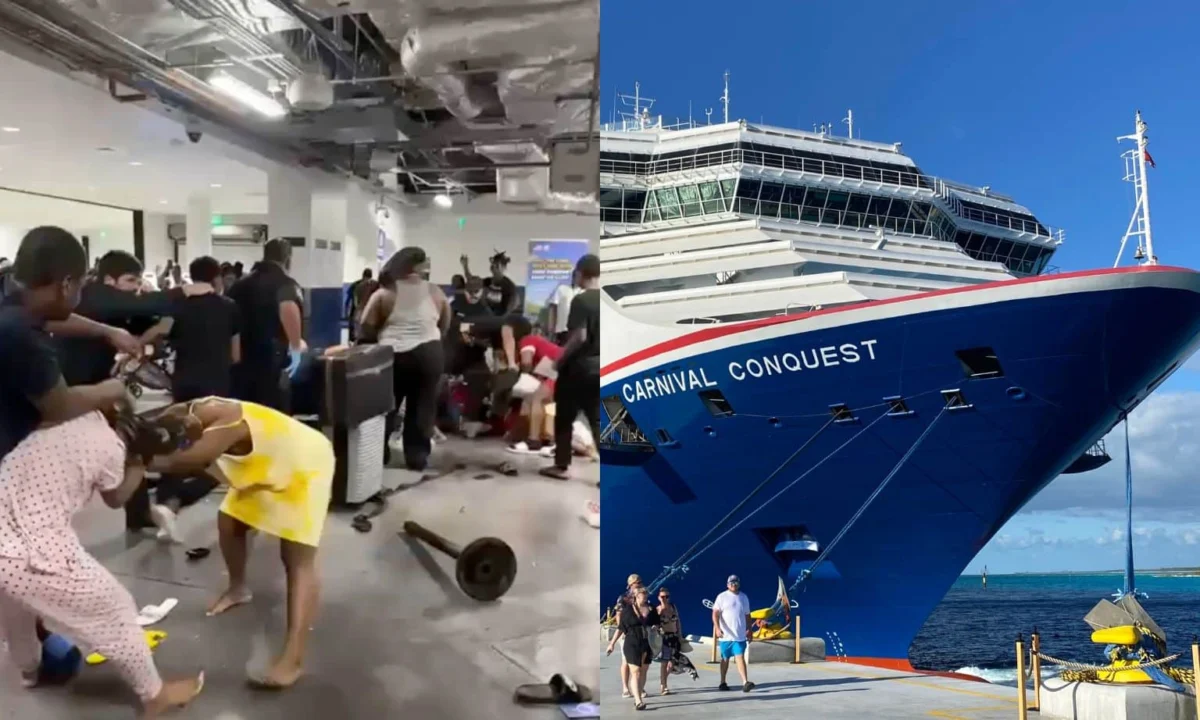
A chaotic scene unfolded on a Carnival cruise ship, culminating in a violent brawl that has led to 16 passengers being permanently banned from future voyages with the cruise line. The incident, which occurred in the debarkation area at immigration in the Bahamas, saw large groups of passengers engaged in a free-for-all, with punching, kicking, and pulling. While no serious injuries were reported and no arrests were made as no parties wished to press charges, the disruptive behavior has resulted in a stern response from Carnival, reinforcing its zero-tolerance policy for unruly conduct.
The footage of the altercation, which circulated widely, captured the shocking extent of the violence as passengers aggressively attacked each other. Hundreds of other travelers on board the Carnival Conquest watched on, stunned by the unfolding pandemonium. The incident highlights a persistent issue within the travel industry, particularly on high-capacity cruise ships, where a small minority of passengers can significantly disrupt the experience for the majority. Carnival’s swift action in issuing lifetime bans underscores the gravity with which such behavior is viewed by major cruise operators.
Background and Chronology of the Incident
The melee reportedly began unexpectedly as passengers were queuing for immigration processing in the Bahamas. According to reports from the Miami-Dade Sheriff’s Office, the initial conflict stemmed from a dispute between two families. The situation escalated dramatically when one passenger allegedly attempted to cut to the front of the immigration line, triggering a chain reaction of aggression.
While the exact timeline of the brawl is difficult to ascertain from the available footage, it is understood to have occurred during the debarkation process, a period of high passenger traffic and often heightened emotions as vacations conclude. The location of the incident, under the authority of U.S. Customs and Border Patrol, meant that law enforcement was on hand to manage the situation. Their prompt response was acknowledged by Carnival, which expressed appreciation for the law enforcement’s handling of the matter.
The lack of formal charges being pressed by any involved parties is a common occurrence in such altercations on cruise ships. Often, passengers involved in these disputes are either unwilling to cooperate with authorities or wish to avoid further complications. However, this does not absolve them from the cruise line’s internal disciplinary actions.
Carnival’s Stance and Policy Enforcement
A spokesperson for Carnival reiterated the company’s firm stance against disruptive behavior. "The incident occurred in the debarkation area under the authority of U.S. Customs and Border Patrol," the spokesperson stated. "We appreciate law enforcement’s swift response and handling of the matter. We do not tolerate such behaviour, and 16 people have been placed on our Do Not Sail List."
This "Do Not Sail" list is Carnival’s internal mechanism for identifying and barring individuals who have violated the cruise line’s conduct policies. The terms and conditions of Carnival’s cruises explicitly outline the consequences for guests whose actions negatively impact the experience of others. The policy states: "Any Guest whose conduct affects the comfort, enjoyment, safety, or well-being of other guests or crew will be detained onboard and/or disembarked at their own expense and will be prohibited from sailing with Carnival in the future." The 16 passengers banned in this instance have fallen under this strict policy.
Precedent and Industry-Wide Concerns
This incident is not an isolated event within the cruise industry. Cruise bans for misbehaving passengers are a recurring theme, with various cruise lines implementing similar measures. Last year, a brawl on the Carnival Jubilee resulted in 24 guests being banned. These incidents, while not an everyday occurrence, serve as stark reminders of the potential for conflict in close-quarters environments with a diverse range of individuals.
While the report suggests such incidents are less common in Australia, it acknowledges a significant brawl on a Carnival ship in 2018 that resulted in approximately 30 injuries. This historical event indicates that disruptive behavior is not confined to any single region or cruise line. In contrast, typical passenger complaints in Australia often revolve around more mundane issues like noise from children or hygiene standards, rather than violent confrontations.
However, the global nature of cruising means that issues can arise anywhere. Just last week, a Royal Caribbean ship experienced a high-profile fight involving 13 individuals at a private beach club in Nassau, demonstrating that similar behavioral challenges are present across different cruise lines. This underscores that the issue is more about individual conduct than a flaw inherent to a specific cruise line.
Public Reaction and Social Media Discourse
The viral nature of the brawl footage has ignited discussions among cruise enthusiasts and the wider public. Social media platforms, particularly Reddit, have become hubs for passengers to express their dismay and frustration. Many users voiced their disappointment that such behavior can mar the vacation experience for others who seek a peaceful and relaxing getaway.
One common sentiment expressed on Reddit was a bewilderment at the propensity for violence among some travelers. A user questioned, "Why are people like this? Truly? What is it about a vacation on a cruise ship that turns people violent like this when they disembark?" They further elaborated on the baffling nature of such aggression, stating, "The quick-to-violence temperament is baffling to me. Why do you want to spend your life so angry and so quick to find offense. It just seems like a miserable way to live. And now you are banned from a cruise line forever. Well done."
Another observation highlighted the perplexing nature of the fight occurring at 8 AM, noting the absence of alcohol availability at that hour. "It was EIGHT in the morning. There is no alcohol available. These stone-cold sober people decided to brawl in the customs line," one user pointed out, emphasizing the underlying behavioral issues rather than external influences like intoxication.
The discussion also touched upon the potential for banned passengers to simply move to other cruise lines. "They’re banned on Carnival so who’s the unlucky cruise line they will move to next?" one user mused, reflecting a concern that these individuals might continue their disruptive patterns elsewhere.
A touch of sarcasm was also evident in some comments, with some users suggesting that such behavior is more likely to be found on Carnival. "At least people like this have the decency to all congregate at Carnival. Carnival does us cruisegoers a great service," one comment read, reflecting a perception held by some within the cruising community. However, this sentiment was tempered by others who rightly pointed out that such incidents are not exclusive to Carnival, citing the recent Royal Caribbean altercation.
Broader Implications for the Cruise Industry
The incident on the Carnival Conquest serves as a significant reminder of the challenges cruise lines face in managing passenger behavior. While the vast majority of cruise passengers enjoy their vacations without incident, the actions of a few can have far-reaching consequences. For cruise lines, maintaining a safe and enjoyable environment is paramount to their business model. Incidents like this can damage reputation and deter potential customers.
The implementation and enforcement of strict conduct policies, such as Carnival’s "Do Not Sail" list, are crucial tools for cruise lines to maintain order. These policies not only serve as a deterrent but also provide a clear framework for action when violations occur. The swift banning of the 16 passengers demonstrates Carnival’s commitment to upholding these standards.
Furthermore, the incident highlights the complex relationship between cruise lines, passengers, and the destinations they visit. While the brawl occurred in Bahamian waters, the passengers were disembarking from a U.S.-based cruise line, and the implications extend to U.S. border control procedures. The cooperation between cruise lines and law enforcement agencies is vital in addressing such situations effectively.
The financial and logistical implications for cruise lines can also be considerable. Dealing with onboard disturbances, managing passenger disputes, and coordinating with local authorities all require significant resources. The potential loss of revenue from banned passengers, while a necessary consequence, also represents a business consideration.
Looking ahead, the cruise industry will likely continue to refine its passenger conduct policies and enhance onboard security measures. The goal is to strike a balance between providing a fun and relaxed vacation experience and ensuring the safety and comfort of all guests. The continued transparency and decisive action by cruise lines in addressing disruptive behavior will be key to maintaining public trust and the long-term viability of the industry. The 16 passengers banned from Carnival will undoubtedly be a cautionary tale for others who may consider engaging in similar conduct.




 Anjar Salim
 Tatiana Tantri Indah Sari
 Budi Mulyono
 Lukman Taruna Persada Ramadan
