
 Chandra Hamzah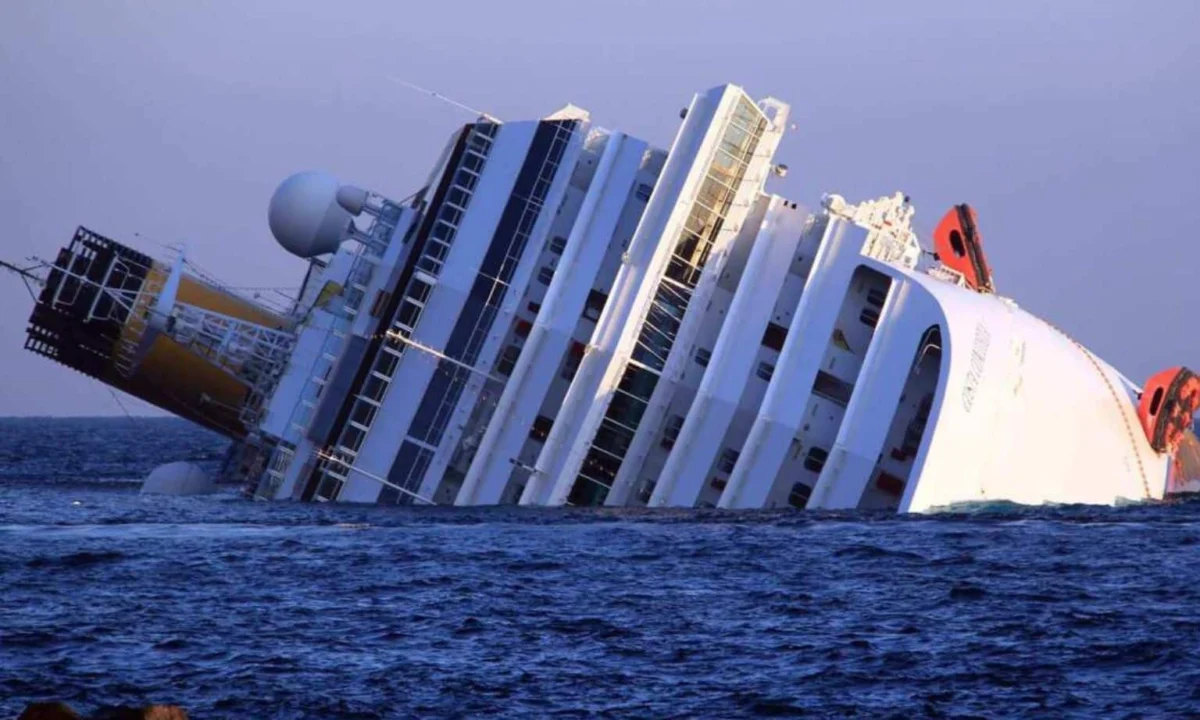
Netflix is set to release a new documentary on July 10th, delving into the catastrophic sinking of the Costa Concordia cruise ship, an event that tragically claimed 32 lives and sent shockwaves through the maritime industry. The film promises to offer a comprehensive account of the disaster, weaving together harrowing survivor testimonies, previously unseen archival footage, and an in-depth analysis of the sequence of events that led to the vessel’s demise off the coast of Italy in January 2012. This examination comes at a time when the cruise industry has significantly evolved, implementing enhanced safety measures to prevent such a tragedy from recurring.
The night of January 13, 2012, began like any other for the passengers and crew aboard the Costa Concordia, a state-of-the-art vessel on a Mediterranean cruise. However, what unfolded would etch itself into the annals of maritime disasters. The ship, carrying over 4,200 people, struck a submerged rock in the Tyrrhenian Sea, just off the island of Isola del Giglio. The impact, described as a violent jolt, tore a massive 53-meter gash in the ship’s port side hull. This catastrophic breach led to the rapid flooding of crucial compartments, including the engine room, quickly rendering the main engines and essential ship services inoperable.
As water relentlessly poured into the wounded hull, the massive cruise liner began to list precariously. Adrift and without power, the Costa Concordia drifted back towards the shores of Isola del Giglio, its growing instability a terrifying harbinger of the impending disaster. The vessel eventually rolled onto its starboard side, a colossal monument to the night’s unfolding horror, before settling on the seabed in a shallow area, its decks tilted at a sickening angle.
Beyond the mechanical failure and environmental factors, the Costa Concordia disaster is also a stark narrative of human error, deceit, and a profound failure of leadership. The actions, or inactions, of the ship’s captain have been identified as a central element in the tragic loss of life, leading to accusations of negligence and a dereliction of duty that directly contributed to the deaths of passengers and crew.
The Costa Concordia incident stands as a significant outlier in the history of modern cruising. While maritime disasters are not unheard of, the scale and circumstances of this capsizing are particularly unique. The most comparable event in recent history is the sinking of the MS Estonia in 1994, which tragically resulted in over 800 fatalities when the ferry went down in the Baltic Sea. However, the Costa Concordia‘s story is distinct in its context – a modern, luxury cruise ship in relatively calm waters, striking a known navigational hazard due to what investigators later determined to be a deliberate, albeit reckless, deviation from its approved course.
The aftermath of the disaster saw a significant overhaul of safety protocols and technologies within the global cruise industry. The incident served as a brutal wake-up call, prompting a comprehensive review and enhancement of safety standards, making cruise ships demonstrably safer than they have ever been before.
Understanding the Factors Behind the Costa Concordia’s Fate
The Critical Errors of Captain Francesco Schettino
At the heart of the tragedy lies the conduct of Captain Francesco Schettino. His actions and decisions on the night of the disaster were scrutinized extensively, leading to his eventual conviction. Schettino was found guilty of multiple charges, including manslaughter, causing a maritime disaster, and abandoning his ship, for which he received a sentence of 16 years in prison.
Investigations revealed that Schettino had steered the Costa Concordia dangerously close to the shore of Isola del Giglio. This maneuver, intended as a "salute" to the island and its inhabitants, was a flagrant violation of standard maritime procedures and navigation rules. Numerous allegations surfaced regarding Schettino’s conduct during the critical hours. These included claims that he had slowed the ship down significantly to allow for a more leisurely dinner, a decision that would have reduced the vessel’s maneuverability in an emergency. Another disturbing allegation was that he had asked his first officer to check the ship’s radar because he had misplaced his reading glasses, suggesting a level of unpreparedness and distraction at the helm. Further reports, though unproven in court, suggested that traces of cocaine were found in Schettino’s hair samples, hinting at potential impairment.
Adding to the perceived chaos and compromised judgment, the court also alleged that Schettino had a lover on board, a non-paying passenger whose presence allegedly "generated confusion and distraction for the captain." This personal entanglement, coupled with other alleged lapses, contributed to a picture of a captain whose focus was compromised during a critical operational period.
Perhaps the most damning aspect of Schettino’s culpability was his delay in ordering an evacuation. He deviated from established protocols on multiple occasions, demonstrating a shocking reluctance to acknowledge the severity of the situation. In an act that drew widespread condemnation and disbelief, Schettino was among the first to leave the stricken vessel, while thousands of passengers and crew members remained trapped onboard. His excuse of having "tripped and fallen into a lifeboat" was met with widespread skepticism. Furthermore, when contacted by the Italian Coast Guard and ordered to return to the ship to coordinate the evacuation efforts, Schettino refused, further exacerbating the crisis.
While the initial impact with the rock was an accident, the courts unequivocally determined that Schettino’s negligence and a series of poor decisions played a pivotal role in the catastrophic outcome for the ship and its occupants. The disaster was not merely a consequence of striking a rock, but a complex interplay of navigational recklessness, delayed response, and a profound failure of command.
Enhancing Safety: The Evolution of Modern Cruise Ships
The Costa Concordia disaster served as a catalyst for unprecedented advancements in cruise ship safety. While the inherent risks of maritime travel can never be entirely eliminated, the cruise industry has responded with a robust commitment to technological innovation and procedural refinement, making modern cruise ships significantly safer than their predecessors.
Advanced Navigation Systems: Today’s cruise ships are equipped with highly sophisticated navigation technology. These systems often integrate artificial intelligence and "smart bridge" technologies designed to minimize human error. Through an array of cameras and sensors deployed on the ship, these systems create detailed digital cartography of sea routes and surrounding environments, essentially providing captains with real-time, three-dimensional underwater maps. This enhanced situational awareness allows for more precise navigation, especially in complex or hazardous waters.
Satellite Technology and Weather Forecasting: Complementing on-board systems, advanced satellite technology provides crucial oversight from above. This includes precise global positioning (GPS) with accuracy within meters, enabling early detection of potential collision courses. Furthermore, these satellite systems continuously monitor weather conditions, providing captains with advance warnings of approaching storms or adverse seas. This proactive approach allows for adjustments to routes, speeds, or even port destinations to avoid dangerous weather.
Integrated Collision Avoidance: The integration of AI and smart bridge systems means that even if human error occurs, these navigation systems are designed to intervene. If a ship is detected to be steering too close to a known danger, a restricted area, or another vessel, the system can alert the captain or, in critical situations, even override manual controls to prevent a collision.
Stabilizer Technology: Modern cruise ships feature advanced stabilizer fins, often referred to as underwater wings. These dynamically adjust to counteract the forces of waves and currents, significantly reducing the ship’s roll and pitch. This not only enhances passenger comfort but also improves the vessel’s stability, particularly in rough seas, and reduces the risk of cargo or equipment shifting in a way that could compromise safety.
Evolving Lifeboat Technology: In the unfortunate event of an evacuation, lifeboat technology has also seen significant improvements. Newer lifeboats are designed with enhanced safety features and greater capacity. Some modern systems are capable of launching and evacuating up to 1,000 passengers in just over 20 minutes, a testament to the focus on rapid and efficient emergency response.
Stricter Protocols and Training: Beyond technological advancements, cruise lines have implemented more stringent protocols for crew training. Regular drills, both physical and digital, are conducted to ensure that crew members are proficient in emergency procedures, particularly evacuations. Passengers also participate in mandatory safety briefings and muster drills, familiarizing them with emergency exits, life jacket usage, and assembly points, ensuring a more organized and effective response during crises.
The Costa Concordia disaster, while a profound tragedy, ultimately spurred an era of heightened safety consciousness and innovation within the cruise industry. The lessons learned from that night have been instrumental in shaping a safer future for maritime travel.




 Anjar Salim
 Tatiana Tantri Indah Sari
 Budi Mulyono
 Lukman Taruna Persada Ramadan
