
 Diana Nuri Rohmawati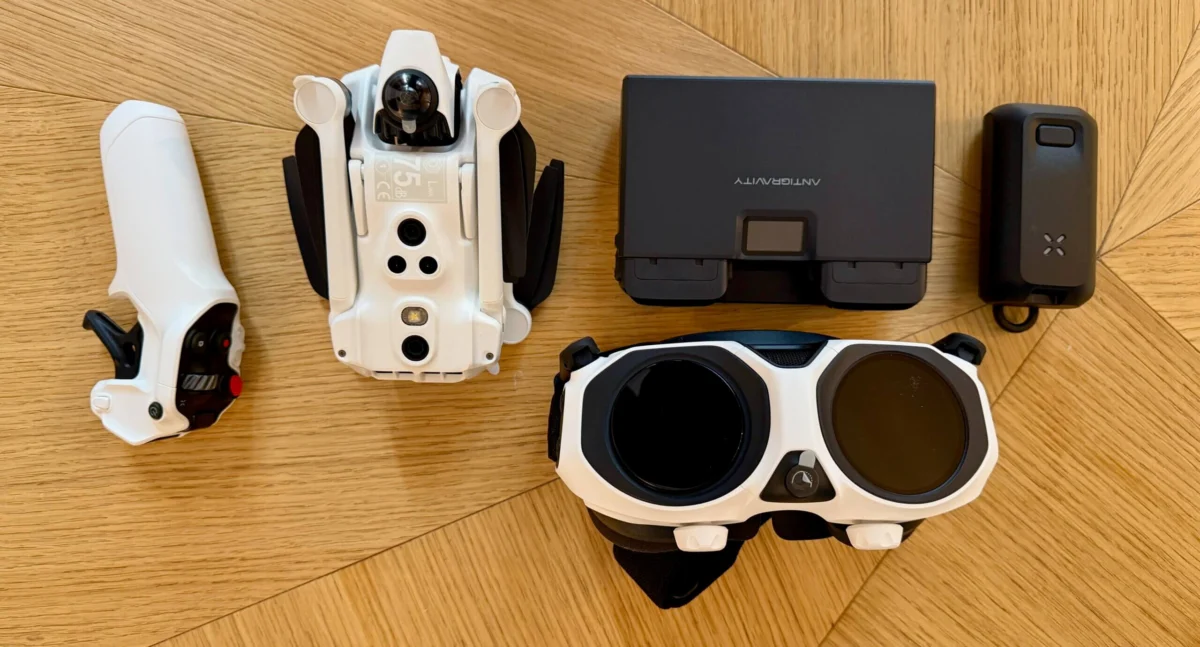
The global drone industry reached a significant technological milestone in late 2025 with the release of the Antigravity 360 A1, an unmanned aerial vehicle (UAV) that seeks to fundamentally alter the landscape of aerial cinematography. By integrating a dual-lens 360-degree capture system into a sub-250-gram chassis, the A1 represents a departure from the traditional gimbal-stabilized camera drone. This new architecture allows for a "fly now, frame later" workflow, effectively decoupling the flight path from the camera’s orientation and providing creators with a virtualized multi-camera environment generated from a single flight.
Technological Architecture and Optical Engineering
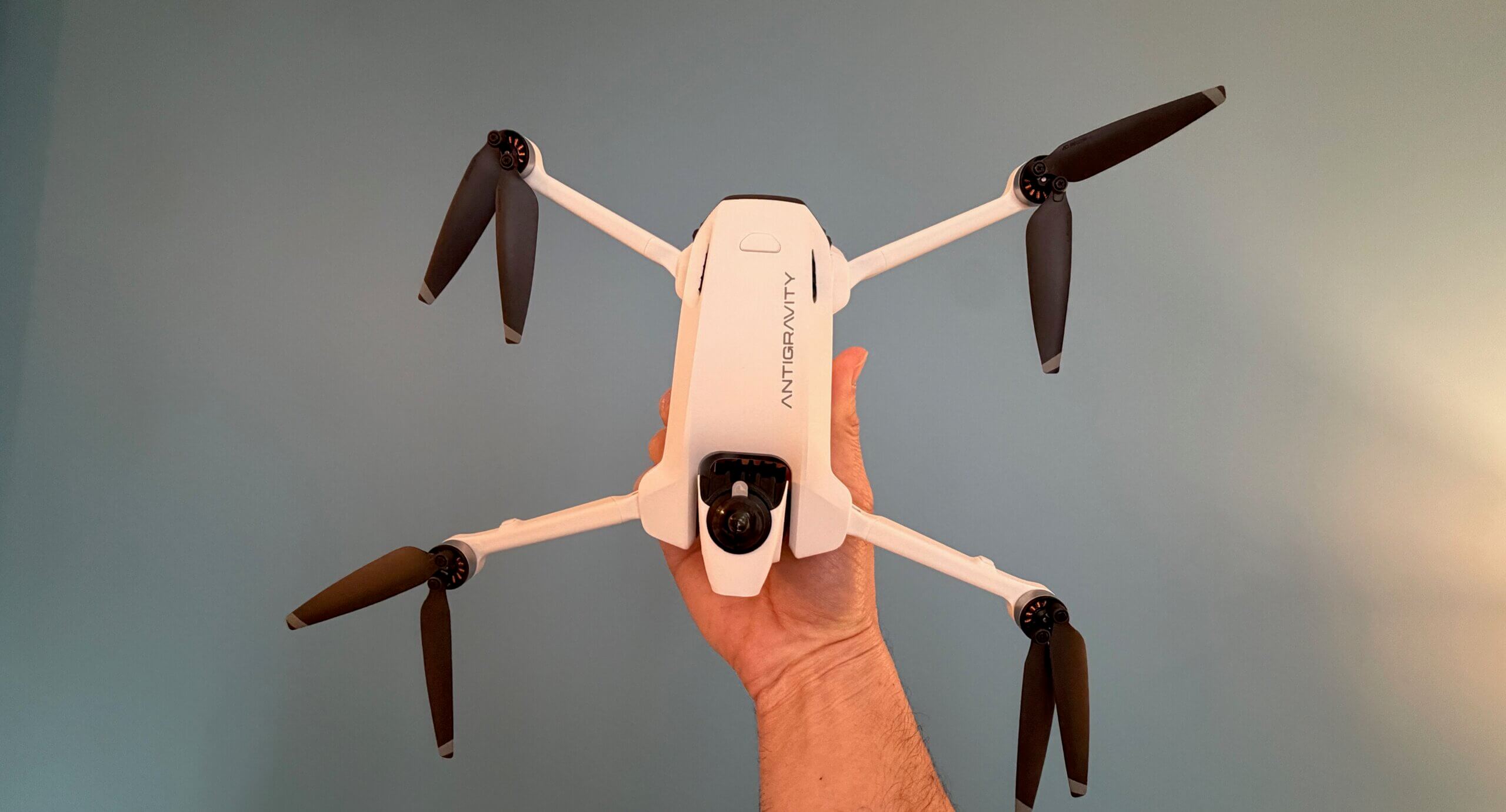
At the core of the Antigravity 360 A1 is a sophisticated optical array consisting of two ultra-wide-angle lenses mounted on the top and bottom of the central fuselage. Each lens features a 200-degree field of view, providing an overlapping coverage area that allows the onboard processor to stitch together a seamless 360-degree spherical image. This configuration eliminates the traditional "blind spots" associated with single-lens drones and allows for the digital removal of the aircraft itself from the final footage.
The imaging system is powered by dual 1/1.28-inch CMOS sensors. While the industry standard for high-end photography drones often utilizes 1-inch sensors, the A1’s sensors are notably larger than those found in standard 360-degree action cameras. This increased surface area improves the signal-to-noise ratio, enhancing performance in low-light environments and expanding the dynamic range. For professional applications, the drone supports a 10-bit "Log" color profile, facilitating color grading in post-production, alongside a "Vivid" profile designed for immediate social media distribution.
Regulatory Compliance and Material Science
A primary driver behind the A1’s design is the 250-gram regulatory threshold. In many jurisdictions, including the United States under Federal Aviation Administration (FAA) guidelines and various European Union territories under European Union Aviation Safety Agency (EASA) rules, drones weighing 250 grams or more are subject to stricter registration requirements and operational limitations. By engineering the A1 to weigh exactly 249 grams with its standard Intelligent Flight Battery, Antigravity has positioned the device as a consumer-grade tool that bypasses many commercial-tier bureaucratic hurdles.
To achieve this weight while maintaining structural integrity, the manufacturer utilized a high-grade carbon-fiber-reinforced polymer. This material offers a superior strength-to-weight ratio compared to the Acrylonitrile Butadiene Styrene (ABS) plastic commonly used in the consumer drone market. The A1 also features a tactile folding mechanism, reducing its footprint to the size of a large smartphone for transport, though its thickness remains approximately three times that of a standard mobile device to accommodate the dual-lens housing and cooling systems.
Immersive Flight Operations and Motion Control
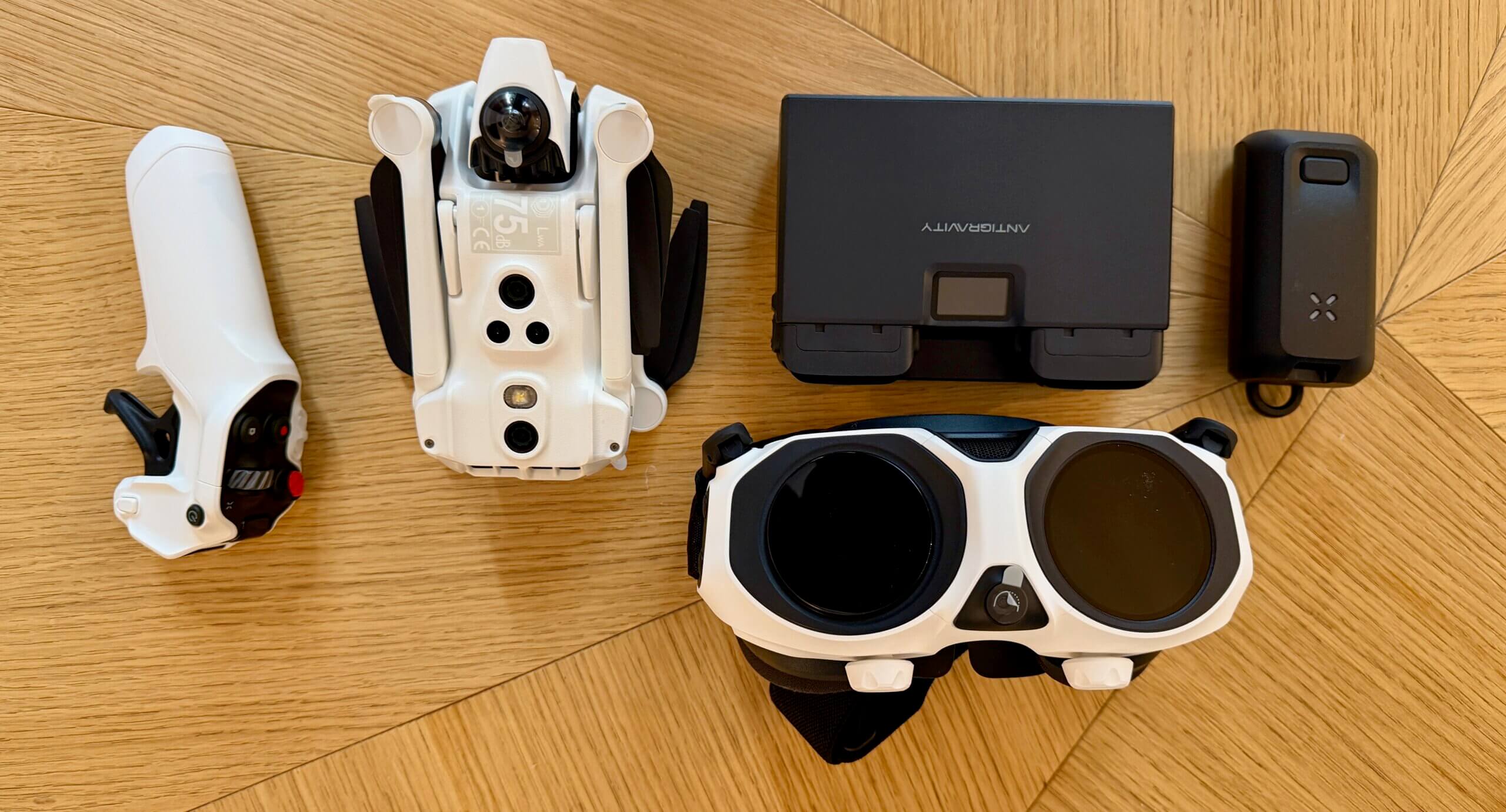
The Antigravity 360 A1 introduces an immersive pilot experience through its proprietary Vision Goggles. These goggles utilize dual 4K micro-OLED displays with a 120Hz refresh rate, minimizing latency and providing a high-fidelity feed. A critical feature of this system is integrated head tracking. Because the drone records a full 360-degree sphere, the pilot can look in any direction—left, right, up, or down—to see the environment, independent of the drone’s heading. This provides a level of spatial awareness previously reserved for high-end First Person View (FPV) racing drones.
Flight control is managed via a single-handed motion controller, which translates wrist movements into flight maneuvers. This intuitive interface is designed to lower the barrier to entry for novice pilots while maintaining the agility required for complex environments. For experienced operators, the A1 remains compatible with traditional "Mode 2" dual-stick controllers, allowing for manual acrobatic flight.
Flight Dynamics and Performance Data
The A1 is categorized as a "cinewhoop" style drone, a design philosophy that prioritizes stability and predictability over raw speed. However, its performance metrics remain competitive within the portable drone segment:
- Top Speed: Approximately 36 mph (58 km/h).
- Wind Resistance: Stable operation in winds up to 20 mph.
- Stabilization: Powered by proprietary "FlowState" algorithms that utilize internal gyroscopes to level the horizon and remove jitter.
- Recovery Features: Includes "Turtle Mode," a software-enabled propeller sequence that allows the drone to flip itself over and take off after an upside-down landing or minor crash.
Battery life remains a variable factor depending on environmental conditions. The standard 249g-compliant battery provides an estimated 24 minutes of flight time, which translates to roughly 19 to 20 minutes of real-world operation with active recording. For users not restricted by the 250g limit, an optional "Pro Battery" extends flight time to 39 minutes, though the additional weight slightly reduces the aircraft’s maneuverability.
The Evolution of Post-Production: Antigravity Studio
The paradigm shift introduced by the A1 extends into the editing suite. Traditional drone footage is limited by the framing decisions made by the pilot during the flight. The A1, conversely, records the entire environment in 8K resolution. When this spherical footage is brought into the "Antigravity Studio" application, the editor can "reframe" the shot, choosing the camera angle, zoom level, and panning motion long after the flight has concluded.
The application leverages Artificial Intelligence (AI) through an "Auto-Frame" tool. This feature identifies subjects—such as vehicles, athletes, or landmarks—and automatically generates a tracking shot that keeps the subject centered. Data transfer is handled wirelessly at speeds up to 80MB/s, or via a high-speed physical connection, catering to the high-bandwidth requirements of 8K 360-degree files.
Chronology of Development and Market Context
The development of the Antigravity 360 A1 followed a three-year cycle beginning in 2022, aimed at merging the 360-degree imaging technology of action cameras with the flight capabilities of micro-drones.
- Q1 2023: Prototype phase focused on minimizing the "stitch line" between dual lenses on a vibrating aerial platform.
- Q4 2024: Beta testing of the carbon-fiber-reinforced chassis to meet the 249g weight target.
- Late 2025: Official global release and integration of the AI-driven Antigravity Studio app.
Industry analysts have noted that the A1 arrives at a time when the drone market is bifurcating. On one side, high-end cinema drones like the DJI Inspire series continue to dominate professional film sets. On the other, "social-first" drones like the A1 are targeting a growing demographic of solo creators who require high-quality footage without the need for a dedicated camera operator.
Industry Analysis and Broader Implications
The release of the Antigravity 360 A1 has sparked a broader conversation regarding the future of "spatial" media. By capturing a full sphere of data, the A1 is not just a video tool but a data-gathering device for Virtual Reality (VR) and Augmented Reality (AR) environments. The ability to export footage directly into VR-compatible formats positions Antigravity to capitalize on the increasing adoption of head-mounted displays in both the consumer and industrial sectors.
Furthermore, the "fly now, frame later" philosophy has implications for safety. Because the pilot does not need to focus on framing a shot through a narrow field of view, they can devote more attention to the flight path and obstacle avoidance, potentially reducing the rate of drone-related accidents in complex urban or forested environments.
However, some technical challenges remain. The 8K resolution, while impressive on paper, is distributed across a 360-degree sphere. When reframed into a standard 1080p or 4K flat video, the effective pixel density is lower than that of a dedicated 4K fixed-lens camera. Additionally, the exposed nature of the dual fisheye lenses makes them more susceptible to damage compared to recessed or protected lenses on traditional drones.
Conclusion
The Antigravity 360 A1 represents a significant pivot in UAV design, prioritizing creative flexibility and regulatory ease. While it may not replace the high-bitrate sensors of heavy-lift cinema drones, it offers a unique value proposition for the travel, action sports, and newsgathering sectors. By automating the most difficult aspects of aerial cinematography—framing and stabilization—Antigravity has transitioned the drone from a complex piloting challenge into a versatile, invisible camera platform. As AI-driven editing continues to mature, the "360-degree aerial" format is expected to become a standard component of the modern digital creator’s toolkit.




 Anjar Salim
 Chandra Hamzah
 Tatiana Tantri Indah Sari
 Budi Mulyono
 Lukman Taruna Persada Ramadan
