
 Anjar Salim
Chattanooga, Tennessee, has long rejected the traditional dichotomy that separates bustling metropolitan environments from pristine natural wilderness. Instead of positioning nature as a weekend escape located hours beyond city limits, this southeastern municipality has systematically integrated the outdoors into its civic identity and daily infrastructure. That decades-long commitment culminated in a landmark international recognition when Chattanooga was officially designated as North America’s first National Park City in 2025. Joining a remarkably elite global tier of cities that prioritize ecological stewardship, public lands, and barrier-free access to nature, the Scenic City has firmly established a new benchmark for how modern urban centers can coexist with the natural world.
The foundational shift toward becoming a national park city did not occur overnight. It represents the culmination of a deliberate multi-decade municipal strategy that began in the late twentieth century with the transformation of the downtown waterfront. Long before receiving its recent international accolade, local government agencies, conservation groups, and civic leaders recognized that economic revitalization and ecological preservation were not mutually exclusive, but rather mutually reinforcing goals. Through targeted investments in river cleanup, greenway expansion, urban forestry, and the preservation of surrounding ridges and canyons, Chattanooga steadily wove a dense tapestry of outdoor recreation directly into the fabric of daily life for its residents and visitors alike.
This deliberate urban planning has yielded profound economic and social implications for the region. According to tourism data compiled by the Chattanooga Tourism Co., the city’s outdoor recreation economy serves as a primary driver of sustainable regional growth, attracting millions of visitors annually who seek high-impact adventures without sacrificing the cultural amenities of a modern city. The National Park City designation has accelerated this trajectory, serving as a powerful catalyst for ecotourism and reinforcing local policies aimed at protecting green spaces from over-development. Urban planners and environmental economists point to Chattanooga as a living laboratory, demonstrating how prioritizing natural assets can simultaneously elevate public health, boost property values, and foster deep civic pride.
For travelers looking to experience this unique convergence of urban sophistication and wild landscapes, the region offers an exceptionally diverse array of pursuits that span from the heart of downtown to the surrounding plateaus and river gorges.
Navigating the Tennessee River Blueway
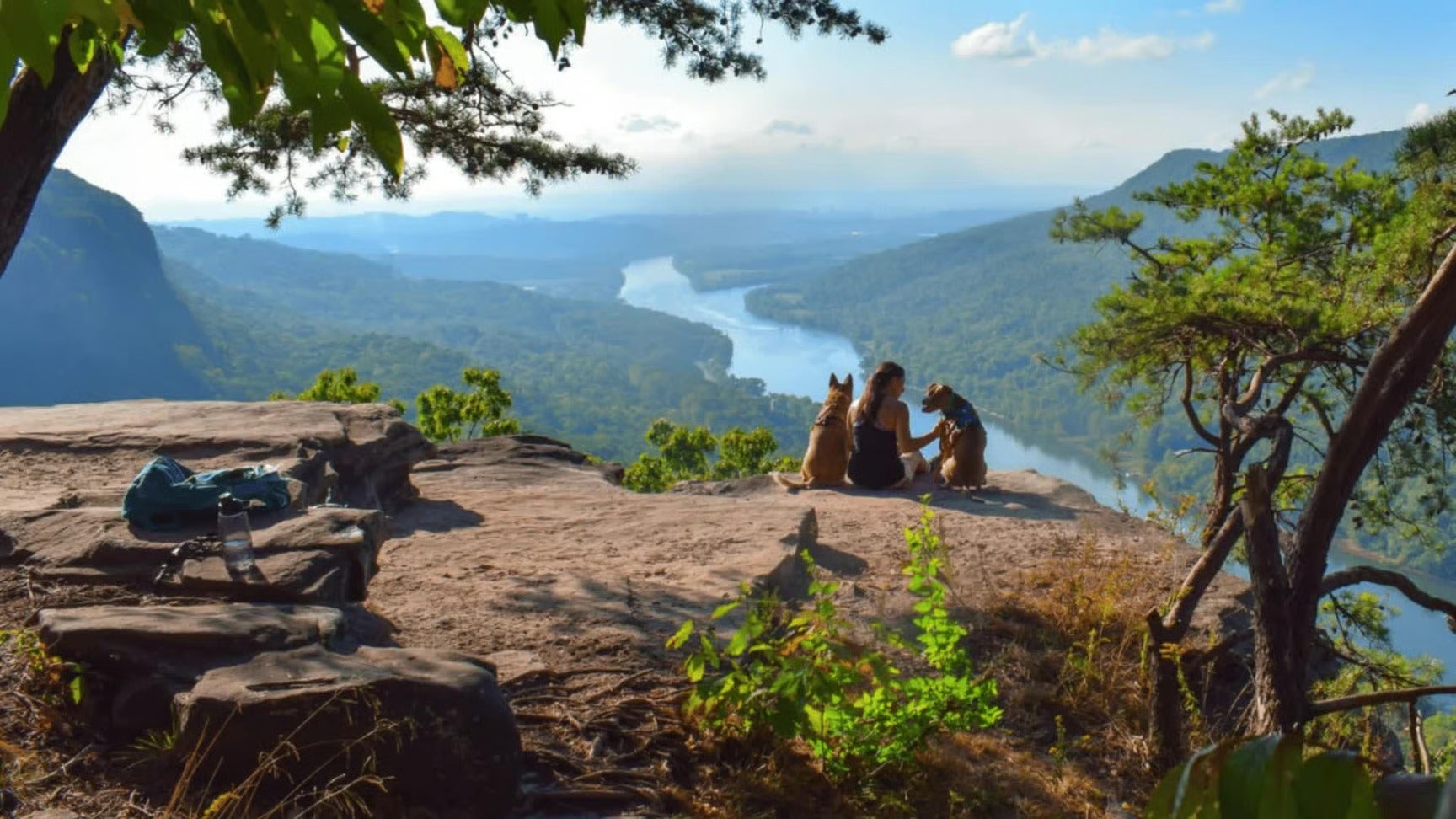
The aquatic centerpiece of the region is the Tennessee River Blueway, a protected water trail stretching 45 flatwater miles between the Chickamauga Dam and the Nickajack Dam. Flowing directly through the heart of the urban landscape, the river provides an accessible aquatic corridor for both novice and experienced paddlers. Outfitters such as L2 Outside, situated near Coolidge Park, supply kayaks and stand-up paddleboards that allow visitors to launch directly into the downtown waterfront.
Paddlers can navigate beneath the historic arches of the city’s pedestrian and vehicular bridges before steering upstream toward the sandstone bluffs of the Bluff View Art District. This stretch of water highlights the seamless integration of Chattanooga’s urban architecture with its dramatic geological setting, offering vantage points of sheer rock faces and verdant hillsides just feet away from public parks and culinary hotspots.
Subterranean Exploration at Raccoon Mountain Caverns
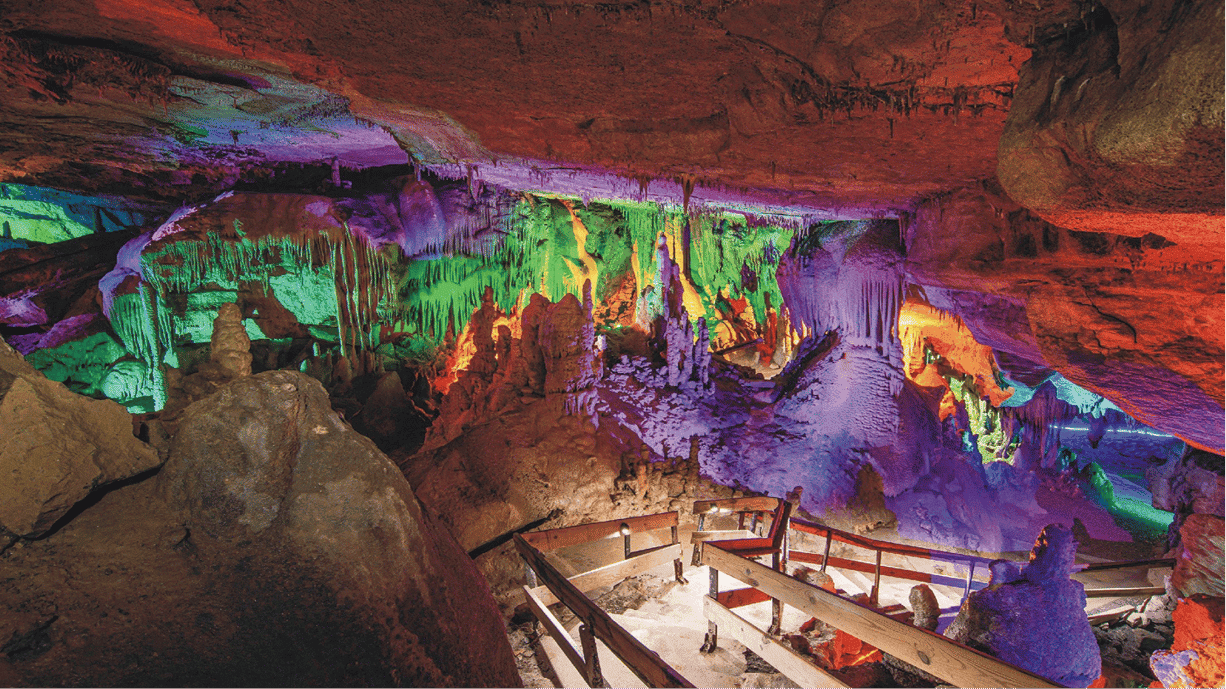
Beneath the forested ridges surrounding the city lies a vast subterranean network that underscores East Tennessee’s geological significance. The state of Tennessee officially harbors the highest concentration of known caves in the United States, with a dense cluster of caverns riddling the limestone strata beneath Hamilton County and its neighboring areas. Raccoon Mountain Caverns serves as a premier gateway to this subterranean world, boasting more than five miles of mapped passages and extensive chamber systems.
The facility offers a spectrum of guided underground excursions, ranging from walking tours suitable for all ages to highly technical spelunking expeditions. The Waterfall Dome Expedition stands out as the most immersive offering, requiring participants to squeeze through tight slot canyons, navigate subterranean tunnels, and occasionally crawl through narrow passages to reach hidden geological formations and underground waterfalls. These guided experiences provide both a thrilling athletic challenge and an educational window into the complex hydrology and ancient limestone deposition that shaped the Cumberland Plateau.
Contemplative Spaces at the Sculpture Fields at Montague Park
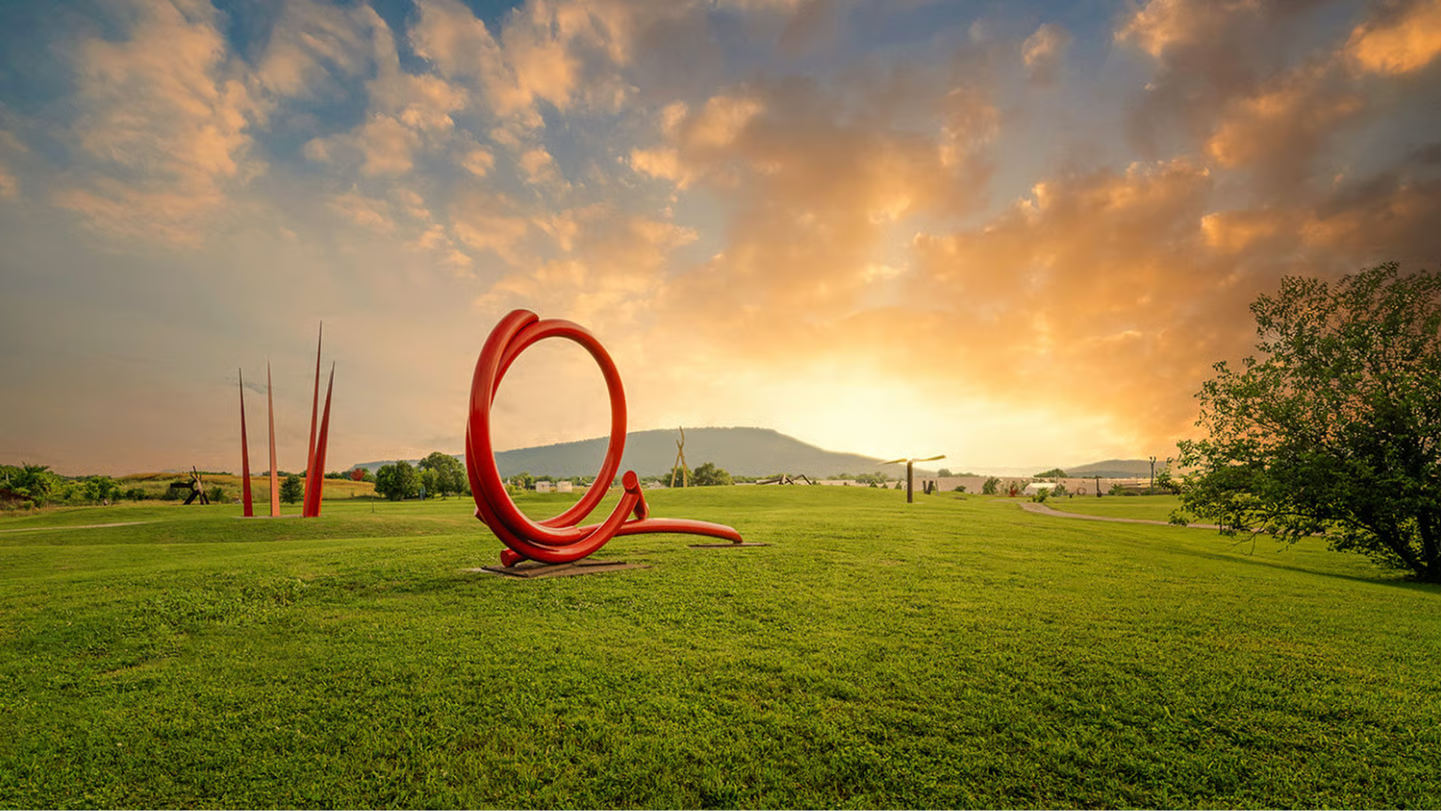
Moving from wild subterranean chambers to curated open-air spaces, the Southside neighborhood hosts the Sculpture Fields at Montague Park, the largest dedicated sculpture park in the American Southeast. Spanning 33 acres of reclaimed industrial land, the park combines contemporary art appreciation with passive outdoor recreation, featuring 1.5 miles of walking trails interspersed with 50 large-scale, world-class installations.
Visitors meandering through the expansive meadow encounter a diverse collection of monumental works, ranging from abstract steel structures bearing decades of aged patina to whimsical, colorful interpretations of natural forms like trees and organic geometry. The park exemplifies Chattanooga’s broader philosophy of land reclamation, transforming a historically underutilized industrial site into a vibrant cultural hub that encourages reflection, physical activity, and community gathering within a natural setting.
Whitewater Thrills on the Ocoee River
For those seeking high-adrenaline aquatic adventure, the nearby Ocoee River offers some of the most celebrated whitewater rafting in North America. Globally renowned as the official site of the slalom whitewater competitions during the 1996 Centennial Olympic Games, the Ocoee provides continuous class III and class IV rapids characterized by powerful wave trains, hydraulic drops, and massive river pillows.
Commercial outfitters operate daily trips catering to a wide spectrum of athletic abilities. The Middle Ocoee route delivers a high-intensity, five-mile sprint featuring numerous continuous rapids ideal for a half-day excursion. For more seasoned adventurers, full-day itineraries combine the Middle and Upper sections, incorporating the technical challenges of the historic Olympic slalom course. The river stands as a testament to regional cooperation between state and federal agencies, balancing recreational access with strict environmental management of the Ocoee River gorge.
Aerial Ascents at Lookout Mountain Flight Park
Rising prominently above the southern horizon, Lookout Mountain is a 20-mile-long plateau that has served as a landmark for centuries, famously witnessing pivotal Civil War engagements before evolving into a modern mecca for aviation sports. The plateau is home to the Lookout Mountain Flight Park, a nationally recognized hang-gliding instruction and guiding facility that enables enthusiasts to experience flight from high above the valley floor.
The park offers tandem flights for beginners, pairing participants with certified professional instructors who launch from a dedicated ramp situated on the western edge of the mountain. Gliding silently above rolling farmland and expansive forest canopies, flyers achieve altitudes reaching approximately 3,000 feet, gaining an unmatched aerial perspective of the Tennessee Valley. This airborne vantage point encapsulates the overarching ethos of Chattanooga: an environment where the boundaries between earth, sky, and human recreation dissolve entirely.
Broader Implications and Future Outlook
As urban centers globally grapple with the dual pressures of population growth and climate change, Chattanooga’s model offers a compelling blueprint for sustainable municipal development. By institutionalizing access to rivers, caves, parks, and mountains as a fundamental public right rather than an ancillary amenity, the city has redefined what it means to live in an urban environment.
Local civic leaders and tourism officials emphasize that maintaining this delicate equilibrium requires continuous investment in conservation infrastructure, trail maintenance, and water quality monitoring. Yet, as the city builds upon its 20th-century waterfront renaissance and its 2025 National Park City designation, the overarching message remains clear: Chattanooga is not merely a city situated near the outdoors—it is an adventure city, where the wild and the urban exist as one cohesive ecosystem.




 Chandra Hamzah
 Tatiana Tantri Indah Sari
 Budi Mulyono
 Lukman Taruna Persada Ramadan