
 Cholid Fahmi Thalib
The modern culinary landscape is frequently defined by white tablecloths, reservation apps, and Michelin stars. Yet, some of the most profound insights into a region’s cultural identity are found far outside traditional dining rooms. They reside on the sticky shelves of historic country stores, inside bakery cases filled before dawn, and across deli counters where generational locals order without looking at a menu. This localized tactile economy forms the beating heart of Pennsylvania’s agricultural sector, offering travelers and residents alike an unfiltered, practical examination of regional taste through the ingredients, baked goods, and heritage recipes that sustain communities week after week.
For travelers mapping road trips across the Commonwealth, farm markets provide an invaluable structural and culinary detour. Far from mere convenience stops, these establishments function as cultural archives, morning breakfast destinations, picnic supply depots, and quiet introductions to small-town commerce. As consumer habits increasingly shift toward localized economies and experiential travel, Pennsylvania’s farm markets have emerged as essential anchors for food-focused itineraries, bridging the gap between historical agriculture and contemporary culinary tourism.
The Distinct Anatomy of Agricultural Retail
Farm markets operate on a temporal and commercial rhythm fundamentally distinct from standard convenience retail or conventional grocery chains. While a corner store serves as a transactional fix for immediate hunger and a restaurant provides a curated, sit-down performance, a well-stocked agricultural market presents an exhaustive cross-section of a regional food shed.
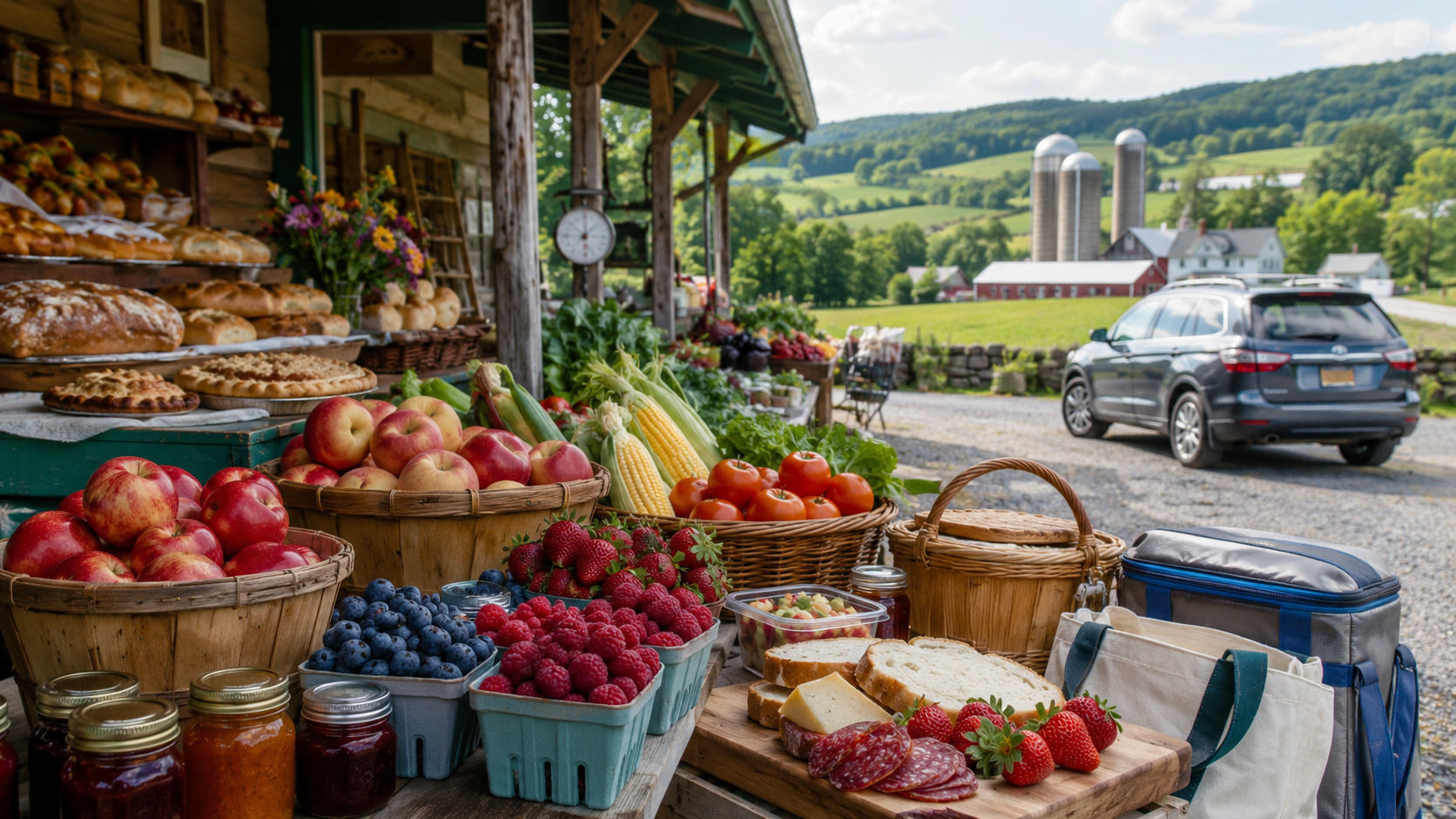
In a single visit, a patron might encounter heirloom apples harvested hours prior, scratch-made loaves of sourdough, bulk baking supplies, artisanal preserves, house-cured deli meats, raw cheeses, and seasonally driven prepared foods meant for immediate consumption. This incredible breadth of inventory—exemplified by operations like Whispering Pines Fruit Farm—transforms a routine travel pause into an immersive sensory exploration.
The primary appeal lies in autonomy and sensory engagement. Unlike a standard restaurant menu where flavors are predetermined by a chef, a farm market invites the consumer to curate their own experience. Visitors can evaluate dozens of apple varieties by sight and aroma, converse with bakers regarding regional flour mills, inspect rows of pickled goods, and assemble a bespoke picnic to be enjoyed later in the afternoon. This participatory style of shopping routinely yields discoveries that outlast the duration of the trip itself.
The Historical and Cultural Evolution of Local Foodways
While restaurants interpret regional ingredients through the lens of modern culinary technique, farm markets preserve the baseline ingredients of domestic life. Flavor in Central Pennsylvania, the Susquehanna Valley, and Lancaster County lives just as vividly in grocery aisles, refrigerated deli cases, and handwritten cardboard signs advertising seasonal gluts as it does in high-end dining establishments.
Historically, these markets evolved out of necessity. In rural Pennsylvania, where geographic isolation historically required communities to be largely self-reliant, the local market or farm stand served as the central hub of trade and socialization. Generations of families have relied on these spaces not just for weekly groceries, but as social anchors where news is exchanged, holidays are provisioned, and agricultural harvests are celebrated.
This infrastructure is deeply seasonal, dictating a shifting landscape of goods throughout the year:
- Summer: Dominated by stone fruits, berries, sweet corn, field tomatoes, and cold picnic staples.
- Fall: Defined by hard-cider apples, pumpkins, baking spices, winter squash, and robust pantry provisions.
- Winter and Early Spring: Pivot toward comfort foods, aged cheeses, root vegetables, baked goods, preserves, and bulk dry goods.
This cyclical availability grounds the consumer in the immediate geography of the region, emphasizing that food has a season and a specific place of origin.
Economic Impact and Direct-to-Consumer Agricultural Data
Beyond their cultural value, farm markets play a critical financial role in sustaining regional food systems. By purchasing directly from farm stands, independent grocers, and localized agricultural outlets, consumers redirect capital straight into the pockets of growers, bakers, food processors, and small-business owners who define a region’s economic stability.
According to data compiled by the United States Department of Agriculture (USDA) Economic Research Service regarding direct-to-consumer food sales, localized outlets—including farmers markets, farm stands, and community-supported agriculture (CSAs)—remain vital lifelines for small family farms. Direct-to-consumer sales allow small-scale agricultural producers to bypass traditional, highly consolidated supply chains, securing a higher profit margin on their yields.
For the average traveler, spending money at these independent hubs translates into meaningful economic stewardship. Purchasing a wedge of cheddar, a jar of fruit butter, or a bag of orchard-fresh fruit provides direct financial support to the distinct ecosystem of small towns that corporate highway developments often bypass. Furthermore, these stops offer unmatched flexibility for families and groups navigating long transit routes, merging affordability with high nutritional quality.
Navigating the Market: A Guide for Culinary Explorers
Approaching a Pennsylvania farm market requires a balance of planning and spontaneous curiosity. While arriving with a mental shopping list is helpful, the greatest rewards often come from observing the buying habits of regular patrons.
Seasonal fruit stands represent the most visually striking draw. Regional produce—ranging from mid-summer peaches to late-autumn cider apples—offers an unadulterated taste of the local terroir. Even for travelers without access to a full kitchen, fresh fruit serves as an efficient breakfast or roadside snack.
Bakery counters offer another profound glimpse into regional heritage. Many long-standing markets specialize in regional baked goods, including traditional whoopie pies, shoofly pie, sticky buns, and heritage breads. These items are easily transported and serve as culturally authentic alternatives to generic souvenirs.
Deli counters streamline the midday meal. Offering house-roasted meats, local cheeses, freshly prepared salads, and spreads, these counters enable visitors to assemble a high-quality picnic lunch in minutes, liberating them from the constraints of restaurant reservations.
Meanwhile, bulk foods and pantry aisles reveal deeply ingrained regional shopping habits. Bins filled with specialty grains, heritage popping corn, local honey, and proprietary spice blends highlight a culture that still values home cooking and scratch preparation over convenience packaging.
Integrating Agricultural Stops into Modern Road Trips
Strategic itinerary planning can elevate a standard drive through Pennsylvania into a dynamic culinary expedition. Incorporating farm markets into a travel schedule requires understanding their daily operational rhythms.
Morning visits offer the highest yield for bakery goods and breakfast items. Arriving early ensures access to limited-run items before popular products sell out, while allowing travelers to experience the market at its most tranquil operational hour.
Midday pauses align naturally with lunch preparation. Rather than relying on fast-food chains along interstate exits, travelers can utilize markets as provisioning hubs, collecting fresh provisions to enjoy at nearby state parks, scenic overlooks, or historic trailheads.
Late-day stops serve as efficient repositories for non-perishable souvenirs and take-home provisions. Shelf-stable preserves, honey, and dry goods can be safely stowed in vehicle trunks without risking spoilage, capping off a day of exploration just before heading toward lodging.
To construct a cohesive food-focused day trip, experts recommend anchoring the itinerary around a single agricultural market and pairing it with complementary regional assets. For instance, travelers exploring the central portion of the state can combine a morning market visit with a downtown walking tour, or cross-reference options like restaurants in Huntingdon, PA, to seamlessly transition from daytime agricultural exploration to a sit-down evening meal. This multi-layered approach ensures that travel remains varied, engaging, and deeply connected to the surrounding environment.
The Broader Implications for Regional Tourism
As travelers increasingly reject homogenized tourism experiences in favor of authenticity, the role of the farm market becomes even more pronounced. These establishments offer an accessible entry point into the agricultural heritage of the Commonwealth, requiring no specialized knowledge—only an appetite and a willingness to explore.
By bridging the gap between historical preservation and modern local commerce, Pennsylvania’s farm markets enrich the travel experience. They transform ordinary transit routes into corridors of discovery, reminding visitors that understanding a place is not merely about observing its landmarks, but about sharing in the daily nourishment of its people.



 Anjar Salim
 Chandra Hamzah
 Tatiana Tantri Indah Sari
 Budi Mulyono
 Lukman Taruna Persada Ramadan
