
 Hendra Ismail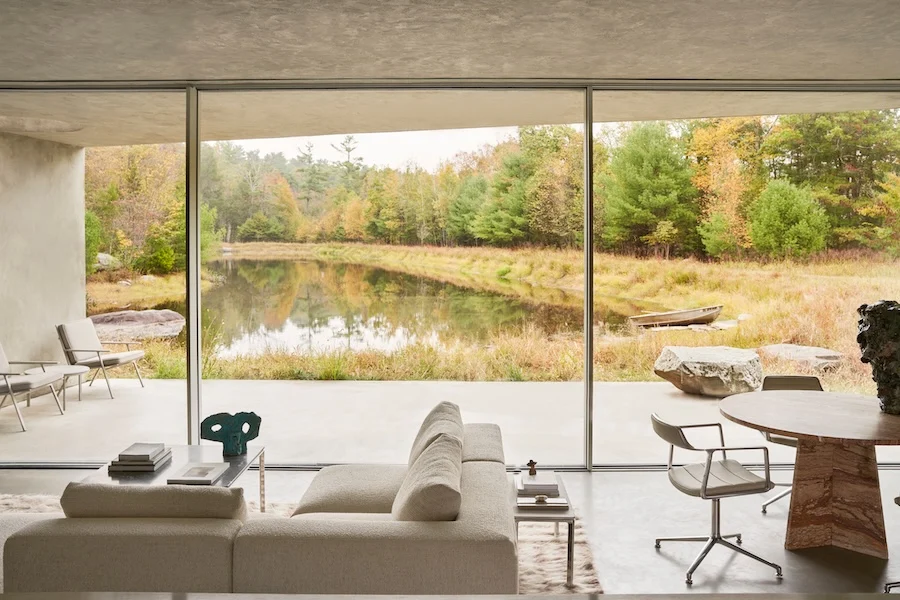
Words by: Stephanie Chen | Photos by Pia Winter Hansen + Eric Petschek
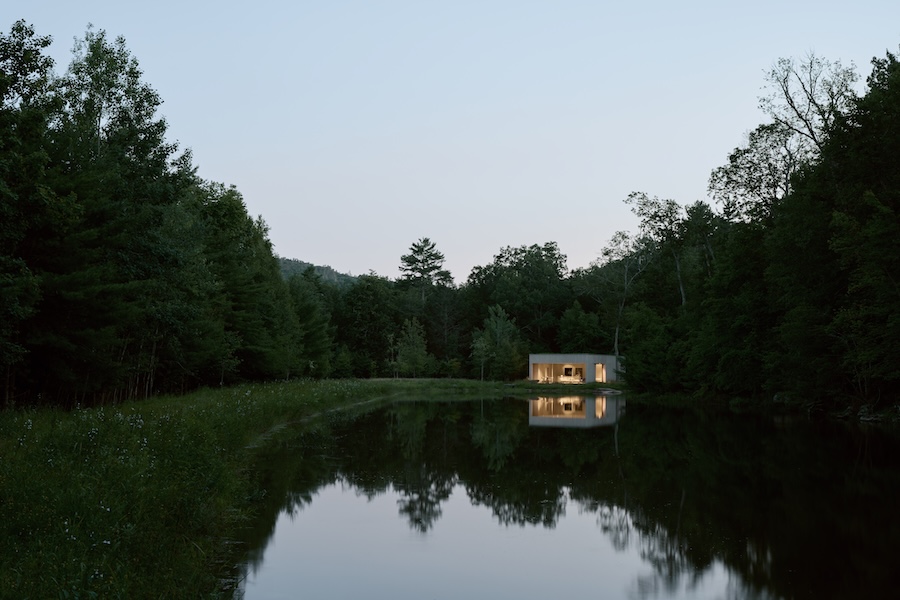
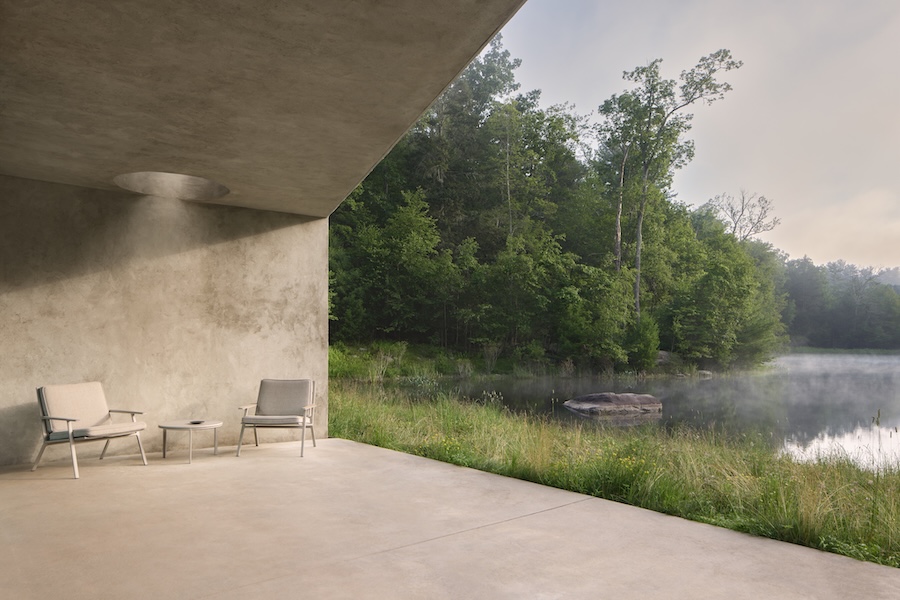
Danish design powerhouse Vipp has officially launched its inaugural U.S. guesthouse, a significant milestone marking the brand’s expanding global footprint. Nestled within the serene landscape of rural Upstate New York, the newly unveiled Vipp Pavilion in Lumberland represents the brand’s fifteenth bookable guesthouse worldwide. This architectural gem, conceptualized by the acclaimed Los Angeles-based architecture firm Johnston Marklee, is more than just a place to stay; it is envisioned as a sculptural object designed to harmonize with its natural surroundings. Spanning 1,200 square feet, the pavilion is strategically positioned at the edge of a tranquil pond, enveloped by 16 acres of picturesque forest, offering guests an immersive retreat into nature.
A Sculptural Masterpiece Rooted in Geometric Principles
The creation of the Vipp Pavilion is the culmination of a four-year design and construction process, a testament to the meticulous planning and execution inherent in Vipp’s guesthouse projects. Johnston Marklee, known for its innovative and contextually sensitive architectural designs, approached the pavilion as a freestanding sculpture. The structure’s distinctive form is derived from two tangent ellipses, a geometric choice that masterfully echoes the curvilinear contours of the adjacent pond. This deliberate design decision not only creates a visually striking form but also establishes a profound connection between the built environment and the natural water feature.
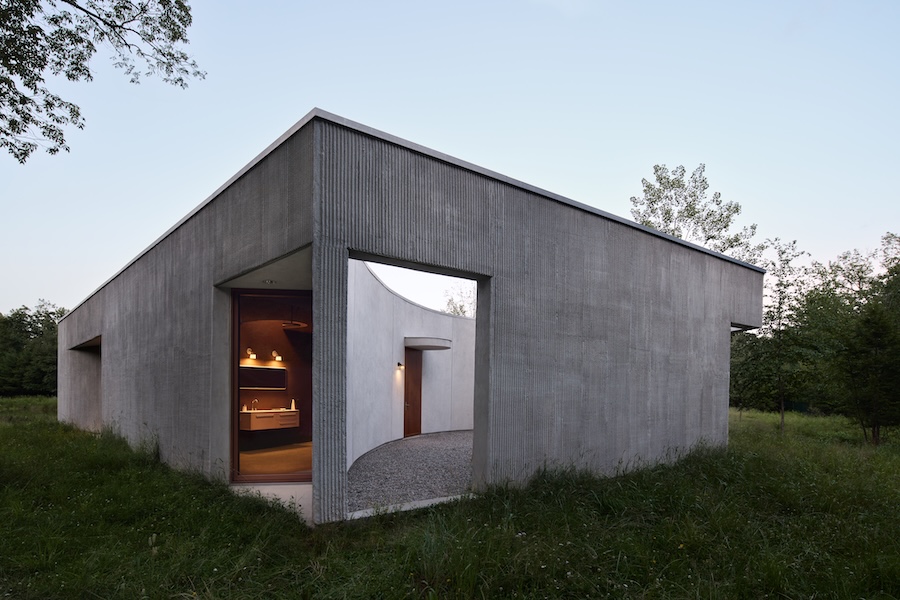
Visitors are welcomed into the pavilion through a sweeping, curved courtyard. This entrance sequence is designed to be an experience in itself, with arcs of light and shadow playing across the surfaces, drawing the eye upward and framing the expansive sky. This transitional space prepares guests for the pavilion’s unique spatial qualities and its intimate relationship with the landscape.
Sharon Johnston, a founding partner at Johnston Marklee, elaborated on the pavilion’s initial impression: "At first glance, the building resembles a stone on the pond; initially solid, but slowly revealing its volumetric form on the approach." This description highlights the pavilion’s ability to surprise and engage, presenting a solid, almost elemental presence from a distance, which then unfolds into a more complex and inviting architectural volume as one draws nearer. This nuanced approach to form and perception is a hallmark of Johnston Marklee’s design philosophy, which often seeks to create structures that are both monumental and intimately scaled.
The Tactile and Immersive Interior Experience
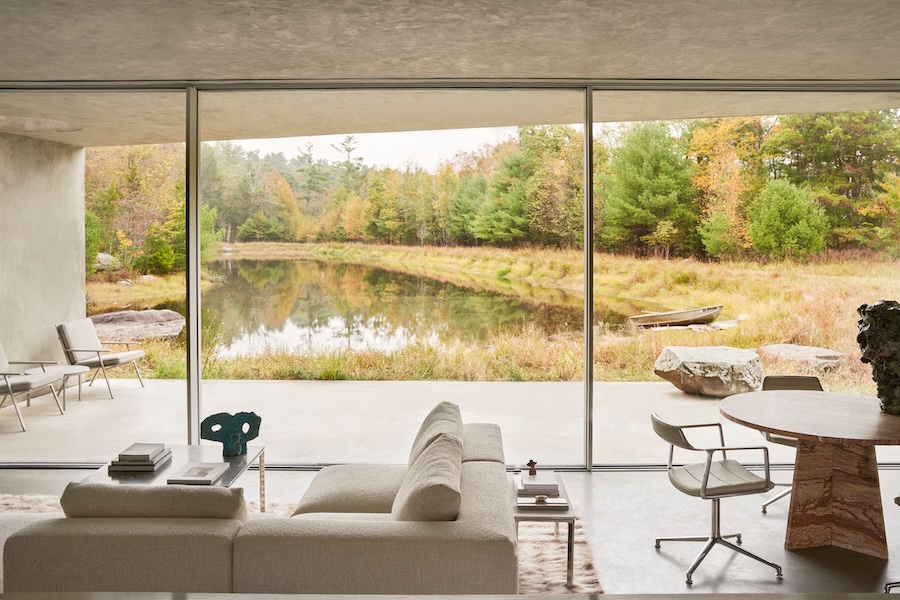
The interior of the Vipp Pavilion is a masterclass in material honesty and sensory engagement, reflecting Vipp’s long-standing commitment to high-quality materials and functional design. The pavilion’s exterior is clad in a sophisticated combination of smooth and ribbed stucco, offering a tactile contrast that hints at the richness within. Upon entering at the tangent point between the two elliptical forms, guests are led into a second, central elliptical room. This main living space is defined by its skylit, open-plan layout, featuring floors of raw concrete and walls finished with rough stucco. The orientation of this space is deliberately focused on capturing panoramic views of the water and the surrounding meadow, ensuring that the natural beauty of the site is an integral part of the interior experience.
Tucked away between the gently curved walls are two private bedrooms. These intimate spaces are thoughtfully designed with large mahogany-framed windows, offering serene views and a connection to the forest. The interior material palette has been carefully curated to draw inspiration from the surrounding Upstate New York landscape. Warm, golden browns evoke the hues of autumn leaves, while muted grayish-greens suggest the mosses and lichens found on trees, and rich jade tones recall the deep green of the indigenous fir trees. This deliberate chromatic scheme ensures a seamless transition between the interior and exterior environments, fostering a sense of tranquility and belonging.
A striking focal point in the main living area is the anodized aluminum kitchen. Its sleek, contemporary design, with rounded edges that echo the pavilion’s curved exterior, serves as a functional heart of the home. Positioned beneath a large circular skylight, the kitchen not only provides a practical space for preparing meals but also contributes to the overall aesthetic harmony of the interior. The juxtaposition of the polished aluminum against the raw cement walls creates a compelling visual and tactile dynamic.
The tactile quality of the interior is further enhanced by the selection of furnishings and finishes. Soft, wraparound curtains provide a sense of enclosure and privacy, while a comfortable modular sofa invites relaxation. A custom-designed travertine table in earthy tones and elegant swivel chairs add to the refined yet approachable atmosphere. The warmth of Sapele wood is utilized for millwork and window frames, introducing a natural richness that complements the more austere materials. Large, floor-to-ceiling glass doors are strategically placed to dissolve the boundaries between the interior living spaces and the lush, verdant outdoors, allowing for a constant dialogue with nature.
Landscape Design: A Seamless Integration with Nature
The landscape surrounding the Vipp Pavilion has been as thoughtfully considered as the architecture itself. Designed by Larry Weaner Landscape Associates (LWLA), a firm renowned for its expertise in ecological and site-specific landscape design, the grounds feature a pastoral meadow and a living green roof. This landscape strategy prioritizes the use of regional native plants and employs low-maintenance approaches, ensuring that the pavilion integrates seamlessly with its environment. The meadow not only enhances the aesthetic appeal of the site but also serves as a vital ecological element, supporting local biodiversity.
The green roof, a prominent feature of the pavilion, further blurs the lines between the building and its natural setting. It provides insulation, manages stormwater runoff, and creates a habitat for local flora and fauna, contributing to the overall sustainability of the project. The LWLA design ensures that the landscape strategy is not merely decorative but deeply functional and environmentally responsible, extending the pavilion’s ethos of connection to nature.
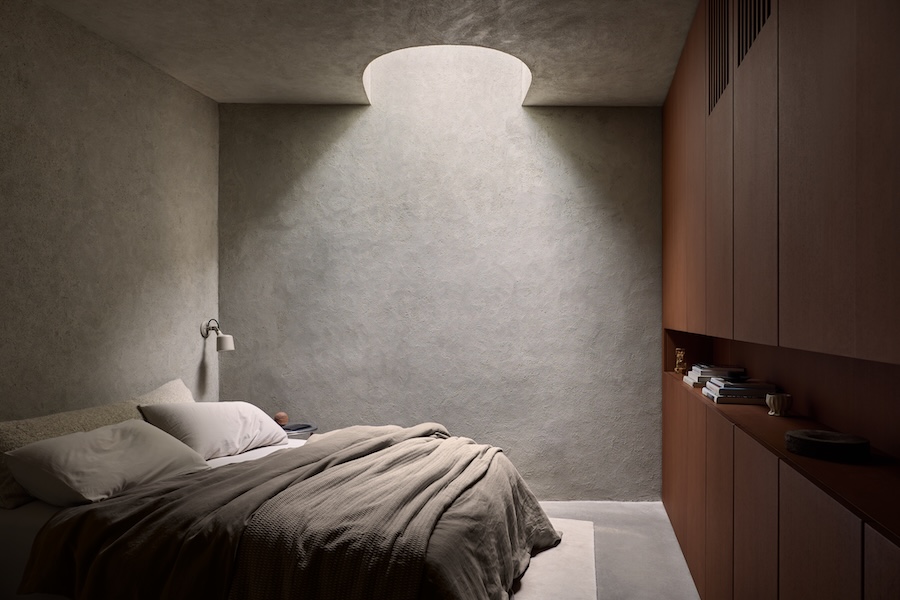
Sharon Johnston reflected on the pavilion’s relationship with its setting, stating, "The pavilion is an autonomous structure that masks a sense of scale, form, or function in contrast with the surroundings as it frames and embraces the skies and forest. The abstract form doesn’t prescribe one’s engagement with the space or interior furnishings, rather each visitor will be able to shape their own experiences. It provides a retreat from the expected and a portal into nature." This sentiment underscores the pavilion’s design intent: to offer a space of profound escape and personal discovery, where the architecture serves as a framework for a deeply engaging experience with the natural world.
Vipp’s Global Guesthouse Strategy and U.S. Expansion
The launch of the Vipp Pavilion in Upstate New York is a significant expansion of Vipp’s international guesthouse program, which began in 2014 with the opening of the Vipp Chimney House in Copenhagen. This initiative showcases Vipp’s commitment to offering unique hospitality experiences that highlight their philosophy of durable design and quality craftsmanship. Each Vipp guesthouse is carefully selected for its architectural merit and its ability to provide an immersive experience within its local context.
Vipp’s strategy involves transforming existing architectural structures or commissioning new ones, all meticulously outfitted with Vipp kitchens, bathrooms, and furniture. This ensures a consistent brand experience of high-quality design and functionality across all locations. The brand has successfully established guesthouses in diverse settings, including a former water tower in Sweden, a forest cabin in Norway, and a loft in Milan. The addition of the U.S. property signifies Vipp’s growing interest in the North American market and its desire to offer its distinctive hospitality concept to a broader audience.
The selection of Upstate New York for their first U.S. guesthouse is particularly strategic. The region has seen a significant rise in popularity as a destination for design-conscious travelers seeking escapes from urban centers. Its rolling hills, dense forests, and tranquil lakes provide an ideal backdrop for a retreat focused on nature and design. The Lumberland location, known for its natural beauty and relative seclusion, offers the perfect environment for the Vipp Pavilion to fulfill its promise of a peaceful and inspiring sanctuary.
The pavilion is available for booking through Vipp’s official website, allowing travelers to experience the fusion of Danish design and American landscape firsthand. The pricing and availability are managed directly by Vipp, ensuring a streamlined booking process for interested guests. This direct booking model allows Vipp to maintain control over the guest experience and reinforce their brand narrative.
Broader Implications for Design and Hospitality
The opening of the Vipp Pavilion in Upstate New York has several implications for the broader design and hospitality industries. Firstly, it reinforces the growing trend of architectural tourism, where travelers seek out unique and architecturally significant accommodations. This pavilion, designed by a globally recognized firm and curated by a renowned brand, is poised to attract a discerning clientele interested in experiencing cutting-edge design in a natural setting.
Secondly, it highlights the increasing demand for immersive, nature-connected experiences within the hospitality sector. As urban living becomes more prevalent, there is a corresponding desire for retreats that offer respite, tranquility, and a deep connection to the natural world. The Vipp Pavilion’s design, with its emphasis on panoramic views, natural materials, and seamless indoor-outdoor transitions, perfectly addresses this demand.
Furthermore, the project underscores the successful integration of architecture, interior design, and landscape design. The collaboration between Johnston Marklee and Larry Weaner Landscape Associates demonstrates a holistic approach to creating a complete experiential environment. This integrated design philosophy is becoming increasingly crucial for developing sustainable and impactful projects that resonate with contemporary values.
The success of Vipp’s guesthouse model also suggests a viable strategy for design brands looking to expand their reach and engage consumers in new ways. By offering tangible experiences of their products and design ethos, brands can foster deeper connections with their audience and build brand loyalty. The Vipp Pavilion is not just a showcase for Vipp’s products; it is an embodiment of their lifestyle philosophy.
The project’s meticulous attention to detail, from the choice of stucco finishes to the selection of native plants, sets a high bar for future developments in the architectural tourism and boutique hospitality sectors. It serves as an exemplar of how thoughtful design, when combined with a deep respect for the environment, can create spaces that are both aesthetically compelling and deeply restorative. The Vipp Pavilion in Lumberland is more than a guesthouse; it is a statement on the power of design to enhance our connection to ourselves, to each other, and to the natural world.

 Anjar Salim
 Chandra Hamzah
 Tatiana Tantri Indah Sari
 Budi Mulyono

