
 Tatiana Tantri Indah Sari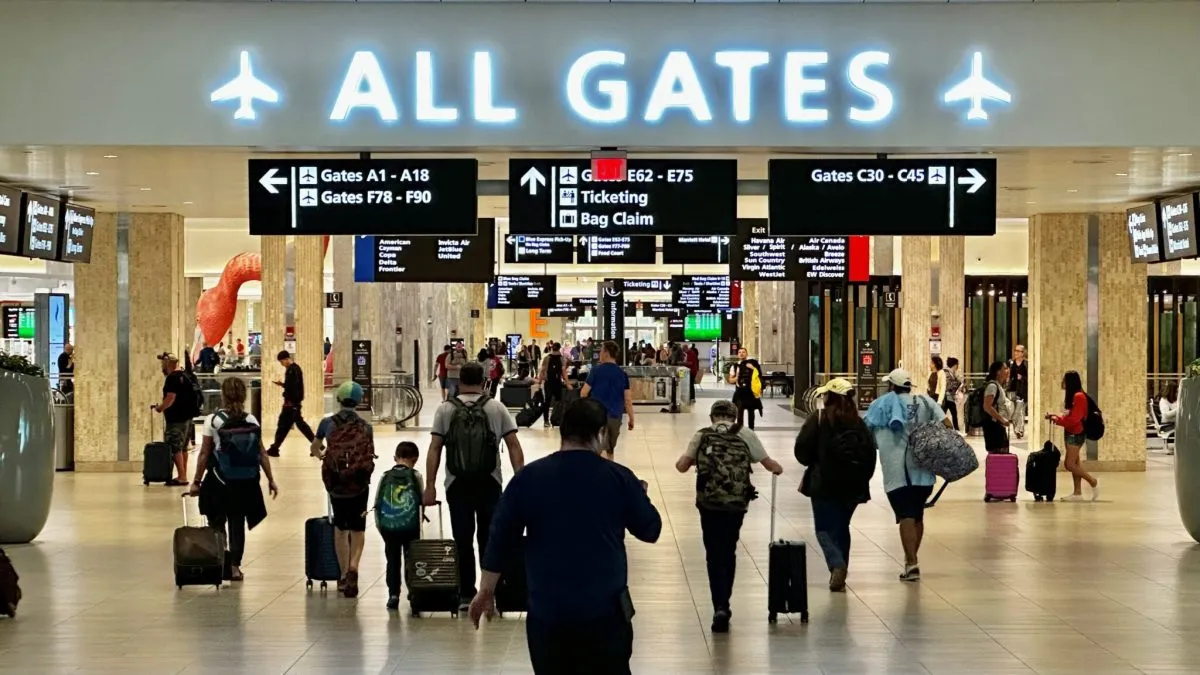
The Trump administration announced it would deploy agents from U.S. Immigration and Customs Enforcement (ICE) to major American airports starting Monday, in a direct response to the escalating staffing shortages within the Transportation Security Administration (TSA) that have severely strained security operations during the prolonged partial government shutdown. This unprecedented move aims to alleviate the burden on TSA personnel, who have been working without pay for weeks, leading to widespread absenteeism and significant disruptions at security checkpoints nationwide.
Context: The Government Shutdown’s Grip on Federal Operations
The deployment of ICE agents was a stark symptom of the deeper crisis engulfing the federal government. The partial government shutdown, which began on December 22, 2018, stemmed from a bitter political impasse between President Donald Trump and Congressional Democrats over funding for a wall along the U.S.-Mexico border. As negotiations stalled, approximately 800,000 federal employees were either furloughed or deemed essential and required to work without pay. Among the latter group were roughly 51,000 TSA officers, alongside customs and border protection agents, air traffic controllers, and Coast Guard personnel, all critical to national security and infrastructure.
The financial strain on these employees became increasingly severe with each passing pay period. Many federal workers, living paycheck to paycheck, struggled to meet basic expenses like rent, mortgages, and groceries. This economic hardship directly contributed to a significant increase in unscheduled absences, particularly within the TSA, where officers faced the unenviable choice between upholding their duties without compensation or seeking temporary employment or other means to support their families.
TSA Under Strain: A Critical Vulnerability
Weeks into the shutdown, reports of TSA staffing shortages grew from isolated incidents to a nationwide crisis. The agency, already operating on tight margins, saw its workforce depleted by a surge in "sickouts" – a euphemism for employees calling in sick due to financial distress or seeking alternative work – and outright resignations. Data released by the TSA revealed a sharp increase in unscheduled absences, with some reports indicating absence rates more than double the normal levels in certain regions. For instance, by early January, the national unscheduled absence rate for TSA officers had reportedly reached around 10%, compared to a typical rate of 3-4% during the same period in previous years.
This widespread absenteeism led to significant operational challenges at airports across the country. Passengers experienced unusually long security lines, sometimes exceeding two or three hours, particularly at major hubs like Atlanta Hartsfield-Jackson International Airport, Miami International Airport, Houston George Bush Intercontinental Airport, and New York’s LaGuardia Airport. In some extreme cases, entire security checkpoints or even terminals were forced to close due to insufficient staffing, disrupting travel plans for hundreds of thousands of passengers and raising concerns about the integrity of the nation’s aviation security apparatus. The closures and delays not only inconvenienced travelers but also had ripple effects on airline schedules, contributing to flight delays and cancellations, and incurring significant economic costs for the aviation industry.
The ICE Deployment: Scope and Rationale
In an attempt to mitigate these burgeoning issues, the Trump administration announced the deployment of ICE agents. Tom Homan, then the "border czar" and a former acting director of ICE, was tasked with overseeing the initiative. In an interview on CNN’s “State of the Union,” Homan outlined the specific role ICE agents would play. He clarified that ICE personnel would not be performing core security functions such as operating X-ray machines or conducting pat-downs, tasks for which they are not specifically trained. Instead, their primary role would be to assist with the flow of passengers at the exit points of security checkpoints.
"I don’t see an ICE agent looking at an X-ray machine because they’re not trained in that," Homan stated, emphasizing the supplementary nature of their deployment. "This is about helping TSA do their mission and get the American public through that airport as quick as they can while adhering to all the security guidelines." The rationale was that by having ICE agents manage the post-screening areas – ensuring passengers collect their belongings efficiently, directing them onward, and maintaining order – TSA agents could then focus exclusively on their specialized screening duties, thereby speeding up the overall process and reducing wait times. This, the administration argued, was a temporary but necessary measure to maintain security standards and passenger flow during an unprecedented crisis.
Official Reactions and Stakeholder Perspectives
The announcement of ICE deployment drew a swift and varied array of reactions from different stakeholders.
- Administration’s Defense: Officials from the Department of Homeland Security (DHS), under which both TSA and ICE operate, reiterated Homan’s stance, portraying the move as a prudent, collaborative effort to address a critical national security challenge. They emphasized that the agents were being deployed to support existing operations, not to supplant them, and that public safety remained the paramount concern. They also highlighted the flexibility of federal resources in times of crisis.
- TSA Employee Unions: The American Federation of Government Employees (AFGE), which represents a significant portion of TSA officers, expressed deep skepticism and concern. While acknowledging the severe staffing shortages, union leaders argued that deploying ICE agents was a "band-aid solution" that failed to address the root cause: the shutdown itself. They questioned the effectiveness of placing agents with different training and mission sets into airport security roles, even if limited to "exits." Furthermore, they voiced concerns about potential "mission creep," where ICE agents, whose primary role is immigration enforcement, might overstep their defined boundaries. Most importantly, the union reiterated its call for an immediate end to the shutdown and for federal employees to receive their back pay, arguing that only this would restore the morale and full operational capacity of the TSA workforce.
- Congressional Opposition: Democratic lawmakers and civil liberties advocates swiftly condemned the move. Many argued that the deployment of ICE agents, particularly given their agency’s controversial reputation regarding immigration enforcement, could create an intimidating atmosphere for travelers, especially those from minority communities or non-citizens. They raised concerns about potential racial profiling or an undue expansion of immigration enforcement activities into airport security checkpoints. Critics lambasted the administration for resorting to such measures rather than ending the shutdown, labeling it a politically motivated distraction from the core issue. Lawmakers also questioned the cost-effectiveness and true necessity of the deployment, suggesting it was more about optics than genuine operational improvement.
- Aviation Industry and Traveler Groups: Airlines and airport authorities, while deeply concerned about the economic impact of travel disruptions and the potential for compromised security, generally expressed a cautious welcome for any measure that promised to alleviate checkpoint delays. Their primary focus was on maintaining efficient operations and ensuring passenger confidence. Traveler advocacy groups, while sharing concerns about security and civil liberties, primarily echoed the public’s frustration with the long lines and called for an immediate resolution to the shutdown to restore normalcy to air travel.
Chronology of Escalation: The Shutdown’s Impact on Air Travel
- December 22, 2018: Partial government shutdown begins after funding negotiations collapse.
- Late December 2018: Initial reports emerge of increased unscheduled absences among TSA officers, primarily due to unpaid work.
- Early January 2019: Absenteeism rates at TSA checkpoints across the country escalate significantly, leading to longer wait times and isolated checkpoint closures at several major airports.
- Mid-January 2019: The situation worsens, with multiple airports reporting severe delays and, in some cases, entire terminals being forced to close security checkpoints due to critical staffing shortages. Airlines begin reporting flight delays and cancellations tied to TSA issues.
- January 13, 2019: The Trump administration announces the plan to deploy ICE agents to airports.
- January 14, 2019: ICE agents begin deployment to select U.S. airports, with a focus on high-traffic hubs most affected by TSA staffing shortages.
Implications: Security, Civil Liberties, and Operational Efficacy
The deployment of ICE agents carried significant implications across several critical domains:
- Security Concerns: While Homan stated ICE agents would not perform screening, their presence at security checkpoints, even in a supporting role, raised questions about the overall security posture. Critics argued that diverting agents from their primary immigration enforcement duties to an unfamiliar environment, even for seemingly simple tasks, could potentially create new vulnerabilities or dilute the focus of a highly specialized security process. The lack of specific TSA-mandated training for ICE agents in airport security protocols, even for exit management, was a point of contention.
- Civil Liberties and Public Trust: The most vocal opposition stemmed from civil liberties organizations and immigrant advocacy groups. The presence of ICE, an agency often associated with controversial immigration raids and enforcement actions, at airport security checkpoints sparked fears among minority communities and non-citizens about increased scrutiny, potential for profiling, and a general chilling effect on travel. The concept of "mission creep," where an agency’s mandate subtly expands beyond its original scope, was a significant concern, especially given the politically charged environment surrounding immigration. This could erode public trust in federal agencies and make travelers hesitant, even if the agents were ostensibly there to help.
- Operational Efficacy: The immediate effectiveness of the deployment in significantly reducing wait times was also a subject of debate. While additional personnel at checkpoints could theoretically improve passenger flow, the underlying issue of TSA officer fatigue, low morale, and the fundamental staffing deficit remained unaddressed. Critics questioned whether a relatively small number of ICE agents performing ancillary duties could truly offset the impact of thousands of unpaid and disillusioned TSA officers. It was viewed by many as a short-term, reactive measure rather than a sustainable solution to a systemic problem caused by the shutdown.
The Broader Political Landscape
This decision was not made in a vacuum; it was deeply intertwined with the broader political stalemate over border wall funding. The deployment of ICE agents, an agency central to the administration’s immigration agenda, underscored the President’s commitment to prioritizing border security, even as it created disruptions elsewhere. For the administration, it was a move to demonstrate proactive management of a crisis it attributed, in part, to the need for border security. For Democrats, it was another example of the administration’s heavy-handed tactics and a further illustration of the collateral damage inflicted by the shutdown. The situation intensified calls for a rapid resolution to the funding dispute, as the economic and operational costs of the shutdown continued to mount.
Looking Ahead: The Path to Resolution
The deployment of ICE agents served as a stark reminder of the cascading effects of the government shutdown, highlighting how a political dispute could ripple through various federal agencies and impact the daily lives of millions of Americans. While a temporary measure, it underscored the critical need for a stable and fully funded federal workforce to ensure national security and maintain essential public services. The long-term resolution, as most stakeholders agreed, lay not in inter-agency reassignments, but in an end to the government shutdown, allowing federal employees to return to work with the assurance of their pay and the full restoration of critical government functions. The incident became a significant point of discussion in the ongoing debate about federal worker compensation, national security priorities, and the proper utilization of law enforcement resources during periods of political gridlock.




 Anjar Salim
 Chandra Hamzah
 Budi Mulyono

