
 Anjar Salim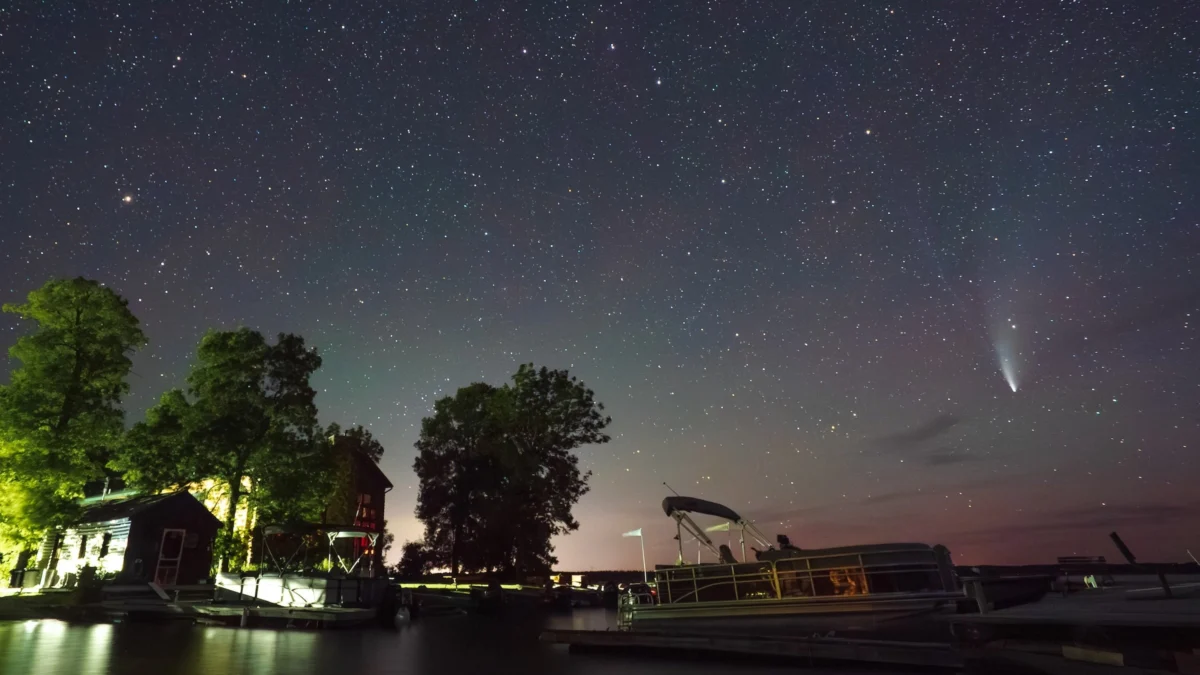
Astronomers and celestial enthusiasts across the globe are turning their gaze toward the inner solar system as a newly discovered comet, designated C/2026 A1 (MAPS), prepares for a high-stakes encounter with the sun in early April 2026. Discovered in January by a collaborative team of French astronomers, the object has been classified as a "sungrazer"—a rare and volatile category of comet that passes exceptionally close to the solar surface. Should the comet survive its upcoming perihelion, it may evolve into one of the most brilliant celestial displays of the decade, potentially achieving a visual magnitude comparable to the planet Venus.
The path of Comet MAPS is currently being monitored with a mixture of anticipation and caution. At its closest approach on April 4, the comet is projected to come within approximately 465,000 miles of the sun. To provide a terrestrial perspective, this distance is roughly equivalent to a round-trip journey between the Earth and the moon. While this proximity provides the thermal energy necessary to create a spectacular tail of ionized gas and dust, it also subjects the comet’s nucleus to extreme gravitational tidal forces and intense solar radiation, posing a significant risk of total fragmentation.
The Mechanics of a Sungrazing Comet
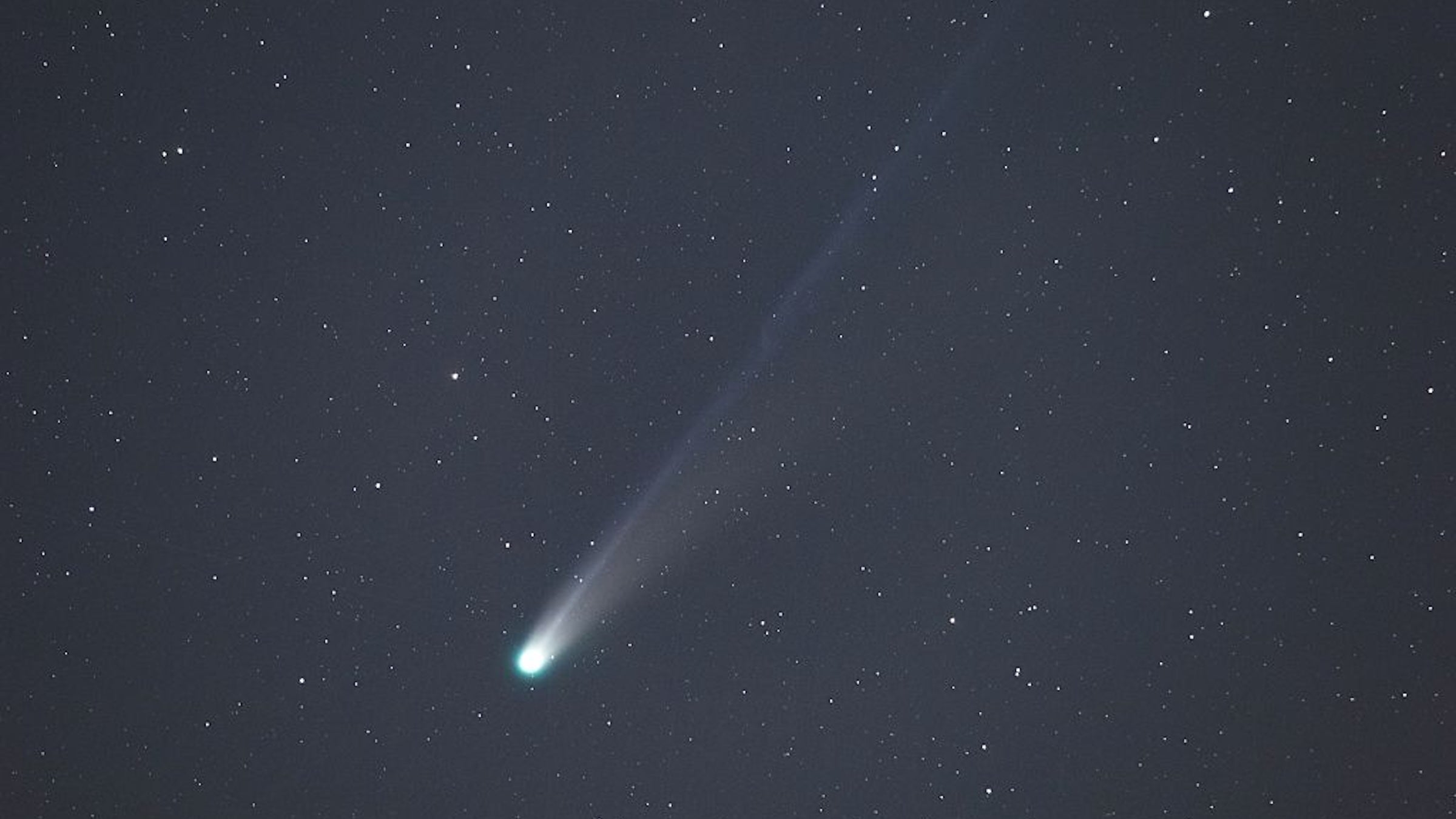
A comet is essentially a "dirty snowball" composed of frozen gases, rock, and interstellar dust. As these objects approach the sun, a process known as sublimation occurs, where ices transition directly into gas. This creates the coma—a nebulous envelope around the nucleus—and the iconic tails that point away from the sun. For a sungrazer like C/2026 A1, this process is accelerated to a violent degree.
The classification of "sungrazer" is generally reserved for comets that pass within 850,000 miles of the sun. Comet MAPS is expected to penetrate deep within this zone. Historically, many sungrazers belong to the Kreutz group, a family of comets believed to be fragments of a single giant comet that broke apart centuries ago. While the exact lineage of C/2026 A1 is still being analyzed, its survival depends heavily on the size and structural integrity of its nucleus.
Preliminary estimates from astronomical observations suggest that Comet MAPS possesses a nucleus approximately 2 kilometers (1.2 miles) in diameter. This size is a critical factor; larger comets have a significantly higher probability of surviving the sun’s heat without completely evaporating or breaking into smaller, invisible fragments. Eric Gustafson, a senior educator at the Saint Louis Science Center’s James S. McDonnell Planetarium, notes that while many sungrazers are small and vanish during perihelion, the 2-kilometer estimate for MAPS offers a genuine "chance of surviving perihelion" and perhaps achieving "Great Comet" status.
Timeline of the Celestial Event
The window for observing Comet MAPS is narrow and highly dependent on its structural survival. Astronomers have outlined a specific chronology for the event:
- Late March 2026: The comet continues its approach, increasing in brightness but remaining difficult to see without professional-grade telescopes due to its proximity to the solar glare.
- April 4, 2026 (Perihelion): The comet reaches its closest point to the sun. This is the moment of maximum peril and maximum potential brightness. Some models suggest it could reach an apparent magnitude of -4, which would make it visible even during daylight hours, though observing it at this stage is extremely dangerous without specialized solar filters.
- April 5–10, 2026: If the nucleus remains intact, the comet will emerge from the sun’s glare. This is the primary window for evening observers.
- Mid-April 2026: The comet will begin its journey back into the outer solar system, gradually fading in brightness as it moves away from the sun’s heat.
Hemispheric Visibility and Observation Challenges
The viewing prospects for Comet MAPS vary significantly based on the observer’s geographic location. Currently, orbital calculations indicate that the Southern Hemisphere will enjoy the most favorable viewing conditions. In regions such as Australia, South Africa, and South America, the comet is expected to appear higher in the sky during the twilight hours following perihelion.
For observers in the Northern Hemisphere, including the United States, the comet will remain much lower on the horizon. According to data from the stargazing application Star Walk, the comet will appear just above the southwest horizon at dusk. This positioning means that even if the comet is exceptionally bright, it may be obscured by terrain, buildings, or the thick atmosphere near the horizon.
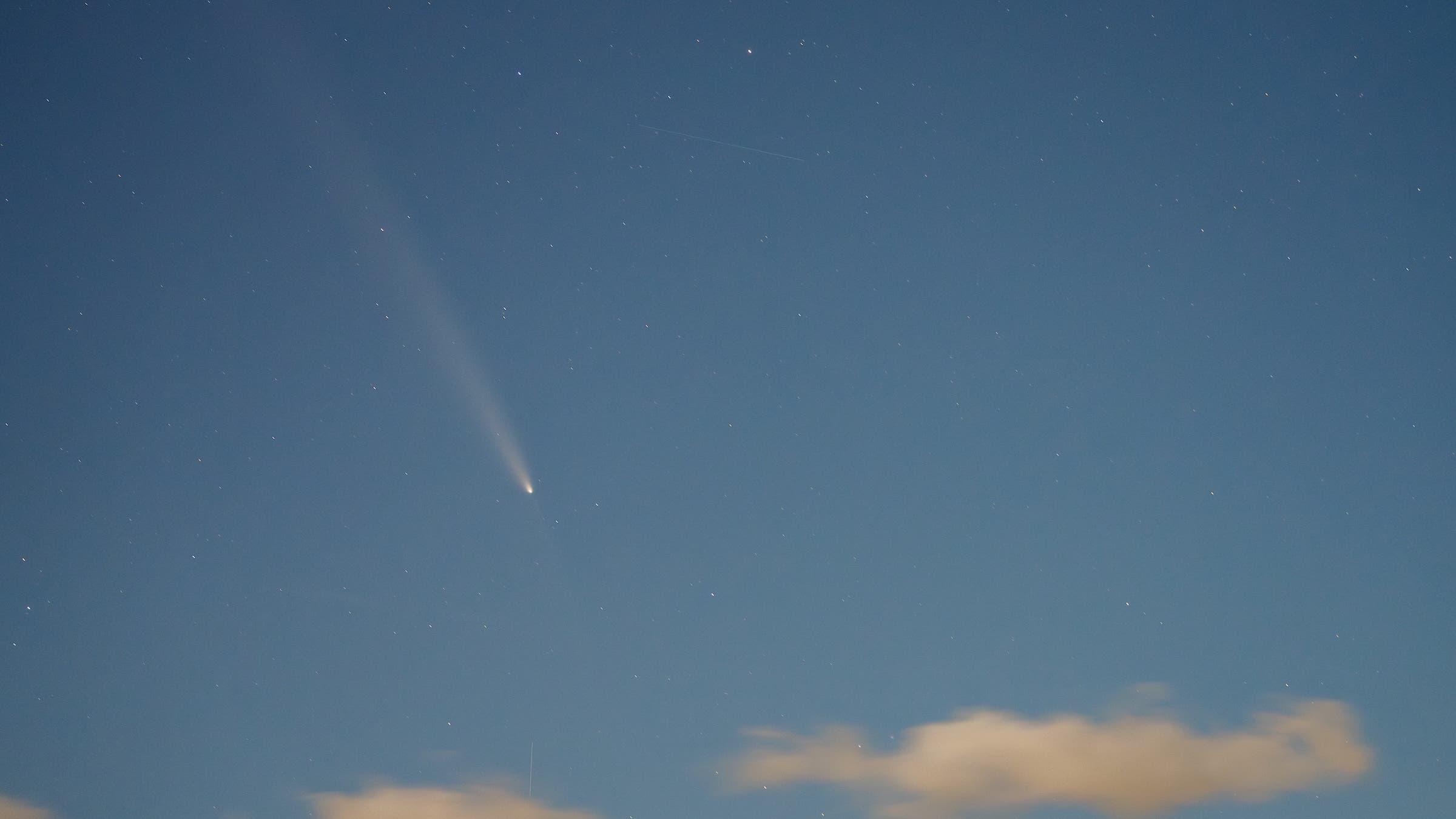
However, there remains a significant "wild card" that could benefit northern observers: the tail. "The one hope we have for seeing this comet is, if it behaves like other great comets of the past, they often develop extremely long tails that can stretch over 40 degrees of the night sky," says Gustafson. A 40-degree tail—larger than the span of the Big Dipper—would rise high enough into the dark sky to be visible even if the comet’s head (the nucleus) remains tucked near the horizon.
Historical Context: From NEOWISE to Tsuchinshan-ATLAS
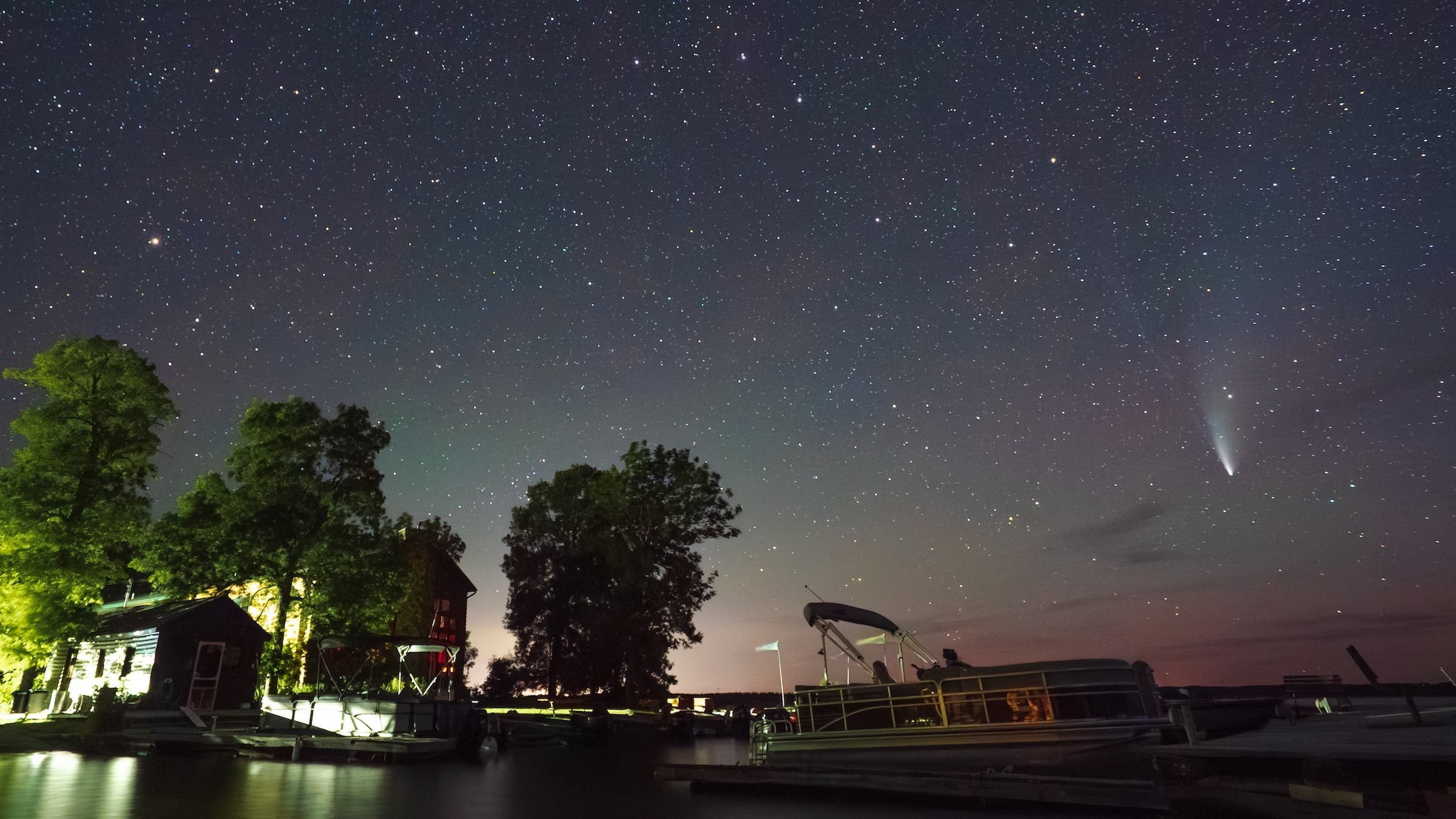
The excitement surrounding C/2026 A1 (MAPS) is fueled by recent memories of other significant comets. In 2020, Comet NEOWISE provided a rare naked-eye spectacle for the Northern Hemisphere during the height of the summer. More recently, in 2024, Comet Tsuchinshan-ATLAS captivated the world with its brilliant coma and long, dusty tail.
Comparisons to these previous events are inevitable. While NEOWISE was a "long-period" comet that didn’t pass nearly as close to the sun as MAPS will, its survival and subsequent brightness set a benchmark for public interest. If MAPS survives its 465,000-mile "haircut" past the sun, its proximity ensures a level of activity and brightness that could surpass both NEOWISE and Tsuchinshan-ATLAS, provided the nucleus does not succumb to the immense thermal stress.
Scientific and Public Engagement
The discovery of C/2026 A1 underscores the importance of international cooperation in planetary defense and astronomical surveys. The French team that identified the object utilized wide-field imaging to spot the faint smudge of the comet months before its arrival in the inner solar system. For the scientific community, the passage of a sungrazer provides a unique opportunity to study the composition of the early solar system, as the sun’s heat "bakes" the comet and reveals materials that have been frozen for billions of years.
For the general public, the event serves as a reminder of the dynamic nature of our cosmos. To maximize the chances of a successful sighting, experts recommend finding a location with an unobstructed view of the southwest horizon. Utilizing light pollution maps to find "dark sky" sites—such as the Oregon Outback or Big Bend National Park—will significantly improve the visibility of the comet’s faint tail.
Premier North American Facilities for Comet Observation
While many will attempt to view Comet MAPS from their backyards, several world-class observatories across the United States offer public programs and advanced instrumentation that provide a superior viewing experience.
Kitt Peak National Observatory (Arizona)
Located in the Quinlan Mountains outside Tucson, Kitt Peak is home to one of the largest arrays of optical telescopes in the world. The observatory’s Nightly Observing Program allows visitors to view deep-sky objects through high-caliber telescopes. Its high elevation and dry desert air provide the atmospheric clarity necessary to spot faint cometary tails.
Griffith Observatory (California)
An iconic landmark in Los Angeles, Griffith Observatory has a storied history of comet observation. It famously hosted more observers for Halley’s Comet in 1986 than any other site on Earth. Its Zeiss refracting telescope is open to the public for free viewing on clear nights, offering an accessible way for urban dwellers to participate in the event.
McDonald Observatory (Texas)
Situated in the Davis Mountains of West Texas, McDonald Observatory benefits from some of the darkest skies in the lower 48 states. The facility’s "Star Parties" are renowned for their educational value, and its location makes it an ideal spot for viewing objects low on the southwest horizon, such as Comet MAPS.
Saint Louis Science Center (Missouri)
The James S. McDonnell Planetarium serves as a hub for Midwestern astronomy. Through monthly star parties and pop-up events, the center provides the public with access to high-quality telescopes and expert narration, making it an excellent resource for those in the central United States.
Sunriver Nature Center & Observatory (Oregon)
This NASA-affiliated facility in Central Oregon offers a "hands-on" approach with over a dozen telescopes available for public use. Its location in a recognized Dark Sky Place ensures that the subtle glow of a comet’s coma won’t be lost to city lights.
Adirondack Sky Center and Observatory (New York)
For those in the Northeast, the Adirondack Sky Center in Tupper Lake offers a rare escape from the light pollution of the Eastern Seaboard. The center provides free public stargazing, focusing on providing residents of the New York area a clear window into the solar system.
Conclusion: A Celestial Gamble
The fate of Comet C/2026 A1 (MAPS) remains one of the great unknowns of the 2026 calendar. Like all sungrazers, it is a high-risk, high-reward object. If it disintegrates, it will leave behind nothing more than a cloud of dust visible only to solar-monitoring satellites. If it survives, however, the world may be treated to a "Great Comet" that rivals the brightest stars and planets, leaving a lasting mark on the history of 21st-century astronomy. For now, scientists and stargazers alike can only wait, monitor the data, and keep their eyes on the southwestern sky.




 Chandra Hamzah
 Tatiana Tantri Indah Sari
 Budi Mulyono

