Tatiana Tantri Indah Sari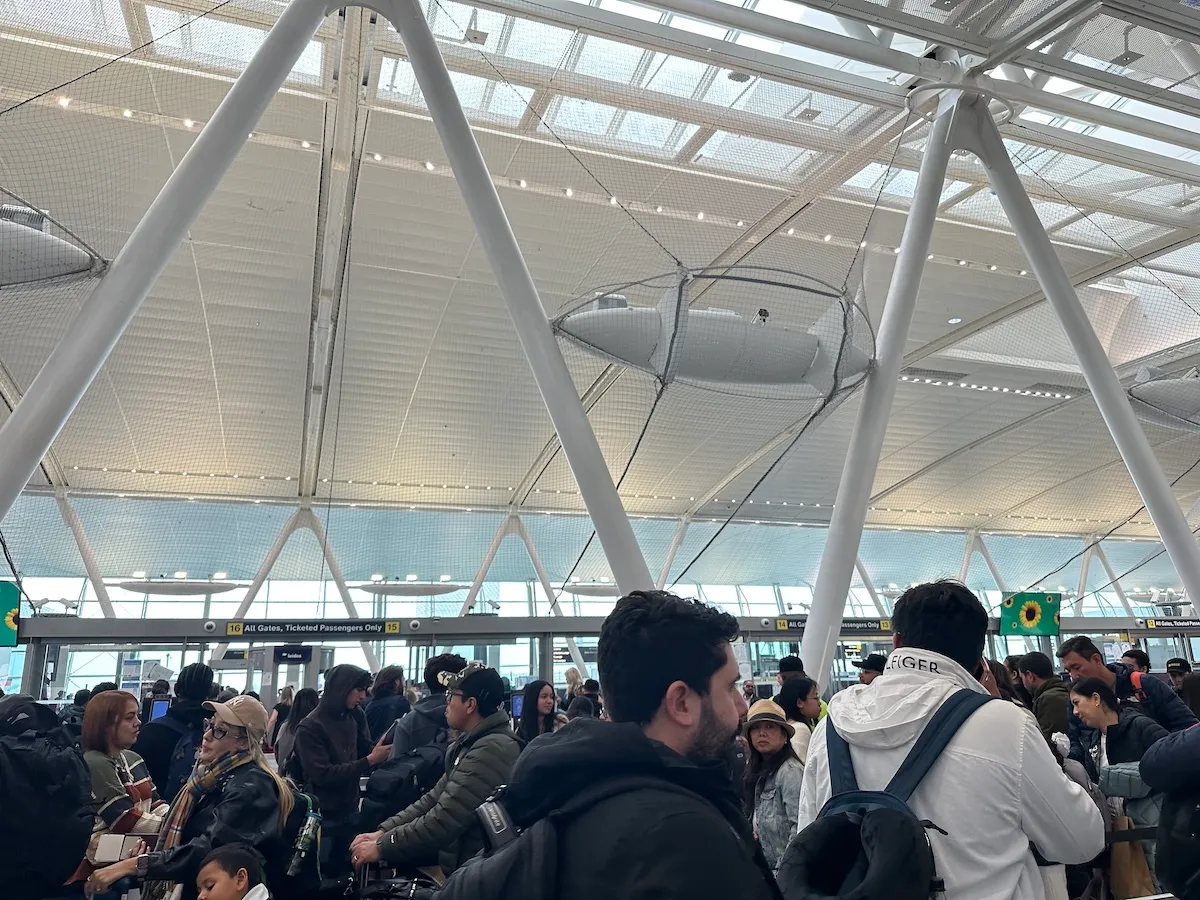
Multiple major U.S. airports have ceased publishing real-time security wait times online, a decision prompted by severe Transportation Security Administration (TSA) staffing shortages that have caused queues to extend into baggage claim areas and even parking garages. This unprecedented move underscores a growing crisis impacting air travel nationwide, with passengers experiencing waits stretching for hours, leading to missed flights and significant operational disruptions for airlines. The situation escalated on Monday when the Trump administration deployed agents from U.S. Immigration and Customs Enforcement (ICE) to assist with security functions at over a dozen airports across the country, though initial observations and social media reports suggested their presence did not alleviate the extensive delays.
New York’s John F. Kennedy International Airport (JFK) was among the first to confirm the suspension of its wait-time reporting system on Monday morning, citing the dynamic and unpredictable nature of the queues that were consistently exceeding two to three hours. This move by major travel hubs signals a critical breakdown in normal airport operations and raises questions about the resilience of the nation’s air travel infrastructure under sustained pressure.
Escalating Crisis: A Chronology of Delays
The current wave of severe TSA staffing shortages did not emerge overnight but rather represents the culmination of several weeks of escalating challenges. The situation began to deteriorate noticeably in late December and early January, coinciding with a partial government shutdown that impacted various federal agencies, including the Department of Homeland Security, under which the TSA operates. Although TSA officers were deemed essential personnel and mandated to work without pay during the shutdown, the prolonged period of uncertainty and financial strain led to a significant increase in call-outs and sick leaves.
By mid-January, reports from major airports such as Atlanta Hartsfield-Jackson (ATL), Chicago O’Hare (ORD), Los Angeles International (LAX), and Dallas/Fort Worth (DFW) began to indicate longer-than-average wait times, with some terminals consistently seeing queues exceeding an hour. The issue was initially attributed to the peak holiday travel season combined with the early effects of staffing attrition. However, as the shutdown persisted, the situation worsened dramatically.
The week leading up to Monday saw a critical point reached. On Friday, internal TSA memos, later leaked to the press, highlighted a 200% increase in unscheduled absences compared to the same period the previous year. This surge, combined with a pre-existing shortage of approximately 1,000 officers nationwide, created a perfect storm. Airports, particularly those with high passenger volumes and multiple terminals, began struggling to maintain even a semblance of efficiency.
On Sunday, reports surfaced from several major hubs of wait times consistently exceeding 90 minutes, with peak periods pushing past two hours. This prompted preliminary discussions among airport authorities and airline representatives about potential mitigation strategies. The decision to deploy ICE agents, announced over the weekend, was reportedly an effort by the administration to provide additional personnel where possible, though the specific roles these agents would undertake remained a point of contention and confusion.
Monday marked the formal recognition of the crisis’s severity. As travelers arrived for early morning flights, they were met with scenes of chaos: lines snaking through ticketing areas, merging with baggage claim, and in some instances, extending beyond terminal entrances. It was on this day that JFK, followed shortly by Newark Liberty International (EWR), LaGuardia (LGA), and subsequently several other major airports, decided to suspend their online wait-time reporting systems. The official reasoning cited was the "inability to provide accurate, real-time data due to the fluid and unprecedented nature of the queues." Unofficially, sources suggested that publishing wait times of three hours or more was causing panic and exacerbating the situation.
Supporting Data Illuminates the Scale of the Problem
The anecdotal evidence of long lines is corroborated by a range of data points that underscore the systemic challenges facing the TSA. Prior to the current crisis, the TSA aimed for a standard wait time of 30 minutes or less for standard lanes and 10 minutes or less for TSA PreCheck. Data from the first week of February, however, indicated average wait times at the nation’s 30 busiest airports had surged to 75 minutes for standard lanes, with many individual checkpoints experiencing durations far exceeding this average. At peak times, some airports reported individual checkpoint wait times of up to 210 minutes.
Internal TSA figures revealed that approximately 10% of the agency’s 51,000-strong frontline workforce was experiencing unscheduled absences during the height of the crisis, a figure significantly higher than the typical 3-4% for this period. This translates to over 5,000 officers either calling out sick or not reporting for duty. Furthermore, reports indicated a noticeable increase in attrition rates among newer officers, suggesting that the strain was impacting recruitment and retention efforts.
Passenger volume further compounds the problem. According to the Bureau of Transportation Statistics, U.S. airports processed an average of 2.3 million passengers daily in the preceding months. Even a marginal increase in processing time per passenger, when multiplied by millions, results in exponentially longer queues. For instance, if an average security check takes an additional 60 seconds per passenger due to understaffing, a checkpoint processing 1,000 passengers per hour would see a cumulative delay of 1,000 minutes, or over 16 hours, for that hour’s throughput.
Economically, the impact is substantial. The U.S. Travel Association estimates that for every hour of delay, the travel industry incurs tens of millions of dollars in lost productivity, missed connections, and rebooking fees. Airlines reported an increase in delayed and cancelled flights directly attributable to passengers missing their boarding times due to security queues, leading to significant financial penalties and operational costs. One major carrier estimated that the delays at its primary hubs alone were costing it upwards of $5 million per day in re-routing, re-accommodations, and lost revenue.
Official Responses and Mitigation Efforts
The crisis has elicited a flurry of responses from various stakeholders, each attempting to address the immediate challenges or articulate their positions.
TSA Leadership: David Pekoske, the Administrator of the TSA, acknowledged the "unprecedented challenges" facing the agency. In a press conference, he stated, "We are working tirelessly to minimize the impact on the traveling public while maintaining our absolute commitment to security." He detailed several mitigation strategies, including authorizing significant overtime hours for active officers, redeploying non-frontline personnel who hold security clearances to assist with non-screening functions (such as bin retrieval or queue management), and initiating expedited hiring processes. Pekoske emphasized that despite the delays, security protocols were not being compromised, asserting that "every passenger and every bag is undergoing the full security screening process." He also appealed to the public for patience and understanding, urging travelers to arrive at airports significantly earlier than recommended.
Airport Authorities: Major airport operators expressed profound concern over the situation. Rick Cotton, Executive Director of the Port Authority of New York and New Jersey, which operates JFK, EWR, and LGA, stated, "The decision to suspend wait time reporting was not taken lightly, but it became impossible to provide accurate, meaningful data to the public given the constantly shifting and extended queues." He called upon federal authorities to urgently resolve the staffing crisis, highlighting the negative impact on the region’s economy and reputation as a global travel hub. Many airports also deployed their own customer service representatives to assist passengers navigating the labyrinthine lines and provided free water and snacks to those waiting.
Airline Industry: Airlines, bearing the brunt of passenger frustration and operational disruptions, vocally called for immediate federal intervention. Nicholas Calio, President and CEO of Airlines for America (A4A), an industry trade organization, issued a statement urging the administration and Congress to "swiftly resolve the staffing crisis that is severely impacting our passengers and our operations." He noted a significant increase in passengers missing flights, leading to delays across their networks. "The current situation is unsustainable," Calio stated, emphasizing the economic damage and the erosion of traveler confidence. Several airlines also began waiving change fees for passengers who could demonstrate they missed their flights due to excessive security wait times.
Department of Homeland Security (DHS) and the Administration: The deployment of ICE agents by the Trump administration was a notable response. A spokesperson for DHS clarified that the ICE agents were not replacing TSA officers in security screening roles but were instead being utilized for "non-security, mission-support functions" such as monitoring entry and exit points, managing crowds, and providing general assistance. This was framed as an effort to free up TSA-certified officers to focus solely on screening. However, critics questioned the effectiveness and appropriateness of this deployment, pointing out that ICE agents lack specific TSA training for checkpoint operations. The administration maintained that it was exploring all available options to alleviate the pressure on the federal workforce.
Congressional Reaction: The situation quickly garnered attention on Capitol Hill. Several members of Congress, particularly those representing districts with major airports, expressed alarm. Representative Bennie Thompson (D-MS), Chairman of the House Homeland Security Committee, announced plans for immediate oversight hearings, stating, "This crisis is a direct result of the administration’s policies and is jeopardizing both national security and the economy. We need answers and a clear plan of action." Calls for a permanent funding solution for federal agencies and a review of TSA staffing levels intensified.
Broader Impact and Implications
The ongoing TSA staffing crisis and the resulting airport chaos carry significant broader implications, extending beyond mere inconvenience for travelers.
Economic Ramifications: The disruption to air travel has a ripple effect across the economy. Businesses reliant on timely travel for meetings, conferences, or logistics face increased costs and reduced productivity. The tourism sector, a significant contributor to the U.S. economy, could see a decline if potential visitors are deterred by the prospect of hours-long waits and missed connections. The perception of an unreliable travel infrastructure can damage international business and tourism.
Operational Strain on Airlines: Airlines operate on tight schedules, and delays at one airport can cascade throughout their entire network. Missed connections lead to passengers being rebooked, often requiring overnight stays, which strains airline customer service and incurs additional costs for accommodations and meal vouchers. Crew scheduling is also affected, potentially leading to additional delays if pilots and flight attendants exceed their legal duty limits. The efficiency of the global air cargo network, which relies on passenger flights for much of its capacity, is also disrupted.
Passenger Confidence and Well-being: The psychological toll on travelers is considerable. The stress of potentially missing a flight, the physical discomfort of standing in long lines for hours, and the uncertainty of the situation can erode public trust in the air travel system. For vulnerable populations, such as families with young children, elderly passengers, or individuals with disabilities, these extended waits can pose significant health and logistical challenges. The decision by airports to suspend wait time reporting, while perhaps pragmatic from an operational standpoint, can also fuel anxiety and a sense of being uninformed among travelers.
Security Concerns (Perceived vs. Actual): While TSA officials maintain that security standards are not being compromised, the public perception can be different. Extended wait times and a visibly strained workforce can create a sense of vulnerability, regardless of the actual protocols in place. Furthermore, a fatigued workforce, even if fully compliant with procedures, might be perceived as having a higher potential for human error. The deployment of ICE agents, while intended to assist, also sparked debates about the appropriate allocation of resources and expertise in a complex security environment.
Political and Governance Implications: The crisis has become a significant political flashpoint, highlighting debates over federal funding, government efficiency, and the management of critical national infrastructure. It puts pressure on the administration to demonstrate effective governance and on Congress to find bipartisan solutions to prevent future occurrences. The long-term implications could include calls for structural reforms within the TSA, including staffing models, compensation structures, and contingency planning for future government shutdowns or similar crises.
In conclusion, the decision by major U.S. airports to cease online security wait time reporting is a stark indicator of a system under severe stress. Driven by profound TSA staffing shortages, the crisis has created unprecedented delays, disrupted air travel on a national scale, and ignited a broad debate among federal agencies, airport authorities, airlines, and the traveling public about the future resilience and efficiency of the nation’s aviation security framework. The coming weeks will be crucial in determining whether the mitigation efforts can stabilize the situation and restore public confidence in air travel.

 Chandra Hamzah
 Gabriela Annisa
 Budi Mulyono
 Anjar Salim