
 Budi Mulyono
The World of Hyatt loyalty program is currently undergoing a period of significant transition, leading analysts to recalibrate the baseline value of its rewards currency. According to the latest data from Frequent Miler’s Reasonable Redemption Value (RRV) database, the estimated value of a Hyatt point has been adjusted to 1.7 cents per point (cpp). This update comes at a critical juncture for the hospitality giant, which recently announced a comprehensive restructuring of its award pricing model set to take effect in May 2026. This new five-tier award chart is expected to introduce substantial volatility into the redemption landscape, with maximum point requirements for certain properties projected to rise by as much as 67%.
The adjustment to 1.7 cents represents a slight decrease from previous estimates, a shift largely attributed to the integration of the Mr. & Mrs. Smith (MMS) portfolio and the expansion of the Inclusive Collection. While Hyatt remains one of the most valuable currencies in the travel industry—often doubling the value of competitors like Marriott Bonvoy or Hilton Honors—the data suggests that recent brand acquisitions are exerting downward pressure on the program’s overall median value.
The 2026 Mayday Transition: A Chronology of Change
The hospitality industry is closely monitoring Hyatt’s upcoming shift to a five-tier award chart. Historically, Hyatt has utilized a relatively transparent category-based system with standard, off-peak, and peak pricing. However, the move scheduled for May 2026 signifies a pivot toward greater pricing flexibility for hotel owners, a move often referred to in the industry as "dynamic-lite" pricing.
In the immediate term, Hyatt’s annual category changes are scheduled to take effect next month. Early indicators suggest a trend toward upward movement, with a higher volume of properties ascending to more expensive categories than those descending. This serves as a precursor to the 2026 overhaul. Analysts have established the current 1.7-cent valuation as a pre-change baseline to measure the true impact of these devaluations over the coming 12 to 24 months.
The 2026 chart will allow properties to charge significantly more during high-demand periods. For consumers, this represents a potential erosion of the "sweet spot" redemptions that have long made Hyatt the preferred program for loyalty enthusiasts. Hyatt management has defended the move, citing the need to provide property owners with better compensation during peak occupancy periods when cash rates are exceptionally high.
Data-Driven Methodology: The Gondola Analysis
To reach the 1.7-cent valuation, analysts utilized a massive dataset provided by Gondola, a hotel search and analytics platform. The study encompassed over 560,000 domestic and international award searches across nearly 2,000 World of Hyatt properties. By comparing real-world cash prices (inclusive of taxes and fees) with point requirements for the same rooms, the analysis provides a statistically significant snapshot of the program’s current worth.
A key differentiator in this methodology is the treatment of resort fees. Unlike several major competitors, Hyatt waives resort and destination fees on all award stays. To ensure an "apples-to-apples" comparison with cash stays—where these fees are mandatory—the analysis utilized the "Total Cash Rate." This approach highlights a hidden value in the Hyatt program; at properties in high-fee markets like Las Vegas, Hawaii, or New York City, the waiver of a $50-per-night resort fee can single-handedly elevate the redemption value by several tenths of a cent.
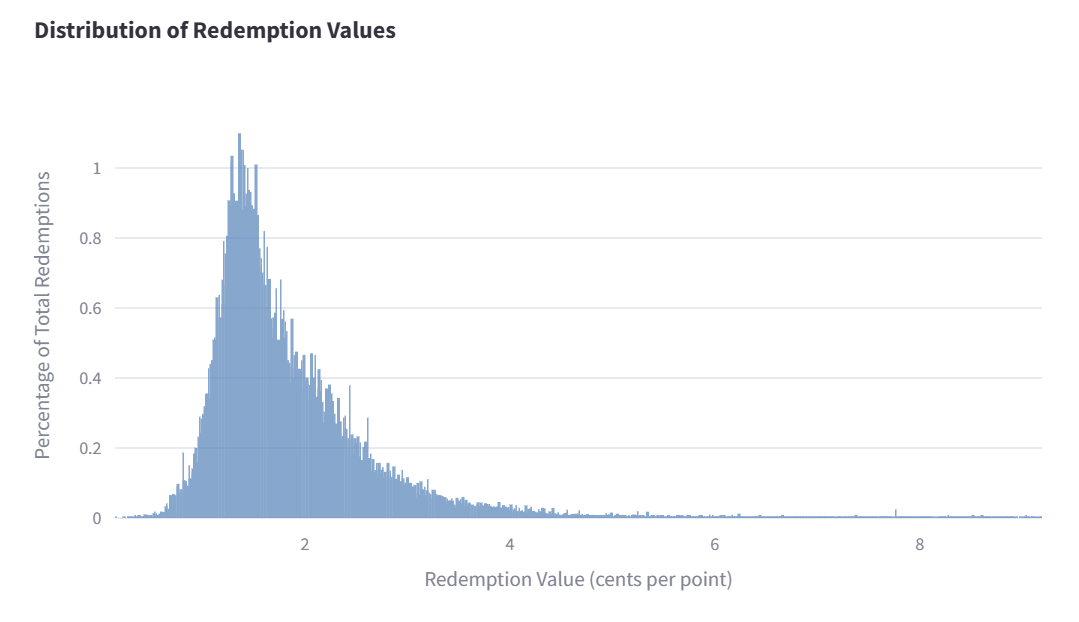
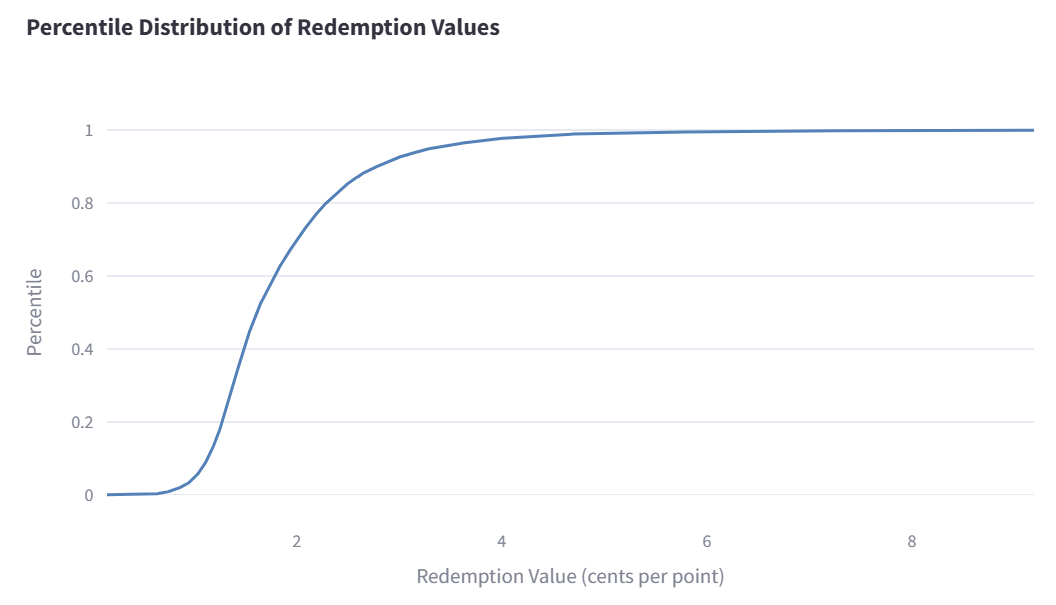
The resulting distribution of data shows that while the median (50th percentile) sits at 1.7 cents, there is a wide variance in potential value. For travelers who "cherry-pick" their redemptions—booking only when the point-to-cash ratio is favorable—the 75th percentile of data suggests a value of 2.2 cents per point is readily achievable.
Brand Disparity and the "Smith" Effect
One of the most revealing aspects of the Gondola dataset is the performance variance across Hyatt’s diverse brand portfolio. The data confirms a growing divide between Hyatt’s "legacy" brands and its newer, third-party integrations.
Legacy brands, including Park Hyatt, Grand Hyatt, Hyatt Regency, and the limited-service Hyatt Place, continue to perform strongly. These brands consistently yield median values above the 1.7-cent mark. In contrast, the integration of the Mr. & Mrs. Smith platform and certain all-inclusive brands within the Inclusive Collection has dragged the overall average down.
Mr. & Mrs. Smith properties and some all-inclusive resorts frequently yield redemptions in the 1.25 to 1.5-cent range. Analysts noted that removing Mr. & Mrs. Smith data alone would increase the overall Hyatt RRV by approximately 8%. This disparity suggests that while Hyatt has successfully expanded its global footprint through these partnerships, the redemption economics for these boutique and partner properties are less favorable for the consumer than traditional Hyatt-managed hotels.
Impact of Redemption Tiers and Geographic Trends
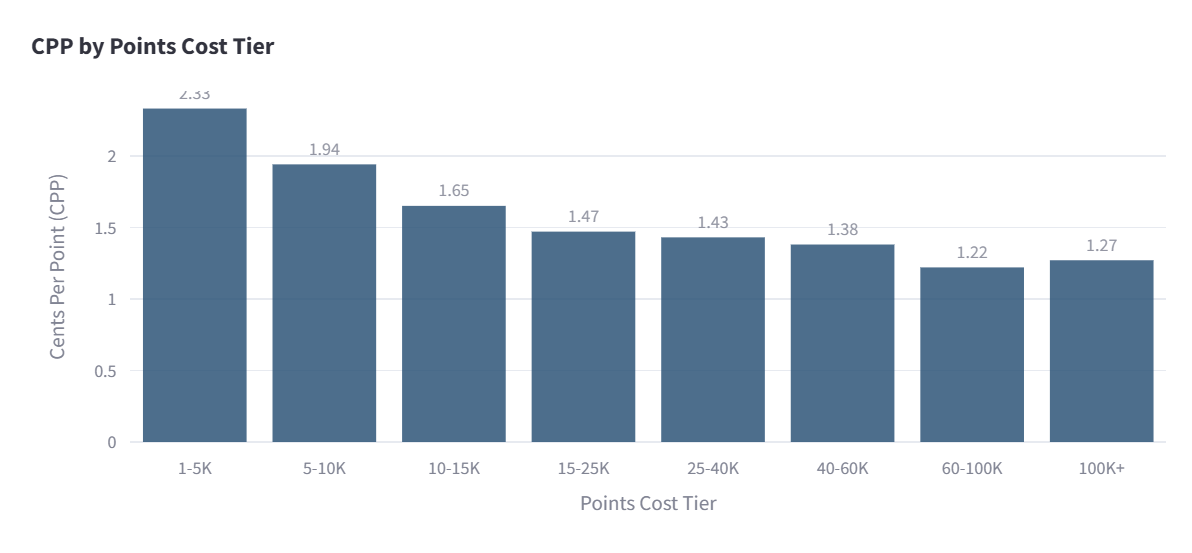
The value of Hyatt points is also heavily influenced by the "category" or point-cost of a stay. The analysis indicates that lower-category hotels (Categories 1 through 4) offer the highest relative value. This is partly because the cash rates for budget and mid-tier properties often remain high relative to the low point requirements.
As the point cost increases, the redemption value tends to stabilize or dip, particularly at the 60,000-point-per-night level and above. This tier is dominated by high-end Mr. & Mrs. Smith properties, which, as established, offer lower average value.
Geographically, the data shows distinct trends:
- Domestic and High-Density International Cities: Markets like Tokyo, London, and Cabo San Lucas show values significantly higher than the worldwide average. These cities feature a high concentration of Hyatt-branded properties where the program’s traditional award chart remains highly effective.
- Resort-Heavy Markets: Destinations like Cancun, which are saturated with all-inclusive properties, tend to show lower median values.
- Boutique Markets: International cities where Hyatt’s presence is primarily through Mr. & Mrs. Smith see lower-than-average point values, mimicking the brand-specific trends.
Elite Status and the Globalist Factor
For World of Hyatt elite members, the "worth" of a point is a more complex calculation. Because elite members (Discoverist, Ambassador, and Globalist) earn bonus points on paid stays, the "opportunity cost" of using points instead of cash is higher.
For a top-tier Globalist member earning a 30% point bonus on cash stays, the relative value of a point is slightly lower than for a non-status member. However, this is often offset by tangible benefits. Globalist members receive free parking on award stays—a benefit not extended to paid stays at many urban properties. When parking fees of $50 to $80 per night are factored into the equation, the value proposition for high-tier elites often exceeds the 1.7-cent baseline despite the higher opportunity cost.
The Transfer Partner Relationship: Chase Ultimate Rewards
The valuation of Hyatt points has broader implications for the credit card industry, specifically regarding Chase Ultimate Rewards. Currently, Chase points carry a Reasonable Redemption Value of 1.5 cents, while Hyatt sits at 1.7 cents.
Given that Chase points transfer 1-to-1 to Hyatt, a logical paradox arises: how can the "source" currency be worth less than the "target" currency? Analysts explain this through the lens of "reasonable" expectations. While Chase points can be transferred to Hyatt to achieve 1.7 cents or more, they are also frequently used for airline transfers or travel portal bookings where 1.5 cents is a more common baseline. The 1.7-cent Hyatt RRV reflects what a user can reasonably expect when they have already committed to the Hyatt ecosystem.
Implications and Future Outlook
The transition toward a more flexible award chart in 2026 suggests that Hyatt is moving away from the "outsized value" model that made it a darling of travel hackers. By allowing prices to rise significantly during peak periods, Hyatt is effectively capping the maximum value a traveler can extract from their points during high-demand holidays or major events.

Industry experts anticipate that the coming year will see a "rush to redeem" as savvy travelers attempt to lock in current rates before the May 2026 changes. The upcoming category shifts next month will serve as the first major test of the program’s stability.
For the average consumer, the message remains clear: while Hyatt points are still among the most valuable assets in a travel portfolio, their value is increasingly dependent on "where" and "what" you book. The era of universal high-value redemptions across all brands is fading, replaced by a more nuanced landscape where legacy Hyatt hotels remain the gold standard, and new integrations require more careful mathematical scrutiny. Analysts will continue to monitor the 1.7-cent baseline as the 2026 "Mayday" overhaul approaches, providing a data-driven look at one of the most significant shifts in hotel loyalty history.




 Chandra Hamzah
 Tatiana Tantri Indah Sari
 Anjar Salim

