
 Anjar Salim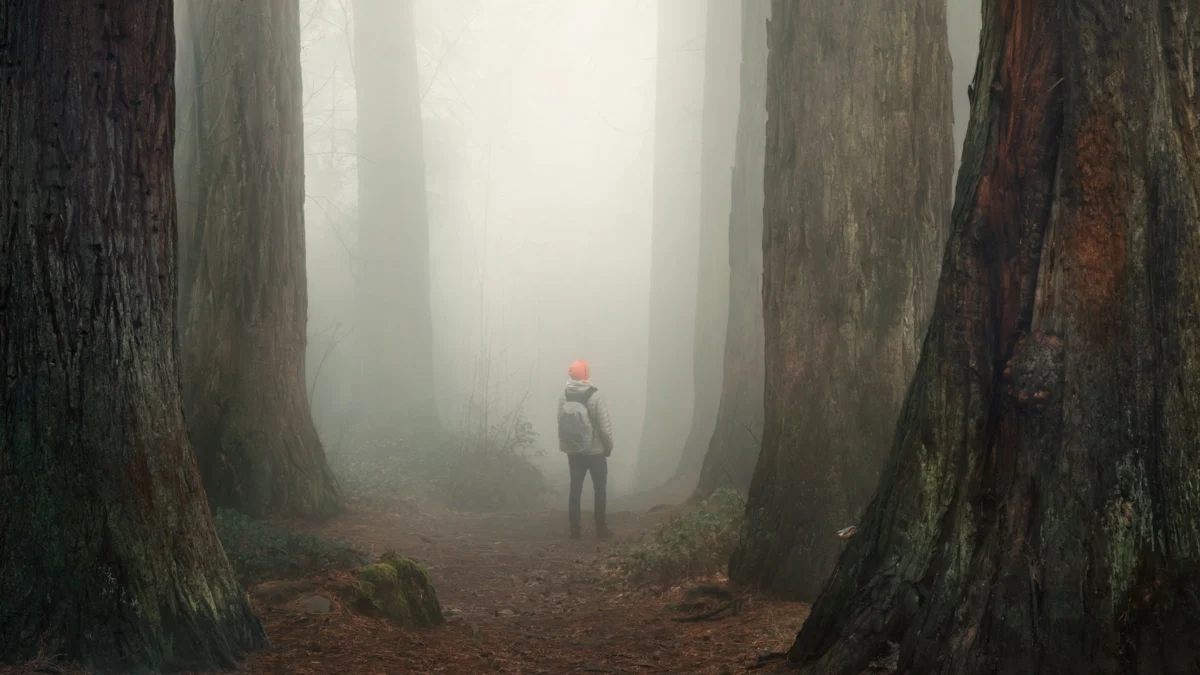
A 71-year-old hiker, who had been missing for three days in the dense, rugged backcountry of Northern California, was successfully rescued on March 18, 2026, after a fortuitous encounter with a local tour group. The woman, whose identity has been withheld by authorities, survived without food, water, or adequate supplies in the Jackson Demonstration State Forest, a remote region known for its towering redwoods and treacherous terrain. Her discovery by guides from the Skunk Train, a historic rail excursion company, ended a multi-day search and rescue operation that had mobilized local law enforcement and volunteers across Mendocino County.
The Discovery at Camp Noyo
The rescue unfolded during a routine excursion led by Skunk Train railbike guides near Camp Noyo, a remote campground situated deep within the redwood forest. Xochitl Villa, a guide for the company’s electric railbike tours, reported that the discovery occurred while the group was pausing for lunch. The silence of the forest was broken by the sound of a woman crying out for assistance.
According to Villa’s account provided to the San Francisco Chronicle, the hiker was found in a state of extreme distress and physical exhaustion. The woman reportedly shouted, "Please help me. I’ve been lost in the woods since Sunday morning." She expressed a profound fear that she would not survive another night in the wilderness.
Camp Noyo, where the encounter took place, is currently closed to the public and typically unstaffed during the spring months. This isolation underscores the narrow margin of survival for the hiker; had the Skunk Train tour not been passing through the decommissioned rail corridor at that specific time, the outcome could have been fatal.
Chronology of the Disappearance
The hiker’s ordeal began on the morning of Sunday, March 15, 2026. According to the Mendocino County Sheriff’s Office (MCSO), the woman had intended to go for a brief, 30-minute walk on the Chamberlain Creek Waterfall Trail. This trail is a two-mile out-and-back path located near the small community of Comptche, approximately 150 miles north of San Francisco.
What began as a short excursion quickly turned into a survival situation when the hiker lost the trail. She later informed rescuers that parts of the path appeared significantly overgrown, leading her to become disoriented. Lacking a cellular phone, essential medications, and basic survival gear, she found herself trapped in a 50,000-acre wilderness as night fell.
For the next 72 hours, the woman navigated the "Green Diamond" of the Mendocino coast—a region characterized by steep ravines and massive old-growth redwoods. She was dressed only in a T-shirt and a thin flannel shirt, attire wholly insufficient for the local climate, where nighttime temperatures in March frequently drop into the low 40s Fahrenheit.
Survival Tactics and Physiological Toll
The hiker’s survival is being credited to her resourcefulness and sheer force of will. To combat the plummeting temperatures, she utilized the natural architecture of the forest, seeking shelter inside hollowed-out redwood stumps. To preserve body heat, she buried her feet in the dirt, a primitive but effective method of insulation.
Perhaps most critically, the woman reported that she forced herself to stay awake during the nights. She feared that if she fell into a deep sleep while her body temperature was dropping, she might succumb to hypothermia and never wake up. This level of cognitive awareness is remarkable given her lack of caloric intake and hydration over the three-day period.
By the time she was located on Wednesday, the physical and psychological toll was evident. Villa described the hiker as having severely cracked lips, lacerated feet, and pine needles matted into her hair. Furthermore, the woman was experiencing auditory hallucinations, a common symptom of extreme dehydration and psychological stress. She admitted to hearing voices in the woods, often mistaking the buzzing of insects for human speech, which initially made her skeptical that the guides’ voices were real.
The Role of the Skunk Train and Emergency Technology
The rescue was facilitated by the unique operations of the Skunk Train, formally known as the California Western Railroad. The company operates "railbikes"—custom-built, pedal-powered carts with electric assist that travel along historic tracks. These tracks penetrate deep into areas of the Jackson Demonstration State Forest that are inaccessible by standard motor vehicles.
Upon finding the hiker, the guides immediately initiated emergency protocols. Because the area lacks cellular service, the guides utilized a satellite-based SOS device. These devices, which communicate directly with global satellite networks, are increasingly becoming standard equipment for wilderness guides and backcountry enthusiasts. The SOS activation alerted the Mendocino County Sheriff’s Office and provided precise GPS coordinates, allowing Search and Rescue (SAR) teams to pivot from their broader search area to the specific location at Camp Noyo.
Official Response and Medical Evaluation
The Mendocino County Sheriff’s Office, led by Captain Quincy Cromer, confirmed that search and rescue personnel and volunteers had been actively scouring the Chamberlain Creek area since the hiker was reported missing. Following the satellite notification, medical personnel were dispatched to the rail corridor.
Despite her ordeal, Captain Cromer noted that the woman was in surprisingly "good spirits" when officially handed over to law enforcement. Following a field medical evaluation, it was determined that while she was suffering from exhaustion and minor injuries, she did not require immediate hospitalization. She was subsequently transported back to her vehicle and reunited with her family.
In a formal press release, the MCSO stated: "The Mendocino County Sheriff’s Office would like to thank the Skunk Train railbike guides for their assistance in locating and rescuing this missing person. Their presence in the remote backcountry and their use of emergency communication technology were instrumental in this successful outcome."
Background: The Jackson Demonstration State Forest
The site of the disappearance, the Jackson Demonstration State Forest (JDSF), is the largest of California’s demonstration forests. Managed by CAL FIRE, it serves as a site for both commercial timber production and public recreation. While it is a popular destination for hikers, mountain bikers, and horseback riders, its 48,652 acres present significant challenges for the unprepared.
The forest’s geography is dominated by second- and old-growth coast redwoods, Douglas fir, and tan oak. The canopy is often so thick that it obscures the sun, making natural navigation difficult. Furthermore, the Mendocino County Tourism Commission frequently warns visitors that the region’s trails can be poorly marked and that the rugged terrain can lead to rapid exhaustion. The Chamberlain Creek area, specifically, is known for its dense undergrowth, which can obscure trailheads after heavy seasonal rains or periods of rapid growth.
Analysis of Implications for Wilderness Safety
This incident highlights several critical themes in modern wilderness safety and search and rescue operations.
1. The "Ten Essentials" for Senior Hikers:
The hiker’s lack of supplies—specifically a light source, extra layers, and water—nearly led to a tragedy. Safety experts emphasize that even for short, 30-minute walks, hikers should carry the "Ten Essentials," including navigation, sun protection, insulation, illumination, first-aid, fire starters, repair kits, nutrition, hydration, and emergency shelter. For senior hikers, carrying necessary medications is also paramount.
2. The Impact of Trail Maintenance:
The hiker’s claim that the trail was "overgrown" points to a growing challenge in public land management. Budgetary constraints and environmental factors can lead to trail degradation. When trails become indistinguishable from the surrounding forest, "social trails" or animal paths can lead hikers astray.
3. The Vital Role of Satellite Communication:
This rescue serves as a powerful case study for the efficacy of satellite messengers (such as Garmin inReach or Zoleo). In the "dead zones" of Mendocino County, where traditional GPS and cellular phones fail, these devices are the only reliable link to emergency services. The Skunk Train’s investment in this technology was the literal lifeline in this scenario.
4. Psychological Resilience in Survival:
The woman’s decision to stay awake to avoid hypothermia and her use of natural insulation demonstrate a high level of "will to live," which survival experts often cite as the most important factor in backcountry endurance. Her experience with hallucinations also serves as a reminder of the cognitive decline that occurs rapidly under environmental stress.
Conclusion
The rescue of the 71-year-old hiker in the Jackson Demonstration State Forest stands as a testament to both individual resilience and the importance of community vigilance. The chance encounter with the Skunk Train guides transformed a potential recovery mission into a successful rescue. As outdoor recreation continues to see record numbers of participants, including older demographics, local authorities continue to urge the public to "know before you go," emphasizing that in the vastness of the Northern California redwoods, a 30-minute stroll can become a three-day battle for survival in the blink of an eye.




 Chandra Hamzah
 Tatiana Tantri Indah Sari
 Budi Mulyono
