
 Anjar Salim
State officials and emergency management agencies in Hawai’i are currently assessing the aftermath of a series of historic flooding events that have caused an estimated $1 billion in damages across the archipelago. The timing of the natural disaster is particularly precarious, coinciding with the peak spring break travel season, a period upon which the state’s economy heavily relies. While images of submerged neighborhoods and infrastructure failures have circulated globally, the Hawai’i Tourism Authority (HTA) and local business leaders are urging travelers to maintain their plans, emphasizing that the majority of the state remains open and that the local economy is too fragile to withstand another significant drop in visitor numbers.
The crisis follows a "double whammy" of weather systems known as Kona lows, which have saturated the islands with record-breaking rainfall. Beyond the immediate physical damage, the event has reignited a broader conversation regarding Hawai’i’s economic dependence on tourism and the urgent need for infrastructure resilience in an era of increasingly volatile weather patterns.
Chronology of the 2026 Kona Low Storm Events
The flooding was precipitated by two distinct but consecutive low-pressure systems. The first Kona low began its transit through the island chain on March 10, 2026. Over the course of six days, the system tapped into deep subtropical moisture, dropping a minimum of 12 inches of rain on every major island. Some localized areas, particularly on the windward slopes, recorded more than 50 inches of precipitation within a 144-hour window. This initial saturation caused significant soil instability and filled reservoirs to near-capacity.
On March 19, 2026, a second Kona low developed to the northwest of the state. This system moved more slowly than the first, lingering over Maui and Oahu. This second wave of rain fell on already saturated ground, leading to immediate runoff, flash flooding, and the formation of several large sinkholes that consumed vehicles and severed key transportation arteries. By March 23, while flash flood warnings for Oahu and the Big Island were lifted, heavy rains continued to impact Maui, complicating recovery efforts and leading to the closure of several state and national parks.
Governor Josh Green’s preliminary damage assessment of $1 billion includes the destruction of private residences, the loss of agricultural crops, and extensive damage to public roads and bridges. State officials have noted that this figure is likely to rise as inspectors reach more remote areas currently cut off by landslides.
Understanding the Meteorology: What is a Kona Low?
To understand the severity of the March 2026 floods, it is necessary to examine the specific meteorological phenomenon involved. A Kona low is a seasonal cyclone that typically forms in the north-central Pacific during the "cool season" between November and March. Unlike the standard trade wind weather patterns that bring rain primarily to the north and east-facing shores, a Kona low shifts the wind direction. "Kona" is the Hawaiian word for leeward, or the western side of the islands.
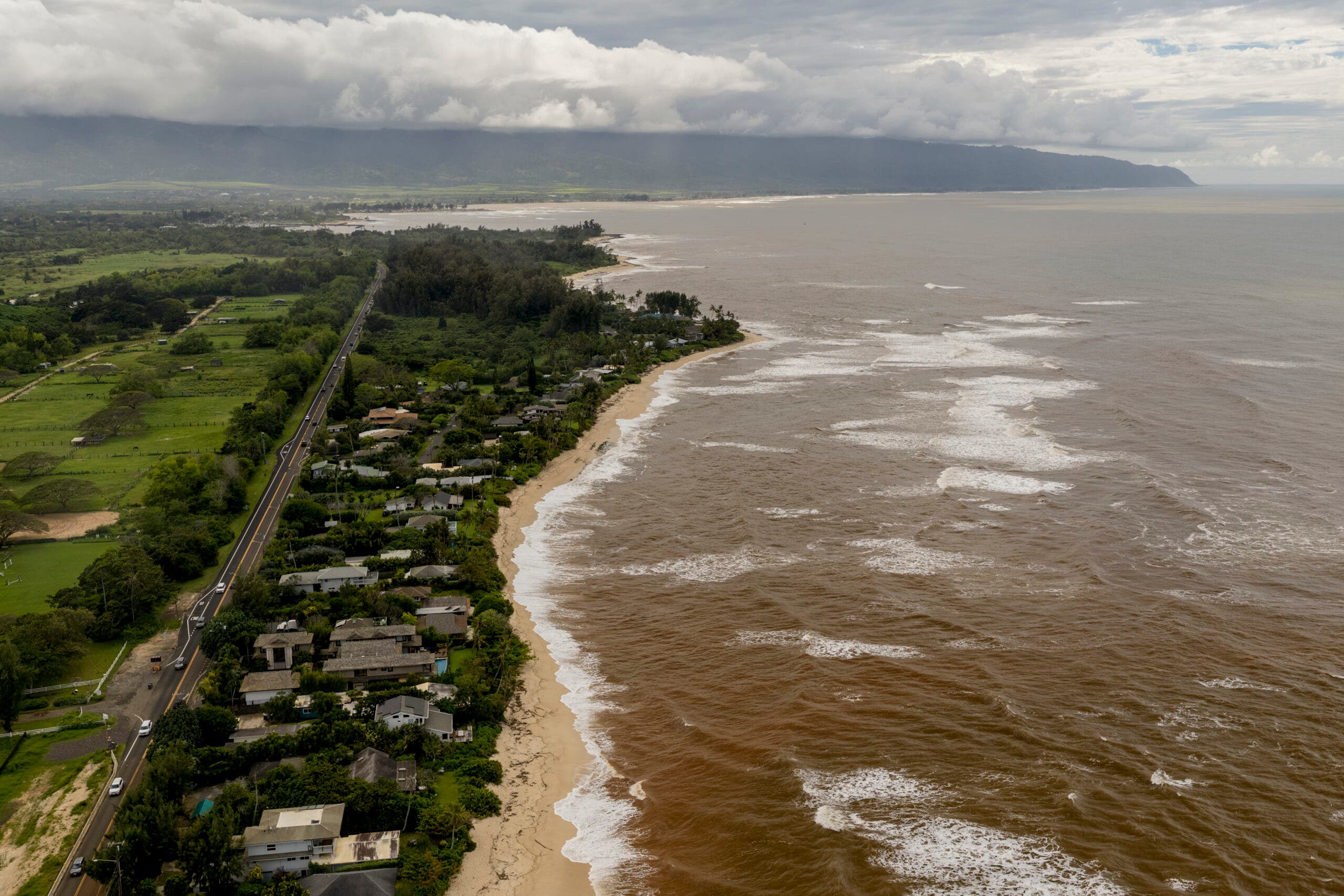
When these low-pressure systems form, they pull moisture-laden air from the south, resulting in intense, widespread rainfall that affects the entire island rather than just specific windward regions. The 2026 events were particularly devastating because the two systems occurred in such rapid succession. This left no time for the islands’ volcanic soil to drain, transforming small streams into raging torrents and causing the "brown water" phenomenon where sediment, pollutants, and debris are washed into the coastal ecosystem.
Regional Impacts and Strategic Closures
The impact of the storm has not been uniform across the state, leading to a complex landscape for travelers and residents alike.
On Oahu, the North Shore and the Mānoa Valley experienced the most severe damage. The HTA has issued specific advisories asking visitors to avoid these residential and ecologically sensitive areas to allow for debris removal and utility repairs. Conversely, the primary tourist hub of Waikiki and the majority of Honolulu remain operational, with most hotels reporting only minor landscaping damage.
On the Big Island (Hawai’i Island), the recovery is further along. Hawai’i Volcanoes National Park has partially reopened, though certain backcountry trails remain closed due to washouts. Access to the Kīlauea summit and Chain of Craters Road was restored as of March 22, providing a boost to local tour operators.
Maui remains the most challenged island. Heavy rainfall continues to plague the eastern regions. Authorities have restricted access to the Road to Hāna to local traffic only, citing the risk of further landslides. Major attractions, including Haleakalā National Park, Waiʻānapanapa State Park, and the ʻĪao Valley State Monument, have been closed indefinitely. Furthermore, the community of Lahaina, which was still in the midst of rebuilding following the catastrophic 2023 wildfires, has faced new setbacks as floodwaters moved through temporary housing sites and construction zones.
The Economic Necessity of Continued Tourism
The flooding arrives at a time of extreme economic vulnerability for the state. Tourism accounts for more than 20 percent of Hawai’i’s Gross Domestic Product (GDP) and supports over 200,000 jobs. Despite the years following the global pandemic, visitor numbers have not fully returned to 2019 levels. The 2023 Lahaina fires already dealt a massive blow to Maui’s economy, and the current flooding threatens to stall a recovery that was just beginning to gain momentum.
Economic data indicates a concerning trend: as the cost of living rises and tourism revenue remains inconsistent, a growing number of Indigenous Hawaiians and long-term residents are migrating to the U.S. mainland in search of affordability. A significant decline in spring break arrivals could accelerate this "brain drain."
Caroline Anderson, the HTA’s interim president and CEO, emphasized the role of the visitor in the recovery process. She noted that while some communities are in mourning or cleanup mode, the rest of the state relies on the "circular economy" of travel. When tourists stay in hotels, eat at local restaurants, and hire local guides, they provide the capital necessary for residents to repair their own homes and businesses.
Public Health and Safety Considerations
For those who do choose to visit, officials have issued several stern warnings. The most prominent is the "Brown Water Advisory." Following heavy rains, storm runoff carries pathogens, chemicals, and sewage into the ocean. The Hawai’i Department of Health warns that water containing animal feces and overflowing sewage can lead to serious illnesses, including Leptospirosis and staph infections. Experts recommend waiting at least 48 to 72 hours after the rain has stopped before entering the ocean, and even then, only if the water has regained its clarity.
Hiking safety is another primary concern. The saturated ground has made many popular trails treacherous. Flash floods in Hawai’i can occur even if it is not raining in the immediate vicinity, as water from the mountains moves rapidly toward the sea. Search and rescue teams have likened the force of these flash floods to an avalanche, urging hikers to stay away from stream beds and waterfalls, which are currently flowing at dangerous volumes.
Analysis of Long-term Implications and Diversification
The 2026 flood crisis underscores a recurring theme in Hawaiian policy discussions: the need for economic diversification. Critics of the current model argue that relying so heavily on a single industry—tourism—leaves the state’s population too exposed to the whims of weather and global events. There are growing calls for the state to invest more heavily in sustainable agriculture, green energy, and technology sectors that could provide more stable, high-paying jobs that are not dependent on visitor arrivals.
Furthermore, the $1 billion damage estimate highlights the need for a massive overhaul of the state’s infrastructure. Many of the roads and drainage systems in Hawai’i were designed for the weather patterns of the 20th century. As climate change increases the frequency and intensity of Kona lows and tropical storms, the state faces the daunting task of "climate-proofing" its islands. This includes upgrading culverts, reinforcing bridges, and reconsidering the placement of coastal developments.
Official Guidance for Travelers
As of late March 2026, the official stance of the Hawai’i Tourism Authority remains that there is no reason to cancel upcoming trips, provided travelers are willing to be flexible. The HTA suggests a "respectful travel" approach:
- Stay Informed: Regularly check water quality advisories and weather updates from the National Weather Service.
- Support Local: Prioritize spending at family-owned businesses and local tour operators who are most affected by the sudden downturn.
- Shift Expectations: Visitors are encouraged to trade ocean activities for inland cultural experiences or pool-based recreation until water advisories are lifted.
- Avoid Impacted Zones: Respect closures in areas like Hana and the North Shore. Entering these areas not only endangers the visitor but can also hinder emergency response and repair work.
While the physical scars on the landscape from the March 2026 floods will take months or years to heal, the social and economic resilience of the islands depends on a delicate balance. The spirit of "Aloha," often extended to visitors, is now being requested in return, as the state seeks to navigate yet another hurdle in its path toward a stable and sustainable future.




 Chandra Hamzah
 Tatiana Tantri Indah Sari
 Budi Mulyono
