
 Diana Nuri Rohmawati
In the contemporary era of hyper-connectivity and the democratized sharing economy, a significant disconnect persists between the public perception of international travel and the statistical reality of its accessibility. Despite a wealth of resources dedicated to budget-conscious exploration, a substantial segment of the population remains tethered to the belief that global travel is an exclusive privilege of the wealthy, a perilous undertaking for the solitary, or a logistical impossibility for those established in their careers. This prevailing cynicism, often fueled by outdated marketing narratives and sensationalist media coverage, obscures a global tourism landscape that has become increasingly inclusive over the last two decades. To understand the current state of global mobility, it is essential to analyze the primary myths that deter potential travelers and examine the empirical data that refutes them.

The Economic Paradigm Shift: Deconstructing the Cost of Exploration
The most pervasive barrier to international travel is the assumption of prohibitive expense. For much of the 20th century, travel was marketed as a luxury commodity, defined by high-end resorts, all-inclusive cruises, and premium airfare. However, the rise of the "budget traveler" movement and the proliferation of low-cost carriers (LCCs) have fundamentally altered the industry’s economic structure. According to data from the International Air Transport Association (IATA), the real cost of air travel has seen a consistent downward trend over the last 30 years, adjusted for inflation.
The myth that travel requires a "trust fund" or a high-salary position fails to account for the diversification of the tourism economy. Budget-conscious strategies—including slow travel, visiting secondary cities, and utilizing local transport—allow individuals to maintain daily spends that often rival or fall below the cost of living in major metropolitan areas in the United States or Western Europe. Analysts suggest that the "expensive vacation" trope is a byproduct of targeted advertising by the luxury hospitality sector, which spent decades equating leisure with high-expenditure consumption. In reality, the emergence of the "flashpacker" and the budget-conscious digital nomad demonstrates that global exploration is achievable on a median or even minimum-wage income, provided there is a strategic approach to financial planning and a shift in priorities.

Financial Instruments and the Credit Score Fallacy
A secondary financial myth involves the perceived danger of travel rewards programs. Many prospective travelers avoid credit card "churning" or the strategic use of travel-branded financial products due to fears of damaging their credit scores. This apprehension typically stems from a misunderstanding of how credit bureaus calculate risk. While a "hard inquiry" during a credit application may result in a temporary dip of five to ten points, the long-term benefits of an increased total credit limit and a consistent payment history often result in a net positive impact on a consumer’s FICO score.
Industry data indicates that travel rewards enthusiasts, often referred to as "travel hackers," frequently maintain credit scores in the high 700s or low 800s. The key differentiator is the "credit utilization ratio"—the amount of credit used versus the amount available. By opening multiple accounts but maintaining low balances and paying them in full each month, travelers can accumulate hundreds of thousands of miles and points, effectively subsidizing flights and accommodation. This practice has transformed travel from an out-of-pocket expense into a byproduct of everyday consumer spending on groceries, fuel, and utilities.

The Evolution of Digital Trust: Safety in the Sharing Economy
The rise of platforms such as Couchsurfing and Airbnb has introduced a new era of "digital trust," yet skepticism regarding the safety of staying with strangers remains high. Historically, the hospitality industry relied on centralized oversight (hotels and hostels) to guarantee safety. Peer-to-peer sharing platforms have replaced this with decentralized verification systems.
Couchsurfing, a platform designed for cultural exchange, operates on a rigorous system of peer reviews and identity verification. While the idea of sleeping on a stranger’s sofa may trigger safety concerns, the statistical frequency of incidents on these platforms is remarkably low compared to the volume of successful interactions. Sociologists point to the "homophily" effect in these communities, where users are motivated to maintain high ratings to remain part of the network. Furthermore, these platforms have evolved to offer "hangout" features, allowing travelers to meet locals in public spaces for coffee or museum visits, thereby mitigating the perceived risk of shared lodging while still reaping the benefits of local expertise.

A Chronology of Perception: The Stigma of Hitchhiking
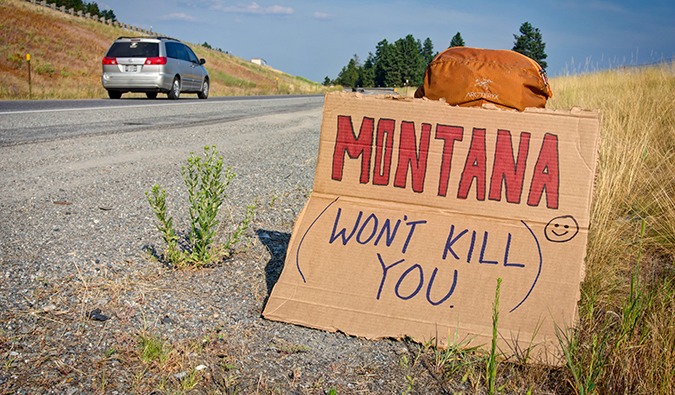
The perception of hitchhiking as a lethal endeavor is perhaps the most enduring myth in the travel sphere, particularly in North America. This fear is not accidental but is rooted in a specific historical context. In the 1950s and 1960s, the Federal Bureau of Investigation (FBI) in the United States launched a concerted campaign to discourage hitchhiking. This was partly motivated by the era’s social conservatism and a desire to limit the mobility of civil rights activists and counter-culture youth who relied on the practice to attend rallies and festivals.
Media narratives throughout the 1970s and 1980s further solidified this fear through the "urban legend" trope, focusing on rare but sensationalized crimes. However, in many parts of the world, including New Zealand, parts of Europe, and South America, hitchhiking remains a normalized and culturally accepted mode of transport. Modern travelers often utilize digital equivalents or "ridesharing" apps (like BlaBlaCar in Europe), which provide the same cost-saving benefits as hitchhiking but with the added security of GPS tracking and user profiles.

Gender and Solo Exploration: Analyzing the "Safety Gap"
The narrative that solo travel is inherently dangerous for women is a frequent headline in mainstream media. This "if it bleeds, it leads" approach to journalism often ignores the millions of women who navigate the globe safely every year. While it is true that female travelers may face specific societal challenges, safety experts argue that the risk is often no higher than what one faces in their home city.
Statistical analysis of crime rates in popular travel destinations often reveals them to be safer than many major American hubs. For example, Rwanda, frequently cited by those unfamiliar with its current geopolitical state as a "dangerous" destination due to its 1994 history, is now ranked as one of the safest countries in Africa and globally. The growth of solo female travel—which saw a 230% increase in search interest between 2016 and 2019 according to industry reports—indicates that a new generation of travelers is prioritizing empirical safety data over sensationalist warnings.
Demographics and the "Grey Gap Year"
A persistent demographic myth suggests that budget travel is a rite of passage exclusive to the young and unattached. This ignores the burgeoning "Silver Nomad" trend. Data from the AARP and various travel agencies indicate that retirees are increasingly opting for long-term, budget-conscious travel over traditional luxury cruises.
The "Grey Gap Year" involves seniors utilizing hostels (which often offer private rooms), RVing across continents, or participating in volunteer programs abroad. The accessibility of travel has expanded to accommodate families as well, with the "Worldschooling" movement gaining traction. These families leverage the remote work revolution to educate their children through global experience, proving that the constraints of age and family status are often self-imposed rather than systemic.

Global Labor Markets and the Working Abroad Opportunity
The final myth centers on the supposed difficulty of finding employment while traveling. Many believe that working overseas requires a corporate transfer or a specialized visa. While high-level professional roles do require significant bureaucracy, the "working holiday" sector is a vital part of many national economies.
Countries such as Australia, New Zealand, and Canada offer Working Holiday Visas (WHVs) to young adults from dozens of partner nations, allowing them to fund their travels through seasonal work in agriculture, hospitality, and tourism. Additionally, the rise of the digital nomad—facilitated by "Digital Nomad Visas" now offered by over 50 countries including Portugal, Estonia, and Barbados—has decoupled income from geography. For those without remote careers, opportunities in English language instruction (TEFL), au pair placements, and agricultural volunteering (WWOOF) provide a steady stream of room, board, and modest stipends.

Broader Impact and Implications for Global Citizenship
The debunking of these myths has profound implications for global stability and economic development. When travel is viewed as an accessible tool for education rather than a luxury for the elite, it fosters a more informed and empathetic global citizenry. The transition from "tourist" to "traveler" involves a shift from passive consumption to active engagement with local economies.
As the world continues to recover from the disruptions of the early 2020s, the travel industry is seeing a shift toward "intentional travel." This involves longer stays, deeper cultural immersion, and a rejection of the high-cost, high-stress vacation model. By dismantling the psychological barriers of cost, safety, and demographic suitability, the global community can continue to move toward a future where the ability to witness the world is limited only by one’s curiosity, not by their bank account or their fears. The reality of modern travel is that it is safer, cheaper, and more inclusive than at any other point in human history, provided one is willing to look past the myths and engage with the data.




 Anjar Salim
 Chandra Hamzah
 Tatiana Tantri Indah Sari
 Budi Mulyono
 Lukman Taruna Persada Ramadan
