
 Gabriela Annisa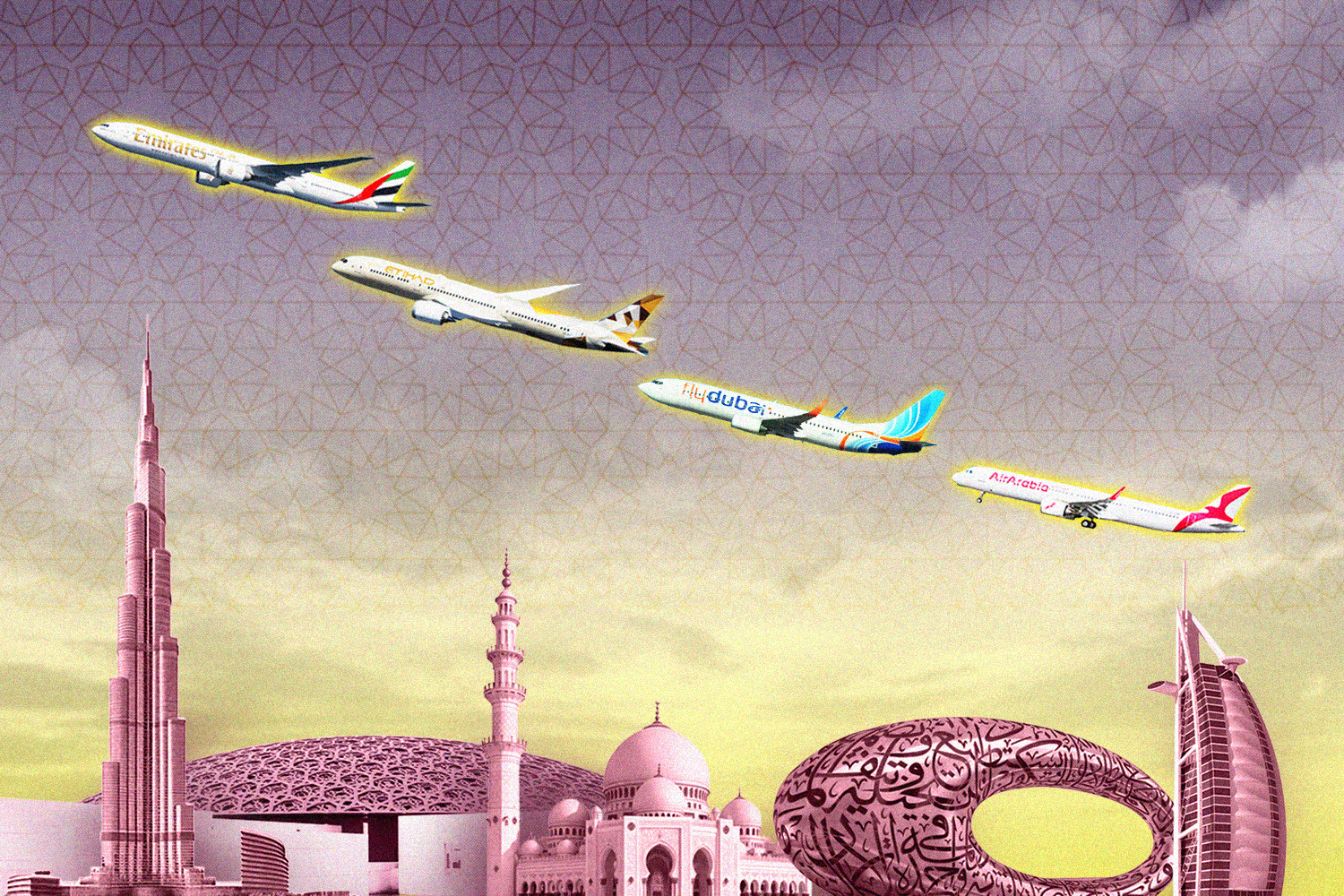
The United Arab Emirates’ aviation sector is navigating a pivotal new chapter, marked by strategic shifts among its dominant carriers: Emirates, Etihad Airways, flydubai, and Air Arabia. While Emirates, the long-established global behemoth, embarks on a path of cautious, deliberate expansion, its counterparts—Etihad Airways and flydubai—are aggressively charting new territories and intensifying their market presence. Concurrently, Air Arabia continues its relentless pursuit of low-cost market leadership, extending its reach further afield. This dynamic landscape, underpinned by hundreds of aircraft on order, the strategic development of new airport hubs, and an intensifying regional competitive environment, signals a rapid evolution in the Gulf aviation narrative.
The Genesis of UAE Aviation Ambition: A Strategic Imperative
The remarkable ascent of the UAE’s aviation industry is not merely an outcome of geographical advantage but a deliberate, long-term strategic vision to diversify its economy beyond hydrocarbon resources. Dubai, in particular, recognized early the transformative power of aviation as a catalyst for economic growth, trade, and tourism. The founding of Emirates in 1985 was a direct response to this imperative, designed to establish Dubai as a central global nexus, connecting East and West. This vision was spectacularly successful, transforming a nascent desert port into one of the world’s most vital logistical and tourist hubs. Abu Dhabi later followed suit with Etihad Airways in 2003, aiming to replicate and enhance this success for its own emirate.
This foundational strategy involved significant government investment, not just in the airlines themselves but critically in world-class airport infrastructure. Dubai International Airport (DXB) was meticulously developed into a sprawling, efficient hub capable of handling tens of millions of passengers annually, becoming the busiest airport for international passenger traffic for several consecutive years. Similarly, Abu Dhabi International Airport (AUH) has undergone substantial upgrades, culminating in the recent opening of its state-of-the-art Terminal A, designed to significantly enhance capacity and passenger experience. Sharjah International Airport (SHJ), the home base for Air Arabia, has also seen continuous expansion to support the burgeoning low-cost carrier market. This integrated approach, combining robust airlines with cutting-edge airport facilities, laid the groundwork for the UAE’s unparalleled aviation success.
A Chronology of Growth, Diversification, and Strategic Realignment
The trajectory of UAE aviation can be segmented into distinct phases, each reflecting evolving market conditions and strategic imperatives:
- 1980s-1990s: Foundations and Initial Ascent: Emirates was founded in 1985 with just two leased aircraft, rapidly expanding its network across Asia, Europe, and Africa. Its strategy focused on connecting underserved routes and leveraging Dubai’s geographical position as a natural stopover.
- 2000s: The Golden Age of Expansion and Market Entry: This decade witnessed explosive growth. Emirates placed monumental aircraft orders, notably for the Airbus A380 and Boeing 777, cementing its long-haul, premium-service identity. Etihad Airways was established in 2003, initially pursuing an aggressive growth strategy that included forming an "equity alliance" by acquiring stakes in other airlines globally. Towards the end of the decade, the UAE diversified its aviation portfolio with the launch of low-cost carriers: Air Arabia in 2003 (from Sharjah) and flydubai in 2008 (from Dubai). These carriers were designed to tap into the rapidly growing regional and budget travel markets, complementing the full-service offerings of Emirates and Etihad.
- Mid-2010s: Challenges, Consolidation, and Re-evaluation: The mid-2010s presented a more challenging environment. Geopolitical shifts, fluctuating oil prices, and concerns about overcapacity in certain markets led to profitability pressures. Etihad’s ambitious equity alliance strategy, which saw investments in airlines like Air Berlin and Alitalia, proved financially unsustainable, leading to a significant strategic pivot away from this model towards a more streamlined, profitable approach. Emirates also faced headwinds, prompting a more measured approach to fleet expansion and route development.
- Late 2010s-Early 2020s: Post-Pandemic Resilience and Strategic Realignment: The COVID-19 pandemic delivered an unprecedented shock to global aviation, severely impacting UAE carriers. However, the sector demonstrated remarkable resilience, aided by strong government support and swift vaccination programs. The post-pandemic recovery has seen a strategic realignment: Emirates focusing on premium market dominance and selective growth, Etihad on leaner, profitable expansion, and flydubai and Air Arabia aggressively capturing new regional and low-cost segments. This period has also emphasized sustainability initiatives and digital transformation across all carriers.
Unprecedented Fleet Expansion and Network Ambition: Supporting Data
The future trajectory of UAE carriers is profoundly shaped by their substantial aircraft orders, signaling long-term confidence and aggressive growth plans. Collectively, these airlines have hundreds of new-generation aircraft on order, representing a multi-billion-dollar investment in future capacity and efficiency.
- Emirates: The airline is a cornerstone customer for the Boeing 777X, with firm orders for over 100 aircraft, including the 777-8 and 777-9 variants. It also has significant orders for the Boeing 787 Dreamliner and the Airbus A350, marking a strategic diversification from its historical reliance on the A380 and 777-300ER. These new aircraft will facilitate route expansion, fleet modernization, and enhanced fuel efficiency, crucial for long-haul operations.
- Etihad Airways: Following its strategic overhaul, Etihad has streamlined its fleet but retains substantial orders for the Boeing 787 Dreamliner and Airbus A350, which are central to its renewed focus on profitable, point-to-point routes and network optimization.
- flydubai: As a rapidly expanding narrow-body specialist, flydubai has placed massive orders for the Boeing 737 MAX family, with commitments for well over 100 aircraft. This extensive order book will enable it to significantly broaden its network, particularly into secondary cities across Eastern Europe, Central Asia, Africa, and the Indian subcontinent, often complementing Emirates’ long-haul services through codeshare agreements.
- Air Arabia: Similarly, Air Arabia continues its aggressive fleet expansion with orders for the Airbus A320neo family, reinforcing its position as a leading low-cost carrier in the MENA region and beyond. These highly efficient aircraft are pivotal for its strategy of opening new routes and establishing additional operational bases.
This collective fleet expansion is designed to facilitate substantial network growth. Pre-pandemic, Dubai International Airport (DXB) consistently handled over 80 million passengers annually, with projections for a return to and exceeding these levels. Abu Dhabi International Airport (AUH) also saw significant passenger traffic growth, and Sharjah International Airport (SHJ) has been expanding to accommodate Air Arabia’s burgeoning operations. The aviation sector, including airlines, airports, and associated services, contributes an estimated 27% to Dubai’s GDP, underscoring its critical economic importance. These investments are set to further solidify the UAE’s position as a global air travel and logistics hub, significantly boosting tourism, trade, and economic diversification efforts.
Individual Carrier Strategies: A Divergent Path Forward
While sharing the common goal of enhancing the UAE’s global connectivity, each carrier is executing a distinct strategy tailored to its market segment and overarching objectives.
-
Emirates: Cautious Optimisation and Premium Dominance
Emirates’ current strategy can be characterized as one of cautious optimization rather than unbridled expansion. Having built an unparalleled global network, the airline is now focusing on consolidating its strengths, enhancing the premium passenger experience, and maximizing profitability. This involves a multi-billion-dollar cabin refurbishment program for its existing A380 and 777 fleets, ensuring a consistent and elevated product offering.
Network expansion is targeted and strategic, often leveraging partnerships. Recent codeshare agreements with major North American carriers like United Airlines and Air Canada exemplify this approach, allowing Emirates to tap into vast domestic networks without directly serving numerous secondary cities. "Our focus remains on sustainable growth, leveraging our state-of-the-art fleet and world-class service to deliver an unmatched premium travel experience," an Emirates spokesperson might state, underscoring the airline’s commitment to quality over sheer volume in certain aspects. This strategy also anticipates the eventual full transition of operations to Dubai World Central (DWC) / Al Maktoum International Airport, which will provide significantly more capacity for future long-term growth. -
Etihad Airways: Leaner, Profitable, and Strategically Focused
Following its ambitious but ultimately unsuccessful equity alliance strategy, Etihad Airways has undergone a significant transformation, emerging as a leaner, more focused, and profitable airline. Its current aggressive push into new markets is characterized by a disciplined approach to route selection, prioritizing profitability and leveraging Abu Dhabi’s burgeoning tourism and business appeal. The airline is actively expanding its network to key point-to-point destinations, particularly in Europe, Asia, and Africa, that align with Abu Dhabi’s economic diversification plans.
An Etihad executive might articulate, "We are building a sustainably profitable airline by focusing on operational excellence, optimizing our network for direct connections to Abu Dhabi, and providing a premium product that reflects Emirati hospitality." The recent opening of Abu Dhabi International Airport’s new Terminal A is a cornerstone of this strategy, providing a world-class gateway designed to enhance passenger experience and support increased traffic. -
flydubai: Unlocking Secondary Markets and Synergistic Growth
flydubai’s aggressive expansion is characterized by its strategic role in complementing Emirates’ global network. Operating a fleet of modern Boeing 737 MAX aircraft, flydubai specializes in opening up underserved secondary cities within a 5-6 hour flight radius from Dubai. This strategy allows Emirates to focus on its long-haul, high-density routes while flydubai feeds passengers into Dubai’s hub from markets that might not sustain wide-body operations. The deep codeshare agreement between Emirates and flydubai has created a powerful dual-hub model, offering passengers seamless connectivity across a vast combined network.
A flydubai representative could emphasize, "Our rapid expansion is driven by the clear demand for direct connectivity to Dubai from a multitude of regional and emerging markets. We are unlocking new travel opportunities and strengthening Dubai’s position as a truly global gateway, working in close synergy with Emirates." This strategy is crucial for maintaining Dubai’s competitive edge against other regional hubs. -
Air Arabia: Dominating the Low-Cost Landscape
Air Arabia continues to be a formidable force in the low-cost carrier (LCC) segment, consistently expanding its "further afield" reach through new routes and the establishment of additional operational bases. Beyond its main hub in Sharjah, the airline has established joint ventures and operational bases in countries like Morocco, Egypt, Pakistan, and Armenia, effectively localizing its low-cost model and tapping into diverse markets. Its focus remains on delivering value for money, targeting both leisure travelers and the significant VFR (Visiting Friends and Relatives) traffic within the MENA region, Central Asia, and parts of Europe.
An Air Arabia official might state, "We are committed to making air travel accessible and affordable across an ever-growing network. Our expansion into new bases and strategic partnerships allows us to cater to the immense demand for budget-friendly travel, driving regional connectivity and economic growth." The airline’s consistent profitability underscores the effectiveness of its disciplined LCC model.
New Hubs and Infrastructural Prowess: Preparing for Tomorrow
The UAE’s aviation future is inextricably linked to its continued investment in airport infrastructure. The development of new and expanded hubs is not just about accommodating growth but also about enhancing efficiency, sustainability, and passenger experience.
- Dubai World Central (DWC) / Al Maktoum International Airport: The long-term vision for DWC is to become Dubai’s primary mega-hub, eventually replacing Dubai International (DXB). While the full transition has been gradual, DWC is already handling significant cargo operations and is poised for increased passenger traffic as Emirates eventually shifts its entire operation there. This move will unlock immense capacity, potentially handling over 200 million passengers annually, cementing Dubai’s long-term dominance as a global aviation crossroads.
- Abu Dhabi International Airport (AUH) – Terminal A: The recent opening of Terminal A (formerly Midfield Terminal) at AUH represents a monumental leap in Abu Dhabi’s aviation infrastructure. With a capacity for 45 million passengers annually, it significantly enhances Etihad’s ability to grow its network and elevate the passenger experience, offering state-of-the-art facilities, advanced biometrics, and a more seamless travel journey.
- Sharjah International Airport (SHJ): As Air Arabia’s primary hub, SHJ has undergone continuous expansion projects to increase its passenger capacity and improve facilities, supporting the rapid growth of the low-cost carrier and its regional network.
These infrastructural developments are not just about physical space; they integrate advanced technologies, smart airport solutions, and sustainable design principles, preparing the UAE for the next generation of air travel.
Intensifying Regional and Global Competition
The future trajectory of UAE carriers is not without significant competitive pressures, both regionally and globally.
- Regional Competition: The most significant new challenge comes from Saudi Arabia, which is embarking on an unprecedented aviation expansion. The launch of Riyadh Air, a new national carrier aiming to rival Emirates and Qatar Airways, alongside the ambitious NEOM Airlines and the substantial expansion of Saudia, signals a fierce battle for market share in the Gulf. This new dynamic will undoubtedly intensify competition for transit passengers, talent, and strategic routes. Qatar Airways, a perennial rival, continues to maintain a strong global network and premium offering from its Doha hub.
- Global Competition: Beyond the Gulf, traditional European, Asian, and North American carriers are adapting their strategies to counter the dominance of Gulf hubs. The rise of ultra-long-haul point-to-point flights, enabled by new aircraft technology, could potentially bypass some traditional hub connections. Furthermore, increasing global pressures regarding sustainability and environmental impact necessitate significant investment in Sustainable Aviation Fuels (SAF) and greener operational practices, adding another layer of complexity to competitive strategies.
Broader Impact and Implications for the UAE and Beyond
The continued evolution and expansion of UAE carriers carry profound implications, extending far beyond the aviation sector itself.
- Economic Diversification and Growth: Aviation remains a cornerstone of the UAE’s efforts to diversify its economy away from oil. It fuels tourism, logistics, trade, and financial services, creating a vibrant, multi-faceted economic ecosystem. The growth of these airlines directly translates into increased tourist arrivals, foreign direct investment, and global business connections.
- Employment Generation: The aviation sector is a major employer, not only directly within airlines and airports but also across a vast array of related industries, including hospitality, retail, freight, and construction. The ongoing expansion guarantees sustained job creation and opportunities for skilled professionals.
- Geopolitical Influence and Soft Power: The UAE’s extensive global air connectivity enhances its geopolitical influence and soft power. By connecting diverse cultures and economies, the airlines serve as vital ambassadors, fostering international relations, trade agreements, and cultural exchange.
- Sustainability Challenges and Innovation: The rapid growth of the aviation sector presents significant environmental challenges. UAE carriers are increasingly investing in fuel-efficient new-generation aircraft, exploring Sustainable Aviation Fuels (SAF), and implementing operational efficiencies to reduce their carbon footprint. This push for sustainability will drive innovation within the sector.
- Technological Advancement: The demand for seamless and efficient travel experiences is driving significant investment in technological advancements, from biometrics and AI-powered customer service to advanced air traffic control systems and digital cargo solutions. The UAE is positioned to be a leader in adopting and integrating these innovations.
In conclusion, the UAE’s aviation story is far from complete. It is a narrative of relentless ambition, strategic foresight, and continuous adaptation. As Emirates, Etihad, flydubai, and Air Arabia navigate a complex global landscape, their divergent yet complementary strategies, backed by monumental investments in fleets and infrastructure, position the UAE to not only maintain but further solidify its standing as a preeminent global aviation powerhouse. The journey ahead promises further innovation, intense competition, and a sustained drive to connect the world through the heart of the Gulf.

 Chandra Hamzah
 Tatiana Tantri Indah Sari
 Hendra Ismail
 Walid Sujud Trenggono
 Budi Mulyono