
 Chandra Hamzah
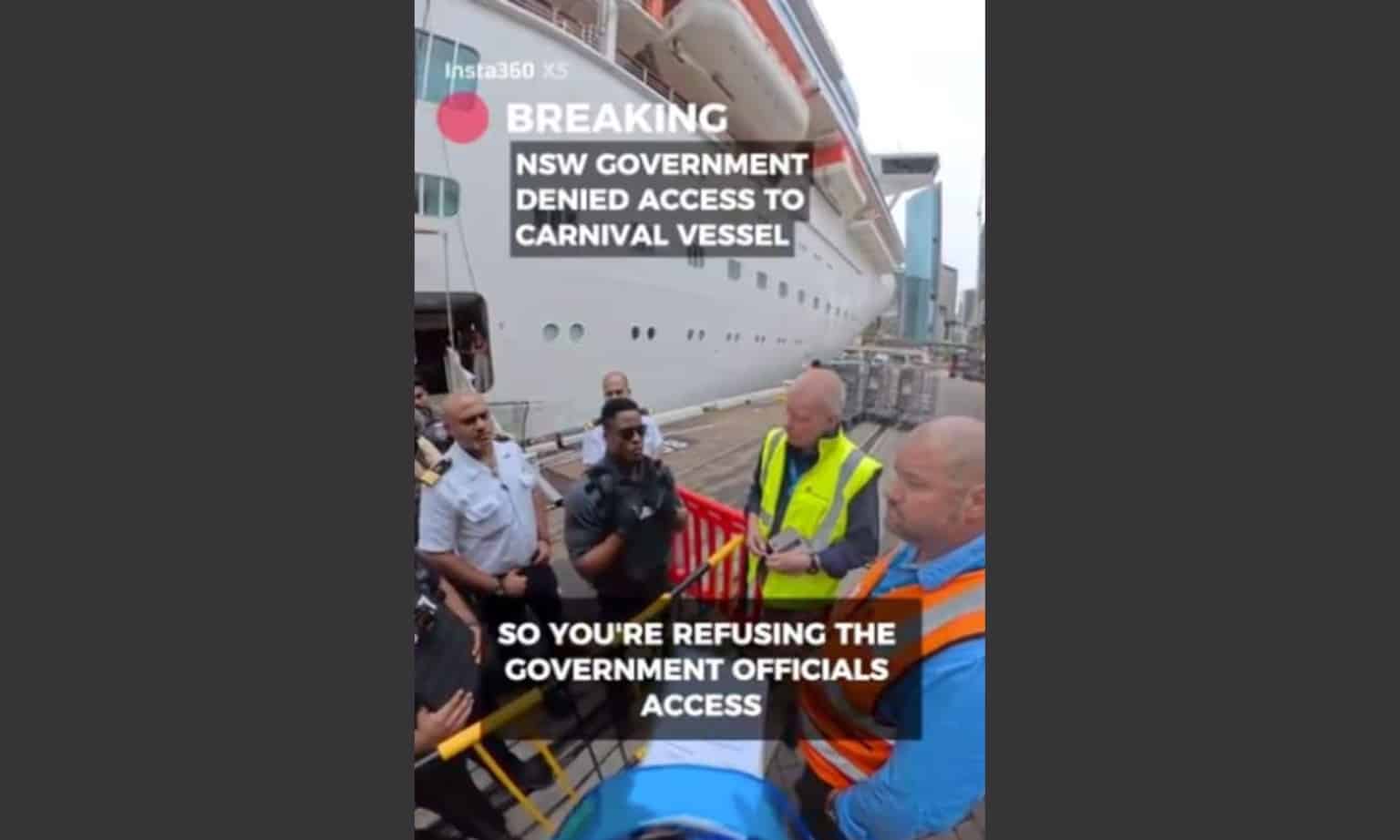
This week saw a tense confrontation outside the cruise ship Carnival Adventure when officials from the Maritime Union of Australia (MUA), accompanied by inspectors from SafeWork NSW, attempted to board the vessel. The incident, captured on video and disseminated widely across social media, was characterized by Carnival Australia as an unauthorized attempt to board their ship, intimidate crew, and compromise security protocols. Carnival Australia issued a strong statement asserting, "They have no authority to board our ship, bully our crew or violate security protocols that create risks for our guests." Despite the cruise line’s stance, the visual impact of the confrontation quickly spread globally through trade news outlets and newsletters, raising concerns about the timing and potential repercussions for an industry already grappling with significant challenges.
The cruise industry, headquartered in hubs like Miami, has been closely observing the Australian market for some time. The confluence of aging fleets and an increasing number of new ships presents opportunities for destinations that can offer attractive conditions. However, recent events, coupled with a shifting global landscape, have cast a shadow over Australia’s prospects. The MUA’s actions, occurring at a critical juncture, have exacerbated existing anxieties about the nation’s cruise sector, which has been experiencing a concerning decline in capacity and economic contribution.
A Stunt with Global Reach
The public nature of the confrontation, amplified by social media and trade publications, was clearly intended to maximize visibility. While the MUA’s specific grievances were not immediately detailed in the initial reports, the visual of union officials and government inspectors attempting to board a major cruise liner is potent. This tactic, often employed to draw attention to labor disputes or regulatory concerns, has the potential to create significant reputational damage.
Carnival Australia’s firm response highlights the perceived overreach by the union and regulators. The company’s emphasis on security protocols and guest safety underscores the potential risks associated with unauthorized boarding. The swift global dissemination of the incident suggests that the international cruise community, including operators and potential investors, are taking note. This visibility could influence future deployment decisions, particularly as cruise lines evaluate destinations offering stable and predictable operating environments.
Economic Headwinds and Declining Capacity
The implications of this incident are particularly concerning given the current state of Australia’s cruise industry. For years, ports like Sydney and Brisbane have been actively working to attract more cruise ships, especially during the traditionally slower winter months, in a bid to bolster the sector’s growth. Recent initiatives, such as exclusive reports by Cruise Passenger revealing that NSW Ports is offering price incentives for shoulder and winter season cruising, indicate a governmental effort to stimulate year-round activity. However, these positive developments are now overshadowed by the potential fallout from the Carnival Adventure confrontation.
The most significant concern stems from Cruise Passenger’s in-depth analysis of Australia’s cruise capacity. Previous reports have highlighted a substantial decline of over 30% in cruise capacity. The latest projections suggest a continuation of this downward trend, with an estimated loss of another $1 billion in economic output for the upcoming year. This would bring the industry’s total earnings down from $8 billion three years ago to a projected $6 billion. Such a decline is particularly disheartening given the robust demand for cruising among Australians, many of whom are now opting for international holidays, thereby benefiting other countries’ burgeoning tourism industries.
The impact extends beyond economic figures. The local cruise industry directly supports approximately 22,000 jobs, and further losses in capacity could translate into significant job reductions. Paul Nicolaou, from Business Sydney, voiced these concerns, stating that the union’s actions could undermine "years of work" dedicated to establishing Sydney as a premier cruising destination. He questioned the collaboration between the MUA and SafeWork NSW, demanding an explanation from the NSW Government. Nicolaou emphasized that the negative perception generated by the incident could significantly damage the economic contributions of cruising to Sydney, NSW, and the nation as a whole. He also pointed out Carnival Australia’s long-standing relationship with Sydney as a homeport and its support for numerous local suppliers, suggesting the MUA’s campaign might be linked to broader discussions regarding coastal shipping arrangements. Nicolaou concluded by asserting that the Australian Maritime Safety Authority (AMSA), the designated government authority overseeing the cruise industry, should be allowed to perform its regulatory duties without interference.
A Shifting Global Landscape
The challenges facing Australia’s cruise industry are not isolated. Globally, cruise lines are reassessing their fleet deployments. The Middle East, for instance, has emerged as a more attractive region for some operators, adding further impetus for cruise lines to seek out diverse and favorable markets. This global dynamic makes it imperative for Australia to present a stable and inviting environment for cruise operations.
Recent trends indicate a significant contraction in Australia’s cruise capacity. Since the 2023/24 season, major cruise lines such as Cunard Cruises, Virgin Voyages, and Disney Cruise Line have completely withdrawn from the Australian market. Additionally, Royal Caribbean, Carnival Cruises, and Princess Cruises have reduced their presence by one ship each. While some lines like Celebrity Cruises, Norwegian Cruise Line, and Holland America have maintained a consistent presence with one ship each summer, the overall trend points towards a shrinking market.
Data compiled by Cruise Passenger reveals a dramatic decline in large homeported ships. From the 2023/24 season to the 2025/26 season, Australia’s cruise capacity plummeted by a staggering 33%. While capacity has shown signs of stabilization since then, it has not experienced meaningful growth. Projections for the 2027/28 season still indicate a significant overall decline of 31% compared to the 2023/24 season. Even looking ahead to the 2025/26 season, there has only been a modest 2.5% increase in capacity, a stark contrast to previous growth periods.
Economic Impact and Job Security at Risk
The economic ramifications of this capacity decline are substantial. In the 2023/24 season, the industry generated an all-time high of $8.43 billion in total economic output. This figure dropped to $7.32 billion in the 2024/25 season, representing a 13% decrease and over $1 billion in lost economic output. Given that a 17% drop in large ship capacity between the 2023/24 and 2024/25 seasons coincided with a 13% drop in overall economic output (adjusted for inflation), further contractions are anticipated. With big ship capacity projected to contract by another 19% in the 2025/26 season, it is estimated that the industry will rake in approximately $6.25 billion. This would leave the industry 26% smaller and result in cumulative losses of around $2.2 billion over a three-year period.
The implications for employment are equally concerning. The cruise industry is a significant employer, supporting 22,000 jobs. A continued decline in cruise operations could lead to widespread job losses across various sectors, including hospitality, logistics, and supply chain management.
Calls for a National Strategy and Future Outlook
In response to these challenges, numerous industry voices, including Cruise Passenger, have been advocating for a national cruise summit. The Australian Cruise Association has officially joined these calls, incorporating a proposal for funding a national cruise strategy into its executive plan. This strategy would involve collaborative efforts between government and industry stakeholders to address the complex issues facing the sector.
Despite repeated attempts to solicit comment from Tourism Minister Don Farrell regarding the situation, no response has been received. This lack of official engagement fuels concerns that the industry may continue to stagnate, with no clear plan to recover the billions in lost economic output.
The current trajectory suggests a critical juncture for Australia’s cruise industry. The recent union confrontation, coupled with persistent regulatory uncertainties and a global recalibration of cruise itineraries, paints a challenging picture. While efforts are being made to incentivize off-season cruising and attract new deployments, such as the potential year-round presence of Royal Caribbean by 2028 following the development of their private destination at Lelepa, these initiatives must be supported by a cohesive national strategy and a stable operating environment. The industry’s future hinges on its ability to overcome these headwinds and regain its momentum.
Fleet Deployment Snapshot: Australia’s Cruise Capacity Trends
The following table illustrates the changes in large homeported ships in Australia since the 2023/24 season, highlighting the fluctuating capacity and the impact on the industry:
| Cruise Line | 23/24 | 24/25 | 25/26 | 26/27 | 27/28 |
|---|---|---|---|---|---|
| Royal Caribbean | Brilliance of the Seas (2543), Ovation of the Seas (4905), Quantum of the Seas (4905) | Ovation of the Seas (4905), Quantum of the Seas (4905) | Anthem of the Seas (4905), Voyager of the Seas (3602) | Anthem of the Seas (4905), Quantum of the Seas (4905) | Anthem of the Seas (4905) Voyager of the Seas (3602) |
| Carnival Cruises + P&O | Carnival Splendor (3012), Carnival Luminosa (2826), Pacific Adventure (2636), Pacific Explorer (2000), Pacific Encounter (2600) | Carnival Splendor (3012), Carnival Luminosa (2826), Pacific Adventure (2636), Pacific Explorer (2000), Pacific Encounter (2600) | Carnival Splendor (3012), Carnival Luminosa (2826), Carnival Encounter (2600), Carnival Adventure (2636) | Carnival Splendor (3012), Carnival Luminosa (2826), Carnival Encounter (2600), Carnival Adventure (2636) | Carnival Splendor (3012), Carnival Luminosa (2826), Carnival Encounter (2600), Carnival Adventure (2636) |
| Celebrity Cruises | Celebrity Edge (2908) | Celebrity Edge (2908) | Celebrity Edge (2908) | Celebrity Edge (2908) | Celebrity Edge (2908) |
| Princess Cruises | Majestic Princess (3560), Royal Princess (3600), Grand Princess (2610), Coral Princess (2000) | Royal Princess: 3600 Diamond Princess: 2670 Crown Princess: 2000 |
Discovery Princess: 3600 Crown Princess: 2000 |
Grand Princess (2610) Royal Princess (3600) |
Grand Princess (2610) Royal Princess (3600) Sapphire Princess (2670) (only Oct to Jan) |
| Norwegian Cruise Lines | Norwegian Spirit (2002) | Norwegian Spirit (2002) | Norwegian Spirit (2002) | Norwegian Spirit (2002) | Norwegian Spirit (2002) |
| Cunard Cruise Line | Queen Elizabeth (2081) | Queen Elizabeth (2081) | No ship | No ship | No ship |
| Disney Cruise Lines | Disney Wonder (2400) | Disney Wonder (2400) | Disney Wonder (2400) | No ship | No ship |
| Holland America | Westerdam (1964) | Westerdam (1964) | Noordam (1972) | Noordam (1972) | Westerdam (1964) |
| Virgin Voyages | Resilient Lady (2770) | No ship | No ship | No ship | No ship |
| Total | 18 ships Total capacity: 51322 |
15 ships Total capacity: 42509 |
12 ships Total capacity: 34463 |
11 ships Total capacity: 33976 |
12 ships Total capacity: 35343 |



 Tatiana Tantri Indah Sari
 Budi Mulyono
 Anjar Salim
