
 Tatiana Tantri Indah Sari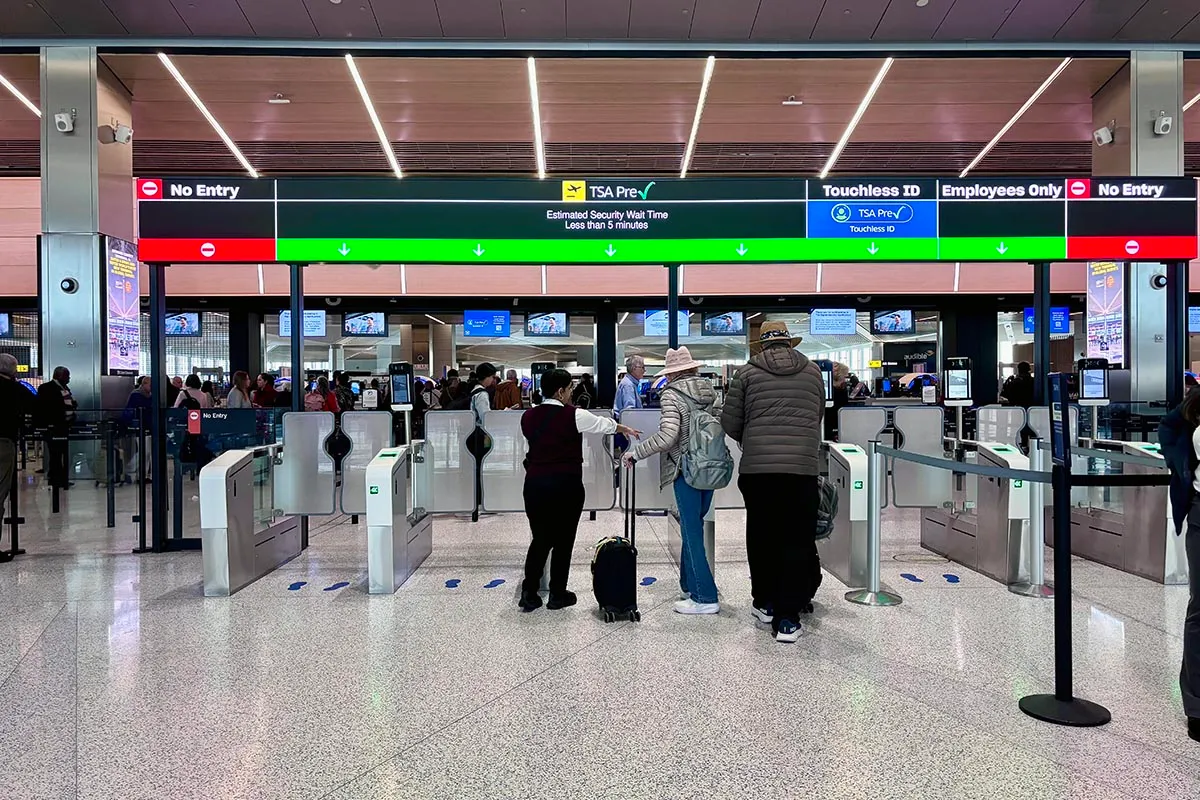
The Trump administration has put forward a sweeping proposal to initiate the privatization process for the Transportation Security Administration (TSA), a move detailed in the White House’s 2027 budget proposal released on a recent Friday. This ambitious plan calls for significant changes to the nation’s aviation security framework, including a proposed cut of $52 million from the TSA’s budget and a mandate for small airports across the country to enroll in the existing Screening Partnership Program (SPP). The SPP, which allows for the use of private screeners under federal oversight, currently operates in a limited number of airports. This proposal emerges in the wake of two government shutdowns, during each of which TSA officers faced the hardship of missing two paychecks, leading to widespread staffing shortages and hours-long wait times at security checkpoints in airports nationwide.
Background: The Genesis of TSA and Federalized Security
The Transportation Security Administration was born out of the profound national trauma of the September 11, 2001, terrorist attacks. Prior to 9/11, airport security screening was primarily conducted by private contractors hired by individual airlines and airports. This decentralized system, critics argued, led to inconsistent standards, inadequate training, and often low-paid, high-turnover workforces. Following the attacks, the consensus rapidly shifted towards a national, standardized approach to aviation security.
The Aviation and Transportation Security Act (ATSA) of 2001, signed into law just two months after 9/11, federalized airport security screening. It created the TSA within the Department of Transportation (later moved to the Department of Homeland Security in 2003) with the explicit mission to protect the nation’s transportation systems. This marked a monumental shift, establishing a uniformed federal workforce responsible for passenger and baggage screening, a task previously delegated to private entities. The rationale was clear: a federalized force would ensure consistent training, uniform procedures, better oversight, and direct accountability to the government, thereby enhancing national security.
However, even at its inception, ATSA included a provision for an alternative: the Screening Partnership Program (SPP). This program, often referred to as "opt-out," allowed airports, under specific conditions, to apply to use private screening companies, provided these companies adhered to all TSA security requirements and standards. The intent was to offer a degree of flexibility and potentially foster innovation, while still maintaining federal oversight. Initially, the program was capped at a small number of airports, but its scope has seen gradual expansion over the years.
The Screening Partnership Program (SPP): A Closer Look
The SPP allows airports to apply to replace federal TSA screeners with private contract screeners, known as Private Security Contractors (PSCs), who are employed by companies approved by the TSA. These PSCs must meet the same rigorous training, certification, and performance standards as federal TSA officers, and their operations are subject to direct oversight and auditing by TSA personnel. The TSA continues to set all security policies and procedures, even at SPP airports, ensuring a baseline level of security consistency across the national aviation system.
Currently, there are approximately 20-25 airports participating in the SPP, including major hubs like San Francisco International Airport (SFO) and Kansas City International Airport (MCI), alongside smaller regional facilities. Proponents of the SPP often highlight several potential advantages:
- Flexibility and Responsiveness: Private companies may be able to staff more flexibly to meet fluctuating passenger demands, potentially reducing wait times.
- Cost Efficiency: Some argue that private sector competition can lead to lower operational costs, though this is a subject of ongoing debate, as TSA still funds the contracts.
- Local Control: Airports may feel they have more input and control over their security operations and personnel management.
- Customer Service: Private companies might be more attuned to customer service metrics, as their contracts can be tied to performance.
Conversely, critics of SPP raise concerns about:
- Security Gaps: Worries that private contractors, potentially driven by profit motives, might cut corners on training, compensation, or staffing levels, compromising security.
- Oversight Challenges: The sheer scale of overseeing hundreds of private contracts across the country could strain TSA’s resources.
- Erosion of Federal Standards: A widespread shift could dilute the unified national security culture established post-9/11.
- Labor Issues: Concerns about lower pay, fewer benefits, and higher turnover rates among private screeners compared to their federal counterparts, potentially impacting morale and experience.
The Catalytic Role of Government Shutdowns
The Trump administration’s renewed push for privatization is inextricably linked to the significant disruptions caused by recent government shutdowns, particularly the 35-day partial shutdown from December 22, 2018, to January 25, 2019. This shutdown, the longest in U.S. history, directly impacted approximately 800,000 federal employees, including the entire TSA workforce of roughly 45,000 to 50,000 officers. Designated as essential personnel, TSA officers were required to work without pay.
The consequences were immediate and severe. As weeks passed without paychecks, many officers faced extreme financial hardship, leading to a surge in "sick-outs" and an acceleration of attrition. Reports from major airports like New York’s LaGuardia (LGA), Atlanta’s Hartsfield-Jackson (ATL), and Miami International (MIA) indicated significant staffing shortages, with some airports reporting absentee rates double or triple their normal levels. This directly translated into hours-long wait times at security checkpoints, causing missed flights, passenger frustration, and operational chaos for airlines and airports. For instance, at one point during the 2018-2019 shutdown, wait times at some terminals reportedly exceeded 90 minutes, far surpassing TSA’s target of 30 minutes for standard lanes and 10 minutes for TSA PreCheck. A similar, though shorter, shutdown in January 2018 also saw TSA officers working without pay, highlighting the recurring vulnerability of the federal workforce.
These events brought the fragility of the federalized security model under immense scrutiny, offering a powerful narrative for those advocating for privatization. The argument posed was that a privatized system might be less susceptible to the whims of federal budget impasses, as private contractors operate outside the direct federal payroll system.
Details of the 2027 Budget Proposal
The White House’s 2027 budget proposal, beyond its overarching intent for privatization, lays out specific financial and operational directives. The proposed $52 million cut from TSA’s budget, while seemingly modest in the context of an agency with an annual budget typically exceeding $8 billion, signals a clear direction towards reducing federal expenditure on direct security operations.
The most impactful element of the proposal is the mandate for "small airports" to enroll in the SPP. While the proposal did not explicitly define "small airports," this classification typically refers to those with lower passenger volumes, often categorized by the Federal Aviation Administration (FAA) as non-hub, small hub, or even medium hub airports, rather than the nation’s largest commercial service airports (large hubs). This mandatory enrollment would significantly expand the SPP, potentially shifting hundreds of airports from federal to private screening operations.
The administration’s rationale, as inferred from similar proposals and statements, centers on the belief that such a transition would lead to greater efficiency, cost savings, and potentially improved passenger experience by leveraging private sector innovation and competition. It also aligns with a broader philosophical stance favoring reduced government footprint and increased private sector involvement in public services.
Stakeholder Reactions and Perspectives
The proposal has predictably drawn a wide range of reactions from key stakeholders:
- TSA Leadership (inferred): While official statements would emphasize maintaining security standards regardless of the workforce model, any TSA Administrator would likely face the daunting task of managing such a massive transition, ensuring continuity of security operations, and addressing the morale of federal officers.
- TSA Union (American Federation of Government Employees – AFGE): The AFGE, which represents a significant portion of the TSA workforce, has historically been a staunch opponent of privatization. They would likely argue vehemently that privatizing security would compromise national security, lead to a "race to the bottom" in terms of wages and benefits for screeners, and result in higher turnover, less experienced personnel, and ultimately, a less secure system. They would advocate for fair pay and stable employment for federal officers, emphasizing their dedication and training.
- Airport Operators (e.g., American Association of Airport Executives – AAAE, Airports Council International – North America – ACI-NA): Reactions from airport authorities would likely be mixed. Some might welcome the potential for greater control over staffing and the possibility of tailored security solutions to their specific needs. Others might express concerns about increased administrative burdens, potential liability issues, and the financial implications of managing private contracts, especially if the cost burden partially shifts to airports. There could also be apprehension about a potential patchwork of security quality across the nation.
- Airlines (e.g., Airlines for America – A4A): Airlines have a vested interest in efficient security operations and minimal wait times, as these directly impact their on-time performance and customer satisfaction. They might cautiously support privatization if it demonstrably leads to shorter lines and improved passenger flow, provided security standards are not compromised. However, they would also be wary of any changes that could lead to increased costs for them or their passengers.
- Congressional Response: The proposal is expected to ignite a significant debate on Capitol Hill. Republican lawmakers, generally favoring fiscal conservatism and private sector solutions, would likely support the initiative, framing it as a move towards efficiency and responsible government spending. Democratic lawmakers, often aligned with labor unions and advocating for federal employee protections, would likely oppose it, citing concerns about national security, worker rights, and the potential for a decline in service quality. Any legislative effort to implement this proposal would face considerable political hurdles.
- Security Experts: Experts in aviation security and public administration would offer varied perspectives. Some might argue that the success of private screening hinges entirely on the robustness of TSA’s oversight and contractual enforcement, pointing to successful SPP airports as examples. Others might caution that the complexities of national security are too critical to outsource, emphasizing the importance of a unified federal command structure and a dedicated, motivated federal workforce. They might also draw comparisons to security models in other countries, some of which rely heavily on private contractors, while others maintain a more federalized approach.
Potential Implications and Broader Analysis
The proposed widespread privatization of TSA screening carries profound implications across several critical domains:
- Security Effectiveness: The paramount concern is always security. Would a largely privatized system maintain, or even enhance, the current level of security? Critics fear a "race to the bottom" where private companies compete on cost, potentially leading to lower wages, less experienced staff, higher turnover, and diminished training quality, ultimately impacting screening effectiveness. Proponents argue that robust TSA oversight and performance-based contracts can mitigate these risks and potentially incentivize innovation. The key will be the strength and funding of the federal oversight mechanism.
- Cost Efficiency: While the administration touts cost savings, the reality can be complex. While private companies might offer lower hourly wages and benefits than federal employees, the overall cost to the government includes contract management, oversight, and potential hidden costs associated with security incidents or contract renegotiations. Independent analyses would be crucial to determine actual long-term savings versus potential increases in administrative overhead. The $52 million budget cut suggests an initial savings target, but the full financial impact of a nationwide shift is yet to be fully modeled.
- Labor Impact: The proposal would represent a massive upheaval for the TSA workforce. Tens of thousands of federal employees could see their jobs transitioned to the private sector, potentially losing federal benefits, pension plans, and union protections. This could lead to significant morale issues, a brain drain of experienced officers, and a potential increase in labor disputes. The transition itself would be a logistical challenge of immense proportions, requiring careful planning to avoid disruptions.
- Passenger Experience: The stated goal of reducing wait times, particularly after the shutdown-induced chaos, is a significant driver. If privatization leads to more agile staffing and better customer service, passengers could benefit. However, if it results in inconsistent service quality, increased security incidents, or new forms of operational friction, the passenger experience could deteriorate.
- Operational Challenges: Implementing such a widespread change would involve monumental operational challenges. Transitioning hundreds of airports, managing a vast network of private contracts, ensuring uniform standards across diverse companies, and integrating new technologies would require meticulous planning and execution. The risk of widespread disruption during the transition phase would be substantial.
- Political Feasibility: Given the strong opposition from labor unions, many Democrats, and potentially some airport authorities, the proposal faces a difficult path through Congress. Bipartisan consensus would be essential, and past attempts at broad privatization have often stalled due to these very concerns.
In conclusion, the Trump administration’s proposal to mandate widespread TSA privatization represents a significant ideological and operational challenge to the post-9/11 federalized aviation security model. Driven by recent experiences of government shutdowns and a desire for greater efficiency and cost savings, it seeks to fundamentally alter how the nation’s airports are secured. However, the path forward is fraught with complex questions regarding security effectiveness, cost implications, the fate of a dedicated federal workforce, and the operational viability of such a massive transition. The ensuing debate will undoubtedly be a defining moment for the future of U.S. aviation security.




 Anjar Salim
 Chandra Hamzah
 Budi Mulyono

