
 Anjar Salim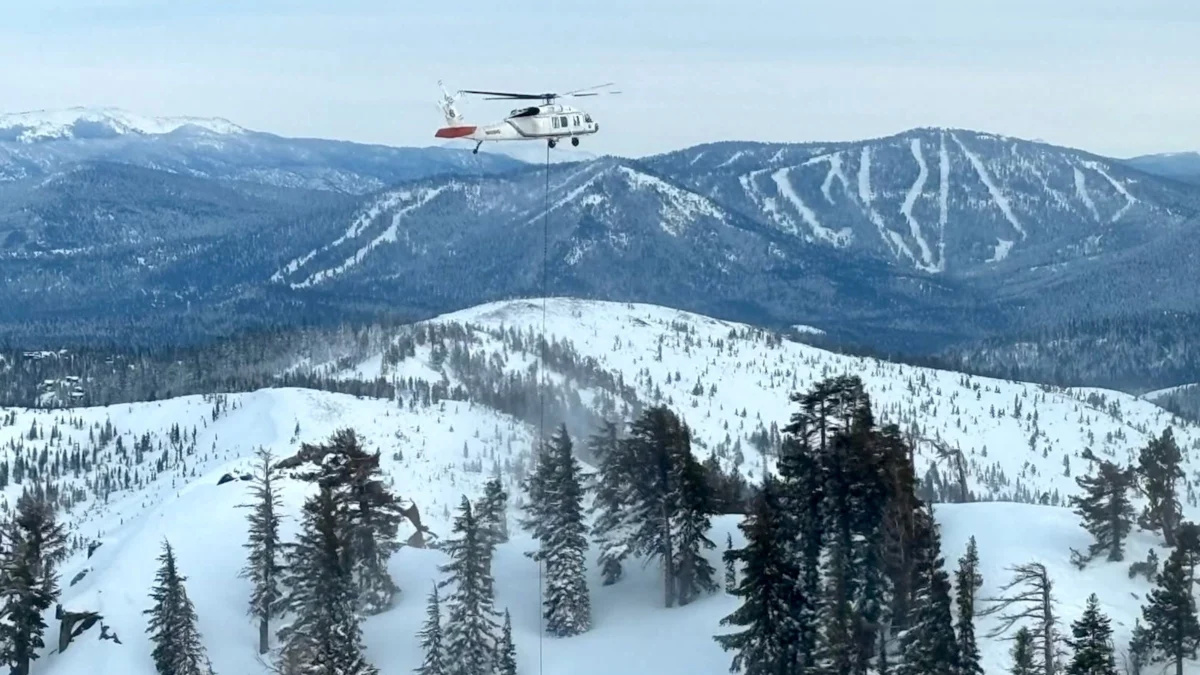
The National Avalanche Center, in coordination with the Colorado Avalanche Information Center, released a comprehensive 45-page incident report on April 3, 2026, detailing the catastrophic events of February 17, 2026, in the Sierra Nevada mountains. The disaster, which resulted in the deaths of nine backcountry travelers near Tahoe, California, stands as one of the deadliest avalanche events in modern American history. While the report acknowledges a "perfect storm" of extreme meteorological conditions and precarious snowpack stability, it places significant emphasis on human decision-making—specifically the decision by professional guides to allow a large group of 15 individuals to travel simultaneously through a high-risk runout zone.
The investigation concludes that the tragedy was not the result of a single failure but a cumulative sequence of environmental stressors and tactical errors. According to the analysis, the group was navigating terrain where a natural or human-triggered avalanche was "likely to very likely" given the extreme weather conditions at the time. The findings have sent shockwaves through the backcountry skiing and guiding communities, prompting a reevaluation of group size protocols and risk assessment during major storm cycles.
Chronology of the Disaster: February 15–19, 2026
The timeline of the tragedy began two days before the fatal slide. On February 15, a powerful atmospheric river began impacting the Tahoe region, characterized by high moisture content and extreme wind speeds. Over a five-day period ending February 19, the area recorded a staggering 111 inches of new snowfall.
On the morning of February 17, the party of 15—consisting of two guides and 13 clients—departed from a backcountry hut system. Despite the worsening conditions, the group proceeded toward their next destination. By mid-afternoon, as the group moved through a known avalanche runout zone, a massive slab released from a slope above them.
The report indicates that visibility was near zero at the time of the incident, which likely obscured the group’s view of the "starting zone" above them. When the slide occurred, 13 members of the party were caught in the flow. Two individuals—one guide and one client—remained on the periphery and were not buried. These two survivors immediately initiated a search and rescue operation, successfully locating and excavating four victims. However, the remaining nine individuals sustained fatal injuries or succumbed to asphyxiation before they could be reached. Search and rescue teams from San Bernardino County and local Tahoe agencies were unable to reach the site for several days due to the continuing storm and extreme secondary avalanche risks.
Meteorological and Snowpack Data Analysis
The technical portion of the report highlights the "dangerous physics" of the snowpack during the February storm cycle. Experts identified a specific layer of "facets"—unstable, sugar-like snow crystals—measuring two to four inches thick. These facets had formed during a previous period of melting and refreezing, creating a weak foundation.
When the atmospheric river arrived, it deposited "Sierra Cement," a colloquial term for snow with high Snow Water Equivalent (SWE). On the day of the avalanche, the SWE was measured at 2.7 inches. This heavy, moisture-laden snow created a "soft slab" that rested precariously on top of the weak facet layer.
Wind played a secondary but equally critical role. Official sensors recorded gusts exceeding 125 miles per hour on ridgelines near the site. These winds acted as a transport mechanism, scouring snow from the windward side of slopes and depositing it as "wind-loaded slabs" on the leeward side. The report notes that the group was traveling directly beneath one of these leeward slabs. The added weight of the wind-deposited snow, combined with the extreme snowfall rate, likely pushed the snowpack to its breaking point.
Terrain Characteristics and the 30-Degree Danger Zone
Rick Rogers, a veteran of the San Bernardino County Sheriff’s Search and Rescue team with 11 years of experience and a former ski patroller at Heavenly Ski Resort, provided context on the geography of the incident. Rogers, who worked in the Tahoe region from 2010 until 2023, noted that the specific angles of the terrain were textbook for avalanche activity.
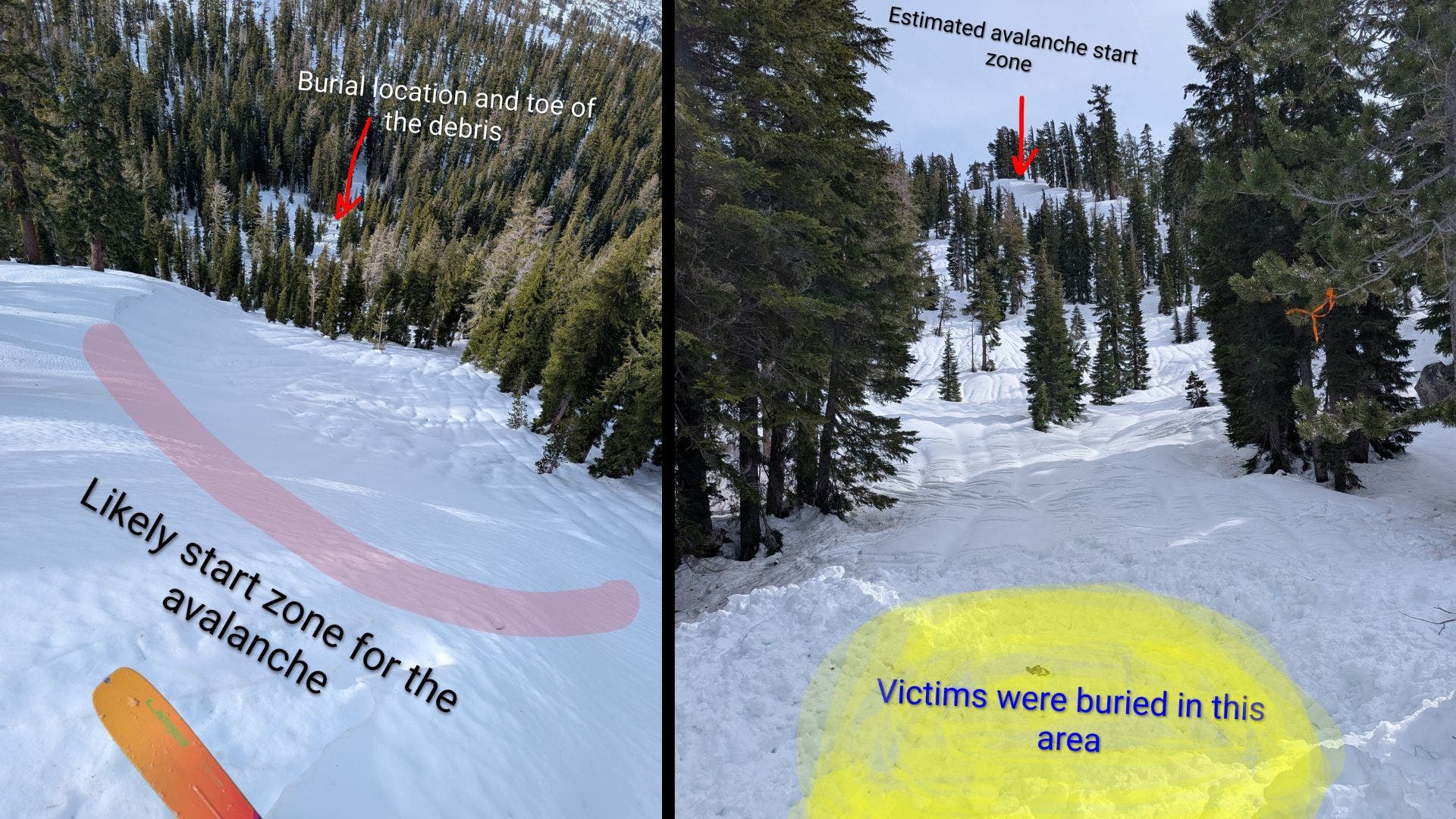
The report confirms that the avalanche likely originated on a slope with an angle between 36 and 40 degrees. "Around 30-degree slopes are where avalanches tend to happen," Rogers explained. "Any steeper, the snow tends to slough off during the storms. Less of an angle, the snow doesn’t run off."
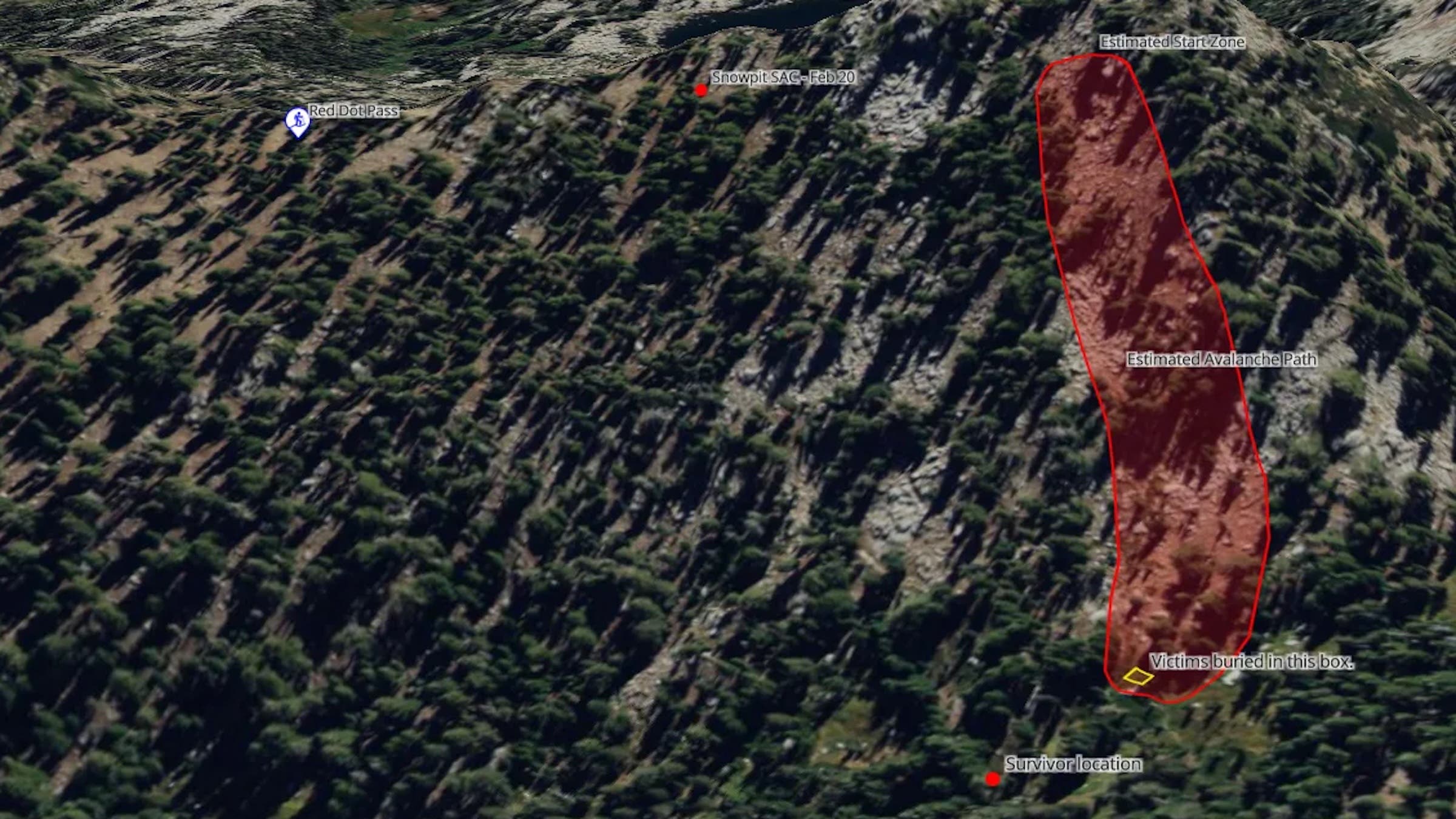
The victims were buried on a lower gradient of 22 to 25 degrees, an area known as the runout zone. The investigation found that the path of the slide cut through a well-established "slide path" that was devoid of "anchors"—natural features like large trees or rock outcroppings that can help stabilize a snowpack. Satellite imagery included in the report shows a clear, unobstructed path from the ridgeline to the valley floor, which allowed the avalanche to gain maximum velocity and mass.
The Human Factor: Group Size and Decision-Making
Perhaps the most scrutinized aspect of the report is the group’s tactical approach to the terrain. Avalanche safety protocols, as defined by the American Avalanche Association, dictate that only one person should be exposed to a potential slide path at a time. This "one-at-a-time" rule ensures that if a slide is triggered, the majority of the group remains safe to perform a rescue.
The group of 15, however, was traveling together when the slide occurred. The report notes: "Analysis of past avalanche accidents has indicated that larger group sizes (four or more people) have a higher chance of being caught in avalanches."
Experts suggest that large groups often fall victim to "heuristic traps." These include "social proof," where individuals assume the group is safe because no one else is expressing concern, and the "expert halo," where clients place absolute trust in guides even when conditions visibly deteriorate. The report points out that the sheer size of the group likely hampered communication and slowed their movement through the dangerous runout zone, increasing their window of exposure.
"My question is whether this group knew they were underneath the avalanche terrain during the storm," Rogers told investigators. He noted that the only way to mitigate the risk entirely would have been to remain in the backcountry huts and wait for the storm to subside.
Equipment and Rescue Limitations
A significant finding in the report involves the use of safety equipment. Several members of the party were equipped with avalanche airbag backpacks, a tool designed to help victims stay near the surface of a moving slide. However, none of the airbags were deployed.
The report explains that airbags require manual activation by the user. In high-velocity slides or situations where a victim is caught off guard, the window for deployment is often only a few seconds. Furthermore, the report clarifies that while airbags are effective in certain types of slides, they offer minimal protection if a victim is buried at the bottom of a deep runout zone or "terrain trap," where snow piles up to significant depths.
The rescue effort was also hindered by the depth of the burial. The sheer volume of the "Sierra Cement" made manual probing and shoveling an exhausting and time-consuming process for the two survivors. By the time the four survivors were extracted, the window for finding the remaining nine victims alive had closed.
Industry Implications and Official Responses
The release of the report has led to calls for stricter regulations within the backcountry guiding industry. The American Avalanche Association issued a statement following the report, emphasizing the need for more rigorous adherence to group size limits during "High" and "Extreme" danger ratings.
Industry analysts suggest that the incident may lead to a shift in how guide services operate during major storm cycles. Potential changes include mandatory "stay-in-place" orders when snowfall exceeds certain thresholds and a reevaluation of client-to-guide ratios in uncontrolled backcountry environments.
The National Avalanche Center’s report does not assign legal blame—as its primary purpose is educational and preventative—but it provides a factual foundation for potential civil litigation. The families of the victims have expressed a desire for the report to serve as a "turning point" for backcountry safety.
Conclusion and Safety Recommendations
The February 17 tragedy serves as a grim reminder of the inherent risks of winter backcountry travel, even for groups led by professionals. The combination of a 111-inch storm, 125 mph winds, and a pre-existing weak layer created a high-energy environment where the margin for error was non-existent.
The report concludes by reiterating fundamental safety tenets for all backcountry enthusiasts:
- Travel one at a time: Never expose more than one person to avalanche-prone slopes or runout zones simultaneously.
- Monitor the Snow Water Equivalent: Heavy, wet snow ("Sierra Cement") creates significant stress on underlying layers.
- Avoid large groups: Keep group sizes small to facilitate better communication and faster movement.
- Respect terrain traps: Be aware of what is above you, even if you are on a flat or low-angle slope.
- Heed weather warnings: During extreme storm cycles, the only 100 percent effective mitigation strategy is to avoid avalanche terrain entirely.
As the Tahoe community continues to mourn the loss of the nine victims, the findings of this report will likely be integrated into avalanche safety courses and professional guiding certifications for years to come, with the hope of preventing a recurrence of such a large-scale tragedy.


 Dwi Wanna
 Budi Mulyono
 Lukman Taruna Persada Ramadan
 Chandra Hamzah
 Gabriela Annisa