
 Tatiana Tantri Indah Sari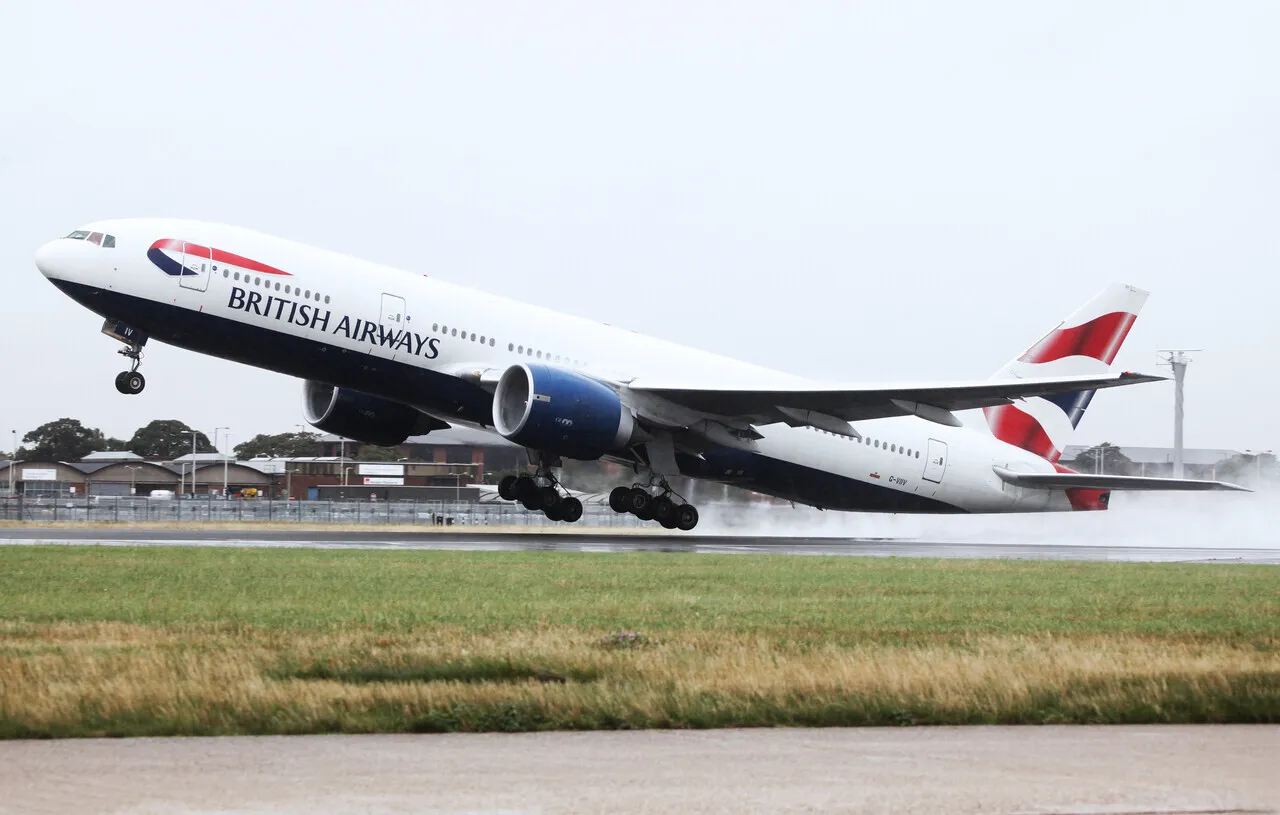
British Airways has initiated a significant shift in the landscape of commercial air travel by permitting passengers to make in-flight phone calls on its aircraft equipped with Starlink satellite internet technology, a decision poised to spark widespread discussion among travelers and industry stakeholders alike. This move, while legal within the United Kingdom and the European Union, stands in stark contrast to the long-standing prohibition on such calls in the United States, underscoring a growing divergence in global aviation policy regarding passenger connectivity. The airline has, however, issued a clear directive to its passengers, stating on its Starlink Wi-Fi webpage, "If you’re making a call, keep your voice low and use headphones," a proactive measure to mitigate potential disruptions to the cabin environment.
A Historical Perspective on In-Flight Connectivity
The concept of communication aboard aircraft has undergone a profound evolution since the dawn of commercial aviation. For decades, the cabin environment was largely a sanctuary from external communications, primarily due to technical limitations and safety concerns. Early attempts at in-flight telephony in the late 20th century, often utilizing seatback phones with exorbitant per-minute charges, never achieved widespread popularity. The advent of personal mobile phones in the 1990s presented a new challenge, leading to concerns about potential interference with aircraft avionics systems. While subsequent studies largely debunked the myth of significant electromagnetic interference from mobile phones, regulatory bodies like the U.S. Federal Communications Commission (FCC) maintained a ban on their use for voice calls, primarily citing concerns over network congestion on ground-based cellular towers and, crucially, passenger experience and comfort.
The turning point came with the widespread adoption of Wi-Fi technology. Initially slow and unreliable, in-flight Wi-Fi services have progressively improved, transforming from a niche offering to a near-standard expectation, particularly among business and premium travelers. Airlines began investing heavily in various satellite and air-to-ground (ATG) solutions, recognizing the growing demand for continuous connectivity. This push was largely driven by a desire to cater to a demographic increasingly reliant on digital communication for work and leisure, viewing robust Wi-Fi as a key differentiator in a competitive market.
Starlink Aviation: A Game Changer in Connectivity
The emergence of Starlink Aviation, SpaceX’s dedicated satellite internet service for aircraft, represents a significant leap forward in in-flight connectivity. Launched in late 2022, Starlink Aviation leverages a constellation of low-Earth orbit (LEO) satellites, promising unprecedented speeds and ultra-low latency compared to traditional geostationary (GEO) satellite systems or ATG networks. While older systems typically offered speeds in the range of 10-50 Mbps per aircraft, Starlink boasts potential speeds of up to 350 Mbps per aircraft, capable of supporting multiple data-intensive activities simultaneously, including video streaming, online gaming, and, crucially, high-quality voice and video calls.
The technical superiority of Starlink lies in its LEO architecture. Satellites orbiting at much lower altitudes (around 550 km) reduce signal travel time, leading to significantly lower latency (typically 20-40 milliseconds) compared to GEO satellites (over 500 milliseconds). This low latency is critical for real-time applications like voice calls and video conferencing, making the experience akin to using broadband internet on the ground. This technological prowess has made Starlink an increasingly attractive option for airlines globally looking to upgrade their in-flight Wi-Fi offerings and enhance the passenger experience, particularly for business and premium customers who demand seamless connectivity. Several airlines, including Hawaiian Airlines, Qatar Airways, and JSX, have already announced plans or begun implementing Starlink on their fleets, recognizing its potential to redefine the connected cabin experience.
British Airways’ Strategic Implementation and Guidelines
British Airways, a flagship carrier known for its premium services, has strategically embraced Starlink technology to bolster its customer offering. While the exact timeline for full fleet rollout of Starlink-enabled aircraft is ongoing, the airline’s decision to permit voice calls marks a notable deviation from industry norms in jurisdictions where it is permissible. This move aligns with BA’s broader strategy to enhance its appeal to business and discerning leisure travelers who prioritize productivity and connectivity during their journeys.
The airline’s cautious approach is evident in its specific guidance for passengers: "If you’re making a call, keep your voice low and use headphones." This instruction is not merely a suggestion but a critical component of managing the potential social ramifications of in-flight calls. By encouraging discrete communication, British Airways aims to balance the newfound freedom of connectivity with the long-held expectation of a relatively quiet and respectful cabin environment. This nuanced approach acknowledges the inherent tension between individual communication needs and the collective desire for peace among passengers. It places the onus of responsible usage squarely on the individual, a challenging proposition for cabin crew to consistently monitor and enforce across an entire flight.
The Divergent Regulatory Landscape: US vs. UK/EU
The legality of in-flight phone calls presents a stark contrast between regulatory frameworks. In the United States, the Federal Communications Commission (FCC) maintains a ban on the use of mobile phones for voice communications on aircraft, rooted in its Part 22 rules. This ban, originally implemented to prevent interference with terrestrial cellular networks, has persisted even as technical arguments against interference have weakened. A primary rationale cited by the FCC and other US agencies has shifted to passenger comfort and the prevention of a noisy cabin environment, reflecting strong public sentiment against in-flight calls. Despite several attempts to review or lift the ban, including a proposal in 2013 that faced overwhelming public and congressional opposition, the FCC has consistently upheld the prohibition.
Conversely, within the United Kingdom and the broader European Union, regulatory bodies like the UK Civil Aviation Authority (CAA) and the European Union Aviation Safety Agency (EASA) have taken a more permissive stance. Since 2008, EASA has allowed airlines to permit the use of mobile phones for voice calls, provided the aircraft is equipped with a "pico-cell" system that connects to satellite networks, effectively creating an on-board mini-network. This system ensures calls are routed via satellite, not terrestrial networks, thus avoiding ground network interference. The UK CAA follows EASA guidelines for aircraft registered in the UK. This regulatory environment has allowed some European carriers to offer mobile telephony services for years, though its adoption has been limited, largely due to passenger aversion and the operational complexities for airlines. British Airways’ decision to leverage Starlink, a more robust and reliable connectivity platform, for this purpose signifies a renewed interest in exploring this permissible service.
Industry Reactions and Passenger Sentiment: A Divided Opinion
The airline industry has largely watched the debate over in-flight calls with a degree of apprehension. While offering comprehensive connectivity is seen as a competitive advantage, particularly for business travelers, the potential for alienating a significant portion of passengers who value peace and quiet has historically deterred widespread adoption of voice call services.
From British Airways’ perspective, this move is likely presented as an enhancement to passenger choice and a response to the evolving demands of modern travelers. While specific official statements beyond the website guidance are yet to fully elaborate on the airline’s rationale, it can be inferred that BA views this as a premium service, differentiating itself in a highly competitive market. Starlink, for its part, would likely emphasize the technological enablement of such services, showcasing the capabilities of its high-bandwidth, low-latency network to support diverse applications, including real-time communication.
Passenger sentiment on in-flight phone calls has consistently shown a strong divide. Numerous surveys conducted over the past two decades have revealed a significant majority of travelers expressing discomfort or outright opposition to allowing voice calls in the cabin. Concerns typically center around noise pollution, invasion of privacy, and the general disruption to what many consider a "sanctuary" from constant digital demands. However, a minority, often comprising business travelers or those with urgent communication needs, express a desire for the option to make calls. This dichotomy presents a significant challenge for airlines seeking to satisfy all segments of their customer base.
Implications for Passenger Experience and Cabin Dynamics
British Airways’ decision introduces complex implications for the in-flight passenger experience. While the freedom to communicate is a clear benefit for some, the potential for increased noise levels and a diminished sense of tranquility within the cabin is a significant concern for others. The "social contract" of air travel, which implicitly includes mutual respect for personal space and quiet, could be tested.
Cabin crew, already tasked with managing a myriad of passenger needs and safety protocols, will face the additional challenge of enforcing the "low voice and headphones" directive. This could lead to increased friction between passengers and crew, as well as between passengers themselves, should individuals fail to adhere to the guidelines. The efficacy of these rules will largely depend on passenger compliance and the proactive efforts of cabin staff to mediate potential disturbances. The success or failure of this experiment could very well dictate whether other airlines in permissive jurisdictions follow suit.
Broader Market and Competitive Dynamics
This move by British Airways is not merely an operational change; it is a strategic maneuver that could influence the broader airline market. By being an early adopter of Starlink-enabled voice calls, BA is positioning itself at the forefront of in-flight connectivity innovation. This could serve as a significant competitive differentiator, particularly on routes where business travelers are prevalent and where the option to make calls is legally permissible. Other airlines, especially those competing directly with British Airways on transatlantic or intra-European routes, will be closely observing the outcomes. Should BA successfully manage the passenger experience and demonstrate a positive return on investment, it could pressure competitors to reconsider their own policies and accelerate their adoption of advanced connectivity solutions like Starlink.
The role of in-flight Wi-Fi as a revenue generator and a passenger loyalty tool is also evolving. As connectivity becomes faster and more reliable, airlines can offer more sophisticated tiered services, potentially including premium access for voice calls or video conferencing. This opens up new ancillary revenue streams and strengthens the value proposition for premium cabin customers.
The Future of In-Flight Communication and Regulatory Evolution
British Airways’ bold step could serve as a crucial test case for the future of in-flight communication. While the US regulatory environment remains steadfastly opposed to in-flight calls, the technological advancements exemplified by Starlink, coupled with the increasing global demand for seamless connectivity, might eventually prompt a re-evaluation of policies worldwide. The fundamental question remains: how can airlines balance the desire for connectivity with the preservation of a comfortable and respectful cabin environment for all passengers?
The success of British Airways’ initiative will depend on several factors: the effectiveness of their guidelines, the behavior of their passengers, and the overall perception of the service. If managed well, it could herald a new era of truly connected air travel. If poorly executed, it risks alienating a significant portion of its customer base and reinforcing the arguments against in-flight calls. Ultimately, British Airways is not just offering a new service; it is participating in a live experiment that could shape the future of air travel etiquette and policy for years to come.




 Anjar Salim
 Chandra Hamzah
 Budi Mulyono
 Lukman Taruna Persada Ramadan
