
 Anjar Salim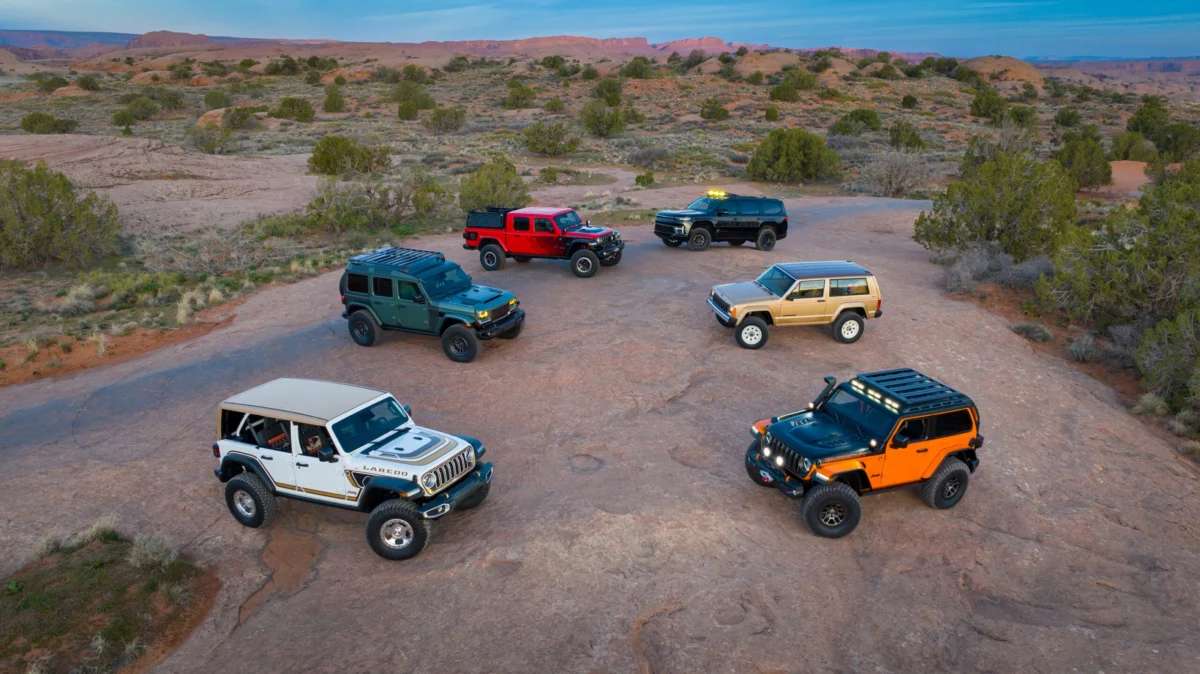
The 60th anniversary of the Easter Jeep Safari (EJS) saw the Moab desert transformed into a high-performance testing ground as Jeep unveiled a fleet of functional concept vehicles designed to showcase the brand’s engineering heritage and future design direction. Held in the rugged terrain of Moab, Utah, the 2026 event drew an estimated 15,000 off-road enthusiasts to a town with a permanent population of just 5,000, underscoring the enduring cultural and economic significance of the gathering. Among the various prototypes presented, three specific models—the Jeep XJ Pioneer, the Jeep Wrangler Anvil 715, and the JPP Buzzcut—emerged as the primary highlights, representing a blend of 1980s nostalgia, military-inspired utility, and modern accessory integration.
Historical Context and the Evolution of Easter Jeep Safari
The Easter Jeep Safari was established in 1967 by the Red Rock 4-Wheelers, initially conceived as a single-day trail ride on the Behind the Rocks Trail. Over six decades, the event has expanded into a nine-day international phenomenon that serves as the unofficial kickoff for the off-roading season. For the Jeep brand, EJS has evolved from a grassroots community gathering into a critical strategic platform for debuting concept vehicles and testing Jeep Performance Parts (JPP) in real-world conditions.
Unlike traditional automotive exhibitions where concepts are static displays of plastic and clay, the EJS concepts are fully operational machines. The 2026 lineup arrived at a pivotal moment for the brand, as it balances its traditional internal combustion legacy—epitomized by the high-displacement HEMI V8—with an aggressive shift toward electrification and the revival of legacy nameplates like the Cherokee.
The Jeep XJ Pioneer: A Technical and Nostalgic Resto-mod
The Jeep XJ Pioneer concept represents a meticulous restoration and modification of a 1984 Jeep Cherokee, the vehicle widely credited with pioneering the modern compact SUV segment. Built on a first-generation donor car, the XJ Pioneer was designed to coincide with the reintroduction of the Cherokee nameplate to the global market.
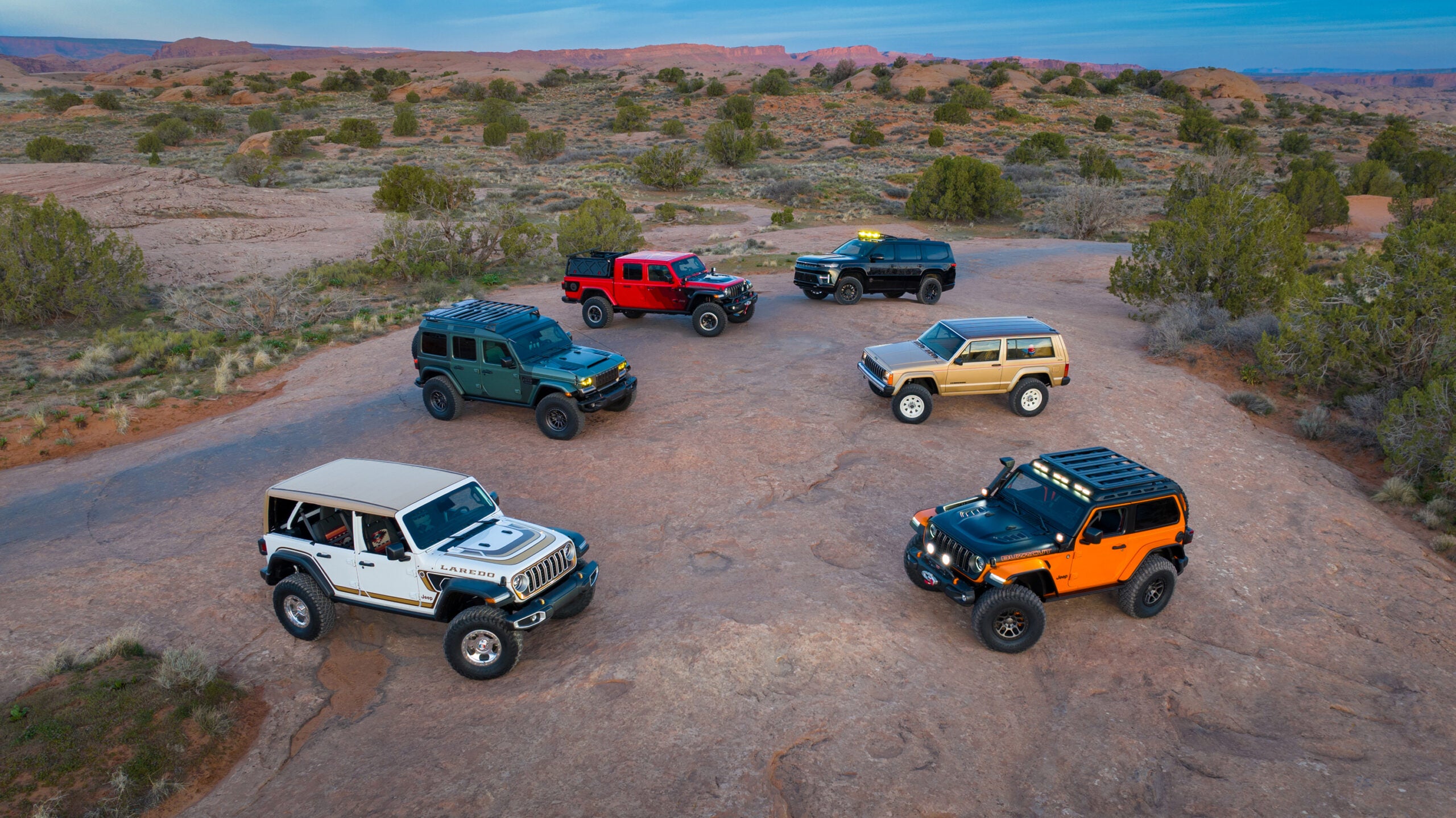
Lead Design Manager Chris Piscatelli directed the project with an emphasis on "olfactory and visual authenticity." While the exterior features modern enhancements, the interior was preserved to maintain the aesthetic of the 1980s. Technical modifications to the XJ Pioneer include:
- Suspension and Lift: A custom 2-inch suspension lift kit designed to accommodate larger tires while maintaining the original unibody integrity.
- Wheel and Tire Package: 33-inch BFGoodrich All-Terrain tires mounted on custom 17-inch wheels.
- Body Armor: Carbon fiber fender flares designed to reduce weight and provide additional clearance, along with heavy-duty rock rails for underbody protection.
- Drivetrain Enhancements: A quick-disconnecting sway bar to allow for increased wheel articulation on technical obstacles.
The interior design, described by Piscatelli as "Fifty Shades of Brown," features era-appropriate beaded seat covers and a period-correct dashboard. The choice to use a pristine 1984 donor vehicle reflects Jeep’s commitment to "resto-modding" as a growing trend in the enthusiast community, where vintage aesthetics are paired with modern off-road capability.
The Jeep Wrangler Anvil 715: Military Heritage and HEMI Performance
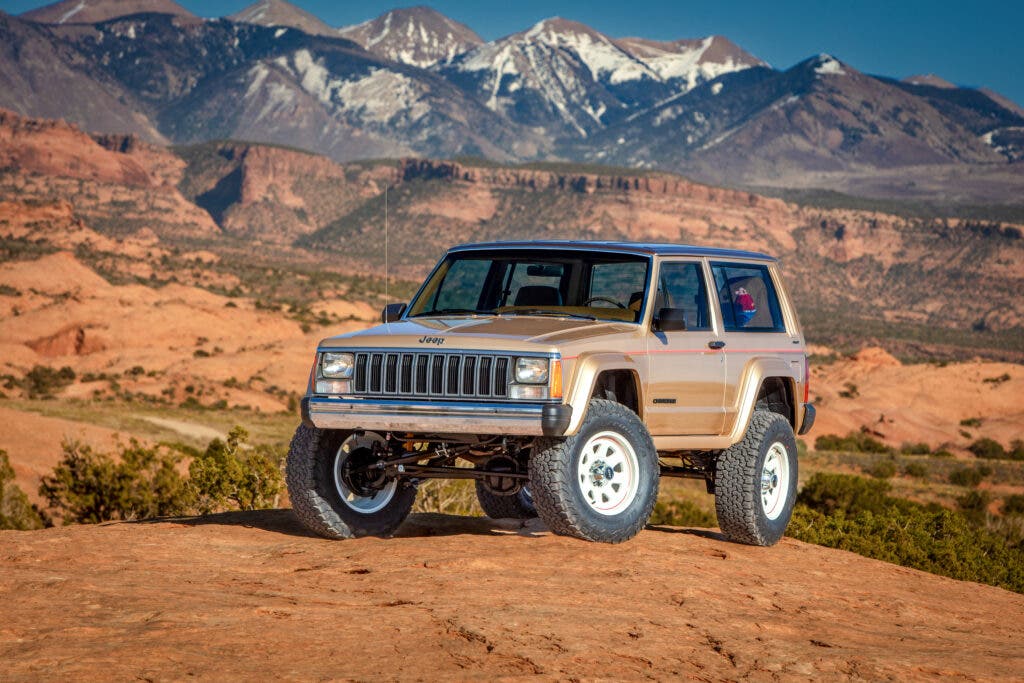
In stark contrast to the retro-civilian appeal of the XJ Pioneer, the Jeep Wrangler Anvil 715 is a heavy-duty concept built for durability and high-output performance. Constructed on the foundation of a Wrangler 392, the Anvil 715 utilizes a 6.4-liter HEMI V8 engine capable of producing 470 horsepower and 470 lb-ft of torque.
The design language of the Anvil 715 draws heavily from the Kaiser Jeep M715, a 1.25-ton military truck introduced in the late 1960s. The concept features a "shark-nosed" front fascia and a blunt grille configuration that departs from the traditional seven-slot vertical design. Key features of the Anvil 715 include:
- Overlanding Utility: A non-removable roof structure equipped with integrated skylights and a heavy-duty roof rack system.
- Recovery and Maintenance: An integrated onboard air system with quick-disconnect fittings, allowing drivers to adjust tire pressure for different terrains without external compressors.
- Obstacle Protection: The inclusion of "limb risers"—steel wires extending from the hood to the roof—designed to deflect low-hanging branches away from the windshield during forest navigation.
- Chassis and Armor: Steel bumpers and rock rails designed for extreme approach and departure angles.
Industry analysts suggest that the Anvil 715 serves as a potential "final salute" to the HEMI engine in the Wrangler platform, as Stellantis continues to transition toward the "Hurricane" twin-turbo inline-six and 4xe plug-in hybrid powertrains. On the Fins and Things trail, the vehicle demonstrated the low-end torque necessary for technical rock crawling, idling up steep inclines with minimal driver input.
The JPP Buzzcut: Minimalism and Accessory Integration
The third standout of the 60th-anniversary fleet is the JPP Buzzcut, a concept developed by Jeep’s Mopar/Jeep Performance Parts division. The Buzzcut is a two-door Wrangler designed with a focus on weight reduction and "flickable" maneuverability.
The most striking modification is a 2-inch chop to the roofline, which, combined with a fastback silhouette, creates a more aggressive and aerodynamic profile. The Buzzcut is finished in "Vitamin C Orange," a high-visibility hue intended to highlight the vehicle’s role as a lifestyle-oriented weekend wheeler. Key technical specifications include:
- Storage Solutions: The removal of the rear seats in favor of a custom-engineered, lockable drawer-storage system, catering to the needs of solo or duo overlanders.
- Lighting and Visibility: A comprehensive suite of TYRI LED lights with orange-anodized rings, providing 360-degree illumination for night trailing.
- Interior Upgrades: High-back performance seats upholstered in a combination of black leather and suede with orange contrast stitching.
- Roof Architecture: A Rhino-Rack platform system mounted directly to the modified roofline for gear hauling.
The Buzzcut serves as a rolling catalog for JPP, showcasing how existing Mopar accessories can be integrated with custom bodywork to create a specialized off-road tool. Its two-door configuration remains a favorite among purists who prioritize a shorter wheelbase for tight technical trails where four-door models may struggle.
Economic Impact and Local Implications for Moab
The 60th anniversary of the Easter Jeep Safari provided a significant economic injection into the Grand County region. With 15,000 visitors descending on a town of 5,000, local hospitality, retail, and automotive service sectors reported record-breaking revenues. However, the surge in population also highlights the ongoing logistical challenges of managing high-density tourism in ecologically sensitive areas.
The Sand Flats Recreation Area, home to the Fins and Things trail used for the concept testing, is managed through a unique partnership between Grand County and the Bureau of Land Management (BLM). The event’s success relies on the "Tread Lightly!" principles, which Jeep and the Red Rock 4-Wheelers promote to ensure that the trails remain open and sustainable for future generations.
Strategic Implications for the Jeep Brand
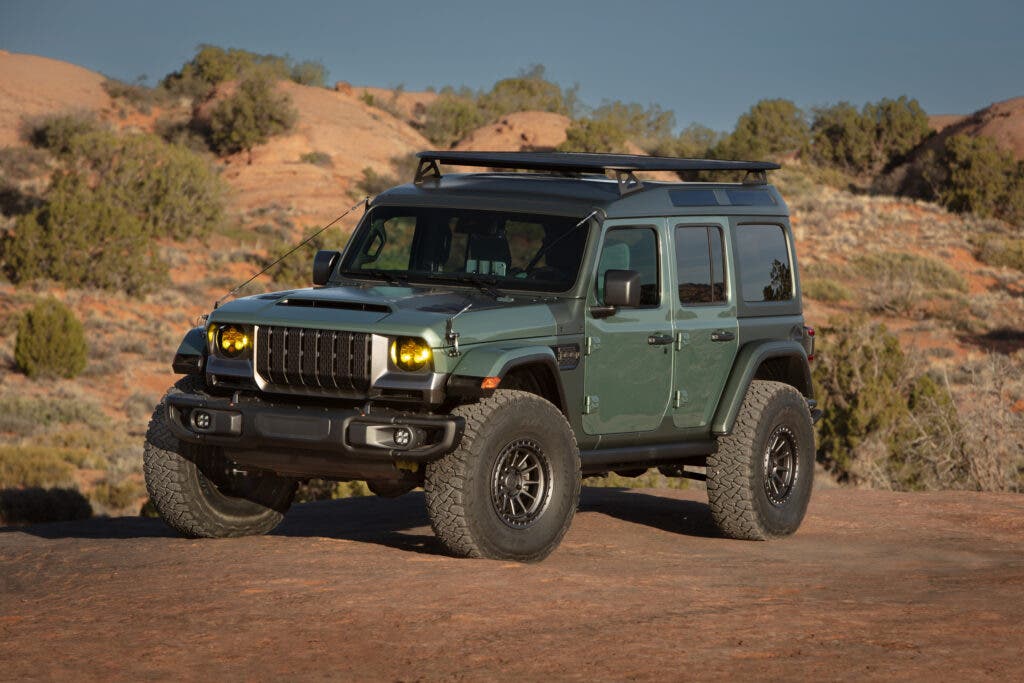
The unveiling of these three concepts provides a glimpse into Jeep’s broader corporate strategy for the late 2020s. By showcasing a resto-mod (XJ Pioneer), a high-performance internal combustion beast (Anvil 715), and an accessory-heavy specialist (Buzzcut), Jeep is attempting to appeal to three distinct segments of its consumer base:
- The Legacy Enthusiast: Those who value the brand’s history and are interested in the revival of nameplates like the Cherokee.
- The Power User: Off-roaders who demand maximum displacement and military-grade durability.
- The Customizer: A younger demographic focused on personalization and the "overlanding" lifestyle, where vehicle utility is as important as off-road prowess.
Official responses from Jeep executives during the event indicated that while these specific concepts may not enter mass production in their current forms, many of the individual components—such as the Anvil’s onboard air system and the Buzzcut’s storage solutions—are being evaluated for future JPP catalogs or as factory options.
Conclusion
The 60th Anniversary Easter Jeep Safari served as more than just a promotional event; it was a demonstration of Jeep’s ability to innovate within the constraints of its own legendary history. As the automotive industry faces a period of rapid technological change, the trio of concepts showcased in Moab suggests that Jeep intendeds to remain anchored in its "trail-rated" identity while exploring new avenues in design and utility. For the thousands of enthusiasts gathered by the fire pits of Moab in April 2026, the message was clear: whether powered by a vintage engine or a modern HEMI, the brand’s future remains deeply rooted in the red rocks of the Utah desert.




 Chandra Hamzah
 Tatiana Tantri Indah Sari
 Budi Mulyono
