Gabriela Annisa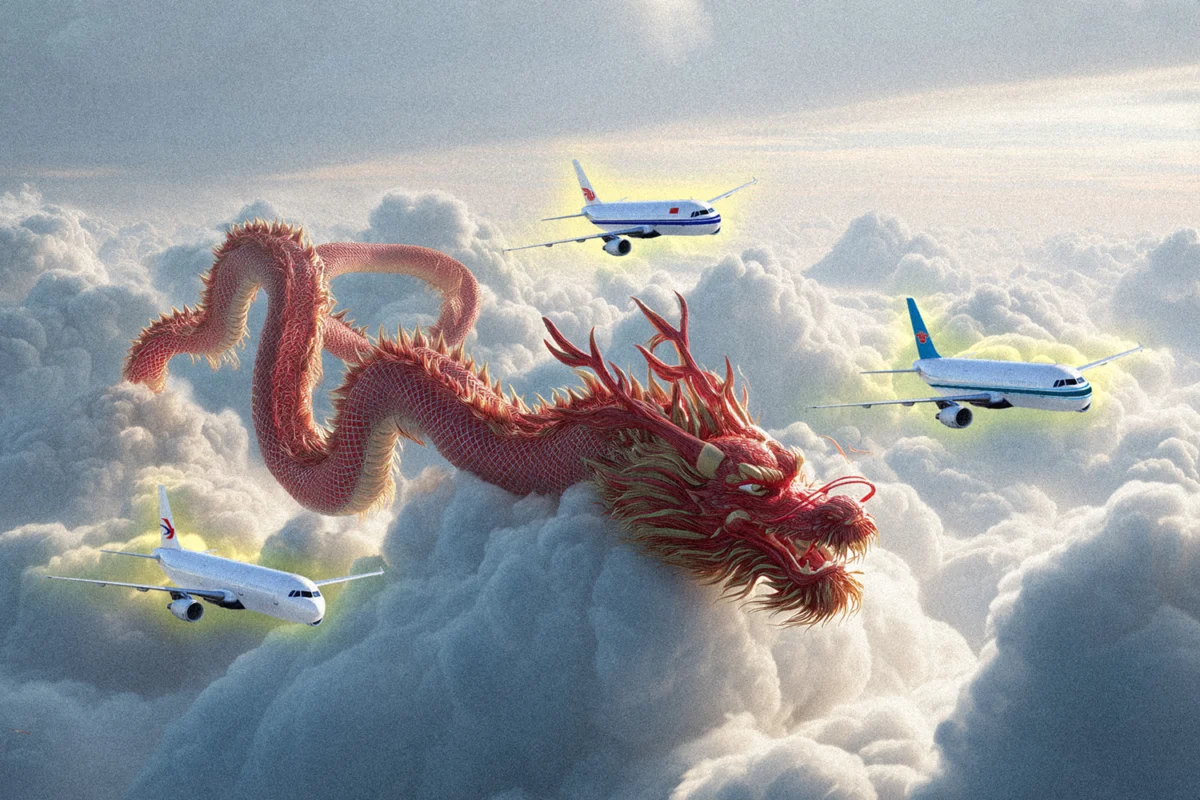
Mainland China’s "Big Three" state-owned airlines—Air China, China Eastern Airlines, and China Southern Airlines—find themselves at a critical juncture, navigating a challenging post-pandemic aviation landscape that has seen them consistently underperform their East Asian counterparts. For six consecutive years, these aviation giants have grappled with significant headwinds, a stark contrast to the robust recovery and soaring premium demand enjoyed by carriers in neighboring Japan, South Korea, Singapore, and the wider Asia-Pacific region. This prolonged struggle is multifaceted, stemming from a complex interplay of lost North American routes, an aging fleet profile, intense competition both domestically and regionally, the relentless pressure of rising fuel costs, and persistent geopolitical tensions. The question of whether they can effectively recalibrate and catch up, or if these powerful forces will continue to impede their recovery, is central to the future of China’s global aviation ambitions.
A Divergent Recovery Path: East Asia vs. Mainland China
The global aviation industry has largely rebounded from the unprecedented disruptions of the COVID-19 pandemic, with many airlines reporting record profits driven by pent-up travel demand. This recovery has been particularly strong in East Asia, where carriers like Japan Airlines (JAL), ANA Holdings, Korean Air, Asiana Airlines, Singapore Airlines, and Cathay Pacific have capitalized on a surge in high-yield premium traffic and optimized their route networks. These airlines were quick to restore international connectivity, often leveraging strong transfer traffic flows and robust cargo operations to bolster revenues while passenger demand ramped up. For instance, Singapore Airlines reported a record annual profit of S$2.67 billion (US$1.98 billion) for fiscal year 2023-2024, citing strong demand across all cabin classes. Similarly, Japanese carriers have seen international passenger volumes exceed pre-pandemic levels on many routes, buoyed by a weaker yen attracting inbound tourism.
In stark contrast, mainland China’s Big Three have lagged significantly. While domestic travel within China recovered rapidly, even surpassing 2019 levels in certain periods, the international segment—particularly long-haul routes—has remained stubbornly depressed. This disparity highlights a fundamental divergence in market conditions and strategic agility. While their regional competitors were aggressively restoring long-haul capacity and attracting lucrative business and leisure travelers, Chinese carriers faced a more constrained environment, grappling with a confluence of factors that limited their ability to fully participate in the global recovery.
The Erosion of Trans-Pacific Dominance: Lost North American Routes
One of the most significant blows to China’s leading airlines has been the dramatic contraction of their North American networks. Prior to the pandemic, trans-Pacific routes were highly profitable corridors, crucial for both business travel and high-value cargo. In 2019, Chinese airlines operated approximately 150 direct flights per week to the United States alone, carrying millions of passengers and generating substantial revenue. However, the onset of COVID-19 led to severe travel restrictions, followed by persistent geopolitical tensions between Beijing and Washington, D.C., which severely curtailed air service.
Chronology of Route Contraction:
- Early 2020: All direct flights between China and the U.S. were largely suspended due to the pandemic.
- Mid-2020 – Early 2023: A prolonged period of minimal service, with both governments imposing strict limits on flight frequencies. For much of this period, weekly flights between the two nations hovered in the single digits for each side, a mere fraction of pre-pandemic levels.
- Mid-2023 Onwards: Gradual, albeit slow, increments in approved flight frequencies. As of late 2023 and early 2024, Chinese carriers were collectively operating around 24-30 round-trip flights per week to the U.S., compared to approximately 150 before the pandemic. This represents a reduction of over 80% in direct capacity. Similar, though less severe, reductions have been observed on routes to Canada.
This drastic reduction has profound implications. North American routes are typically high-yield, attracting a significant proportion of premium passengers and high-value cargo. Their absence has led to a substantial loss of revenue for the Big Three. Industry estimates suggest that the revenue generated from trans-Pacific routes could account for 15-20% of these airlines’ international passenger revenue in a normal year. Furthermore, the limited direct connectivity forces many travelers to transit through hubs in Seoul, Tokyo, or Singapore, inadvertently strengthening these competitor airlines and their respective hubs. This "detour effect" not only costs Chinese airlines direct revenue but also diminishes their global network appeal and competitive edge. Analysts at CAPA Centre for Aviation have noted that this capacity deficit is not merely operational but represents a strategic weakening of China’s direct economic and cultural links with a vital market.
An Aging Fleet and the Imperative for Modernization
Another significant hurdle for China’s Big Three is the relatively older average age of their wide-body fleets compared to many international rivals. While exact figures fluctuate, industry reports often indicate that the average age of long-haul aircraft for Chinese carriers can be several years older than that of leading airlines in Japan, South Korea, or the Middle East. For instance, while some competitors have rapidly introduced fuel-efficient models like the Boeing 787 Dreamliner and Airbus A350 in large numbers, Chinese airlines still operate a substantial number of older Boeing 747s, 777s, and Airbus A330s for long-haul routes.
Impact of an Aging Fleet:
- Fuel Inefficiency: Older aircraft are inherently less fuel-efficient. With fuel typically accounting for 25-35% of an airline’s operating costs, even marginal differences in fuel burn translate into significant financial burdens, especially when global oil prices are volatile or high. A 10-15% difference in fuel efficiency between a new-generation aircraft and an older model can erode profit margins significantly on long-haul flights.
- Higher Maintenance Costs: As aircraft age, they require more frequent and intensive maintenance, leading to increased expenditure on parts, labor, and downtime.
- Passenger Experience: Newer aircraft often feature more modern cabin interiors, improved in-flight entertainment systems, better air filtration, and quieter cabins, enhancing passenger comfort and satisfaction. An outdated cabin can make an airline less attractive, particularly to premium travelers who have more choices.
- Environmental Concerns: In an era of increasing environmental consciousness, operating less fuel-efficient aircraft also presents a challenge to meeting sustainability goals and public perception.
While Chinese carriers have placed orders for newer aircraft, the pace of delivery and integration into their fleets has been slower than ideal, partly due to global supply chain issues affecting Boeing and Airbus, and potentially due to capital allocation strategies during a period of reduced international revenue. This lag in fleet modernization puts them at a competitive disadvantage, particularly on long-haul routes where operational efficiency and passenger appeal are paramount.
Intense Competition: A Battle on Multiple Fronts
The competitive landscape for China’s Big Three is fierce, operating on both domestic and international fronts.
- Domestic Competition: Within mainland China, while the Big Three dominate, they face significant challenges from a growing number of smaller, agile regional carriers and low-cost airlines. These smaller players often focus on specific routes or regions, sometimes offering more competitive pricing or specialized services. The sheer volume of domestic air travel in China means that even a small erosion of market share can translate into substantial revenue losses for the major carriers. This internal pressure limits their ability to raise domestic fares, impacting overall profitability.
- Regional Competition: Internationally, the battle is even more intense. Airlines from neighboring hubs like Singapore (Singapore Airlines), Hong Kong (Cathay Pacific), Seoul (Korean Air, Asiana Airlines), and Tokyo (JAL, ANA) actively compete for Chinese outbound travelers, as well as for transfer traffic. These hubs often offer superior global connectivity, more frequent services, and a wider range of destinations, particularly to Europe and North America. For example, a traveler from a secondary Chinese city might find it more convenient and cost-effective to fly to Europe via Seoul or Tokyo rather than connecting through Beijing or Shanghai on a Chinese carrier, especially given the reduced direct long-haul options from mainland China.
- Premium Demand Gap: While other East Asian carriers are thriving on red-hot premium demand, Chinese airlines face a more subdued market for their premium cabins on international routes. This could be due to a combination of factors including visa restrictions, slower recovery of business travel, and perhaps a perception gap in service quality compared to established premium brands like Singapore Airlines or Cathay Pacific.
This multi-pronged competition puts significant downward pressure on yields, forcing Chinese airlines to often compete on price, which further strains their financial performance.
The Unrelenting Squeeze of Fuel Costs
Fuel is typically the largest or second-largest operating expense for an airline. The past few years have seen significant volatility in global oil prices, exacerbated by geopolitical events and supply chain disruptions. Airlines with less fuel-efficient fleets are disproportionately affected by these price spikes. When crude oil prices surge, older aircraft consume more fuel per passenger-kilometer, directly impacting the bottom line.
Illustrative Impact:
- If fuel constitutes 30% of an airline’s operating costs, a 10% increase in fuel prices (e.g., from $80 to $88 per barrel) could translate to a 3% increase in overall operating costs, assuming no hedging or efficiency gains. For an airline with billions in annual operating expenses, this translates to hundreds of millions in additional costs.
- While airlines can implement fuel surcharges, these are often limited by market competition and consumer sensitivity, making it difficult to fully pass on the increased costs to passengers without impacting demand.
- Hedging strategies can mitigate some risks, but they are not foolproof and can even backfire if prices move unexpectedly.
Chinese airlines, with their extensive networks and often older wide-body aircraft, have felt this squeeze acutely. The inability to fully recover international passenger volumes, particularly high-yield ones, means they have less financial flexibility to absorb these rising costs compared to their more profitable regional rivals.
Geopolitical Headwinds and Diplomatic Tensions
The broader geopolitical landscape, particularly the complex relationship between China and several Western nations, casts a long shadow over the airline industry. Diplomatic tensions can manifest in various ways that directly impact air travel:
- Visa Restrictions and Travel Advisories: Changes in visa policies or the issuance of travel advisories by governments can significantly deter international travel. For instance, if a country issues a travel warning for China due to geopolitical reasons, it directly impacts the number of inbound and outbound passengers.
- Regulatory Hurdles: Tensions can lead to delays or difficulties in obtaining regulatory approvals for new routes, increased flight frequencies, or even aircraft certifications. The slow increase in U.S.-China flight frequencies is a direct example of such regulatory and diplomatic friction.
- Passenger Confidence: Negative media coverage or perceived political instability can erode passenger confidence, making travelers hesitant to book flights, especially for leisure or non-essential business trips.
- Airspace Restrictions: While less common, extreme geopolitical events could theoretically lead to airspace restrictions, forcing longer, more expensive routes.
These diplomatic challenges create an unpredictable operating environment, making long-term strategic planning difficult for Chinese airlines. Unlike purely commercial factors, geopolitical issues are largely beyond the control of airline management, requiring governmental intervention or resolution to alleviate the pressure.
Strategic Responses and Future Outlook
Despite these formidable challenges, China’s Big Three are not static. They are actively pursuing strategies to mitigate the impact and position themselves for a stronger recovery.
- Domestic Market Consolidation: With international recovery slow, a renewed focus on strengthening their vast domestic networks has been a priority. This includes optimizing schedules, enhancing regional connectivity, and improving service standards within China.
- Gradual International Rebuilding: While North American routes remain challenging, efforts are underway to restore capacity on other international routes, particularly to Southeast Asia, Europe, and Oceania, where demand has shown more resilience.
- Fleet Modernization Initiatives: Despite the current constraints, all three airlines have long-term plans for fleet renewal. Air China, China Eastern, and China Southern have significant outstanding orders for next-generation aircraft like the Airbus A320neo family, A350s, and potentially more Boeing 787s and 737 MAX jets once regulatory and political hurdles are fully cleared. The introduction of China’s domestically produced C919 narrow-body jet by China Eastern is also a symbolic step towards modernizing and diversifying the fleet, though its impact on long-haul international routes is limited for now.
- Enhanced Digitalization and Service: Investing in digital platforms for bookings, check-ins, and in-flight services is crucial to improving passenger experience and operational efficiency, aiming to catch up with global best practices.
- Government Support: As state-owned enterprises, these airlines often benefit from direct or indirect government support, which provides a financial safety net during challenging times. However, this support also comes with expectations regarding national strategic objectives and economic contributions.
Statements from Industry and Analysts:
"The recovery of China’s international aviation market is fundamentally linked to the broader geopolitical climate and government policies," commented a Beijing-based aviation analyst, speaking on background. "While domestic demand has roared back, the constraints on long-haul routes, particularly to key Western markets, remain a significant impediment to profitability for the Big Three. They are operating with one hand tied behind their back compared to their regional rivals."
An executive from China Eastern Airlines, in a recent investor call, acknowledged the "complex operating environment" but emphasized the airline’s commitment to "optimizing route structures, enhancing operational efficiencies, and prioritizing customer experience." They highlighted the robust performance of the domestic market as a "stabilizing factor" while international routes continue their "gradual but steady" restoration.
Broader Impact and Implications
The prolonged struggle of China’s Big Three has wider implications beyond their balance sheets.
- Impact on China’s Global Connectivity: A weakened international airline sector hinders China’s ambition to be a leading global aviation hub and limits its direct connectivity for business, tourism, and cultural exchange.
- Tourism Sector: Reduced international flight capacity directly impacts inbound tourism to China, a sector the government is keen to revive to boost economic growth.
- Economic Competitiveness: For multinational corporations operating in China, the reduced direct air links can increase travel times and costs, potentially affecting business efficiency and investment decisions.
- Airline Industry Dynamics: The underperformance of Chinese carriers could shift the balance of power in Asian aviation, further entrenching the dominance of hubs like Singapore, Seoul, and Tokyo for international transfer traffic.
The coming years will be crucial for China’s Big Three. Their ability to overcome the intertwined challenges of geopolitical friction, fleet modernization, and intense competition will determine not only their individual success but also China’s standing in the global aviation landscape. A comprehensive strategy that addresses both operational efficiencies and leverages diplomatic avenues for route restoration will be essential for these giants to truly "catch up" and reclaim their position as formidable players in the international skies.

 Chandra Hamzah
 Tatiana Tantri Indah Sari
 Budi Mulyono
 Anjar Salim