
 Gabriela Annisa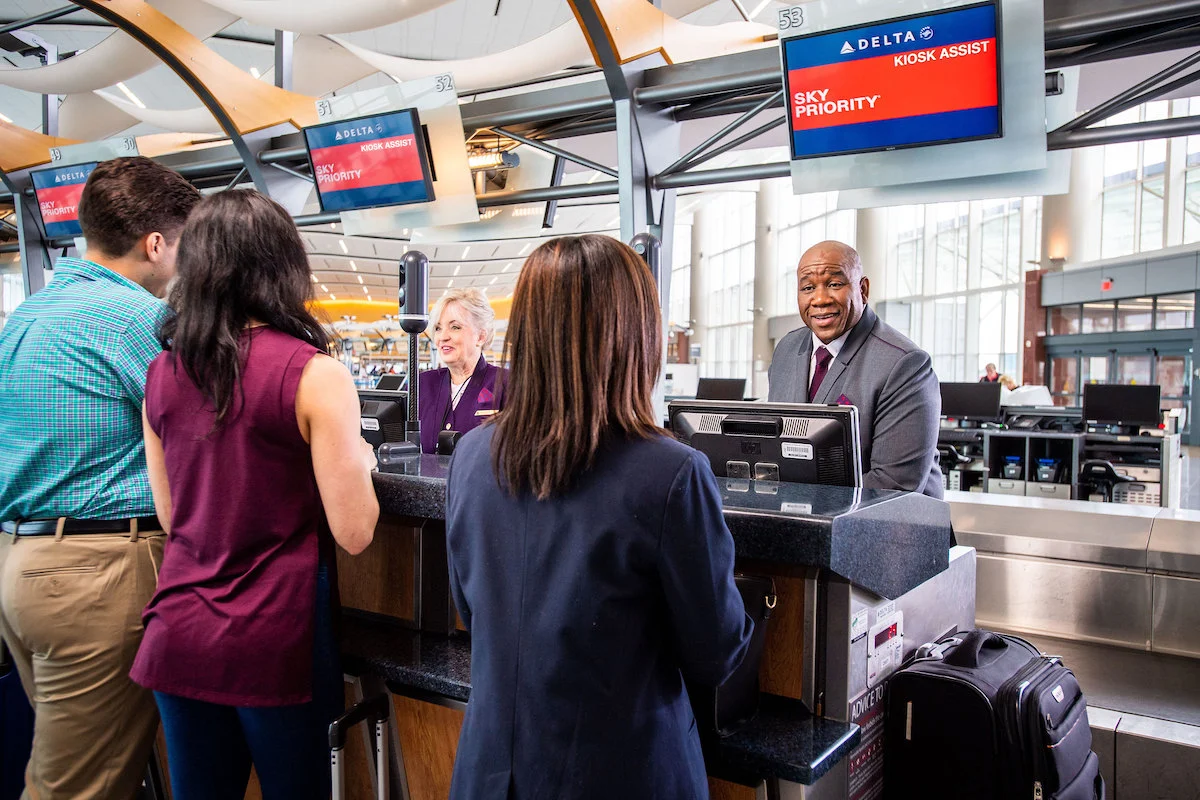
Delta Air Lines has reported its first-quarter 2024 results, revealing a consistent operating margin but highlighting the significant challenge posed by escalating fuel prices. The airline, a bellwether for the U.S. aviation sector, presented its Q1 numbers on April 8th, setting the tone for the broader industry’s earnings season. Industry analysts, including Jay Shabat of Airline Weekly, noted Delta’s remarkable consistency in operating margin, achieving 5% for the first quarter for the third consecutive year, and 4% three years prior, excluding special items. This steadfast performance comes despite considerable market volatility and economic shifts.
The primary concern emanating from Delta’s earnings call was the dramatic surge in fuel costs. The average jet fuel price in the U.S. reached approximately $4.80 per gallon, according to the Airlines for America index, a stark increase compared to Delta’s average fuel price of $2.30 per gallon in 2023. This more than doubling of fuel costs presents a substantial financial headwind. Delta projects that if current fuel price trends persist, its fuel costs in the second quarter could increase by an additional $2 billion. Such an increase would profoundly impact profitability, with the airline forecasting a Q2 operating margin of just 6-8%, a significant decline from the 13% reported in the same period last year. This projection underscores the vulnerability of even resilient carriers to external market pressures, particularly geopolitical events affecting global oil supply.
Geopolitical Context and Market Volatility
The sharp escalation in fuel prices is largely attributed to renewed geopolitical tensions, including the ongoing Middle Eastern conflict. The volatile nature of the oil markets was vividly illustrated on the day of Delta’s earnings call, with prices fluctuating dramatically in response to news of a temporary ceasefire. West Texas Intermediate (WTI) crude oil, which had soared, saw a dip to $96 a barrel on the announcement of a two-week ceasefire, emphasizing the unpredictable environment airlines currently navigate. As Ed Bastian, Delta’s CEO, aptly put it, "We woke up this morning with a very different set of fuel assumptions than when we went to bed." This statement encapsulates the rapid shifts in the operating environment, where assumptions can be overturned overnight.
Bastian further reflected on his decades of industry experience, noting that "high fuel prices are the fastest catalytic factor for change at an industry level." This historical perspective suggests that sustained high fuel costs could trigger significant structural adjustments within the aviation sector, ranging from operational efficiencies to accelerated industry consolidation.
Resilient Demand and the Premium Consumer
Despite the cost pressures, Delta highlighted an exceptionally strong revenue environment, driven by robust passenger demand. Meghna Maharishi, reporting for Skift, observed a "decently positive" mood on Delta’s earnings call, contrasting it with the greater worry expressed in 2023 due to tariffs and policy uncertainties. This year, the focus has shifted from revenue uncertainty to cost uncertainty, with demand proving remarkably resilient.
A key theme was the continued strength of premium travel. Delta executives emphasized that the "tippy top end of that K-shaped curve," referring to high-income travelers, continues to drive demand. These premium consumers are described as "immune to headlines," undeterred by broader economic concerns or geopolitical events. They are consistently buying tickets, flying business class, and planning international summer travel to Europe. This trend is not unique to Delta; United, expected to report similar findings in its upcoming earnings, and other carriers have also noted this strong propensity for premium spending.
The robust demand extends across various segments, including leisure and corporate travel, and spans different geographies, with exceptions such as Mexico leisure and certain European points of sale. Notably, an "inflection" was observed in the main cabin (economy), indicating a broad-based recovery in passenger willingness to fly. Corporate travel, which had seen dampening effects last year, has made a significant comeback. Joe Sposito, Delta’s Chief Commercial Officer, specifically cited strong performance in key business markets such as New York, Los Angeles, Boston, and Seattle.
Driving this sustained consumer spending are several powerful economic engines in the U.S. economy. Jay Shabat pointed to massive AI investment spending by hyperscalers like Google and Amazon, projected to reach $725 billion this year, up from $450 billion last year. This colossal capital expenditure circulates through the economy, indirectly fueling travel demand. Additionally, the "wealth effect" from sustained asset price appreciation, particularly in stock markets and real estate, continues to bolster consumer confidence and discretionary spending. Lastly, significant government deficit spending, encompassing heavy military outlays, tax cuts, and substantial infrastructure investments from the 2021 Infrastructure and Jobs Act, provides further fiscal stimulus, contributing to the overall economic strength and travel demand.
Delta’s Strategic Advantages and Diversification
Delta’s resilience in the face of fuel price volatility is partly attributable to its structural advantages and diversified revenue streams. The airline leverages its highly successful loyalty program, bolstered by a lucrative partnership with American Express, which provides a steady, high-margin revenue stream often less sensitive to direct operational costs.
Beyond passenger revenue, Delta is strategically expanding its ancillary businesses. Delta TechOps, its maintenance, repair, and overhaul (MRO) division, has emerged as a powerful profit engine. This segment saw its revenue more than double year-over-year, alongside expanded margins. By performing aircraft maintenance in-house and offering services to other operators, Delta TechOps not only controls costs but also generates significant external revenue, acting as a crucial buffer during challenging periods.
Cargo operations are also experiencing rapid growth, particularly with the introduction of newer wide-body aircraft like the A350s, which offer enhanced cargo capacity. While Delta currently operates A350-900s, future deliveries of variants like the A350-1000 would further bolster its cargo capabilities. Furthermore, Delta’s unique ownership of an oil refinery, the Trainer refinery in Pennsylvania, provides a degree of vertical integration. While the refinery pays elevated prices for crude oil, it benefits from selling jet fuel and other refined products at equally elevated market rates, potentially offering a hedge against extreme fuel price fluctuations.
Delta’s fleet strategy also reflects its premium focus. New aircraft deliveries feature a significantly higher proportion of premium seating. Approximately 50% of seats on some new planes are designated premium (ranging from premium economy to flat beds), compared to about 30% on older aircraft being replaced. This strategic shift allows Delta to tap into the incredibly strong premium demand, while also instilling capacity discipline, as premium seats occupy more space than standard economy seats, effectively moderating overall seat count growth. This "premium, premium, premium" strategy, as termed by analysts, is a defining characteristic of the post-pandemic era for major U.S. carriers like Delta and United.
The broader industry is also exploring further segmentation within premium offerings. Following United’s lead with a "basic business" concept (stripped-back business class without perks like lounge access or checked bags), Delta indicated it would announce more segmentation initiatives in the coming quarters. This trend aims to cater to different segments of premium travelers, from those seeking only a lie-flat bed on an overnight flight to those desiring a full suite of amenities, maximizing revenue capture from diverse customer preferences.
The Specter of M&A and Industry Consolidation
The confluence of high fuel prices and strong, but uneven, demand is rekindling discussions about industry consolidation. Ed Bastian’s observation about high fuel prices being a "catalytic factor for change" resonates with historical precedents. The last major wave of airline mergers in the U.S. (e.g., Delta-Northwest, United-Continental, American-US Airways) was largely triggered by the fuel price crisis of 2007-2008, when oil surged above $100 a barrel. If current elevated fuel prices persist for an extended period, analysts anticipate a similar imperative for airlines to merge, declare bankruptcy, or exit the market.
Recent comments from U.S. Secretary of Transportation Pete Buttigieg (misidentified as Sean Duffy in the original podcast) have injected fresh impetus into M&A speculation. Secretary Buttigieg suggested a more open stance towards airline mergers, particularly if they can demonstrate consumer benefits without undermining competition. This marks a notable shift from previous administrations, which often expressed skepticism about further consolidation among major carriers. The "big four" — American, Delta, United, and Southwest — collectively hold approximately 80% of the domestic market share, making any further mergers among them highly scrutinized. However, the perceived openness from the Department of Justice (DOJ) and Department of Transportation (DOT) could pave the way for at least one significant deal.
JetBlue Airways is frequently cited as the most likely candidate for consolidation, having entered the current fuel crisis in a relatively distressed state, compounded by recent regulatory setbacks to its proposed Spirit Airlines acquisition. Analysts speculate on potential merger partners for JetBlue. United Airlines appears to be a strong candidate due to its stated desire to re-establish a significant presence at New York JFK and its existing, albeit limited, partnership with JetBlue. Southwest Airlines could also be a plausible suitor, given its historical weakness in the Northeast and potential interest in expanding its New York and New England presence. A merger with Alaska Airlines is generally considered less likely, as Alaska is currently integrating its acquisition of Hawaiian Airlines and faces limited network overlap with JetBlue outside of transcontinental routes.
While Delta itself is deemed too large for further significant mergers, it stands to benefit from any industry consolidation, which could lead to greater pricing power and capacity discipline. The current environment highlights a growing divergence: full-service carriers like Delta and United, with strong premium demand and diversified revenue, are better positioned to weather cost inflation, while low-cost carriers (LCCs) and ultra-low-cost carriers (ULCCs) like Spirit, Frontier, and potentially JetBlue, face immense pressure due to their more cost-sensitive business models and less powerful revenue gains.
Southwest’s Radical Reinvention: Southwest 2.0
In parallel with Delta’s performance, Southwest Airlines is undergoing a profound transformation, dubbed "Southwest 2.0" or "the radical reinvention of America’s favorite cult airline." For decades, Southwest cultivated a unique identity with open seating, a "two bags fly free" policy, and a distinct lack of presence on global distribution systems (GDS) like Expedia or Google Flights. However, the airline has begun to shed many of these long-standing hallmarks.
Key changes include the introduction of assigned boarding and, in some cases, effectively assigned seats, moving away from its signature open-seating policy. The airline has also adjusted its fare structure, introducing a basic fare class that replaces the once-generous "Wanna Get Away" fare, offering fewer perks. Additionally, Southwest has made its fares available on major GDS platforms, significantly broadening its distribution reach. These shifts represent a fundamental departure from the airline’s founding principles and traditional customer experience.
The primary catalyst for this reinvention was the intervention of activist investor Elliot Management. Before Elliot’s involvement, Southwest executives, including CEO Bob Jordan, had expressed reservations about significant changes, often characterizing premium shifts as cyclical rather than structural. However, Elliot’s push for strategic and financial reforms accelerated the pace of transformation, compelling Southwest to "rip off the band-aid" and embrace changes that many executives now view as necessary for long-term competitiveness.
Southwest’s corporate culture, deeply rooted in the legacy of founders Herb Kelleher and Colleen Barrett, adds another layer of complexity to this transformation. The company is known for its strong, distinct culture, including preserving Kelleher’s office and celebrating unique traditions like elaborate Halloween costumes. Navigating these changes while preserving its unique employee and customer-centric ethos is a delicate balancing act.
Customer reaction to Southwest 2.0 has been "super mixed." Long-time devotees, who had mastered the intricacies of the old model (e.g., setting timers for check-in to secure prime boarding groups), feel alienated by the erosion of familiar perks and the shift towards a more conventional airline experience. Changes to the loyalty program, offering fewer points on basic fares, have also generated discontent. However, a significant portion of customers, reportedly 80% in internal surveys, welcome features like assigned seating, viewing it as a less stressful and more predictable travel experience.
The transformation raises the strategic question of whether Southwest risks becoming "stuck in the middle" – losing its distinct low-cost, customer-friendly appeal without fully embracing a premium model. Despite these concerns, Wall Street analysts project that Southwest is well-positioned to weather the current fuel price uncertainty, potentially even breaking even this year if prices remain elevated. This financial resilience is seen as a testament to the positive impact of its strategic adjustments on the carrier’s bottom line.
Southwest executives maintain that their unparalleled customer service and friendly atmosphere remain key differentiators. Anecdotal evidence from travelers, including Meghna Maharishi’s firsthand experience, suggests flight attendants are more interactive and passengers more social than on other airlines, reinforcing this brand identity. Furthermore, Southwest continues to leverage its dominance in secondary airports like Dallas Love Field and Chicago Midway, which offer distinct advantages for travelers. While some criticize the limited "extra legroom" in its premium economy offerings, Southwest’s standard economy seats are often perceived as more spacious than those on ULCCs, positioning it as an appealing option for travelers seeking a balance between affordability and comfort, distinct from both budget and premium carriers.
Outlook
The U.S. airline industry is in a dynamic state, characterized by the dual pressures of robust, albeit segmented, demand and volatile, escalating costs. While full-service carriers like Delta, with their strong premium focus and diversified revenue streams, demonstrate significant resilience, low-cost carriers face intense pressure to adapt. Southwest’s radical reinvention reflects a broader industry trend of strategic repositioning to optimize profitability and meet evolving customer expectations. The specter of sustained high fuel prices looms large, potentially accelerating consolidation and reshaping the competitive landscape in the coming years, forcing airlines to innovate, merge, or risk being left behind.



 Anjar Salim
 Chandra Hamzah
 Tatiana Tantri Indah Sari
 Budi Mulyono

