
 Walid Sujud Trenggono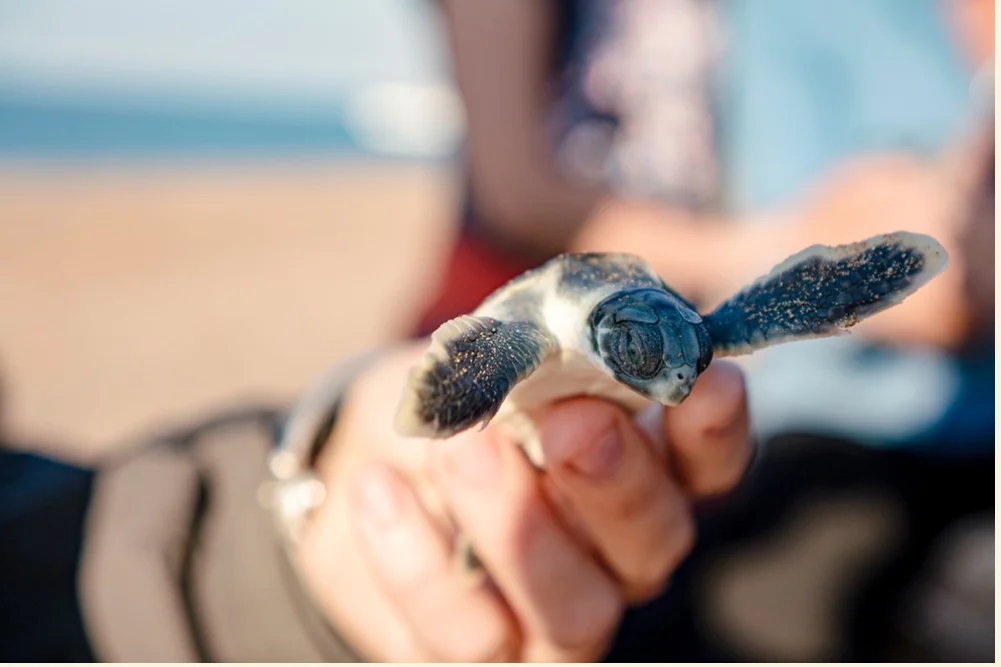
Located approximately 60 kilometers west of Darwin on the edge of the Joseph Bonaparte Gulf, Bare Sand Island—known traditionally as Ngulbitjik—serves as one of the most critical nesting grounds for the flatback turtle (Natator depressus). Each winter, as the southern hemisphere approaches the solstice, hundreds of these marine reptiles emerge from the Arafura and Timor Seas to continue a reproductive cycle that has remained largely unchanged for millennia. Despite their consistent presence on northern Australian shores, the flatback remains one of the least understood sea turtle species globally. Currently classified as "data deficient" by both the Northern Territory government and the International Union for Conservation of Nature (IUCN) Red List, the species is the focus of an intensive, volunteer-led research effort aimed at quantifying its population health and mitigating the escalating threats posed by anthropogenic climate change.
The Unique Biology and Mystery of Natator depressus
The flatback turtle is unique among the world’s seven sea turtle species as the only one endemic to the Australian continental shelf. Unlike the green or leatherback turtles, which undertake vast transoceanic migrations, the flatback stays within the relatively shallow coastal waters of Australia, Papua New Guinea, and Indonesia. Its common name is derived from its distinctively flattened carapace, which features upturned edges and a smoother, thinner texture than the shells of its relatives.
One of the primary challenges for marine biologists is the "lost years" phenomenon, which is particularly pronounced in flatbacks. After hatchlings enter the surf, they disappear into the coastal environment for approximately 30 years. Unlike other species that spend their juvenile years in the open ocean, flatbacks are believed to remain in turbid, coastal waters, making them exceptionally difficult to track. They only reappear to researchers when they reach sexual maturity and return to their natal beaches to nest. On Bare Sand Island, an estimated 650 middle-aged females return annually between May and September, yet the lack of data regarding their juvenile mortality and migratory paths at sea continues to hinder comprehensive conservation planning.
The AusTurtle Research Initiative: A Thirty-Year Chronology
For over three decades, the all-volunteer organization AusTurtle has maintained a seasonal research station on Bare Sand Island. The program operates during the peak nesting months of June and July, utilizing a "no-impact" camp designed to leave the island’s fragile ecosystem undisturbed. The methodology employed by the researchers is rigorous and timed to the lunar and tidal cycles. Flatback turtles typically utilize a four-hour window—two hours on either side of the high tide—to navigate the beach.
The research team performs several critical functions:
- Tagging and Identification: Using titanium flipper tags and PIT (Passive Integrated Transponder) tags, researchers track individual females. Data suggests that specific pairs or groups of turtles often arrive at the beach simultaneously year after year, hinting at complex social structures or communication methods used at sea.
- Morphometric Data Collection: Measures of the carapace length and width provide insights into the age and health of the nesting population.
- Temperature Monitoring: Sensors are placed within the nests to record incubation temperatures. Because the sex of a turtle is determined by the temperature of the sand (Temperature-dependent Sex Determination or TSD), this data is vital for predicting future population ratios.
- Hatchling Intervention: As the sun rises, volunteers patrol the beach to assist "stragglers"—hatchlings trapped in collapsed nests or those unable to reach the surface. These individuals are collected and released under the cover of darkness the following evening to maximize their survival chances against diurnal predators.
The Intersection of Indigenous Sovereignty and Conservation
Bare Sand Island is the traditional land of the Kenbi people. In 2016, following the longest-running Aboriginal land claim in Australian history, native title was officially awarded to the Kenbi clan. This legal recognition has integrated traditional ecological knowledge with modern conservation science, though it also highlights the complexities of managing a protected species within a cultural framework.
The Kenbi people hold the island sacred, believing its seasonal freshwater pools are spiritually connected to the mainland. Part of their cultural heritage includes the sustainable harvesting of turtle eggs, which are often consumed raw. While the sight of egg harvesting can be jarring to conservationists, veteran researchers like Andrew Raith argue that Indigenous involvement is a net positive for the species. Raith notes that the flatback’s estimated one-in-1,000 survival rate from egg to adulthood has remained stable despite millennia of traditional harvesting. By assigning a tangible "value" to the nests as a food source, the Kenbi people have a vested interest in protecting the nesting grounds from industrial development or invasive predators, ensuring the population remains viable for future generations.
Climate Change: The Existential Threat
While traditional harvesting and natural predation—including the presence of a well-documented three-legged saltwater crocodile named Graham—are part of the island’s historical ecosystem, global warming presents a non-traditional threat that the species may not be able to outpace.
The primary concern is the "feminization" of the population. In sea turtles, higher incubation temperatures result in more female offspring, while cooler temperatures produce males. As global temperatures rise, there is a significant risk that northern Australian beaches will produce exclusively female cohorts, eventually leading to a reproductive collapse. Furthermore, flatbacks in the Northern Territory are geographically constrained. Unlike southern populations that might migrate to cooler latitudes as the climate warms, the NT populations are already at the northernmost limit of their range.
Rising sea levels also threaten to inundate low-lying nesting sites on Bare Sand Island. Because the island is largely bereft of heavy vegetation and consists of shifting dunes, increased storm surges and higher tides could wash away entire clutches of eggs before they have a chance to hatch.
Ecological Stakes and the "Indicator Species" Argument
The importance of the flatback turtle extends far beyond the preservation of a single species. Marine biologists classify sea turtles as "indicator species," meaning their health reflects the health of the broader marine environment. Flatbacks play a crucial role in maintaining the balance of coastal ecosystems by grazing on algae and jellyfish, and their nesting activities redistribute essential nutrients from the sea to the nutrient-poor sands of islands like Ngulbitjik.
"If flatbacks go, you weaken the entire ecosystem," explains researcher Andrew Raith. "It won’t just be the turtles that disappear. It will be the invertebrates, the corals, the algae that sea turtles harvest, and their predators too." The collapse of the flatback population would likely trigger a trophic cascade, affecting commercial fisheries and biodiversity throughout the Joseph Bonaparte Gulf.
Operational Logistics and Public Involvement
The conservation effort on Bare Sand Island relies heavily on a mix of scientific rigor and public engagement. The AusTurtle camp is intentionally Spartan: there is no running water, no ground fires are permitted, and all waste—including composted materials—is removed from the island at the end of each stint. This zero-impact approach ensures that the research itself does not become a variable that negatively affects the turtles’ behavior.
For the public, there are two primary avenues for engagement. AusTurtle offers week-long volunteer placements that are frequently booked six months in advance, attracting a diverse demographic of marine biology students, retirees (often referred to as "grey nomads"), and international travelers. For those unable to commit to a full week of field research, eco-tourism operators like Sea Darwin provide guided evening tours from Darwin. These tours allow the public to witness the nesting process under strict supervision, fostering a broader community commitment to marine conservation.
Conclusion: A Precarious Future
The ongoing work on Bare Sand Island represents a race against time. As researchers continue to fill the "data deficient" gap, the window for effective climate intervention is narrowing. The survival of the flatback turtle depends on a delicate balance between respecting the sovereign rights of the Kenbi traditional owners, maintaining the rigorous data collection of AusTurtle, and implementing global strategies to curb rising temperatures. On the windswept dunes of Ngulbitjik, the slow, determined lumber of the flatback turtle remains a symbol of resilience, but it is a resilience that now requires the active and sustained intervention of the human species to endure.




 Anjar Salim
 Chandra Hamzah
 Tatiana Tantri Indah Sari
 Budi Mulyono
 Lukman Taruna Persada Ramadan
