
 Tatiana Tantri Indah Sari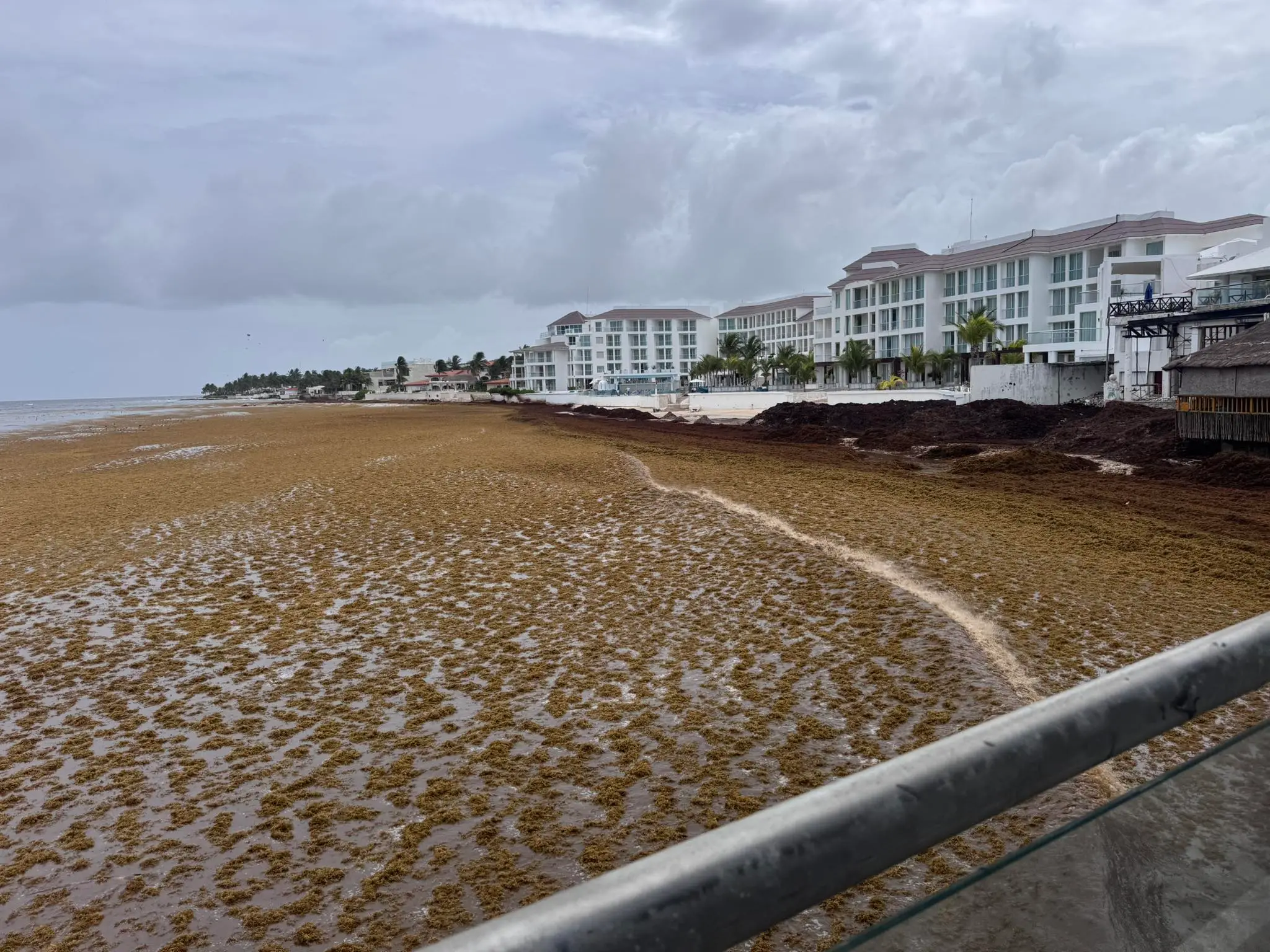
Sargassum seaweed is washing ashore across the Caribbean in record quantities this summer, threatening ecological balance, devastating tourism economies, and posing significant public health challenges. Data released Monday by the University of South Florida’s Optical Oceanography Lab, a leading institution tracking the macroalgae, indicates that almost every region of the Caribbean and Gulf of Mexico experienced record-high sargassum levels in May. Projections suggest volumes are likely to increase further in June, potentially making 2026 the worst year since comprehensive monitoring began, underscoring a rapidly escalating environmental crisis that demands urgent, coordinated international responses.
Sargassum, a naturally occurring brown macroalgae, typically plays a vital ecological role in the open ocean. Free-floating mats provide critical habitat and nursery grounds for a diverse array of marine life, including juvenile fish, sea turtles, and various invertebrates, forming the basis of a unique pelagic ecosystem. The Sargasso Sea, a vast region in the Atlantic Ocean bounded by ocean currents, has historically been its primary habitat. However, over the past decade, a new phenomenon has emerged: the Great Atlantic Sargassum Belt (GASB), an immense bloom stretching thousands of miles from West Africa to the Gulf of Mexico, which is responsible for the unprecedented beaching events.
The Proliferation of Sargassum: A Decade of Escalation
While sargassum is a natural component of Atlantic marine ecosystems, its appearance in vast, disruptive quantities along Caribbean coastlines is a relatively recent phenomenon. The first widespread instances of excessive sargassum inundating shores across the region were reported in 2011, catching many island nations unprepared. Prior to this, beachings were isolated incidents, typically minor and manageable. Since then, the volumes have not only increased but have become a persistent, annual threat, with significant peaks recorded in 2015, 2018, and 2022. Each subsequent year often surpasses previous records, demonstrating a worrying trend of escalating severity and geographical spread. The current summer of 2024 is already establishing itself as a period of unprecedented influx, raising alarms for its potential long-term impacts.
Scientists from the University of South Florida’s Sargassum Watch System (SaWS) utilize satellite imagery and advanced oceanographic models to track the bloom’s movement and predict its arrival. Their data for May 2024 showed the total sargassum quantity across the Central Atlantic and Caribbean Sea reaching an estimated 13 million metric tons, an astonishing figure that surpasses all previous May records. This massive biomass is not merely an aesthetic nuisance; its decomposition unleashes a cascade of environmental, economic, and health problems.
The Great Atlantic Sargassum Belt: Scale and Origin
The Great Atlantic Sargassum Belt (GASB) is a phenomenon of colossal proportions, at times stretching over 5,000 miles from the west coast of Africa to the Gulf of Mexico. This floating mass of seaweed can be hundreds of feet wide and several feet deep, fundamentally altering the marine environment wherever it congregates. Unlike the Sargasso Sea, which is characterized by two endemic species of sargassum that reproduce vegetatively, the GASB primarily consists of two pelagic species, Sargassum natans and Sargassum fluitans, which are known for their rapid growth rates.
The exact causes of this dramatic increase are still under intense scientific investigation, but several factors are strongly implicated. A leading hypothesis points to increased nutrient runoff from major South American rivers, particularly the Amazon. Deforestation and agricultural expansion in the Amazon basin lead to higher sediment and nutrient loads flowing into the Atlantic Ocean. These nutrients, combined with warmer ocean temperatures driven by climate change and altered ocean currents, create ideal conditions for sargassum proliferation in an area previously not known for such extensive blooms. Furthermore, changes in Saharan dust deposition and upwelling patterns in the equatorial Atlantic may also contribute to the nutrient availability that fuels these massive blooms. This complex interplay of environmental factors underscores the multifaceted nature of the crisis.
Ecological and Environmental Catastrophe
When sargassum washes ashore in large volumes, its rapid decomposition consumes vast amounts of oxygen, leading to anoxic conditions in coastal waters. This process, known as hypoxia, suffocates marine life, causing widespread fish kills and devastating critical coastal ecosystems. Coral reefs, which are already under immense stress from climate change and ocean acidification, are particularly vulnerable. The thick mats of sargassum can smother corals, blocking sunlight essential for their survival and altering water chemistry. Seagrass beds, vital nursery grounds for many marine species and natural carbon sinks, are similarly imperiled.
Furthermore, the decomposition process releases hydrogen sulfide (H2S) gas, which is characterized by a pungent, rotten-egg smell. This gas is not only an unbearable nuisance but can also be corrosive to infrastructure and harmful to human health. The dense mats also alter beach morphology, trapping sand and organic matter, which can exacerbate coastal erosion in some areas and disrupt the nesting cycles of endangered sea turtles, as females struggle to navigate the thick seaweed to lay their eggs, and hatchlings face insurmountable obstacles reaching the sea. The sheer weight and volume of the seaweed can also damage coastal ecosystems through physical abrasion.
Economic Devastation for Caribbean Nations
The economic implications of the sargassum crisis are profound, particularly for Caribbean nations heavily reliant on tourism. Pristine white-sand beaches and clear turquoise waters are the cornerstone of the region’s tourism industry, which accounts for a significant portion of GDP and employment in many islands. The arrival of tons of rotting seaweed transforms these idyllic landscapes into malodorous, unsightly stretches, deterring tourists and leading to cancellations. Hotels and resorts face immense costs for cleanup, often requiring heavy machinery and manual labor to remove the seaweed daily, diverting resources that could be invested in infrastructure or community development.
Fisheries, another crucial economic sector, are also severely impacted. The dense mats interfere with fishing operations, damaging nets and boats, and disrupting traditional fishing grounds. The anoxic conditions caused by decomposition can decimate fish populations, reducing catches and threatening the livelihoods of thousands of artisanal fishermen. Lobster, conch, and other commercially important species are particularly vulnerable to habitat destruction and oxygen depletion. Local economies experience a ripple effect, with reduced spending from tourists and fishermen affecting small businesses, restaurants, and other service providers. Some estimates suggest that the sargassum crisis could cost the Caribbean hundreds of millions of dollars annually in lost tourism revenue and increased cleanup expenses, pushing some already fragile economies to the brink.
Public Health Concerns and Community Impact
Beyond the economic and environmental fallout, the sargassum inundation poses direct public health risks to coastal communities. The release of hydrogen sulfide gas, along with ammonia, can cause respiratory problems, particularly for individuals with asthma or other pre-existing conditions. Symptoms can include eye irritation, headaches, nausea, and shortness of breath. Local residents and cleanup crews are most at risk, often working long hours in close proximity to the decomposing seaweed.
The pervasive, foul odor significantly degrades the quality of life for residents, impacting mental well-being and community cohesion. Businesses that rely on outdoor activities, such as beachfront restaurants and watersports operators, suffer immensely, sometimes forced to close during peak sargassum events. The aesthetic degradation of once-beautiful beaches also affects national pride and the psychological connection communities have with their natural environment.
Official Responses and Mitigation Efforts
Governments across the Caribbean have been grappling with the sargassum challenge, often with limited resources. Initial responses focused primarily on mechanical removal using heavy equipment, which is costly, labor-intensive, and can sometimes damage beaches and disrupt sea turtle nesting sites. Some islands, like Barbados and Mexico, have invested in floating barriers or nets deployed offshore to intercept the sargassum before it reaches the beaches, allowing for collection at sea. However, these barriers require significant maintenance and are not always effective against the sheer volume of incoming seaweed.
Regional cooperation has become increasingly vital. The Caribbean Community (CARICICOM) and the Organisation of Eastern Caribbean States (OECS) have initiated discussions and shared best practices, recognizing that this is a transnational problem requiring collective action. International organizations, including the United Nations Environment Programme (UNEP) and the European Union, have provided technical assistance and funding for research and mitigation projects. Scientists are actively exploring innovative solutions, including developing sargassum early warning systems to give communities more time to prepare, and researching potential uses for the collected seaweed.
The Path Forward: Challenges and Innovations
The long-term solution to the sargassum crisis remains elusive and complex. While immediate cleanup efforts are essential, a sustainable approach requires addressing the root causes, such as nutrient runoff and climate change, which necessitate global cooperation and significant policy shifts. Research into alternative uses for sargassum offers a glimmer of hope. Scientists and entrepreneurs are exploring its potential as fertilizer, animal feed, biofuel, bioplastics, and even building materials. For instance, in Mexico, sargassum has been processed into bricks for construction, and in other areas, it’s being composted to enrich agricultural soil. However, these initiatives face challenges related to the high salt content of the seaweed, the presence of heavy metals, and the sheer scale of the biomass that needs to be processed.
Developing efficient, environmentally friendly collection methods that minimize damage to marine ecosystems is also critical. Offshore collection, before the sargassum reaches the coast, is generally preferred, but it requires specialized vessels and infrastructure. The current projections for 2026, indicating it could surpass all previous years in sargassum volume, serve as a stark reminder of the escalating nature of this crisis. Without a concerted, well-funded, and scientifically informed strategy, the Caribbean’s natural beauty, economic stability, and public health will remain under severe threat from the unrelenting tides of sargassum. The ongoing battle against this brown tide underscores the urgent need for global environmental stewardship and regional resilience in the face of a changing climate.



 Anjar Salim
 Chandra Hamzah
 Budi Mulyono

