
 Dwi Wanna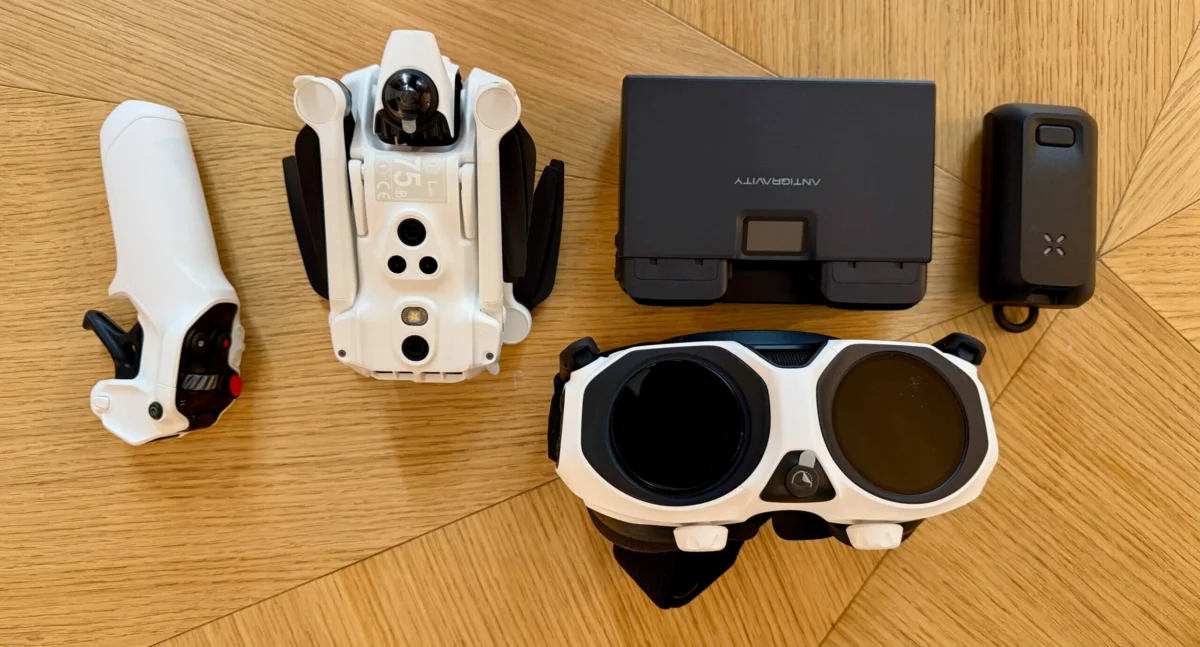
In the rapidly evolving landscape of visual content creation, drones have transitioned from niche gadgets to indispensable tools for capturing dynamic aerial perspectives. While regulatory frameworks continue to shape their deployment, travelers and professional creators alike are increasingly incorporating these devices into their workflows for their ability to produce breathtaking sweeping shots. Emerging from this competitive market, the Antigravity A1, launched in late 2025, represents a significant technological leap, aiming to render traditional gimbals obsolete for a substantial segment of creators. Its innovative dual-lens 360-degree capture system records all directions simultaneously, offering a "fly now, frame later" paradigm that shifts the user experience from piloting a drone to directing a virtual camera within a pre-recorded digital environment.
This article delves into the capabilities of the Antigravity A1, examining its design, flight experience, camera performance, and the implications for content creators seeking unprecedented creative freedom.
Dual-Lens Architecture: Eliminating Blind Spots and Enhancing Versatility
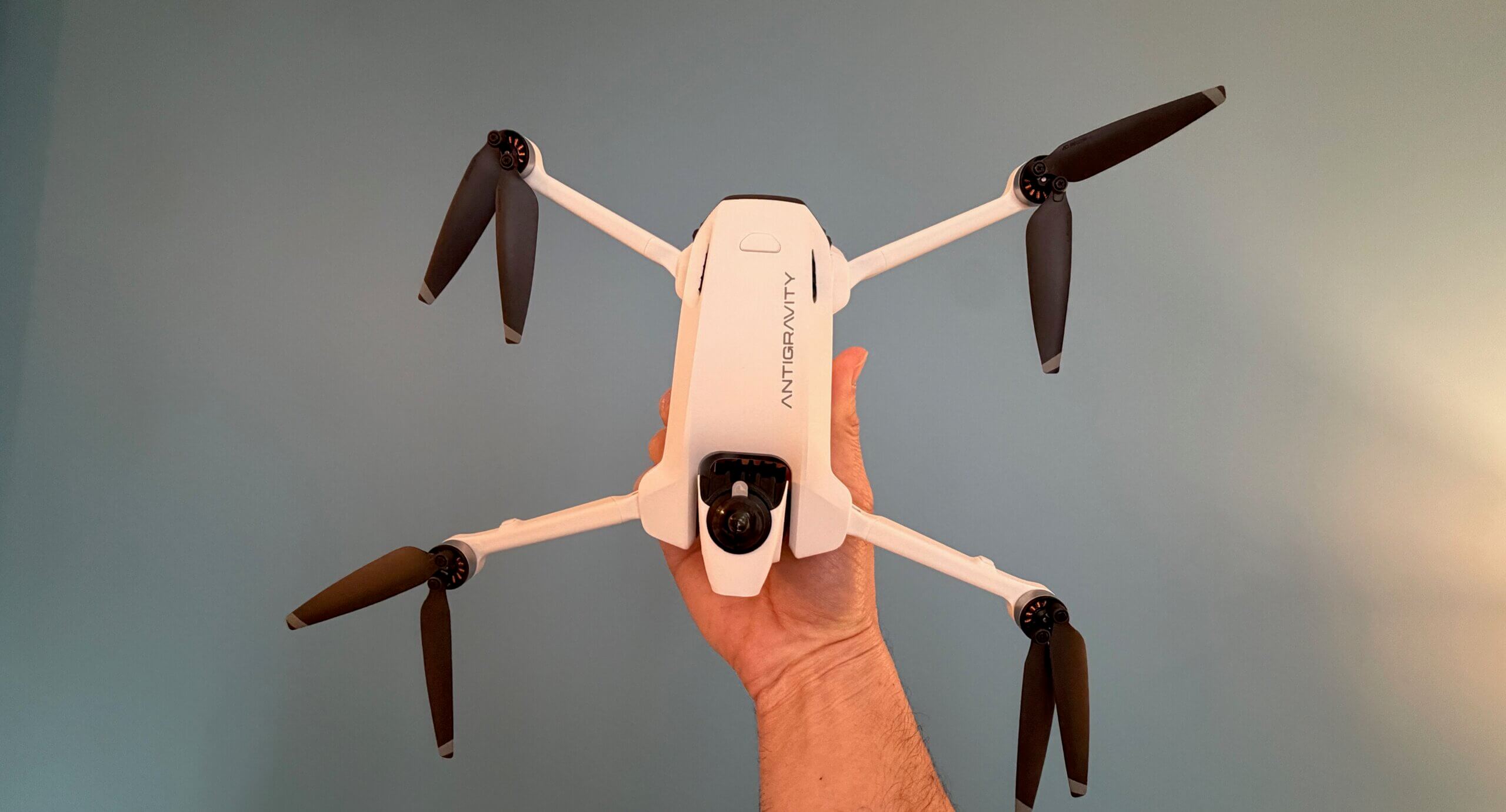
The Antigravity A1 distinguishes itself through its unique dual-lens configuration. Unlike conventional drones that typically feature a single forward-facing camera, the A1 is equipped with two ultra-wide-angle lenses strategically positioned on the top and bottom of its central fuselage. Each lens boasts a 200-degree field of view. When these images are processed and combined, they create a seamless, overlapping 360-degree sphere of visual data. A key feature of this system is the digital removal of the drone itself in the final exported footage, generating the illusion of a camera floating autonomously in mid-air, devoid of any visible support structure.
The onboard sensors are 1/1.28-inch CMOS units. While smaller than the 1-inch sensors found in some professional-grade photography drones, these are considerably larger than those typically integrated into standard 360-degree action cameras. This sensor size contributes to enhanced low-light performance and a wider dynamic range, allowing for the capture of intricate details in both highlights and shadows, even under challenging lighting conditions such as harsh midday sun.
Regulatory Compliance and Design Considerations:
A critical factor in the drone market, particularly for travelers, is weight classification. In most countries, drones exceeding 250 grams are subject to registration requirements and more stringent operational rules. Antigravity has meticulously engineered the A1 to weigh precisely 249 grams with its standard battery. This strategic weight placement circumvents the classification of a commercial drone, thereby eliminating the need for registration in many jurisdictions, a significant advantage for ease of travel and immediate deployment.
The drone’s physical construction underscores its premium positioning. It incorporates a high-grade, carbon-fiber-reinforced polymer, offering a superior strength-to-weight ratio compared to the standard ABS plastics found in less expensive models. The folding mechanism is designed for intuitive and satisfying engagement, with precise tactile feedback that suggests long-term durability. When folded, the A1 achieves a form factor comparable to a large smartphone, albeit with a greater thickness. This compact design facilitates portability, making it an attractive option for creators on the move.
The Immersive Flight Experience: Vision Goggles and Intuitive Controls
The Antigravity A1 redefines the drone piloting experience through its integration with specialized Vision Goggles and an innovative motion controller.
Vision Goggles: A New Dimension of Spatial Awareness
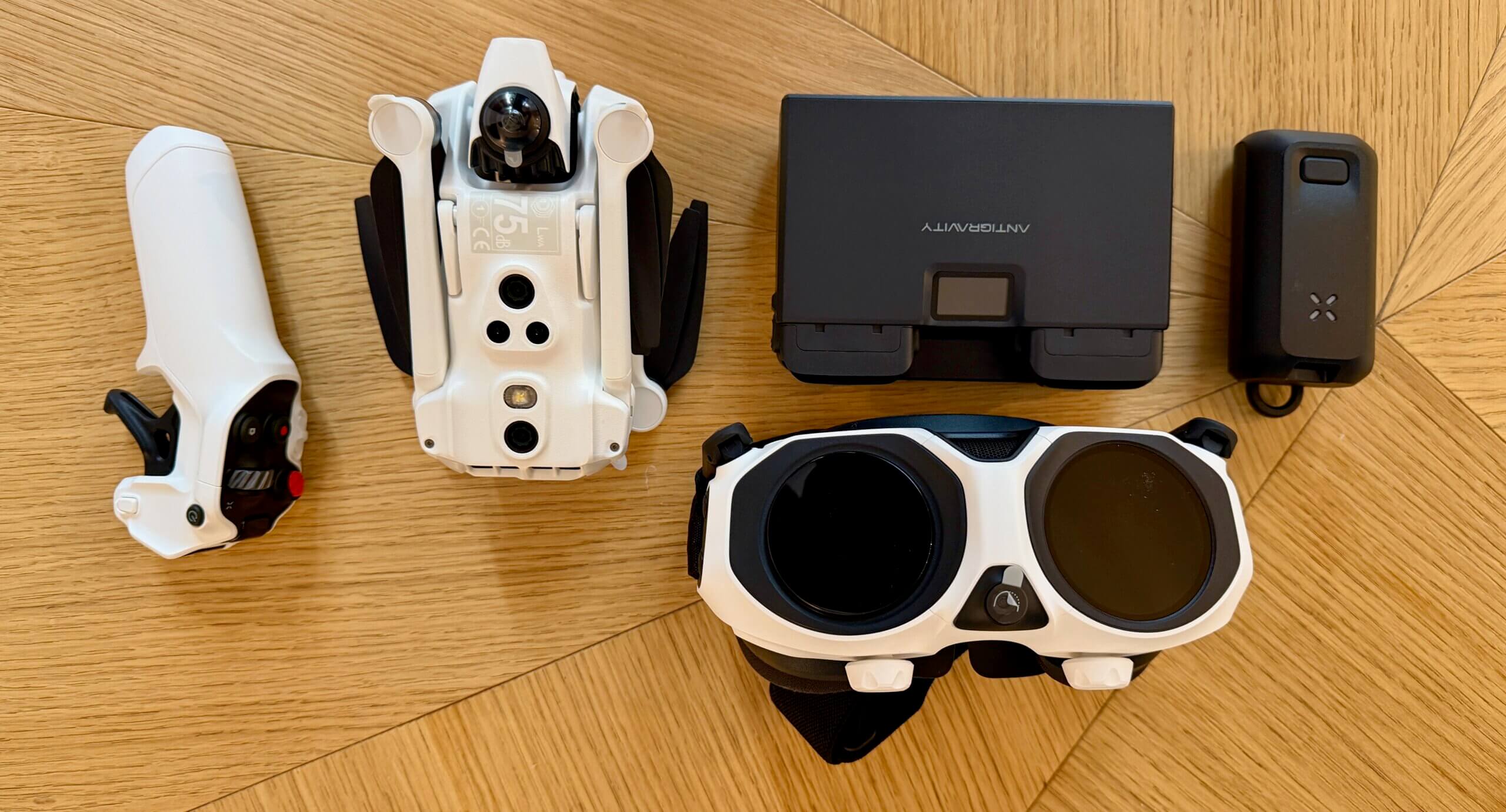
The Vision Goggles are characterized by their sleek, lightweight design and feature dual 4K micro-OLED displays with a 120Hz refresh rate. This high refresh rate, combined with near-imperceptible latency, ensures a fluid and responsive visual feed. Integrated head-tracking technology further enhances the immersive experience. Because the drone captures a full 360 degrees of footage, users are not confined to a fixed forward view. Turning one’s head to the left in the goggles seamlessly pans the drone’s feed to the left, and looking down reveals the terrain passing beneath. This provides an unparalleled sense of presence and spatial awareness, a capability that is fundamentally impossible with traditional fixed-camera drones.
Motion Controller: Fluid and Intuitive Operation
The A1 utilizes a single-handed motion controller for its primary flight interface. Operation is designed for simplicity: users point the controller in the desired direction of travel and pull the trigger to accelerate. Banking is achieved by tilting the wrist, and ascending or descending is controlled by adjusting the controller’s pitch. This intuitive system allows even novice users to navigate complex environments effectively within minutes of initial operation.
For professional First-Person View (FPV) pilots who prioritize the precision of manual acrobatic flight, the A1 also supports a traditional "Mode 2" stick controller. However, the fluidity and responsiveness of the motion controls are so refined that many users may find themselves rarely, if ever, resorting to the traditional controller.
The efficacy of this system is further demonstrated by the inclusion of a video showcasing the drone in action, highlighting its maneuverability and the immersive flight experience.
Camera Performance: Unpacking the 8K Resolution and Advanced Imaging Features
The Antigravity 360 prominently advertises "8K Resolution." It is crucial to understand how this resolution translates in the context of 360-degree video. In traditional cameras, 8K typically refers to the pixel count within a standard 16:9 rectangular frame. However, in 360-degree video, these pixels are distributed across a full spherical image. Consequently, when this 8K sphere is "reframed" into a conventional flat video format, the resulting output is essentially a "crop" of the total captured image. The quality of this reframed output is therefore dependent on the original spherical resolution and the chosen reframing parameters.
Color Science and Stabilization:
The A1 exhibits a noticeable improvement in color science compared to previous generations of 360 cameras. It offers a "Vivid" profile, designed to produce punchy, social-media-ready colors, and a 10-bit "Log" profile. The Log profile is particularly valuable for professional editors, providing greater flexibility for color grading and ensuring seamless integration with footage from other cameras within a post-production workflow.
The drone’s stabilization system, powered by Antigravity’s proprietary "FlowState" algorithms, is described as "miraculous." This advanced stabilization allows the footage to remain remarkably steady, even in challenging conditions such as 20 mph winds, presenting a visual output akin to footage captured from a static tripod. This level of stability is critical for maintaining visual appeal and reducing the need for extensive post-production stabilization.
The Editing Ecosystem: Antigravity Studio App
The accompanying "Antigravity Studio" application plays a pivotal role in the A1’s user experience. It enables wireless footage download at speeds up to 80MB/s, facilitating efficient transfer of large video files. The app’s reframing capabilities are particularly innovative, allowing users to manipulate the video using their phone’s gyroscope. By simply viewing the recorded 360-degree footage and moving their phone, users can effectively "film" their desired shot in real-time, mimicking the actions of a virtual camera operator.
Furthermore, the app features an "Auto-Frame" function, an artificial intelligence tool designed to identify subjects within the footage and automatically generate edits that maintain those subjects in focus. For solo creators, this feature effectively functions as a virtual camera crew, ensuring that no critical moment is missed. This automation significantly streamlines the post-production process, allowing creators to focus on storytelling rather than complex editing tasks.
Battery Life and Flight Dynamics: Balancing Endurance and Agility
Battery technology remains a primary constraint for all small drone platforms. The A1’s standard Intelligent Flight Battery provides a theoretical flight time of 24 minutes. In real-world operational conditions, factoring in moderate wind and continuous recording, users can expect approximately 19 to 20 minutes of flight time.
While 20 minutes may seem limited, the "work per minute" output is considerably higher than that of a traditional drone. The ability to capture all angles simultaneously eliminates the need to re-fly a path to obtain different perspectives, meaning a single 20-minute flight can yield the equivalent usable footage as multiple flights with a conventional drone like the DJI Mavic series. For extended flight requirements, an optional "Pro Battery" is available. This battery, however, pushes the drone’s weight above the 250-gram threshold, thus reintroducing registration requirements. It offers a substantial 39 minutes of flight time, though it may slightly impact the drone’s agility.
In terms of flight characteristics, the A1 is designed as a "cinewhoop" style flyer, prioritizing stability and predictability over aggressive, twitchy maneuverability. Its top speed is approximately 36 mph, which is adequate for following moving subjects like bicycles or cars but insufficient for keeping pace with professional racing drones. A significant practical feature is the "Turtle Mode." In the event of a crash that results in the drone landing upside down, this mode allows the propellers to flip the aircraft back over, enabling immediate takeoff without the need for manual retrieval. This function is particularly valuable in remote or difficult-to-access locations.
Target Audience and Market Positioning
The Antigravity 360 A1 is positioned as a niche product that is rapidly transitioning towards mainstream adoption. Its innovative approach to aerial videography appeals to a diverse range of users, from avid travelers seeking to document their journeys with unique perspectives to professional content creators looking to push the boundaries of visual storytelling.
The primary beneficiaries of the A1’s technology are creators who are seeking to move beyond conventional drone shots and explore more immersive and dynamic visual narratives. The device offers a significant advantage in terms of creative liberation by removing the constraints of manual framing and the reliance on gimbals.
Broader Implications for the Content Creation Industry
The Antigravity 360 A1 represents a significant advancement in the democratisation of advanced aerial cinematography. By abstracting the complexities of camera operation and stabilization into an intuitive "fly and reframe" workflow, the technology lowers the barrier to entry for producing high-quality, immersive video content. This has several implications:
- Enhanced Storytelling Capabilities: The ability to capture a complete spherical environment allows for a richer and more detailed narrative. Editors can explore different perspectives and focus on various elements within a scene after the initial flight, leading to more compelling and dynamic storytelling.
- Increased Efficiency for Solo Creators: Features like the "Auto-Frame" AI tool effectively provide solo creators with a virtual production team, significantly reducing the time and effort required for post-production. This can lead to a higher volume of content production and a greater focus on creative conceptualization.
- Bridging VR and Traditional Cinematography: The A1’s technology blurs the lines between traditional flat-screen video and immersive virtual reality experiences. Footage captured by the A1 can be readily adapted for VR platforms, opening up new avenues for audience engagement.
- Potential for New Creative Genres: The unique capabilities of the A1 could foster the development of entirely new genres of aerial filmmaking, characterized by seamless movement, expansive views, and a profound sense of immersion.
Conclusion: A Transformative Tool for Aerial Cinematography
The Antigravity 360 A1 stands out as one of the most exciting innovations in the drone market. By effectively eliminating the need for a gimbal and alleviating the stress associated with precise manual framing, it empowers users to concentrate on the core objective: telling a compelling story. While its image quality may not yet rival that of high-end cinema drones, and its lenses may require careful handling, these are minor considerations when weighed against the profound creative freedom the A1 provides. It successfully bridges the gap between established cinematography techniques and the immersive potential of virtual reality.
For content creators who are seeking to transcend the limitations of conventional drone videography and explore new frontiers in aerial imaging, the Antigravity 360 A1 is an indispensable addition to their creative toolkit. Its innovative design, intuitive control, and advanced imaging capabilities position it as a transformative force in the future of visual storytelling.




 Anjar Salim
 Chandra Hamzah
 Tatiana Tantri Indah Sari
 Budi Mulyono
 Lukman Taruna Persada Ramadan
