
 Hendra Ismail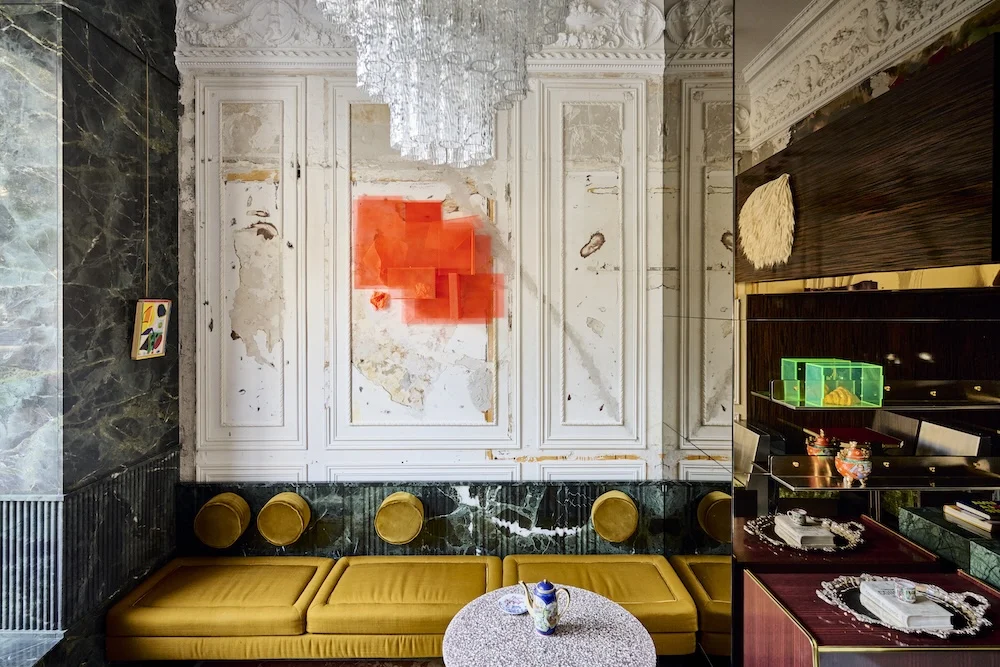
In the heart of San Sebastián, a city renowned for its exquisite culinary scene and stunning coastal beauty, a new establishment named Xauen Café has opened its doors, offering a unique architectural experience that pays homage to the region’s rich heritage. Located directly opposite the iconic Buen Pastor cathedral, this 430-square-foot space, meticulously designed by Iñigo Iriarte, transforms a historic local namesake into a contemporary sanctuary. The café’s design is orchestrated as a deliberate sequence of distinct zones, each unfolding through carefully considered shifts in materials and variations in scale, creating an immersive journey for patrons.
A Journey Through San Sebastián’s Soul: The Entrance Experience
Upon entering Xauen Café, visitors are immediately enveloped in a compact, immersive volume that serves as an anteroom. This initial space is defined by its striking marble mosaic floor, a tapestry of varied colors and meticulously selected stone types. This flooring choice is not arbitrary; it directly references the traditional residential entryways that are a hallmark of San Sebastián’s distinctive architectural character. The effect is one of stepping into a time-honored tradition, a subtle yet powerful evocation of local identity. Complementing this historical nod, a mirrored baseboard runs along the entire perimeter of the entrance. This design element serves a dual purpose: it visually extends the sightlines, creating an illusion of greater spaciousness within the inherently tight footprint, and it amplifies the sense of depth, drawing visitors further into the café’s embrace.
The storefront and entrance door are framed by custom joinery crafted from burgundy-stained wood. This deliberate choice serves as a direct visual reference to the historic portals found throughout San Sebastián, further embedding the café within the city’s architectural lexicon. The seating arrangements within this entrance zone are intentionally designed to foster interaction. An inviting ochre velvet banquette forms the anchor for two central tables, encouraging conversation and connection among patrons. On the opposing side, benches are arranged to face each other, a layout that subtly evokes the intimate, face-to-face seating found in a train carriage, suggesting journeys and shared experiences.
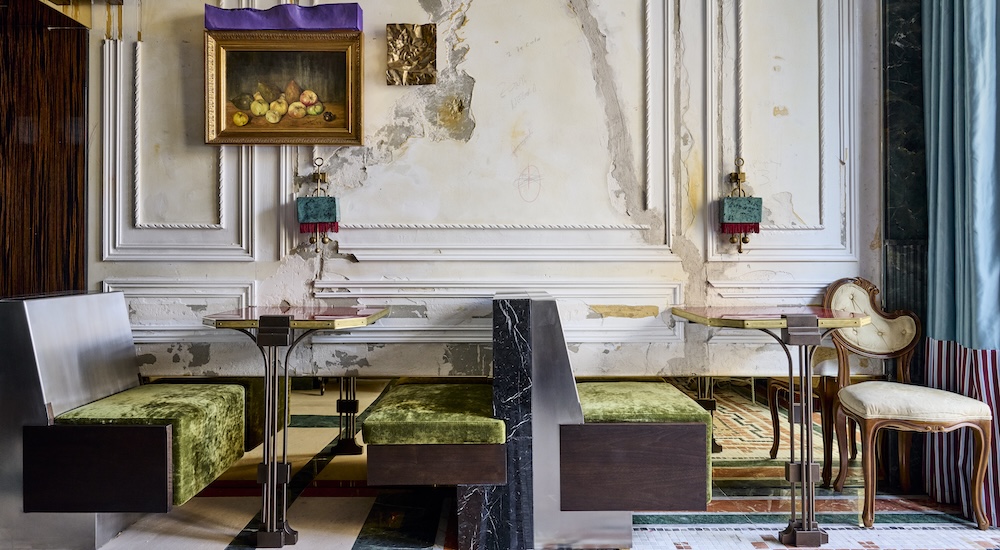
A striking Venini glass pendant light fixture is strategically placed to draw attention inward from the bustling street. Its elegant form and luminous quality serve as a beacon, inviting exploration and signaling a shift from the urban environment to the café’s curated interior. Hidden from plain view, yet integral to the café’s operational efficiency, a concealed dumbwaiter is seamlessly integrated behind a full-height mirror, a clever solution that maintains the aesthetic integrity of the space while addressing practical needs.
Mastering Spatial Constraints: The Innovative Brew Bar Design
One of the most significant architectural challenges addressed in Xauen Café’s design is the dramatic variation in ceiling height. The main area boasts an approximately 13-foot ceiling, but this dramatically drops to a more constrained 6.5 feet in the Brew Bar section. Iñigo Iriarte’s design skillfully minimizes the visual weight of this lower ceiling, ensuring the space remains welcoming and functional. The La Marzocco coffee machine, a prominent piece of equipment in any high-quality café, is cleverly embedded below the counter. This strategic placement means only the essential taps are visible, reducing visual clutter and allowing the bar itself to recede slightly.
The material articulation of the Brew Bar is key to its success in managing the spatial constraints. A combination of perforated metal, a sophisticated marble skirting, and a projecting fluted marble band works in concert to subtly distort perceptions. These elements are employed to make the counter appear lower than its actual height, thereby alleviating the feeling of being overwhelmed by the reduced ceiling. The walls are clad in high-gloss rosewood, a rich and warm material that wraps around the space and extends upward into a dedicated storage volume. This consolidation of visual mass within the reduced ceiling zone not only maximizes utility but also imbues the area with a distinct and memorable identity. Further enhancing the aesthetic and functional qualities of the Brew Bar, custom wall sconces, a collaboration with a local ceramist, introduce delicate brass and textile detailing, adding layers of craftsmanship and refined materiality.
Cultivating Serenity: The Slow Coffee Lounge
As patrons move towards the rear of the café, the atmosphere and spatial qualities undergo a noticeable transformation. The space transitions into the Slow Coffee area, designed to offer a more relaxed and contemplative experience. Here, the proportions shift to encourage lingering and conversation. The walls are finished with a stippled plaster, a technique that adds both tactile texture and crucial acoustic control, contributing to a sense of calm and intimacy. The seating and table arrangements are deliberately low, further promoting a sense of ease and encouraging patrons to settle in and savor their time.
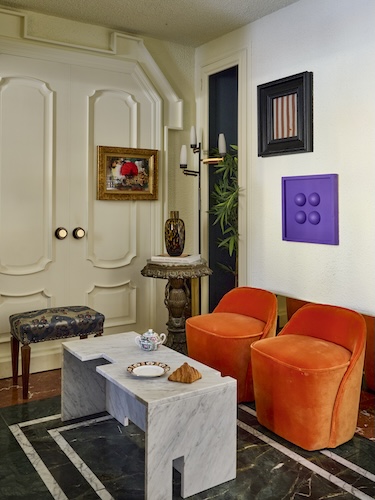
A framed double door at the very back of the café serves to visually extend the perceived space, creating an illusion of greater depth and connection to the outside. A polished brass column acts as a subtle marker, delineating the transition to the staircase that leads to the café’s kitchen facilities. In stark contrast to the more compact and energetic density of the entrance and Brew Bar, this rear zone is conceived to emphasize softness, spatial release, and a gentle rhythm, providing a perfect counterpoint to the earlier, more dynamic areas of the café.
Context and Background: Xauen Café’s Genesis
The inspiration behind Xauen Café draws directly from its namesake, a historic café that once occupied a significant place in San Sebastián’s cultural landscape. While specific details of the original establishment’s timeline and exact operations are part of local lore, its revival in this new architectural form speaks to a broader trend of urban regeneration and heritage appreciation. San Sebastián, a city that experienced significant growth and architectural evolution throughout the 19th and 20th centuries, often sees contemporary projects seeking to engage with its historical fabric. The opening of Xauen Café, therefore, can be viewed within this context, as an effort to reconnect with a past identity while offering a modern interpretation.
The choice of location, directly opposite the Buen Pastor cathedral, is strategic. This prominent position places the café at the nexus of historical and civic life in San Sebastián, ensuring high visibility and embedding it within the city’s most cherished landmarks. The cathedral itself, a neo-Gothic masterpiece completed in 1897, represents a significant period of architectural development in the city, and its proximity lends an air of gravitas and historical continuity to the café.
Design Philosophy and Material Innovation
Iñigo Iriarte’s design for Xauen Café is a testament to a thoughtful approach that prioritizes user experience and spatial narrative. The concept of organizing the 430-square-foot space into distinct, sequential zones is central to this philosophy. This approach allows for a dynamic progression of environments, each with its own character and purpose, preventing the relatively small area from feeling monotonous.

The material palette is carefully curated to contribute to this zonal differentiation. The rich marble mosaic in the entrance evokes a sense of tradition and permanence. The custom burgundy-stained wood joinery speaks of craftsmanship and local architectural heritage. In contrast, the high-gloss rosewood and perforated metal at the Brew Bar introduce a more contemporary and dynamic feel, while the stippled plaster in the Slow Coffee lounge offers a softer, more tactile experience. This deliberate interplay of materials not only defines the spatial transitions but also engages the senses, creating a layered and engaging environment.
The innovative solutions for the low ceiling at the Brew Bar highlight a pragmatic yet elegant design sensibility. By concealing the bulk of the coffee machine and using material treatments to visually lower the counter, Iriarte has transformed a potential design impediment into an opportunity for creative expression. The use of brass accents and custom ceramic wall sconces adds artisanal touches that elevate the café beyond a purely functional space, imbuing it with a sense of bespoke quality.
Broader Impact and Implications
The successful integration of historical references with contemporary design principles in Xauen Café offers a model for future hospitality projects in heritage-rich urban environments. The café’s ability to evoke a sense of place and history while providing a modern and comfortable experience can contribute significantly to the revitalization of its immediate surroundings. By drawing patrons with its unique architectural narrative, Xauen Café has the potential to become a destination in itself, complementing the existing attractions of San Sebastián.
Furthermore, the design’s emphasis on distinct zones and material shifts demonstrates how even small spaces can be maximized to offer varied experiences. This approach can be particularly relevant in densely populated urban centers where retail and hospitality spaces are often at a premium. The project’s success in overcoming spatial challenges, such as the low ceiling, through intelligent design solutions, can serve as an inspiration for architects and designers working with similar constraints.
The collaboration with local artisans, such as the ceramist involved in creating the wall sconces, also highlights the potential for integrating local craftsmanship into contemporary design projects. This not only supports the local economy but also enriches the final product with unique, handcrafted elements that contribute to a distinctive sense of place. As Xauen Café settles into its role in San Sebastián, its architectural narrative is likely to contribute to the city’s ongoing dialogue between its storied past and its vibrant present, offering a unique point of interest for both residents and visitors alike.


 Anjar Salim
 Dwi Wanna
 Budi Mulyono
 Lukman Taruna Persada Ramadan
 Chandra Hamzah
 Gabriela Annisa