
 Walid Sujud Trenggono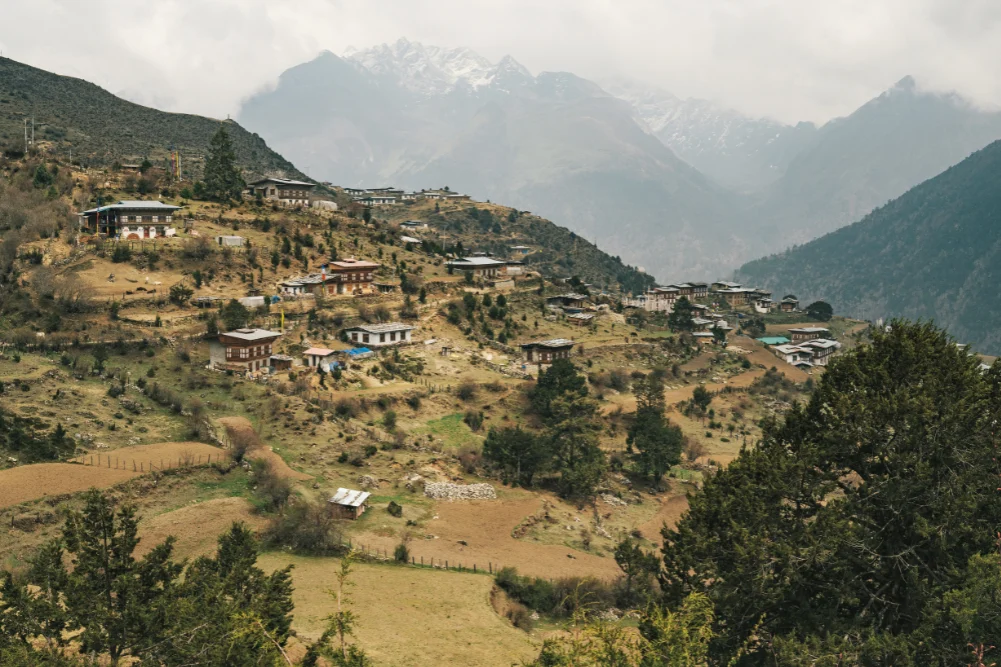
The global tourism industry is witnessing a significant shift as travelers increasingly reject traditional leisure models in favor of "transformative travel," a trend exemplified by the growing international interest in the Kingdom of Bhutan. Situated in the Eastern Himalayas, Bhutan has long maintained a policy of "High Value, Low Volume" tourism, positioning itself as a sanctuary for those seeking a reprieve from the hyper-connected, high-stress environments of Western industrialized nations. Recent reports from the Bhutanese Department of Tourism and independent ethnographic studies highlight a recurring narrative among visitors: the transition from "digital burnout" to a state of "intentional presence" through engagement with Bhutan’s unique socio-economic framework.
The Bhutanese Socio-Economic Framework: Gross National Happiness
Unlike the majority of sovereign states that measure progress through Gross Domestic Product (GDP), Bhutan famously utilizes the Gross National Happiness (GNH) index. Established by the Fourth King, Jigme Singye Wangchuck, in the 1970s, GNH is built upon four primary pillars: sustainable and equitable socio-economic development, environmental conservation, preservation and promotion of culture, and good governance.
According to the 2022 GNH Index, approximately 48.1% of the Bhutanese population is classified as "deeply" or "extensively" happy. This metric is not merely a philosophical abstraction but a rigorous policy tool. No government project or foreign investment is approved without passing a "GNH Lens," which evaluates the potential impact on the community’s psychological well-being and the integrity of the natural environment. This systemic commitment to collective welfare over individual profit has created a society where healthcare and education are free, and the constitution mandates that at least 60% of the land remains under forest cover. Currently, forests blanket approximately 70% of the nation, contributing to Bhutan’s status as the world’s first carbon-negative country.
Logistics of Entry and the Himalayan Gateway
For the modern traveler, the journey to Bhutan begins with a logistical challenge that underscores the country’s isolation and commitment to controlled growth. Paro International Airport, the nation’s primary gateway, is frequently cited as one of the most demanding technical approaches in aviation. Surrounded by 5,500-meter peaks, only a limited number of pilots worldwide are certified to land on its runway.
Upon arrival, the absence of globalized commercial markers is immediate. Bhutan remains one of the few nations without a single McDonald’s, Starbucks, or billboard. Traffic lights are non-existent, even in the capital city of Thimphu, where traffic is instead managed by police officers using rhythmic hand signals. This rejection of modern infrastructure in favor of traditional aesthetics is a deliberate effort to maintain cultural continuity in a world where television and the internet were only introduced as recently as 1999.
Case Study in Rejuvenation: The Dodedrak Monastery
The impact of Bhutan’s environment on the human nervous system is frequently documented by visitors participating in "slow travel." A primary example of this is the pilgrimage to the Dodedrak Monastery, a 12th-century site located on a steep ridge overlooking the Thimphu valley. The ascent to the monastery, often requiring a two-to-three-hour hike through dense forest and unpredictable Himalayan weather, serves as a physical and mental transition point.
Monastic life in Bhutan offers a stark contrast to the "digital zombie" state prevalent in modern urban centers. At Dodedrak, dozens of monks engage in the daily ritual of chanting ancient scriptures, accompanied by the lighting of butter lamps. Researchers in the field of environmental psychology suggest that such experiences—combining physical exertion, sensory immersion in nature, and rhythmic auditory stimuli—effectively lower cortisol levels and reset the autonomic nervous system. For many visitors, the monastery experience represents the first stage of a "midlife reset," moving away from the "bullet-train tempo" of professional life toward a more measured existence.
The Remote Frontier: Laya and the Layap People
The depth of Bhutan’s cultural preservation is perhaps most evident in the village of Laya. Perched at an altitude of 3,800 meters, Laya is one of the highest and most remote inhabited settlements on Earth. Until very recently, the village was unreachable by road, requiring a multi-day trek. Even with improving infrastructure, the village remains largely insulated, home to approximately 1,600 Layap people, an indigenous community with distinct Tibetan roots.
The Layap community is characterized by a matriarchal social structure and a deep-seated tradition of communal labor. In Laya, hospitality is a social mandate; when a family constructs a home, the entire village participates in the labor. This "spirit of collective care" is a central component of Bhutanese social glue.
A significant cultural event in the region is the Bumkor Festival, held biennially. During this festival, sacred texts are carried in a grand procession through the village to ensure a prosperous harvest and community protection. Participants wear traditional attire, including the distinctive conical bamboo hats of the Layap women and yak-wool garments. The festival exemplifies the Bhutanese concept of "enough"—a philosophy of contentment that stands in direct opposition to the consumerist "hunger for more" observed in many Western visitors.
Traditional Wellness and the Gasa Hot Springs
Well-being in Bhutan is treated as a public utility rather than a luxury commodity. This is best illustrated by the Gasa Tsachu (hot springs), located on the banks of the Mo Chhu River. Unlike Western-style luxury spas, these springs are communal sites where locals from across the country gather to soak in waters believed to have medicinal properties.
The springs are rooted in 13th-century legend, which claims that a saint scattered 128 medicines into the water. From a scientific perspective, the high mineral content of the springs is recognized for treating various ailments, including skin conditions and joint pain. The experience for the traveler is one of radical egalitarianism, as visitors find themselves shoulder-to-shoulder with yak farmers, students, and government officials. This lack of social hierarchy in pursuit of health is a fundamental aspect of Bhutanese "Sowa Rigpa" (Traditional Medicine), which remains integrated with the modern healthcare system.
The Philosophy of Impermanence
A unique aspect of the Bhutanese psyche that often unsettles but ultimately comforts foreign visitors is the open discussion of mortality. Bhutanese culture encourages individuals to contemplate death five times a day. Far from being morbid, this practice is intended to foster a sense of impermanence (Anicca), which in turn encourages individuals to live more virtuously and with less anxiety.
In the Western context, death is often sequestered or feared. In Bhutan, it is treated as a natural transition, a reminder that time is finite and should be spent on meaningful pursuits. This perspective is credited with the slower, kinder pace of life observed in the kingdom, where the maximum speed limit even in urban areas rarely exceeds 20-30 km/h.
Economic Implications and the "Sustainable Development Fee"
Following the COVID-19 pandemic, Bhutan underwent a significant shift in its tourism policy. In September 2022, the government increased the Sustainable Development Fee (SDF) to $200 per person per night, though this was later adjusted to $100 per night in 2023 to encourage longer stays. The revenue from the SDF is reinvested directly into the state, funding free education, healthcare, and carbon-neutral infrastructure projects.
This pricing strategy serves as a filter, ensuring that tourism does not lead to the "over-tourism" seen in neighboring regions like Nepal or parts of India. It also ensures that the visitors who do arrive are those who value the preservation of the environment and culture over low-cost consumption. Analysis suggests that this model may provide a blueprint for other ecologically sensitive destinations seeking to balance economic growth with environmental integrity.
Broader Impact and Global Lessons
The "Bhutan effect" on international travelers appears to have a lasting impact beyond the duration of the trip. Longitudinal observations of visitors suggest that the lessons learned in the Himalayas—specifically the concepts of "enoughness," community reliance, and the importance of nature as medicine—serve as psychological tools for navigating the complexities of modern life upon their return home.
As global rates of burnout and mental health crises continue to rise, the Bhutanese model offers a provocative alternative. It suggests that the path to societal well-being lies not in the accumulation of assets or the acceleration of production, but in the deliberate slowing of pace and the prioritization of human and environmental health. While Bhutan continues to modernize, its insistence on doing so through the "GNH lens" ensures that it remains a unique case study in sustainable development and a beacon for those seeking a "necessary awakening" from the pressures of the 21st century.


 Anjar Salim
 Chandra Hamzah
 Budi Mulyono


 Tatiana Tantri Indah Sari