
 Budi Mulyono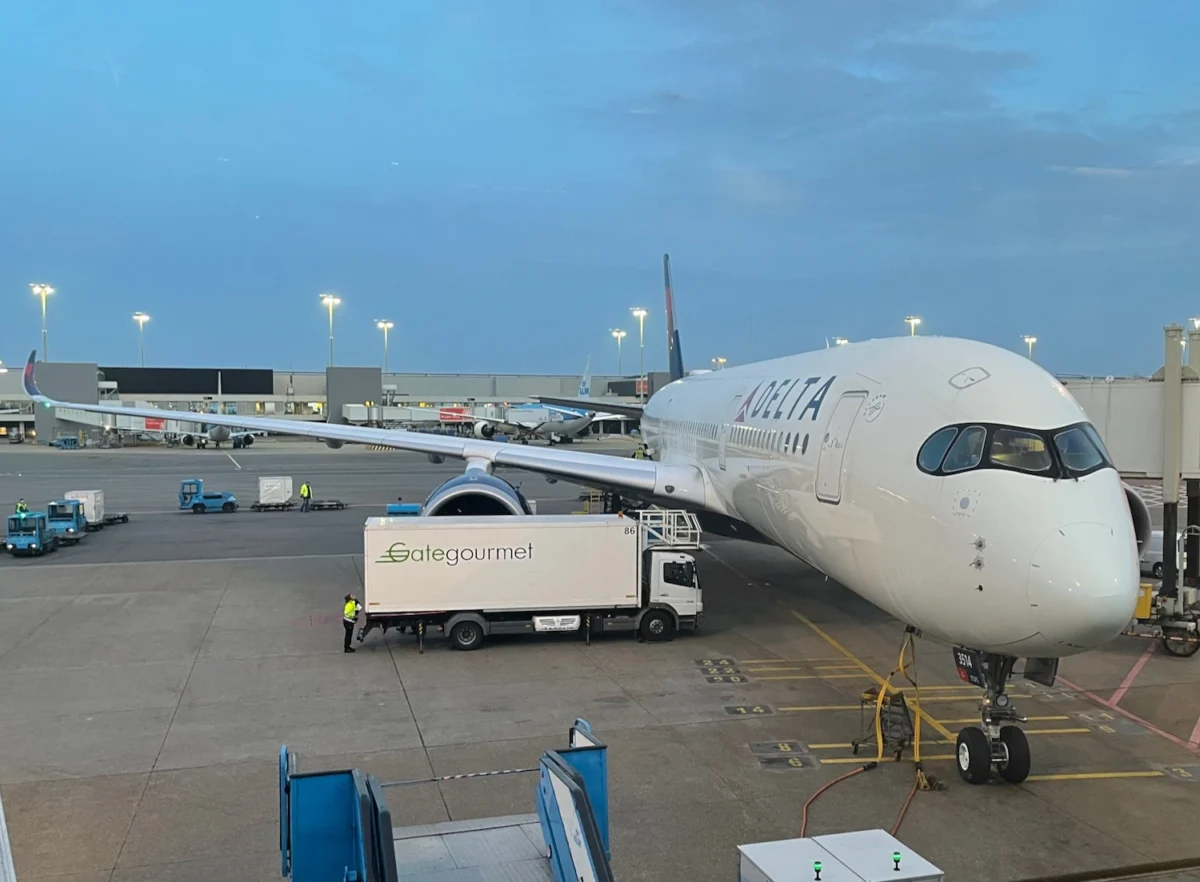
A Delta Air Lines long-haul service operating from Seattle-Tacoma International Airport (SEA) to Taiwan Taoyuan International Airport (TPE) was forced to make an unscheduled emergency landing in Anchorage, Alaska, following a violent verbal and physical altercation between a passenger and a crew member. The incident, which involved the use of a racial slur and threats of physical violence, resulted in the arrest of a passenger and highlighted the ongoing challenges airlines face regarding unruly behavior and the complexities of in-flight de-escalation.
The flight, Delta Flight 69, was traversing the North Pacific route when the situation in the rear galley escalated to a point where the flight deck crew determined that the safety and security of the aircraft were at risk. According to federal court documents and an affidavit filed by the Federal Bureau of Investigation (FBI), the passenger, identified as Malcolm Martin, is now facing significant federal charges for his role in the disturbance.
Detailed Chronology of the In-Flight Incident
The disruption began several hours into the transpacific flight, shortly after the completion of the initial meal service. According to the FBI affidavit, the friction between the passenger and the crew originated from a seemingly routine interaction regarding the use of the aircraft’s lavatories.
Malcolm Martin reportedly approached the rear galley of the Airbus A350-900 where a flight attendant, who is Black, was standing while eating a meal. Witnesses and the crew member stated that Martin forcefully grabbed the flight attendant’s shoulder to get his attention. When the flight attendant turned around, Martin inquired in what was described as a "disrespectful tone" whether the adjacent bathroom was occupied.
The flight attendant pointed out the "locked" indicator on the door, explaining that the red signal meant the latrine was currently in use. According to the affidavit, the flight attendant’s response was characterized as "dismissive," which appeared to further agitate Martin. After the flight attendant returned to his meal, Martin allegedly made several disrespectful comments before entering the lavatory once it became vacant.
The situation reached a breaking point when Martin exited the lavatory several minutes later. A heated verbal argument ensued in the galley. It was during this exchange that Martin allegedly directed a racial slur—the n-word—at the flight attendant. Martin further claimed that the flight attendant was only treating him poorly because Martin is white.
As the confrontation intensified, Martin allegedly threatened to "kick the flight attendant’s ass" once the plane landed in Taiwan. Witnesses reported that Martin eventually "swung" at the flight attendant. While no physical contact was made during the swing, the combination of the physical grab of the shoulder earlier in the flight, the verbal threats, and the attempted strike led the crew to believe the situation was unrecoverable.
Operational Decision and the Diversion to Anchorage
Faced with a passenger who was becoming increasingly volatile and had already demonstrated a willingness to initiate physical contact, the cabin crew alerted the flight deck. In long-haul aviation, the decision to divert is never taken lightly, as it involves significant logistical hurdles, massive fuel costs, and substantial delays for hundreds of passengers.
At the time of the incident, Flight DL69 was positioned near the coast of Alaska, preparing for the long overwater segment across the Pacific Ocean toward East Asia. For flights departing the United States for Asia, Anchorage International Airport (ANC) serves as the primary "last stop" for emergency diversions. Once an aircraft moves further west or south into the Pacific, the options for landing become limited to remote islands or returning to the mainland, which can add hours of flight time in a high-tension environment.
The captain of Flight 69 made the operational decision to divert to Anchorage to ensure the safety of the crew and the other passengers. The aircraft landed at Ted Stevens Anchorage International Airport without further incident. Law enforcement officers, including airport police and FBI agents, met the aircraft at the gate. Malcolm Martin was removed from the plane in handcuffs and taken into federal custody.
Following the removal of the passenger and a security sweep, the aircraft remained on the ground for approximately two hours. During this time, the crew was evaluated to determine if they were fit to continue the mission. Ultimately, the flight departed for Taipei with the same crew, arriving in Taiwan several hours behind schedule.
Legal Consequences and Federal Charges
The legal ramifications for Malcolm Martin are severe. He has been formally charged with interference with flight crew members and attendants under 49 U.S.C. § 46504. This federal statute makes it a crime to assault or intimidate a flight crew member in a way that interferes with the performance of their duties or lessens their ability to perform those duties.
Under federal law, a conviction for interference with a flight crew can result in a prison sentence of up to 20 years. Additionally, the Federal Aviation Administration (FAA) has the authority to levy civil penalties against unruly passengers, with fines reaching as high as $37,000 per violation. The FAA’s "Zero Tolerance" policy, implemented in early 2021, ensures that the agency no longer issues warning notices but instead moves directly to enforcement action for any passenger who disrupts a flight or engages in threatening behavior.
The FBI affidavit also noted that Martin had consumed several alcoholic drinks during the flight. Witness statements gathered by investigators indicated that Martin was behaving in a belligerent manner even before boarding the aircraft in Seattle, with one passenger describing him as an "asshole" during the pre-flight process.
Data and Trends: The Rise of Unruly Passenger Incidents
This incident is part of a broader, troubling trend in the aviation industry. While the number of unruly passenger reports has decreased from the record highs seen in 2021, the frequency of such events remains significantly higher than pre-pandemic levels.
According to FAA data:
- 2021: A record 5,973 reports of unruly passengers were filed, many linked to federal mask mandates.
- 2022: Reports dropped to 2,455.
- 2023: The number stabilized at approximately 2,075 reports.
- 2024: Early data suggests a continued trend of approximately 40 to 50 reports per week.
A significant percentage of these incidents involve alcohol consumption, either at the airport terminal or on board the aircraft. Aviation experts note that the pressurized environment of a cabin can exacerbate the effects of alcohol, leading to impaired judgment and lowered inhibitions. When combined with the stresses of long-haul travel, such as confined spaces and sleep deprivation, the potential for "air rage" increases.
Racial incidents, specifically, have become a point of focus for both airlines and federal regulators. Delta Air Lines, like many major carriers, has emphasized its commitment to diversity and inclusion, stating that harassment of employees based on race is strictly prohibited and will result in a permanent ban from the airline.
Analysis of De-escalation and Crew Training
The FBI affidavit in the Martin case provides a rare, detailed look into the nuances of crew-passenger interactions. While Martin’s behavior—using a racial slur and threatening violence—is legally and socially indefensible, the affidavit also suggests that the interaction was a "two-way street" in terms of verbal aggression.
Investigators noted that the flight attendant involved reportedly made "antagonizing comments" back to Martin during the verbal altercation. The affidavit suggests that the attendant did not initially attempt to de-escalate the situation by walking away or involving the purser (the lead flight attendant) to swap positions. Instead, the interaction escalated as both parties exchanged "disrespectful" remarks.
This aspect of the case highlights the immense pressure placed on flight attendants. They are trained as first responders and safety professionals, but they are also human beings who may find it difficult to remain passive when subjected to racial abuse or physical intimidation.
Aviation security analysts often point out that "tactical withdrawal" is a key component of de-escalation training. When a passenger becomes hostile, crew members are generally taught to:
- Remain calm and professional.
- Set clear boundaries regarding acceptable behavior.
- If the passenger persists, hand the interaction over to a colleague or a supervisor to "reset" the dynamic.
- Issue a formal "In-flight Passenger Disturbance Warning" (often referred to as a "yellow card").
In this instance, the speed with which the situation moved from a bathroom dispute to a physical threat suggests that the window for de-escalation was exceptionally narrow.
The Cost of a Diversion
The financial impact of a diversion for a large wide-body aircraft like the Airbus A350-900 is substantial. Industry estimates for a transpacific diversion range from $50,000 to over $200,000, depending on several factors:
- Fuel Burn: Dumping fuel or landing heavy, followed by the fuel required for a second takeoff and climb to cruise altitude.
- Landing Fees: Anchorage, while a common diversion point, charges significant fees for unscheduled arrivals of heavy aircraft.
- Crew Time: The diversion can push a crew over their legal "duty time" limits, potentially requiring a fresh crew to be flown in, though in this case, the crew was able to continue.
- Passenger Compensation: Missed connections in Taipei may require the airline to rebook hundreds of passengers on other flights or provide hotel vouchers.
For Delta, the cost of this incident extends beyond the balance sheet to the disruption of service for the 200-300 passengers on board, many of whom were traveling for business or international connections.
Conclusion and Future Outlook
The diversion of Delta Flight 69 serves as a stark reminder of the volatility inherent in modern air travel. While the vast majority of passengers fly without incident, a single individual’s decision to engage in abusive and threatening behavior can disrupt the lives of hundreds and trigger a massive law enforcement and operational response.
As Malcolm Martin awaits further legal proceedings in federal court, the case will likely be used as a cautionary tale by the FAA and Department of Justice in their ongoing campaign to curb air rage. For the airline industry, the incident underscores the need for continued investment in de-escalation training and a robust support system for crew members who are increasingly on the front lines of societal tensions.
The safety of the flight remains the paramount concern for any captain, and in the case of DL69, the decision to land in Anchorage ensured that a toxic situation on the ground did not turn into a physical tragedy in the skies over the Pacific. Delta Air Lines has not released an official statement regarding the specific comments of the flight attendant but reiterated that it has zero tolerance for the mistreatment of its employees.


 Cholid Fahmi Thalib
 Hendra Ismail
 Anjar Salim
 Chandra Hamzah
 Lukman Taruna Persada Ramadan