
 Budi Mulyono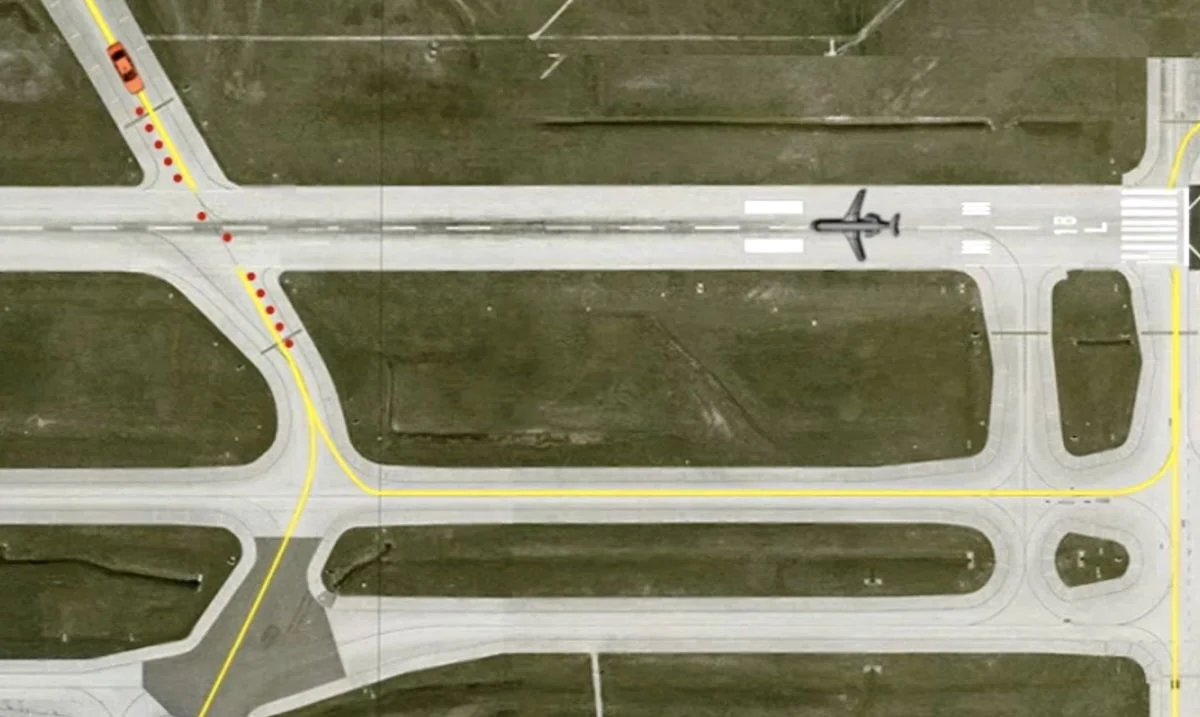
The aviation industry is reeling following a catastrophic ground collision at New York’s LaGuardia Airport (LGA) on the night of Sunday, March 22, 2026, which resulted in the deaths of two pilots and left multiple passengers and ground crew with serious injuries. The incident involved an Air Canada Jazz Bombardier CRJ-900, operating as Flight AC8646, and a Port Authority of New York and New Jersey emergency fire truck. While preliminary reports initially focused on a critical error by air traffic control (ATC), newly released surveillance footage and flight data have introduced a complex set of contributing factors, including the apparent failure of secondary safety systems and vehicle-operator adherence to automated warning signals.
Chronology of the Collision
The accident occurred during the late-night arrival wave at LaGuardia, an airport known for its constrained geography and intersecting runway configuration. Flight AC8646, a regional jet operated by Jazz Aviation on behalf of Air Canada, was on its final approach to land. At the same time, a Port Authority Rescue and Firefighting (ARFF) vehicle was navigating the taxiway system, reportedly responding to a separate non-emergency service call or conducting a routine movement.
According to archived air traffic control recordings, the tower controller cleared the Air Canada Jazz aircraft for landing. Seconds later, the same controller provided clearance for the fire truck to cross the active runway. As the CRJ-900 touched down and began its rollout, the fire truck entered the runway environment. The high-speed impact decimated the cockpit and forward fuselage of the aircraft.
In the immediate aftermath, the air traffic controller was heard on the frequency admitting to the error, stating, “I messed up,” as emergency frequencies were flooded with distress calls. Despite the rapid response from other on-site emergency units, the two pilots of the CRJ-900 were pronounced dead at the scene. The number of injured passengers, several of whom remain in critical condition, has underscored the severity of the impact.
The Role of Runway Entrance Lights (REL)
As the National Transportation Safety Board (NTSB) begins its formal investigation, attention has shifted from the controller’s verbal error to the physical safety infrastructure present at the airport. Surveillance footage obtained from airport security cameras reveals that the Runway Entrance Lights (REL) were fully operational and illuminated at the time of the incursion.
The REL system is a component of the larger Runway Status Lights (RWSL) program, an automated safety system designed to provide a secondary layer of protection independent of ATC instructions. These high-intensity red lights are embedded in the pavement at taxiway-runway intersections. They are triggered by ground radar and surveillance sensors (such as ASDE-X) when the system detects high-speed traffic—either a departing or landing aircraft—on the runway.
The footage indicates that as the fire truck approached the hold-short line, the RELs were glowing solid red, signaling that the runway was unsafe to enter. Technical analysis of the video shows the lights remained active until approximately four seconds before the collision, at which point the landing aircraft passed the sensors. The fact that the fire truck proceeded past these active red lights suggests a breakdown in situational awareness or a fatal reliance on verbal ATC clearance over visual safety cues.
The "Swiss Cheese Model" of Aviation Safety
Aviation safety experts frequently cite the "Swiss Cheese Model," a theory of accident causation developed by James Reason. The model suggests that complex systems possess multiple layers of defense, represented as slices of Swiss cheese. The holes in the slices represent individual weaknesses or "latent conditions." An accident occurs only when the holes in every slice align, allowing a hazard to pass through all defenses.
In the LaGuardia disaster, several "holes" aligned with tragic precision:
- The Operational Layer: The air traffic controller, reportedly working under the strain of chronic staffing shortages and mandatory overtime, issued a conflicting clearance.
- The Technological Layer: While the REL system functioned correctly, it did not physically bar the vehicle from entering the runway, nor was there an in-cockpit alert system for the pilots to warn of a ground obstruction during the landing roll.
- The Human Factor Layer: The operators of the fire truck did not verify the automated red light signals against the verbal clearance they received, nor did they observe the landing aircraft’s approach despite the clear night conditions.
This alignment of failures is rare in modern aviation, which is why the industry has maintained an unprecedented safety record over the last two decades. However, the failure of the REL system to prevent this specific incursion will likely lead to a re-evaluation of how ground vehicle operators are trained to interact with automated lighting.
Air Traffic Control Pressures and Systemic Strain
The controller’s admission of error has reignited a national debate regarding the state of the United States air traffic control system. For several years, the FAA has struggled with a shortage of certified professional controllers, leading to six-day work weeks and ten-hour shifts for many employees at high-volume hubs like New York.
Fatigue is a well-documented factor in operational errors. While the NTSB will examine the specific sleep cycles and work history of the controller involved, industry advocates argue that the system itself is brittle. When a single human error can bypass multiple safety layers, it suggests that the "redundancy" built into the system is not as robust as previously believed.
The Port Authority of New York and New Jersey, which oversees LaGuardia, has stated it is cooperating fully with federal investigators. Internal reviews of ARFF (Airport Rescue and Firefighting) protocols are also underway to determine why the vehicle operator proceeded past the red RELs.
Supporting Data: The Rising Trend of Runway Incursions
This fatal accident occurs against a backdrop of increasing "near-misses" and runway incursions across the United States. FAA data from the past 24 months shows a measurable uptick in Category A and B incursions—incidents where a collision was narrowly avoided or where there was a significant potential for disaster.
Key statistics from the FAA’s recent safety summits include:
- Total Incursions: A 15% increase in total runway incursions year-over-year.
- Pilot Deviations: Accounting for approximately 60% of incursions.
- Vehicle/Pedestrian Deviations: While less frequent (approximately 20%), these often involve airport staff who have high-level access to the movement area, making any error particularly dangerous.
- ATC Errors: Representing the remaining 20%, often attributed to communication "read-back/hear-back" errors or high-density traffic management.
The LaGuardia collision is the first fatal Part 121 (scheduled airline) runway collision in the U.S. in many years, breaking a period of relative stability and highlighting that technology alone cannot eliminate the risk of human fallibility.
Impact on the Aviation Community
The loss of the two Air Canada Jazz pilots has resonated deeply within the regional airline community. Both individuals were described by colleagues as dedicated professionals and "aviation geeks" who had spent years working through the ranks of regional flight operations. The CRJ-900, a workhorse of the Air Canada Express fleet, was carrying dozens of passengers at the time of the crash. While many survived, the psychological and physical trauma of the collision has led to calls for immediate changes to ground safety protocols.
Air Canada released a statement expressing profound sadness: "Our hearts are with the families of our fallen colleagues and the passengers impacted by this tragedy. We are providing all necessary support to our employees and their families during this incredibly difficult time."
Future Implications and Investigative Outlook
The NTSB’s final report is expected to take 12 to 18 months to complete. In the interim, the FAA may issue Safety Alerts for Operators (SAFOs) or mandatory changes to airport ground movement procedures.
Potential outcomes of the investigation include:
- Mandatory Cockpit Alerts: Accelerated implementation of Surface Awareness Initiative (SAI) technology, which provides direct alerts to pilots if a runway is occupied.
- Vehicle Interlock Systems: Exploration of technology that could prevent airport vehicles from crossing a hold-short line if RELs are active.
- Staffing Reforms: Increased pressure on Congress to fund the hiring and training of air traffic controllers to mitigate fatigue-related risks.
As the investigation continues, the focus remains on why the "Swiss Cheese" layers failed so completely on a clear Sunday night at one of the world’s most famous airports. The tragedy serves as a somber reminder that in the high-stakes environment of commercial aviation, the margin for error remains razor-thin, and the reliance on both human and automated systems requires perfect synchronization to ensure the safety of the traveling public.




 Anjar Salim
 Chandra Hamzah


 Tatiana Tantri Indah Sari