
 Gabriela Annisa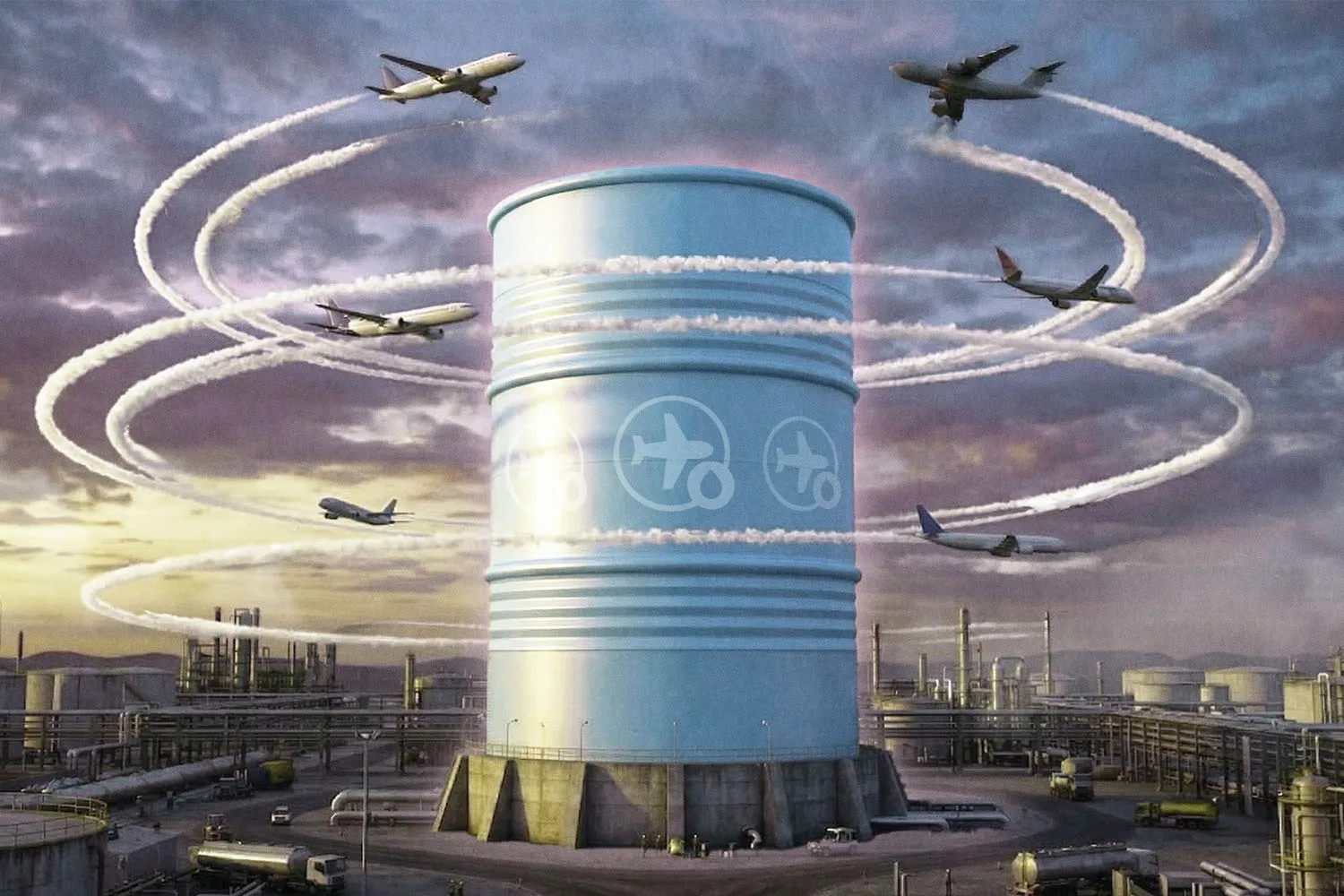
U.S. airlines are facing a formidable challenge as jet fuel prices have surged past the $4 per gallon mark, significantly escalating operational costs for the first quarter of 2026. This precipitous rise in a critical expense component has placed immense pressure on carriers, yet a confluence of robust passenger demand, rising airfares, and strategically diversified revenue streams – including lucrative loyalty programs and expanded premium seating options – is currently providing a crucial buffer. The industry finds itself engaged in a high-stakes economic race, where the central question remains whether these robust revenue streams can sustain pace with the relentless ascent of fuel costs as the industry progresses into the second quarter and beyond.
Global Energy Market Dynamics Driving the Spike
The current surge in jet fuel prices is not an isolated event but rather a direct consequence of complex and interconnected global energy market dynamics. Crude oil, the primary raw material for jet fuel, has seen its prices climb steadily due to a myriad of factors. Geopolitical tensions in key oil-producing regions, most notably ongoing conflicts and supply chain vulnerabilities, have introduced significant uncertainty into global oil supply forecasts. Additionally, decisions by the Organization of the Petroleum Exporting Countries and its allies (OPEC+), including production cuts or slower-than-anticipated increases, have contributed to a tighter global supply picture. This is occurring concurrently with a strong rebound in global economic activity post-pandemic, particularly from major industrial nations and burgeoning economies, which has fueled a sustained increase in demand for energy across all sectors, including aviation. The refining capacity, which converts crude oil into various products including jet fuel, has also faced constraints and bottlenecks, further contributing to higher prices for refined products. This confluence of supply-side limitations and demand-side strength has created a volatile pricing environment that directly impacts the aviation sector.
Jet fuel typically represents one of the largest operating expenses for airlines, often accounting for 20% to 30% of total costs, and sometimes even more during periods of extreme price volatility. Unlike ground transportation, which can gradually transition to electric or alternative fuels, commercial aviation remains overwhelmingly reliant on liquid jet fuel, making it highly susceptible to these market fluctuations. The process of converting crude oil into jet fuel involves multiple refining steps, and any disruptions or increased costs in this process are directly passed on to airlines. The historical volatility of oil prices means airlines have always operated with this inherent risk, but the current sustained high levels present a particularly acute challenge, forcing them to re-evaluate their financial models and operational strategies.
A Chronology of Price Escalation
The trajectory of jet fuel prices over the past few years provides critical context for the current situation. Prior to the COVID-19 pandemic, jet fuel prices hovered at more moderate levels, reflecting a relatively stable global energy market. The onset of the pandemic in early 2020, however, triggered an unprecedented collapse in air travel demand, leading to a dramatic plunge in fuel prices as global consumption plummeted. Airlines found themselves with grounded fleets and minimal fuel needs, temporarily alleviating cost pressures but highlighting the industry’s vulnerability to external shocks.
As global economies began to reopen and travel restrictions eased in late 2020 and throughout 2021, demand for both crude oil and jet fuel gradually recovered. This recovery was initially slow but gained momentum, pushing prices upward. The acceleration became particularly pronounced in the latter half of 2025 and into the first quarter of 2026. Several factors contributed to this intensified spike: renewed geopolitical tensions in Eastern Europe and the Middle East, unexpected production outages in some oil-producing nations, and a stronger-than-anticipated resurgence in international long-haul travel. By February and March of 2026, the benchmark price for jet fuel delivered to major U.S. hubs consistently exceeded the $4 per gallon threshold, marking a significant psychological and financial barrier for carriers. This sustained elevation signals a shift from temporary volatility to a potentially more enduring high-cost environment.
Quantifying the Financial Impact and Mitigation Strategies
The direct financial impact on U.S. airlines has been substantial. For major carriers, preliminary estimates suggest that fuel costs for Q1 2026 could be anywhere from 30% to 50% higher compared to the same period in the previous year, assuming similar flight schedules. For an airline consuming millions of gallons of fuel daily, even a marginal increase per gallon translates into hundreds of millions of dollars in additional expenses over a quarter. For instance, a large legacy carrier might see its quarterly fuel bill increase by upwards of $500 million compared to a scenario where fuel prices were $1-$1.50 lower per gallon. These increased expenditures directly erode profit margins and challenge the financial resilience built during the post-pandemic recovery.
To mitigate this inherent volatility, many airlines employ fuel hedging strategies. Hedging involves purchasing financial instruments to lock in a future price for a certain volume of fuel. This strategy can provide stability and predictability, protecting airlines from sudden price spikes. However, not all airlines hedge equally, and the effectiveness of hedging depends on the timing and extent of the contracts. Some carriers might have robust hedging portfolios covering a significant portion of their anticipated consumption, thereby softening the blow of the current price surge. Others, perhaps due to past hedging losses or a strategic decision to remain unhedged, might be more exposed to spot market prices. The current environment is a test of these hedging strategies, with some carriers undoubtedly better positioned than others to absorb the shock. Furthermore, the cost of entering new hedging contracts has likely increased significantly in this volatile market, making future hedging more expensive.
The Resilience of Revenue: Strong Demand and Diversification
Despite the significant headwind from fuel costs, U.S. airlines are demonstrating remarkable resilience, largely propelled by strong passenger demand and increasingly diversified revenue streams. The phenomenon of "revenge travel" – pent-up demand for leisure and vacation travel following years of pandemic-induced restrictions – continues to drive robust bookings. This leisure demand is complemented by a steady recovery in business travel, which, while not fully at pre-pandemic levels, is showing consistent growth. Load factors, a key metric indicating the percentage of seats filled on a flight, remain high across the industry, signifying efficient capacity utilization.
This strong demand environment has empowered airlines to implement significant fare increases. Dynamic pricing models, which adjust ticket prices based on demand, availability, and competitor pricing, allow carriers to pass on a portion of the elevated fuel costs directly to consumers. While there is a natural elasticity of demand, the current willingness of consumers to pay higher prices for travel has so far absorbed these increases without significantly deterring bookings. This ability to maintain pricing power is a critical factor in offsetting rising operational expenses.
Beyond traditional ticket sales, airlines have strategically expanded their ancillary revenue streams, which are proving to be exceptionally high-margin and stable. Loyalty programs, such as Delta’s SkyMiles, American’s AAdvantage, and United’s MileagePlus, have evolved into powerful profit centers. These programs generate substantial revenue not just from passengers flying, but more significantly, from selling miles to co-branded credit card partners. These sales often represent billions of dollars annually, providing a stable, non-operating income stream that is less directly affected by day-to-day operational costs like fuel. These programs are often valued as separate entities, sometimes exceeding the market capitalization of the airline itself, underscoring their immense financial importance.
Furthermore, the strategic push for premium seating options has yielded significant dividends. Airlines have reconfigured aircraft to include more premium economy, business, and first-class seats, catering to passengers willing to pay extra for comfort, space, and enhanced service. These higher-yield seats generate disproportionately more revenue per square foot of aircraft real estate compared to standard economy seats. Similarly, a wide array of ancillary services – including checked baggage fees, preferred seat selection, in-flight Wi-Fi, and priority boarding – continues to contribute substantially to the bottom line, allowing airlines to extract more revenue per passenger.
Industry Voices and Expert Analysis
Airline executives, while acknowledging the severe impact of rising fuel costs, have largely expressed confidence in their ability to navigate the current environment. A hypothetical statement from a major U.S. airline CEO might read: "While jet fuel remains a significant and unpredictable headwind, the underlying strength of passenger demand, coupled with the strategic investments we’ve made in our loyalty programs and premium product offerings, positions us to manage these pressures effectively. We are seeing sustained willingness from our customers to travel and pay for quality service, which is critical in this high-cost environment."
Industry analysts echo this sentiment of cautious optimism but highlight potential long-term risks. John Smith, an aviation industry analyst at AeroInsights Group, commented, "U.S. airlines are performing admirably in a challenging situation. Their diversified revenue streams and strong demand are providing a much-needed shield against fuel price volatility. However, the long-term viability of this strategy depends on whether fuel prices stabilize or if demand begins to soften. There’s a limit to how much cost can be passed on to consumers before it impacts travel decisions." Another analyst, Jane Doe from Global Aviation Partners, might add, "The current situation underscores the importance of fleet modernization and sustainable aviation fuel (SAF) investments. These are long-term solutions, but the immediate crisis reinforces their strategic imperative."
Government regulators and policymakers are primarily monitoring the situation, focusing on ensuring market stability and consumer protection. While there are no direct interventions to subsidize fuel costs, there is an overarching interest in maintaining a healthy and competitive aviation sector, given its critical role in economic activity and national infrastructure.
Broader Impact and Future Implications
The sustained high cost of jet fuel carries significant broader implications for the aviation sector and the wider economy. Looking into Q2 2026 and beyond, if fuel prices remain elevated or continue their upward trajectory, airlines may be forced to make more difficult decisions regarding capacity management. This could include slowing down fleet expansion, reducing frequencies on less profitable routes, or even temporarily suspending certain services, particularly those with thinner margins. Such adjustments would be aimed at optimizing costs and ensuring profitability in a high-expense environment.
The current situation also provides an added impetus for airlines to accelerate their fleet modernization programs. Newer generation aircraft are significantly more fuel-efficient, offering a tangible reduction in operating costs per available seat mile. While the capital expenditure for new aircraft is substantial, the long-term savings on fuel can make such investments economically compelling, especially when fuel prices are persistently high. Furthermore, the push towards Sustainable Aviation Fuel (SAF) gains renewed urgency. While SAF currently represents a tiny fraction of total fuel consumption and is significantly more expensive than traditional jet fuel, the industry is increasingly committed to its development and adoption as a key pathway to decarbonization and reduced reliance on fossil fuels. Investments in SAF production and infrastructure are likely to intensify.
For consumers, the immediate implication is the continuation of higher airfares. While demand remains strong, there is a point at which price sensitivity will inevitably kick in. This could potentially lead to a slight tempering of leisure travel demand, especially for budget-conscious travelers, and could make ultra-low-cost carrier (ULCC) models more challenging to sustain without significant fare increases. The overall economic impact is multifaceted; aviation is a major contributor to global GDP through tourism, trade, and business connectivity. Sustained high operating costs for airlines could indirectly affect these sectors by making travel and freight more expensive.
The competitive landscape within the airline industry could also shift. Legacy carriers, with their established loyalty programs, extensive premium offerings, and potentially more robust hedging strategies, might be better equipped to weather the storm compared to some low-cost carriers that rely heavily on low base fares and high volume. However, even low-cost carriers have been innovative in adding ancillary revenue streams, adapting their models to the evolving economic realities.
In conclusion, the U.S. airline industry is navigating a period of intense financial pressure driven by soaring jet fuel prices. While the challenge is significant, the sector’s robust recovery in passenger demand, coupled with strategic revenue diversification through loyalty programs and premium offerings, has so far provided a resilient counterweight. The current environment underscores the industry’s adaptability but also highlights its fundamental vulnerabilities to global energy markets. The coming quarters will be a critical test of this finely balanced economic act, determining whether airlines can successfully outpace the rising tide of fuel costs and sustain their recovery in this high-stakes race.



 Anjar Salim
 Chandra Hamzah
 Budi Mulyono


 Tatiana Tantri Indah Sari