Budi Mulyono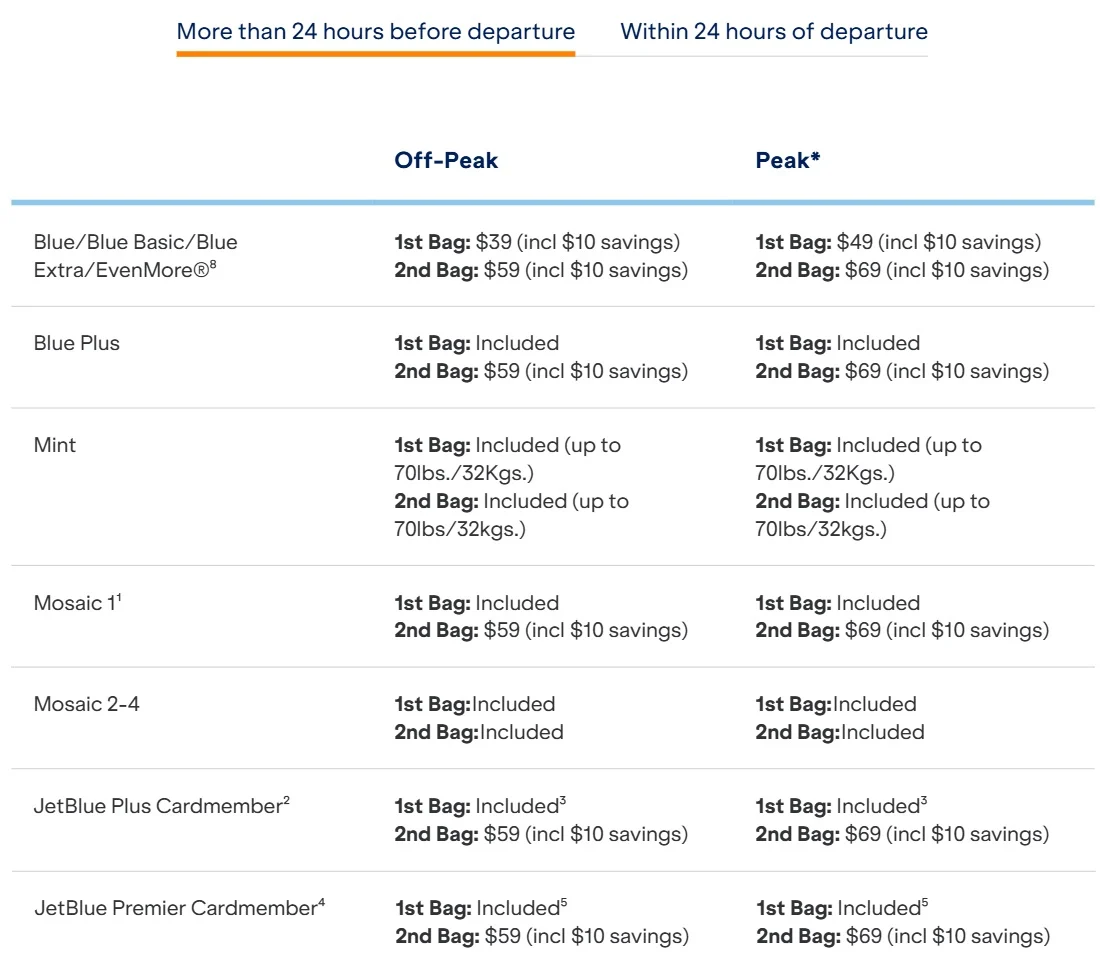
JetBlue Airways has officially overhauled its ancillary fee structure and loyalty program offerings, introducing a series of significant changes designed to diversify revenue streams and incentivize long-term customer commitment. The New York-based carrier recently announced a tiered increase in checked baggage fees, the launch of a first-of-its-kind subscription model for its TrueBlue loyalty program, and a new functionality allowing members to redeem points for non-flight "Extras" and administrative fees. These strategic shifts come as the airline industry continues to grapple with rising operational costs and a shifting competitive landscape, particularly following the termination of JetBlue’s proposed merger with Spirit Airlines.
The Evolution of Dynamic Baggage Pricing
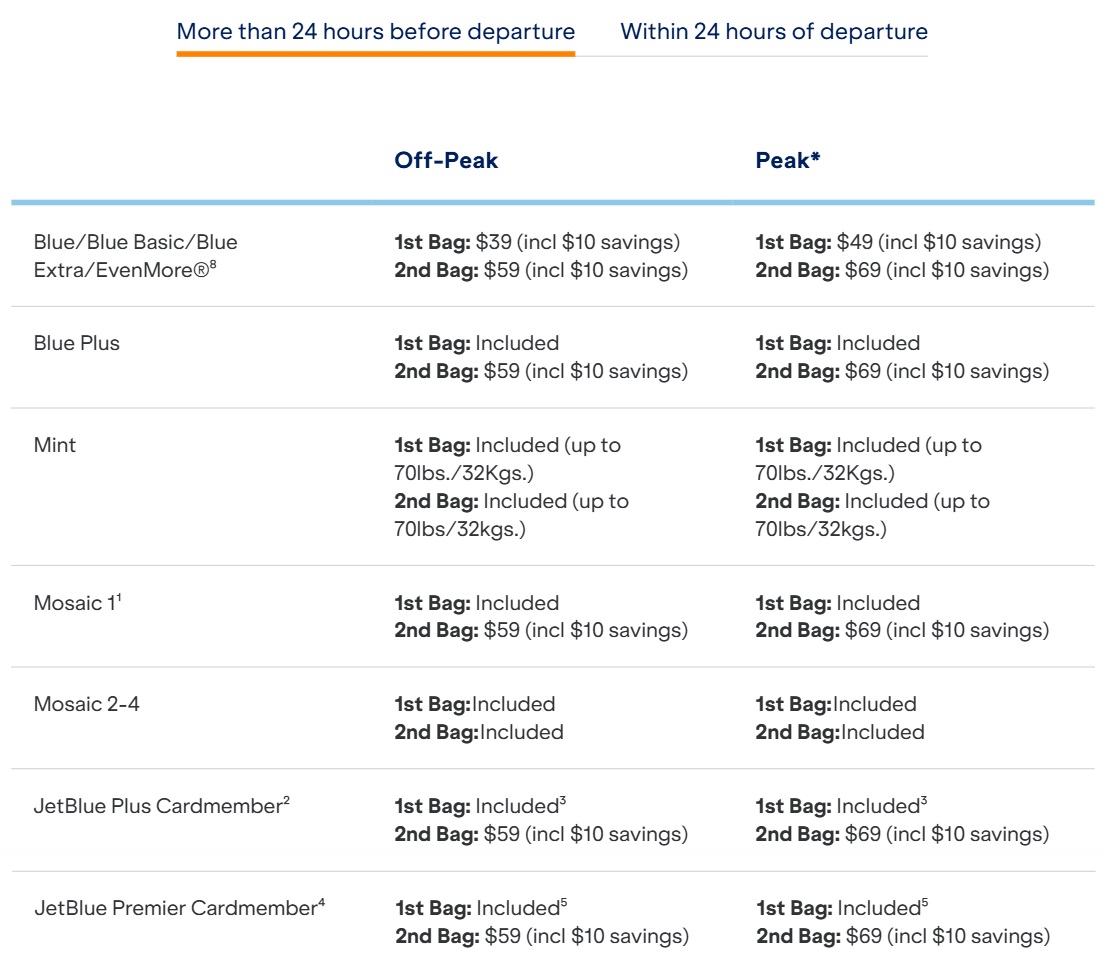
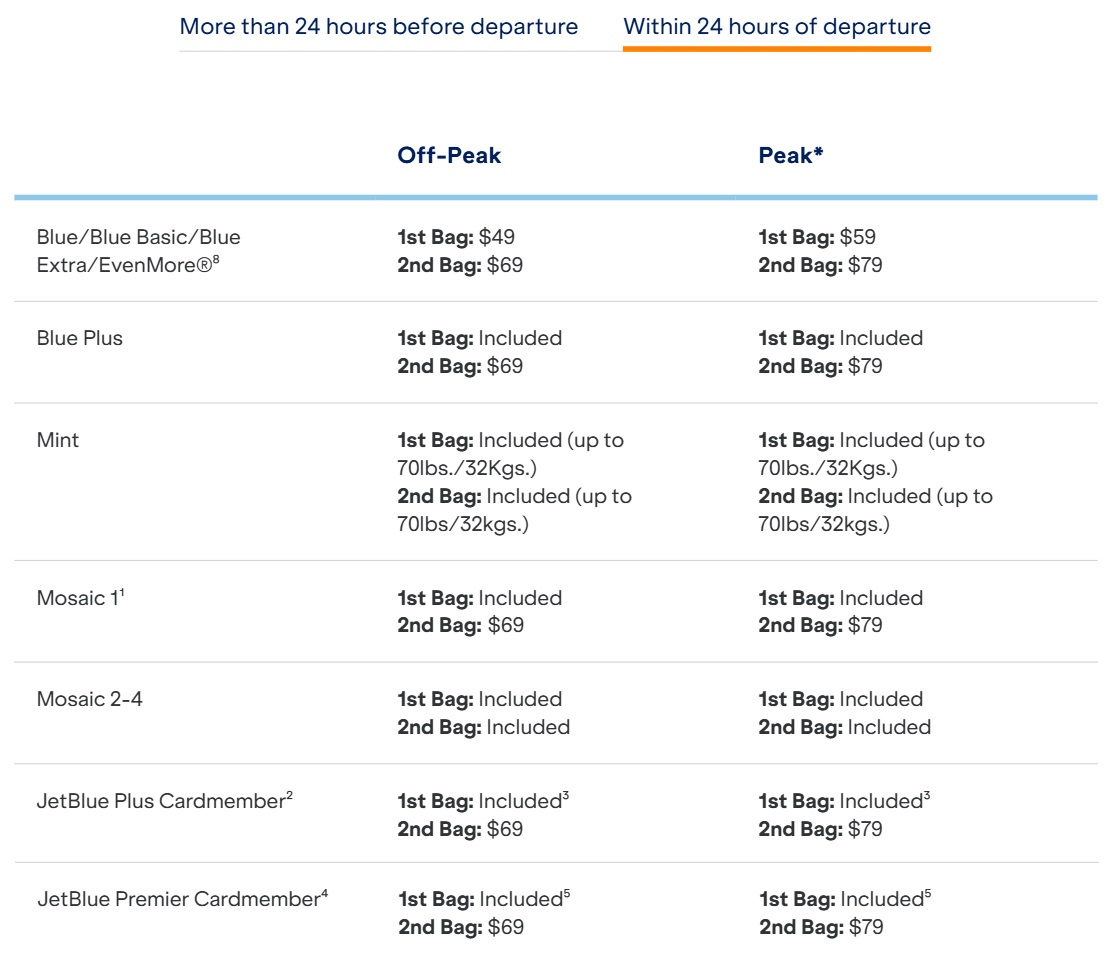
The most immediate impact on travelers involves a restructuring of checked baggage costs. JetBlue has moved toward a more complex, dynamic pricing model that categorizes fees based on three primary variables: the timing of the flight (peak versus off-peak), the timing of the payment (more than 24 hours before departure versus within 24 hours), and the destination.
Under the updated policy, off-peak travel dates will see a $4 increase for the first checked bag. For those paying more than 24 hours in advance, the cost is now $39; for those paying within the 24-hour window, the fee rises to $49. The financial burden increases significantly during peak travel periods, such as holidays and summer months, where the first bag fee has been raised by $9. This brings the cost to $49 for early payers and $59 for those who wait until check-in.
Second checked bags follow a similar upward trajectory. During off-peak windows, a second bag costs $50 (early) or $60 (late). During peak windows, these figures jump to $60 and $70, respectively. These changes represent a broader industry trend toward "unbundling" services, where base fares remain competitive while ancillary services are priced to reflect demand and operational complexity. Industry analysts suggest that by incentivizing early bag payments, JetBlue aims to streamline the airport check-in process and reduce the labor-intensive nature of last-minute luggage handling at the terminal.
Introducing TrueBlue Subscriptions: A New Loyalty Frontier
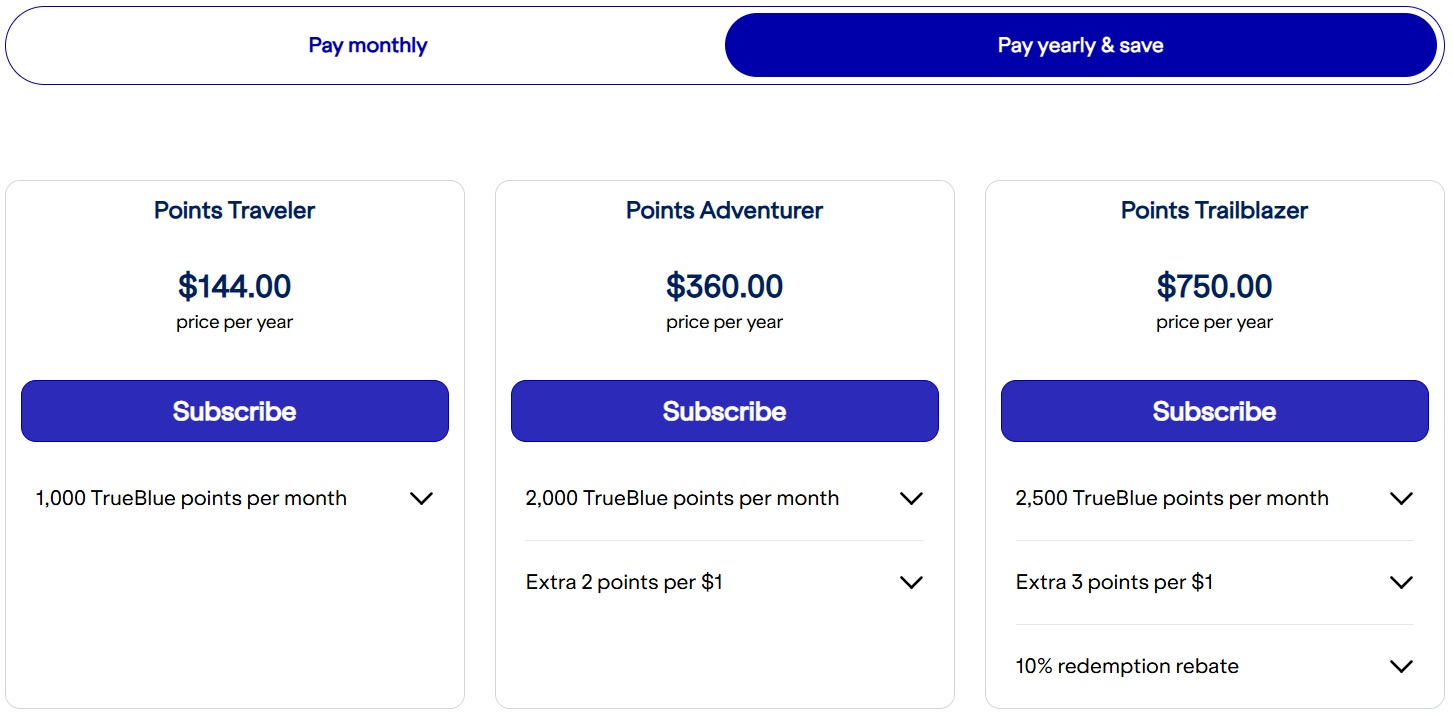
In a departure from traditional airline loyalty mechanics, JetBlue has introduced "TrueBlue Subscriptions." This model allows frequent flyers to pay a monthly or annual fee in exchange for a recurring deposit of TrueBlue points and various travel perks. The program is divided into three distinct tiers: Points Traveler, Points Adventurer, and Points Trailblazer.
The entry-level "Points Traveler" tier is priced at $15 per month or $166 annually. Subscribing annually offers a discount of approximately 7.7% compared to the month-to-month rate. Subscribers at this level receive 1,250 points per month (15,000 per year). At the annual price point, this equates to a purchase price of 1.1 cents to 1.2 cents per point. Given that the industry-standard "Reasonable Redemption Value" for TrueBlue points is approximately 1.3 cents, this tier offers a slight value proposition for those who regularly fly JetBlue and wish to "save" for future award travel.
The mid-tier "Points Adventurer" costs $450 annually and provides 2,500 points per month (30,000 per year). While the raw point-to-cost ratio (1.5 cents per point) is less favorable than the base tier, it includes an additional earning modifier of two points per dollar spent on JetBlue-operated flights. To break even on the value compared to the base tier, a traveler would typically need to spend roughly $3,000 annually on JetBlue airfare.
The premium "Points Trailblazer" tier is priced at $750 annually, awarding 30,000 points per year. On its own, the point value is poor (2.5 cents per point); however, the tier is marketed toward high-frequency travelers who can capitalize on its 10% rebate on award redemptions. When combined with the 10% rebate already offered to JetBlue Plus or Business credit cardholders, these travelers can effectively receive 20% of their points back on every award flight booked. Furthermore, Trailblazers earn an additional three points per dollar on flights.
To stimulate early adoption, JetBlue is offering a limited-time promotion through April 14, 2026. Members who subscribe to either the Adventurer or Trailblazer tiers by this date will receive five bonus "Tiles." Tiles are the fundamental unit of JetBlue’s status ladder; earning 10 Tiles unlocks the first level of "Perks You Pick," while 50 Tiles grants entry into the Mosaic elite status program.
Strategic Integration of Points.com
A critical technical detail of the new subscription model is JetBlue’s partnership with Points.com for payment processing. While this provides a seamless transaction interface, it carries significant implications for credit card rewards. Because Points.com is categorized as a third-party processor rather than a direct airline purchase, these subscription fees generally do not trigger "travel" category bonuses on most credit cards.
Furthermore, this classification likely prevents the subscription from being covered by airline fee reimbursements found on premium cards like the American Express Platinum or the Hilton Honors American Express Aspire. Travelers hoping to offset the cost of a TrueBlue subscription using these annual credits will likely be disappointed, as the transaction will not appear as a direct charge from JetBlue Airways.
Redemptions for Ancillary Fees and "Extras"
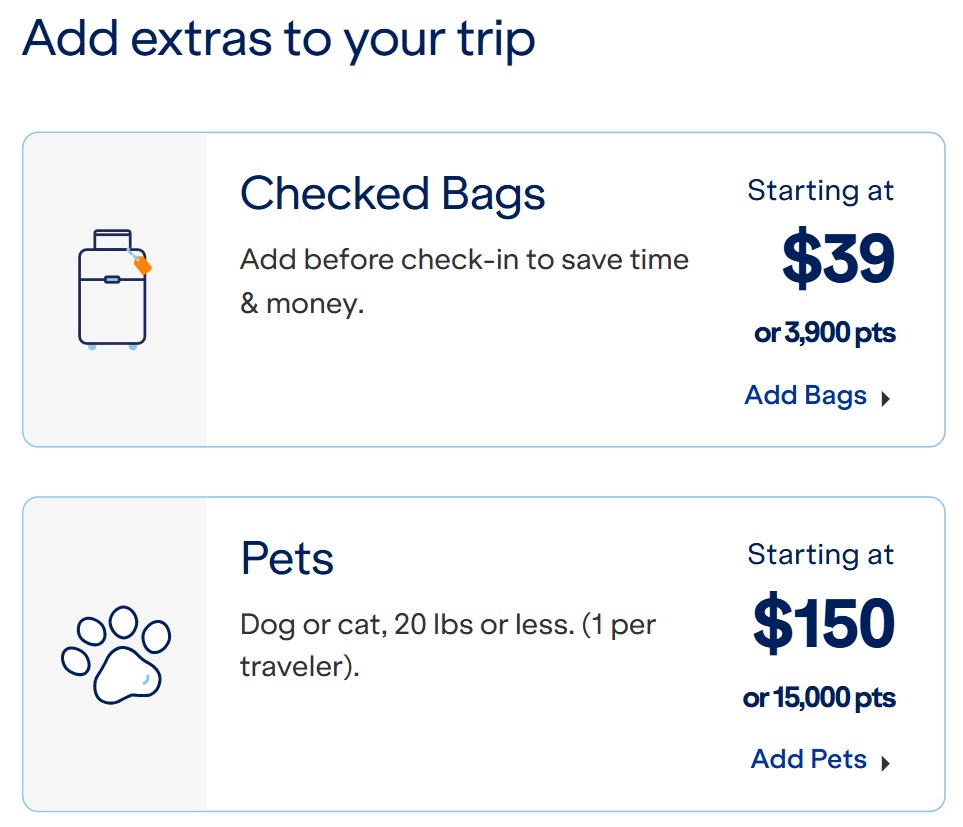
In an effort to provide more flexibility for point usage, JetBlue has enabled a feature allowing members to redeem TrueBlue points for various fees, including seat assignments (such as "Even More Space" seats), checked baggage, and pet fees.
However, early data indicates that the redemption rate for these fees is fixed at 1 cent per point. This is notably lower than the 1.3 to 1.5 cents per point often achievable when redeeming for actual flight segments. Financial experts note that while this provides a "cash-out" option for members with small balances, it is generally considered a suboptimal use of points. Because TrueBlue points do not expire, travelers are typically advised to hold their points for flight redemptions to maximize value. Nevertheless, the move aligns JetBlue with competitors like Delta Air Lines, which has long allowed "Pay with Miles" for various add-ons, albeit often at a lower value than standard award tickets.
Chronology of JetBlue’s Strategic Pivot
The rollout of these initiatives follows a challenging 24-month period for the carrier. In early 2024, the U.S. Department of Justice successfully blocked JetBlue’s acquisition of Spirit Airlines, citing antitrust concerns. This forced JetBlue to pivot from a growth-by-acquisition strategy to a "back-to-basics" approach focused on organic profitability.
- Late 2023: JetBlue begins internal reviews of its loyalty program to increase "stickiness" and predictable revenue.
- Early 2024: The Spirit merger is terminated; JetBlue announces a renewed focus on its core East Coast strongholds and premium Mint service.
- Mid-2024: Preliminary tests of dynamic baggage pricing begin in select markets.
- Current Week: The full suite of baggage fee increases, TrueBlue Subscriptions, and point-for-fee redemptions are launched nationwide.
Analysis of Implications for the Travel Industry
JetBlue’s decision to implement a subscription model is a calculated risk that reflects a broader shift in consumer behavior. Similar models have been seen in the "ultra-low-cost carrier" (ULCC) segment, such as Frontier’s "GoWild!" pass or Alaska Airlines’ "Flight Pass" on the West Coast. However, JetBlue is the first major "hybrid" carrier to attempt a points-based subscription rather than a flight-based one.
By locking customers into a six-month minimum commitment for the monthly subscription, JetBlue ensures a steady stream of cash flow and increases the likelihood that those customers will choose JetBlue over a competitor to utilize the points they are actively purchasing.
For the consumer, the value of these changes depends heavily on their existing relationship with the airline. Holders of the JetBlue Plus, Premier, or Business credit cards remain largely insulated from the baggage fee hikes, as these cards provide a free first checked bag. For the infrequent traveler, however, the "all-in" cost of a JetBlue flight has risen significantly, potentially narrowing the price gap between JetBlue and legacy carriers like United or American.
Official Stance and Market Reaction
While JetBlue has not released a formal press release for every individual fee adjustment, company spokespeople have previously stated that fee adjustments are necessary to offset rising fuel costs and labor contracts. The airline has emphasized that the new TrueBlue Subscriptions are about "choice and flexibility," allowing customers to engage with the brand in the way that best fits their travel frequency.
Market analysts have reacted with cautious optimism. "JetBlue needs to find margin wherever it can," said one industry analyst. "With the Spirit merger off the table, they have to prove they can be a standalone, profitable entity. Increasing ancillary revenue through baggage and subscriptions is the most direct path to that goal."
As the April 14, 2026, deadline for the bonus Tile promotion approaches, the industry will be watching closely to see if other carriers follow suit. If JetBlue’s subscription model proves successful in driving loyalty and predictable revenue, it may well become the blueprint for the next generation of airline loyalty programs. For now, travelers are encouraged to audit their travel habits and credit card portfolios to determine if the new TrueBlue ecosystem offers them a net gain or a more expensive journey.



 Anjar Salim
 Chandra Hamzah
 Tatiana Tantri Indah Sari