Budi Mulyono
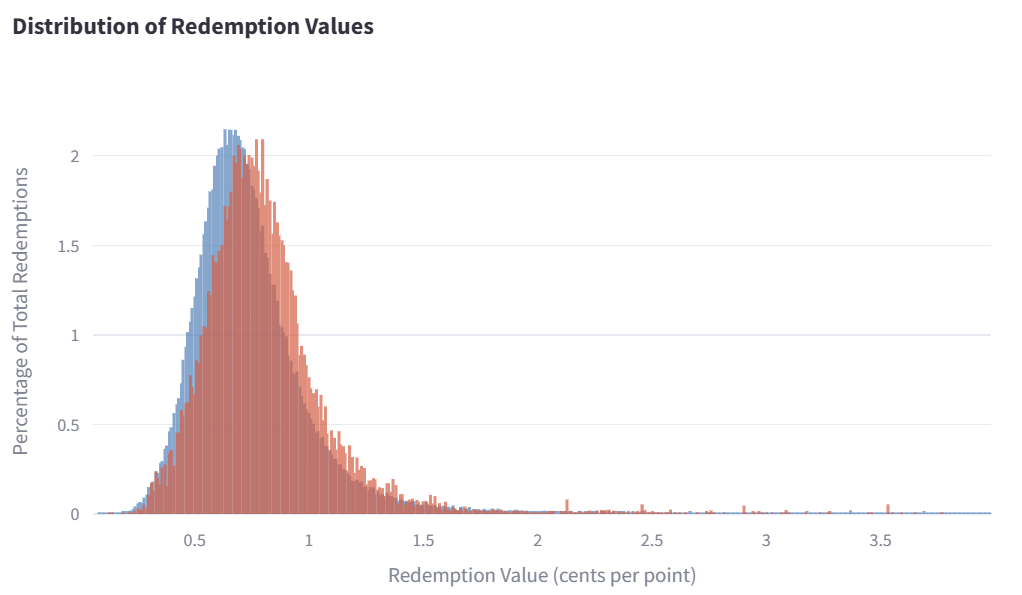
The valuation of Marriott Bonvoy points has remained remarkably resilient despite significant structural changes to the program’s pricing model over the last twenty-four months. According to the latest comprehensive analysis of approximately three million domestic and international search results, the "Reasonable Redemption Value" (RRV) for Marriott Bonvoy points currently stands at 0.77 cents per point. This figure represents a marginal increase of 0.01 cents from previous data sets, signaling a period of stabilization for the world’s largest hotel loyalty program. This valuation is derived from a massive data set provided by Gondola, a hotel search and analytics platform, covering more than 9,000 properties worldwide. By comparing real-world cash prices against point requirements for identical room types, analysts have been able to pinpoint the median value at which a consumer can expect to redeem their points without extensive "cherry-picking" of high-value awards.
The Evolution of Marriott Bonvoy Pricing Models
The stability of the 0.77 cents valuation comes as a surprise to many industry observers who predicted a sharp decline following Marriott’s transition away from fixed award charts. Historically, Marriott utilized a category-based system (Categories 1 through 8) with peak, off-peak, and standard pricing. This allowed members to predict exactly how many points a stay would cost. However, in March 2022, Marriott began a phased transition toward "Dynamic Pricing," where point requirements fluctuate in closer alignment with cash rates.
In early 2023, the program removed the remaining boundaries of its legacy charts, leading to significant price hikes at many high-end, aspirational properties. Some luxury resorts in locations such as the Maldives, Bora Bora, and Aspen saw their nightly point requirements nearly double overnight. Despite these localized "devaluations" at the top tier of the portfolio, the broader data suggests that the vast majority of Marriott’s mid-scale and select-service brands have maintained a consistent point-to-cash ratio. This suggests that while "outsized value" at luxury hotels is becoming harder to find, the floor for point value remains firm across the bulk of the 30+ brands under the Marriott umbrella.

Methodology: Utilizing Big Data for Accurate Valuation
The shift from manual data collection to large-scale algorithmic analysis has transformed how loyalty program values are calculated. Previously, industry experts relied on manual samples of several hundred hotel stays to estimate value. The current RRV of 0.77 cents is based on a significantly more robust methodology involving three million data points.
To ensure an "apples-to-apples" comparison, the analysis excludes non-refundable cash rates. Because Marriott award bookings are generally fully refundable up until a few days before check-in, they are compared only against "Flexible" or "Standard" cash rates. Furthermore, the calculation incorporates the "Total Cash Rate," which includes all applicable taxes and fees. A critical distinction in the Marriott program—as opposed to competitors like World of Hyatt or Hilton Honors—is that Marriott typically does not waive resort or destination fees on award stays. To account for this, the estimated resort fee is subtracted from the cash price before dividing by the point cost, ensuring the RRV reflects the true out-of-pocket savings for the member.
Brand-Specific Performance and the Decline of Luxury Premiums
One of the most notable findings in the recent data is the erosion of the "luxury premium" for point redemptions. In previous years, brands like The Ritz-Carlton and St. Regis frequently offered point values well above 1.0 cent per point, as cash rates skyrocketed while point caps remained relatively low. Under the current dynamic pricing regime, Marriott has successfully aligned these luxury brands with the program median.
Data indicates that the points required for high-end stays now scale almost directly with the elevated cash prices of those rooms. Conversely, mid-tier brands such as Courtyard, Fairfield Inn, and Marriott Hotels & Resorts consistently hover around the 0.77-cent mark. Interestingly, certain "independent" collections within the portfolio, specifically the Tribute Portfolio and Design Hotels, were identified as providing the lowest average value. These properties, while participating in the Bonvoy program, often maintain pricing structures that result in suboptimal redemption rates, frequently falling below 0.6 cents per point.
Geographic Variance in Redemption Value
The value of a Marriott Bonvoy point is heavily dependent on the destination, a trend that mirrors patterns seen in other major hotel loyalty programs. Analysis of "baskets" of popular travel destinations reveals significant disparities:
- High-Value Markets: Miami Beach remains a standout for domestic travelers, frequently offering redemption values exceeding 0.9 cents per point. This is often due to high seasonal taxes and fees that are covered (partially) by the point redemption, combined with high cash demand.
- Low-Value Markets: Cities such as Los Angeles, Singapore, Cancun, and Honolulu tend to offer lower-than-average value. In markets like Honolulu and Cancun, the prevalence of high resort fees—which Marriott members must pay even on award stays—significantly diminishes the net value of the points.
- International Stability: European and Asian urban markets show the highest level of stability, with point values closely tracking the 0.77-cent median.
Strategic Implications for Points Earners and "Cherry-Pickers"
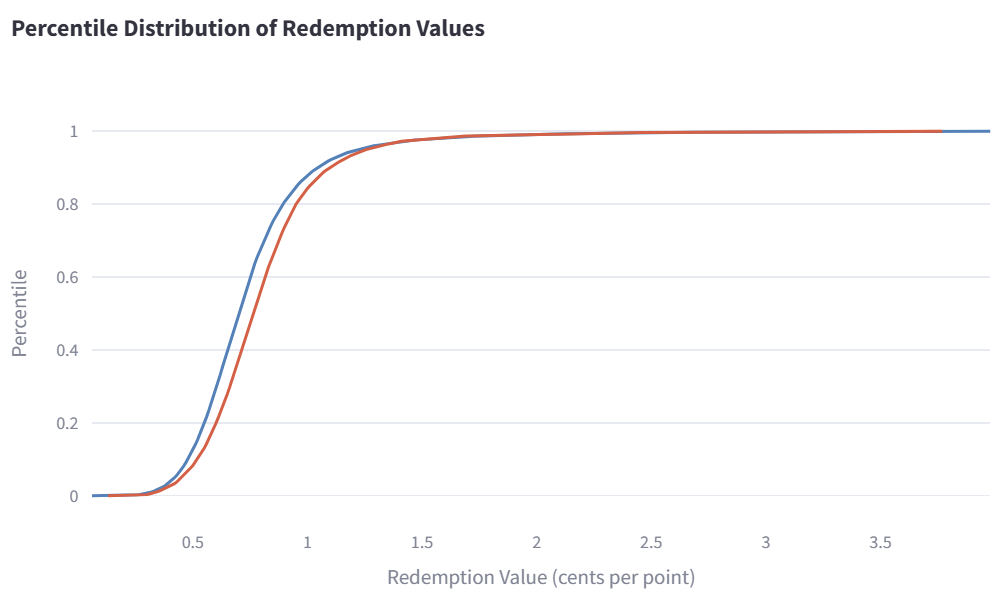
While the median RRV is 0.77 cents, the data highlights that savvy members can still extract significantly more value through strategic booking. The analysis utilizes percentiles to demonstrate the range of potential values:
- 50th Percentile (RRV): 0.77 cents per point. This is the "baseline" value a member can expect with random selection.
- 75th Percentile: 0.91 cents per point. Members who spend a moderate amount of time comparing dates and locations can reasonably achieve this value.
- 90th Percentile: 1.11 cents per point. This represents the "sweet spots" of the program, typically found during high-demand events or at specific properties where dynamic pricing has not yet fully caught up to cash inflation.
For consumers deciding between earning Marriott points or a different currency (such as Hyatt points or airline miles), these figures are vital. For instance, while a credit card might offer 2x points on Marriott spend and 1x on Hyatt, the fact that Hyatt points are frequently valued at 1.7 to 2.1 cents per point means the Hyatt option may still be more lucrative despite the lower earning rate.
The Broader Impact of Hospitality Inflation
The stabilization of point values at 0.77 cents occurs against a backdrop of broader economic inflation within the travel industry. As Average Daily Rates (ADR) at hotels have risen globally, the cost in points has risen commensurately. This "hidden devaluation" means that while the value per point remains steady, the purchasing power of a fixed number of points has decreased. A member who earned 100,000 points three years ago would find that those points cover fewer nights today than they did previously, even if the math still results in a 0.77-cent valuation.
Industry analysts suggest that Marriott’s strategy is designed to protect the program’s balance sheet from "breakage" and high liability. By tethering points more closely to cash values, Marriott reduces the risk of members finding "extreme" redemptions that cost the company significantly more than the internal reimbursement rate paid to hotel owners for award stays.
Conclusion and Future Outlook
The Marriott Bonvoy program remains a cornerstone of the travel loyalty landscape due to its sheer scale and the diversity of its geographic footprint. While the era of easy "high-value" redemptions at top-tier luxury resorts has largely transitioned into a more calculated, revenue-based model, the data proves that the points maintain a predictable and fair floor.
The 0.77-cent Reasonable Redemption Value provides a reliable benchmark for consumers to evaluate credit card sign-up offers, spend bonuses, and point transfers. As Marriott continues to integrate new segments—such as its MGM Collection partnership and its expansion into the mid-scale "StudioRes" market—the consistency of this valuation will be a key metric for member retention. For now, the message to Bonvoy members is clear: the program has stabilized, and while the "golden age" of fixed-chart arbitrage is over, the utility of the currency remains intact for the average traveler.




 Anjar Salim
 Chandra Hamzah
 Tatiana Tantri Indah Sari