Tatiana Tantri Indah Sari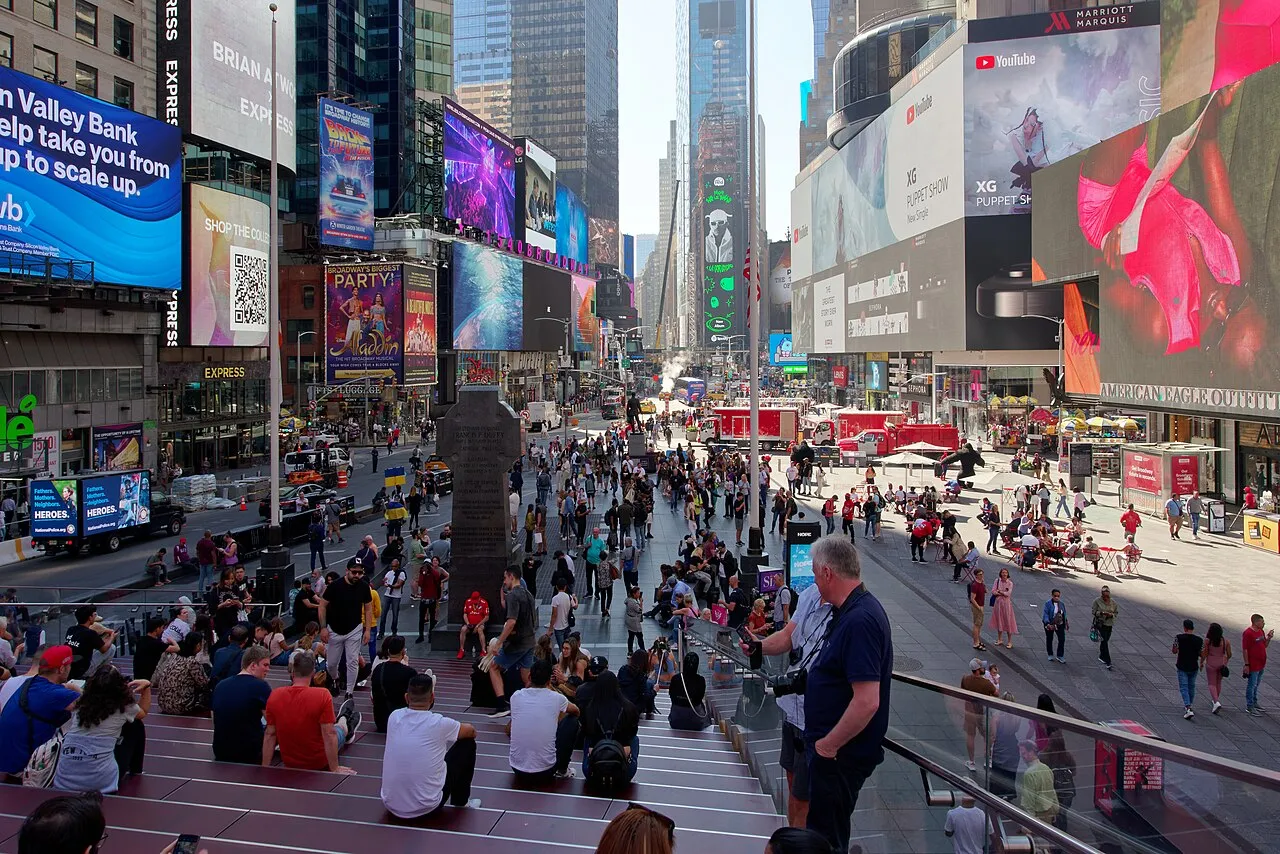
New York City experienced a nuanced tourism landscape last year, achieving a modest increase in overall visitor numbers that exceeded initial projections, primarily driven by robust domestic travel. However, this success was tempered by a significant and concerning decline in international visitors, a trend that mirrors broader challenges facing the U.S. travel industry in the post-pandemic recovery era. While the city’s vibrant cultural attractions and diverse offerings continued to draw crowds, the dip in overseas arrivals underscores a critical economic vulnerability: the loss of higher-spending international tourists who are vital to the city’s luxury retail, premium hospitality, and high-end cultural sectors.
Roughly 65 million travelers visited the metropolis in 2025, marking a 0.7% jump from the previous year’s figures, according to data released Tuesday by New York City Tourism + Conventions. This overall growth was almost entirely attributable to a 1.7% increase in domestic visitors from 2024, signaling a strong preference among American travelers for accessible, familiar, and culturally rich destinations within their own borders. In contrast, the international segment reported 12.5 million visitors, representing a 3.2% decline compared to 2024. This downturn is particularly alarming given that arrivals from seven of New York City’s top 10 international source markets registered decreases last year, highlighting a widespread difficulty in recapturing key global audiences.
The Dynamics of Domestic Resilience
The resilience of domestic tourism has been a cornerstone of New York City’s post-pandemic recovery. American travelers, often seeking weekend getaways, family vacations, or business trips, found the city an attractive option. Factors contributing to this domestic surge include relative ease of travel, often shorter travel times compared to international journeys, and the enduring appeal of New York’s iconic landmarks, world-class dining, and unparalleled entertainment. Broadway, for instance, reported a strong rebound in attendance, largely fueled by regional visitors and domestic tour groups. Major conventions and business events also saw increased participation from U.S.-based companies and attendees, contributing significantly to hotel occupancy rates and local spending.
Domestic visitors, while crucial for volume, typically exhibit different spending patterns than their international counterparts. While they contribute substantially to local businesses like restaurants, smaller retail establishments, and local attractions, their average length of stay and per capita expenditure on luxury goods, high-end accommodations, and premium experiences tend to be lower than those of long-haul international travelers. This distinction is central to understanding the economic implications of the current tourism composition.
The International Visitor Conundrum: A Deeper Dive
The 3.2% decline in international visitors to 12.5 million represents more than just a statistical blip; it signifies a substantial revenue gap for the city. International tourists, particularly those from distant markets, typically stay longer, explore more extensively, and spend significantly more on a per-trip basis. Their contributions are vital to sectors such as luxury retail on Fifth Avenue, high-end hotels in Midtown and downtown, premium dining establishments, and cultural institutions that rely on philanthropic and visitor support.
Analyzing the drop from specific markets reveals the breadth of the challenge. While New York City Tourism + Conventions did not immediately disclose the exact seven markets experiencing declines, historical data suggests that traditional powerhouses such as the United Kingdom, Canada, Brazil, Germany, France, and Australia are typically among the top ten. A decline across such a diverse set of origins points to systemic issues rather than isolated geopolitical or economic fluctuations in a single region. The absence of a full recovery from China, a market known for its high-spending tourists pre-pandemic, continues to be a major factor affecting overall international numbers for the entire U.S., including New York.
Historical Context and Pre-Pandemic Benchmarks
To fully appreciate the current situation, it is essential to contextualize these figures against pre-pandemic levels. In 2019, New York City welcomed a record 66.6 million visitors, including 13.5 million international travelers. This means that while overall tourism in 2025 is approaching the 2019 peak, the international segment remains approximately 7.4% below its pre-COVID high. This gap represents millions of potential high-value visitors and billions in lost economic activity. The city had set ambitious targets for a full recovery by 2024 or 2025, underscoring the disappointment embedded in the latest international figures. The pandemic had drastically reduced international arrivals, plummeting to just 2.4 million in 2020. While the recovery since then has been steady, the recent plateau and decline indicate significant headwinds.
Economic Implications and Spending Patterns
The financial impact of a decline in international visitors is considerable. According to economic impact studies conducted prior to the pandemic, international travelers spent an average of three to four times more per trip than domestic travelers. A typical international visitor might spend upwards of $2,500-$3,500 per visit on accommodation, dining, shopping, and entertainment, compared to domestic visitors whose average spend might range from $800-$1,200. This disparity means that even a small percentage drop in international arrivals can equate to hundreds of millions, if not billions, of dollars in lost revenue for the city’s economy.
The luxury retail sector, particularly stores concentrated in high-traffic tourist areas like Manhattan’s Fifth Avenue, SoHo, and the Upper East Side, is particularly vulnerable. Many of these establishments rely heavily on international clientele, who are more likely to make high-value purchases. Similarly, premium hotels, which command higher average daily rates (ADRs) from international guests, feel the pinch. The city’s vast array of fine dining restaurants, Broadway shows, and cultural institutions also experience reduced patronage from a demographic known for its willingness to invest in unique, high-quality experiences. The ripple effect extends to tour operators, transportation services, and even local artists and artisans who cater to a global audience.
Factors Contributing to the International Decline
Several factors are widely cited by industry experts as contributing to the persistent challenges in attracting international tourists to the United States and, by extension, New York City:
- Visa Processing Delays: Protracted wait times for U.S. visa appointments in many key markets remain a significant deterrent. In some countries, prospective travelers face waits of over a year for an interview, making spontaneous or even well-planned trips difficult or impossible. This administrative bottleneck frustrates potential visitors and diverts them to other destinations with more streamlined entry processes.
- Strong U.S. Dollar: The relative strength of the U.S. dollar against many foreign currencies makes travel to the United States considerably more expensive for international visitors. From accommodation and dining to shopping and attractions, every expense is magnified, reducing purchasing power and making alternative destinations appear more affordable.
- Increased Global Competition: Post-pandemic, many countries in Europe, Asia, and Latin America have aggressively launched marketing campaigns, eased entry restrictions, and offered incentives to attract tourists. Destinations like Paris, London, Tokyo, and Dubai have been particularly effective in regaining their international market share, presenting compelling alternatives to New York City.
- Perception Issues: While New York City remains an aspirational destination, concerns over safety in certain areas, combined with a general perception of high costs, can influence travel decisions. Although crime rates have generally declined in recent years, lingering media narratives or personal anecdotes can impact visitor confidence.
- Air Connectivity and Capacity: While air travel has largely recovered, some long-haul routes may still lack the frequency or directness seen pre-pandemic, making travel less convenient or more expensive for certain international markets.
- Evolving Travel Preferences: A segment of international travelers may be prioritizing eco-tourism, adventure travel, or less crowded destinations, shifting away from traditional urban hubs, at least temporarily.
Official Responses and Strategic Initiatives
In response to these challenges, New York City Tourism + Conventions, the city’s official marketing organization, acknowledged the disparity in visitor recovery. Fred Dixon, President and CEO of NYC Tourism + Conventions, stated in a press conference, "While we are incredibly proud of the resilience shown by our domestic market, the decline in international visitors presents a clear and urgent priority. These are the travelers who fuel our luxury economy, support our arts and culture, and contribute disproportionately to our overall economic health. We are intensifying our global marketing efforts and advocating strongly for federal policy changes, particularly around visa processing, to level the playing field."
The Mayor’s Office has also reiterated its commitment to fully restoring New York City’s international tourism prowess. A spokesperson indicated ongoing collaborations with federal agencies, including the Department of State and the Department of Commerce, to address visa backlogs and streamline entry processes. Furthermore, city officials are exploring new initiatives to enhance visitor experience, improve public safety, and highlight the diverse cultural offerings beyond Manhattan’s core attractions.
The hospitality industry has also weighed in. Vijay Dandapani, President and CEO of the Hotel Association of New York City, expressed cautious optimism. "Our hotels are seeing strong occupancy, especially on weekends, thanks to domestic demand. But the weekday business, traditionally bolstered by international and corporate travel, still lags. We need those high-spending guests back to truly thrive and bring our average room rates and revenue per available room back to their full potential." Industry leaders are collaborating on targeted campaigns aimed at specific international markets, leveraging digital platforms and partnerships with airlines and tour operators.
Proposed solutions extend beyond marketing. There’s a growing consensus on the need for sustained advocacy for federal policy changes, particularly the modernization of the visa application process and potential expansion of visa waiver programs. Additionally, enhancing infrastructure, promoting sustainable tourism practices, and showcasing New York City’s unparalleled diversity of neighborhoods and cultural experiences are seen as key strategies to differentiate the city in a competitive global market.
Looking Ahead: Projections and Challenges
New York City Tourism + Conventions projects a gradual but steady recovery of international visitor numbers over the next two to three years, aiming to surpass 2019 levels by 2027. This projection, however, is contingent on several factors: the easing of global geopolitical tensions, stabilization of international economies, a more favorable exchange rate for foreign currencies against the dollar, and crucially, significant improvements in U.S. visa processing.
The city faces ongoing hurdles, including sustained competition from other global cities that have aggressively courted international travelers. The perception of value for money will also remain a significant challenge, given New York’s reputation as an expensive destination. Innovation in tourism product development, such as promoting niche travel experiences, culinary tours, and neighborhood-specific attractions, will be essential to attract new demographics and retain existing ones. Efforts to enhance accessibility and inclusivity, ensuring that New York City remains welcoming to all, will also play a critical role.
While New York City’s tourism sector has demonstrated remarkable resilience, anchored by a strong domestic base, the latest figures serve as a stark reminder of the critical importance of its international visitors. Recapturing this high-spending market is not merely about achieving pre-pandemic statistics; it is about restoring a vital economic artery that supports thousands of jobs, fuels luxury industries, and enriches the city’s cultural tapestry. The path forward demands concerted efforts from city officials, federal partners, and the entire tourism industry to address the underlying challenges and ensure New York City maintains its position as a truly global destination.



 Anjar Salim
 Chandra Hamzah
 Budi Mulyono