
 Budi Mulyono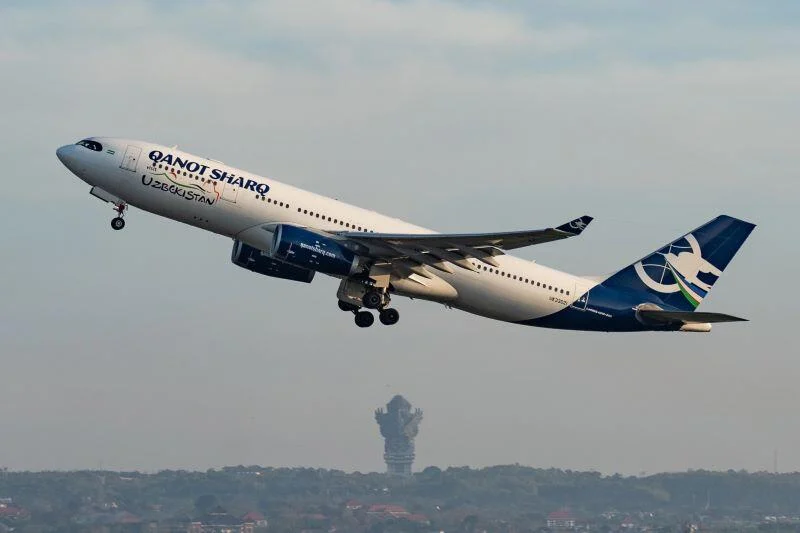
Uzbekistan’s first private airline, Qanot Sharq, has officially announced its intention to enter the North American market with the launch of a new long-haul service between Tashkent International Airport (TAS) and New York’s John F. Kennedy International Airport (JFK). Scheduled to commence on May 3, 2026, the service represents a significant milestone in the liberalization of the Uzbek aviation sector, which was historically dominated by the state-owned flag carrier. The new route will be operated twice weekly, utilizing the airline’s wide-body Airbus A330-200 aircraft.
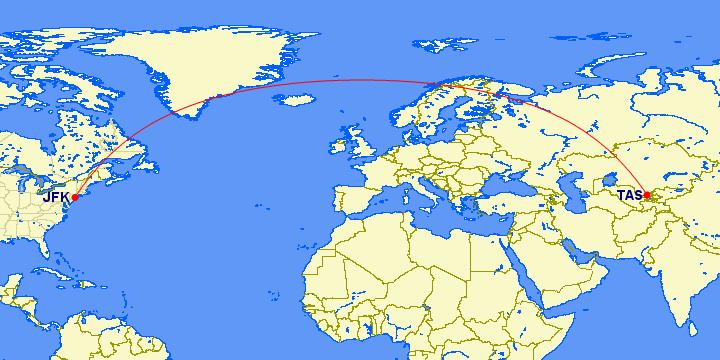
According to data released via AeroRoutes, the westbound flight, designated as HH101, is scheduled to depart Tashkent at 11:20 AM, arriving in New York at 3:40 PM local time. The return leg, HH102, will depart JFK at 5:10 PM, arriving back in the Uzbek capital at 2:40 PM the following day. With a Great Circle distance of approximately 6,338 miles, the westbound journey is blocked at 13 hours and 20 minutes, while the eastbound return is scheduled for 12 hours and 30 minutes. The service will operate on Wednesdays and Sundays, providing a strategic mid-week and weekend option for travelers.
Strategic Expansion into the North American Market
The decision to launch flights to New York follows a period of rapid growth for Qanot Sharq, which resumed operations in 2021 following the modernization of Uzbekistan’s civil aviation regulations. The Tashkent-New York corridor is currently served exclusively by Uzbekistan Airways, which operates the route up to five times per week using Boeing 787-8 Dreamliner aircraft. By entering this market, Qanot Sharq aims to capture a share of the burgeoning "Visiting Friends and Relatives" (VFR) segment, as well as the increasing number of American tourists visiting Central Asia.
The Uzbek diaspora in the United States, particularly within the New York metropolitan area, has grown significantly over the last decade. Communities in Brooklyn and Queens have created a steady demand for direct connectivity to Tashkent. Industry analysts suggest that Qanot Sharq’s entry will likely introduce price competition to a route that has long been a monopoly, potentially lowering fares for budget-conscious travelers and small-business owners involved in trans-Caspian trade.
Fleet Composition and In-Flight Experience
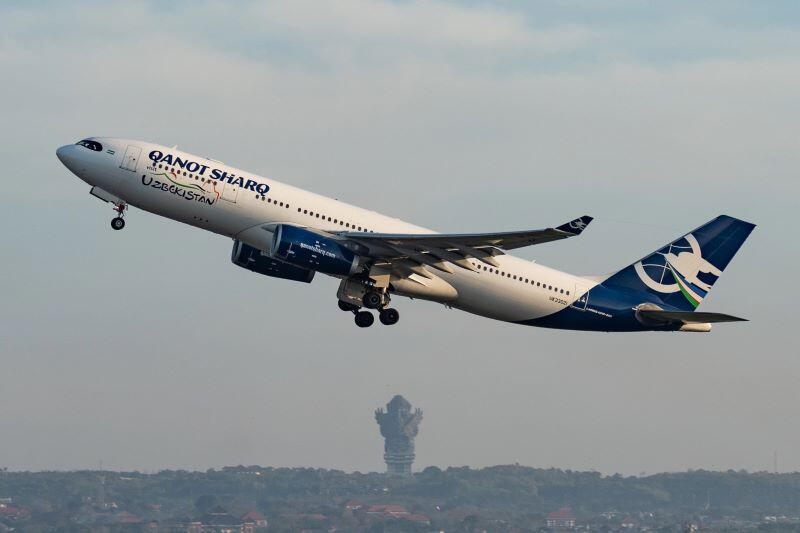
Qanot Sharq will deploy its Airbus A330-200 fleet on the New York route. These aircraft, acquired second-hand—primarily from Air China—have been integrated into the fleet between 2024 and 2025. The aircraft are configured with a two-class layout totaling 266 seats. This includes 18 business class seats in a 2-2-2 configuration, featuring lie-flat capabilities, and 248 economy class seats.
The technical specifications of the A330-200 are well-suited for this mission, though the aircraft represents an older generation of long-haul technology compared to the Dreamliners used by the national carrier. To remain competitive, Qanot Sharq is expected to leverage its lower operating cost structure to offer more aggressive pricing. However, the airline has confirmed that certain amenities common on trans-Atlantic flights will be absent; the aircraft are currently not equipped with Wi-Fi connectivity, and the airline maintains a "dry" policy, meaning no alcoholic beverages are served on board. This policy aligns with the carrier’s branding as a service that respects regional cultural norms while focusing on essential long-haul comfort.
The Evolution of Qanot Sharq
The current iteration of Qanot Sharq is a product of Uzbekistan’s broader economic reforms initiated under President Shavkat Mirziyoyev. For decades, the nation’s aviation industry was a closed system. The dismantling of the monopoly held by Uzbekistan Airways allowed for the emergence of private players like Qanot Sharq, Air Samarkand, and Centrum Air.
Qanot Sharq’s fleet strategy is notably diverse for a carrier of its size. The airline currently operates seven Airbus aircraft, including:
- Two Airbus A320-200s
- Two Airbus A321neos
- One Airbus A321XLR
- Two Airbus A330-200s
The airline’s plans to take delivery of both A321LR (Long Range) and A321XLR (Extra Long Range) variants indicate a dual-track strategy. While the A330s handle high-capacity routes to New York, Jeddah, and various destinations in China and Southeast Asia, the narrow-body long-range aircraft will allow the carrier to explore thinner routes to Europe and East Asia with greater fuel efficiency.
Economic and Diplomatic Implications
The launch of a second carrier on the Tashkent-New York route is more than a commercial venture; it is a signal of Uzbekistan’s increasing integration into the global economy. In recent years, the United States and Uzbekistan have strengthened bilateral ties through the C5+1 diplomatic platform. Improved aviation links are viewed as a prerequisite for expanding trade and investment between the two nations.
Uzbekistan has set ambitious tourism targets, aiming to attract more than 15 million foreign tourists annually by 2030. The "Silk Road" heritage of cities like Samarkand, Bukhara, and Khiva has become a major draw for Western travelers. By providing additional capacity into JFK, Qanot Sharq facilitates easier access for American tour operators and independent travelers who previously had limited options for direct travel to the heart of Central Asia.
Competitive Landscape and Challenges
While the expansion is ambitious, Qanot Sharq faces several operational challenges. The New York-Tashkent route is one of the longest in the region, requiring high utilization rates and sophisticated maintenance support for the aging A330 fleet. Furthermore, the airline must compete with the established reputation and larger network of Uzbekistan Airways, which offers seamless connections to domestic points and neighboring countries.
One notable point of interest for aviation observers is the choice of flight numbers. Qanot Sharq has selected HH101 and HH102, which mirrors the HY101 and HY102 designators used by Uzbekistan Airways for the same route. This move is seen by some as a direct challenge to the incumbent, signaling Qanot Sharq’s intent to be viewed as a primary alternative rather than a secondary charter operator.
Regulatory hurdles also remain a factor. Operating scheduled services into the United States requires stringent adherence to Federal Aviation Administration (FAA) and Department of Transportation (DOT) standards regarding safety, security, and consumer protection. Qanot Sharq’s ability to maintain these standards on a consistent basis will be critical to its long-term viability in the American market.
Chronology of Uzbekistan’s Aviation Liberalization
To understand the context of this new service, it is necessary to look at the timeline of aviation reform in the region:
- 2019: The Uzbek government issues a decree to unbundle Uzbekistan Airways, separating the airline from airport management and air traffic control.
- 2021: Qanot Sharq receives its Air Operator Certificate (AOC) and begins domestic and regional operations, breaking the decades-long monopoly.
- 2022-2023: Several other private carriers, including MyFreighter (Centrum Air) and Air Samarkand, enter the market, focusing on both cargo and passenger segments.
- 2024: Qanot Sharq acquires its first wide-body A330-200s, enabling flights to Istanbul, Jeddah, and Seoul.
- March 2026: Qanot Sharq officially files schedules for its inaugural service to the United States.
- May 3, 2026: Projected date for the first flight from Tashkent to New York JFK.
Impact on the Passenger Experience
For the traveling public, the entry of Qanot Sharq provides a distinct alternative. The airline’s business class, while using an older 2-2-2 layout, offers full lie-flat beds, which remains the industry standard for ultra-long-haul comfort. However, the lack of alcohol and Wi-Fi may influence the choices of business travelers and high-end tourists.
Conversely, for the large Uzbek-American community, the primary drivers are often price, baggage allowance, and direct connectivity. Qanot Sharq has historically positioned itself as a value-oriented carrier, and if it can offer fares significantly lower than the state carrier, it is likely to see high load factors despite the lack of certain "premium" trimmings.
Conclusion
The announcement that Qanot Sharq will begin flying to New York in May 2026 marks a transformative moment for Central Asian aviation. By bridging the 6,000-mile gap between Tashkent and New York, the airline is not only expanding its own horizons but also cementing Uzbekistan’s position as a rising player in international transit and tourism. As the May 2026 launch date approaches, industry eyes will be on the carrier to see how it navigates the complexities of the U.S. market and whether this bold move will encourage further private-sector expansion in the region’s skies.




 Anjar Salim
 Chandra Hamzah

 Tatiana Tantri Indah Sari