
 Gabriela Annisa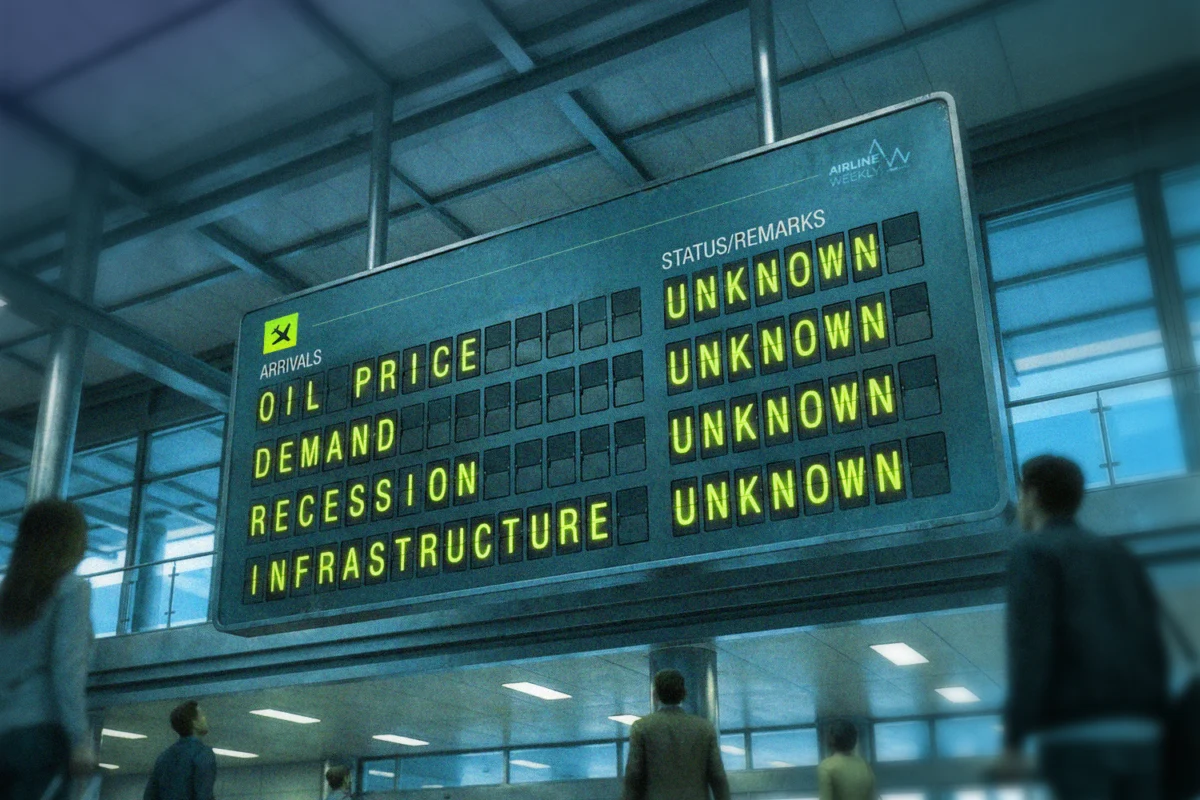
The global aviation sector, which began 2026 with a robust sense of optimism, now confronts an alarming convergence of four distinct and severe challenges stemming from the sudden eruption of a conflict involving Iran. Initial projections for strong passenger demand, stable fuel prices, and an easing of trade tariff anxieties have been dramatically overturned by a geopolitical crisis that has not only shuttered critical Gulf airspace but also propelled oil prices to unprecedented levels, casting a long shadow of uncertainty over the global economy. This week’s in-depth analysis delves into the specific shocks now threatening the equilibrium and profitability of airlines worldwide.
The Unforeseen Geopolitical Shift: The Genesis of Crisis
At the dawn of 2026, the airline industry was poised for what many anticipated would be a banner year. Post-pandemic recovery trajectories were largely positive, with passenger traffic approaching or even exceeding 2019 levels in many regions. Major airline groups reported solid forward bookings, and fleet modernization plans were back on track. Fuel, while always a significant variable, was trading within a manageable range, typically between $70 and $85 per barrel for Brent Crude. Furthermore, the lingering specter of global trade wars, which had concerned air cargo and business travel, appeared to be receding as diplomatic efforts yielded tentative agreements. The prevailing sentiment was one of cautious confidence, underpinned by resilient consumer spending and a re-energized business travel segment.
However, this optimistic outlook disintegrated with alarming speed in early March. A series of escalating provocations in the Persian Gulf, culminating in what has been widely termed the "Iran war," triggered an immediate and profound geopolitical shockwave. Tensions, which had been simmering for months over maritime security and regional influence, exploded into direct military engagement following an incident in the Strait of Hormuz. The initial phase of the conflict saw swift, reciprocal actions, leading to the immediate closure of vast swathes of airspace over the Persian Gulf and surrounding regions, deemed critical for international aviation. Naval blockades and missile threats in the Strait of Hormuz, a choke point for roughly a fifth of the world’s oil supply, sent energy markets into a frenetic upward spiral. Global powers scrambled to react, issuing urgent travel advisories and initiating evacuation plans for their citizens, further signaling the gravity of the unfolding crisis.
Risk 1: Skyrocketing Fuel Prices and Operational Costs
The most immediate and financially crippling impact on the airline industry has been the dramatic surge in the price of jet fuel. Within days of the conflict’s escalation, Brent Crude, which had been comfortably below $85, shot past the $120 mark and continued its ascent, briefly touching $150 per barrel before settling in a volatile range between $130 and $140. This precipitous increase is largely attributable to the direct threat to oil production and shipping lanes in the Gulf region, coupled with speculative trading and a broader fear premium baked into commodity markets. The International Energy Agency (IEA) issued stark warnings about global supply chain vulnerabilities, noting that while strategic reserves might offer temporary relief, the long-term disruption to crude flows could be severe.
For airlines, fuel typically constitutes 25-35% of operational costs, making them exquisitely sensitive to such price fluctuations. Unlike previous fuel spikes, where airlines might have partially hedged their exposure, the sheer speed and magnitude of this increase have overwhelmed many existing hedging strategies. Carriers that had locked in prices at lower rates are now facing significant margin compression as these hedges unwind or become insufficient for current consumption. Those with less robust hedging programs are directly exposed to the elevated spot market prices, leading to immediate and substantial increases in their operating expenses. Analysts from the International Air Transport Association (IATA) estimate that a sustained $130 per barrel oil price could add upwards of $100 billion to the industry’s annual fuel bill, severely eroding profitability and potentially pushing some carriers into the red. Historical precedents, such as the oil shocks of the 1970s and early 2000s, demonstrate how rapidly such cost pressures can trigger fare increases, capacity cuts, and even airline bankruptcies.
Risk 2: Shuttered Airspace and Disrupted Global Networks
The closure of airspace over key regions in the Middle East, particularly around the Persian Gulf, has created an unprecedented logistical nightmare for global aviation. Hubs like Dubai International (DXB), Hamad International in Doha (DOH), and Abu Dhabi International (AUH), which serve as vital arteries connecting Europe, Africa, and the Americas with Asia and Australasia, have effectively been rendered inaccessible or severely restricted. These airports, home to major carriers such as Emirates, Qatar Airways, and Etihad Airways, process millions of passengers and tons of cargo annually, functioning as critical transit points for long-haul routes.
The immediate consequence has been a massive rerouting effort, forcing airlines to adopt significantly longer and less efficient flight paths. Flights that once traversed the Gulf now must detour over Saudi Arabia, Egypt, or even further west over parts of Africa or east over Central Asia, adding hours to flight times. For example, a typical non-stop flight from London to Singapore, which previously might have taken 12-13 hours, now faces an additional 2-4 hours due to rerouting. This translates directly into higher fuel consumption, increased crew costs (necessitating additional pilots and cabin crew for extended duty periods), and reduced aircraft utilization. An aircraft that can complete two Europe-Asia round trips in a given timeframe might now only be able to manage one and a half.
Beyond passenger travel, the disruption to air cargo operations is equally severe. The Gulf region is a crucial nexus for high-value goods, e-commerce, and perishable items. Delays and increased costs in air freight are impacting global supply chains, leading to potential shortages and price increases for consumers. Major cargo operators are grappling with similar rerouting challenges, exacerbating an already strained logistics environment that has yet to fully recover from pandemic-era disruptions. Industry experts project a 15-20% increase in average flight durations for affected routes, leading to a substantial decrease in network efficiency and capacity.
Risk 3: Plummeting Demand Amidst Economic Uncertainty
The "Iran war" has not only created operational headaches but has also unleashed a wave of global economic uncertainty, threatening to suppress demand for air travel. The surge in oil prices is a significant inflationary pressure, impacting consumer purchasing power across various sectors. Central banks worldwide, already battling persistent inflation, face the difficult choice between further interest rate hikes to curb inflation – potentially tipping economies into recession – or tolerating higher inflation. The International Monetary Fund (IMF) has already revised down its global growth forecasts for 2026, citing the conflict as a primary contributing factor to a potential global slowdown or even a mild recession.
This economic malaise directly translates into reduced travel demand. Discretionary leisure travel, often the first to be curtailed during economic downturns, is expected to see a significant drop. Families facing higher energy bills, increased food costs, and general economic anxiety are likely to reconsider holiday plans. Corporate travel, while more resilient, is also vulnerable as companies tighten budgets in anticipation of leaner times. Businesses may opt for virtual meetings over international flights, further impacting premium cabin revenues that are crucial for airline profitability.
Airline CEOs, such as Carsten Spohr of Lufthansa Group (hypothetically inferring a statement), have already signaled potential capacity adjustments, indicating a shift from growth strategies to demand-driven operational models. Early booking data from travel agencies suggests a noticeable slowdown in forward bookings for international routes, particularly those connecting to or through regions perceived as less stable. Analysts predict a global passenger traffic decline of 5-10% year-on-year for 2026, with greater reductions in markets more directly affected by the conflict or economic slowdowns.
Risk 4: Heightened Security Concerns and Insurance Premiums
The eruption of conflict in a strategically vital region invariably raises the global threat level for aviation. The perception of increased risk, whether from direct targeting, collateral damage, or opportunistic acts of terrorism, mandates a re-evaluation of security protocols and insurance coverage. Governments and aviation authorities globally have responded with heightened security alerts, potentially leading to more rigorous screening procedures at airports, longer queues, and increased operational complexity for airlines. These measures, while necessary for passenger safety, add further costs and can detract from the travel experience.
Crucially, the conflict has sent war risk insurance premiums soaring. Airlines are legally required to carry war risk insurance for their aircraft, and the rates for such coverage are dynamic, reacting swiftly to geopolitical events. Insurers, assessing the elevated risk profile of operating anywhere near the conflict zone or even within major flight corridors, have significantly increased their premiums. Reports from London’s Lloyd’s market indicate a 200-500% spike in war risk premiums for flights transiting or originating in the broader Middle East, with ripple effects on global policies. These additional costs, which can run into millions of dollars annually for major carriers, become yet another burden on already strained balance sheets. Furthermore, some insurers may place specific restrictions or exclusions on routes, forcing airlines to reconsider or suspend services to certain destinations altogether. The cumulative effect is a more complex, costly, and risk-averse operating environment for the entire industry.
Industry Responses and Mitigation Strategies
In the face of this quadruple shock, the global aviation industry is mobilizing unprecedented responses. IATA, representing over 300 airlines, has issued urgent calls for de-escalation and a coordinated international effort to restore stability and secure airspace. Willie Walsh, IATA’s Director General (hypothetically inferring a statement), emphasized the "critical need for safe passage and predictable operations," stressing that aviation is an enabler of global commerce and connectivity, indispensable to economic recovery.
Individual airlines are implementing a range of mitigation strategies. Capacity cuts are inevitable, with many carriers announcing reductions in flight frequencies and the suspension of less profitable routes to conserve cash and match dwindling demand. Fleet rationalization, including the temporary grounding of older, less fuel-efficient aircraft, is also being considered. Fuel surcharge adjustments on tickets are likely, though airlines must balance cost recovery with the risk of further deterring demand.
Governments, recognizing the strategic importance of the aviation sector, may consider support measures. Drawing parallels from the COVID-19 pandemic, discussions are emerging around potential aid packages, loan guarantees, or temporary tax relief to help airlines navigate the immediate crisis. However, the nature of this crisis – geopolitical rather than public health – presents different political and economic considerations for state intervention. Many airlines are focusing on optimizing operational efficiencies, renegotiating supplier contracts, and preserving liquidity to weather what is anticipated to be a protracted period of instability.
Long-Term Implications for Global Aviation
The "Iran war" and its ripple effects are poised to reshape the global aviation landscape for years to come. One significant implication is the potential for accelerated industry consolidation, as financially weaker airlines may struggle to survive the combined pressures of high costs and low demand. Mergers and acquisitions could become more prevalent as stronger carriers seek to expand market share or acquire distressed assets.
Furthermore, the reliance on Gulf hubs as primary East-West transit points is under intense scrutiny. Airlines and passengers may increasingly look for alternative routes and hubs, potentially bolstering the strategic importance of airports in Southern Europe, Central Asia, or even further east in Southeast Asia, though these alternatives often come with their own operational complexities. This could lead to a long-term shift in global aviation geography.
The crisis also underscores the imperative for greater resilience in supply chains and energy sourcing. The push towards Sustainable Aviation Fuels (SAF), while still nascent, might gain renewed momentum as airlines seek to diversify their energy dependence away from volatile fossil fuel markets. However, the immediate cost pressures could also divert investment from long-term sustainability initiatives towards short-term survival. Finally, the geopolitical risk management capabilities of airlines will be severely tested and likely enhanced, leading to more sophisticated scenario planning and greater agility in responding to unforeseen global events.
In conclusion, the confluence of soaring fuel prices, widespread airspace closures, plummeting demand, and elevated security costs presents an unprecedented and formidable challenge to the global airline industry. What began as a year of optimism has rapidly transformed into a crucible, testing the resilience, adaptability, and strategic foresight of carriers worldwide. The path ahead is fraught with uncertainty, demanding innovative solutions and concerted international cooperation to navigate the turbulent skies ahead.



 Anjar Salim
 Chandra Hamzah
 Budi Mulyono


 Tatiana Tantri Indah Sari