
 Dwi Wanna
The landscape of international travel has been dramatically reshaped by the pervasive need for constant connectivity. From navigating unfamiliar city streets to instantly translating local menus and accessing essential services, a reliable data connection is no longer a luxury but a fundamental necessity for the modern globetrotter. This shift has rendered traditional methods of securing mobile access abroad, such as the cumbersome process of purchasing and swapping physical SIM cards, increasingly obsolete. In this evolving environment, eSIM technology has emerged as a transformative solution, and Holafly has rapidly established itself as a leading provider in this burgeoning market.
The evolution from paper maps and physical guidebooks to the ubiquitous smartphone has been swift. Early smartphone users recall the often frustrating experience of locating SIM card kiosks in foreign countries, engaging in language barriers to purchase a card, and then painstakingly replacing the tiny physical chip within their device. This process, while functional, was time-consuming and prone to errors. The advent of eSIMs has fundamentally simplified this process, offering a digital alternative that eliminates the need for physical SIM cards altogether. Users can now download an eSIM profile directly to their devices, granting them immediate access to high-speed data. This is particularly crucial in regions where digital transactions and essential services are heavily reliant on internet access, such as in China, where mobile payments are the norm.
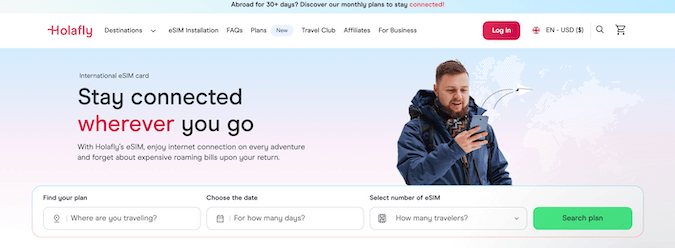
Holafly, a prominent player in the eSIM sector, has distinguished itself by offering a compelling suite of features designed to cater to the needs of international travelers. The company, founded in Spain in 2017 and now headquartered in Dublin, provides eSIMs that can be easily installed via a QR code. Upon activation, these eSIMs enable users to connect to the internet abroad by leveraging local carrier networks. A key differentiator for Holafly is its extensive offering of unlimited data plans across more than 200 destinations. Unlike many competitors who price data by gigabytes, Holafly’s model allows users to purchase plans based on the duration of their stay, ranging from one to 90 days. This flexible pricing structure, combined with a vast global coverage network encompassing Europe, Asia, North America, and Latin America, positions Holafly as a significant contender in the global eSIM market.
The company’s rise reflects a broader trend in the travel technology industry, where convenience and seamless integration are paramount. As the digital nomad movement gains momentum and the average traveler relies more heavily on mobile data for work, communication, and navigation, the demand for efficient and reliable connectivity solutions has surged. Holafly’s business model directly addresses this demand by removing the friction associated with traditional SIM card procurement.

The Holafly Ecosystem: Unlimited Data and Global Reach
Holafly’s core offering revolves around providing travelers with a hassle-free way to stay connected internationally. The company’s commitment to offering unlimited data across a vast array of destinations is a significant draw for many users. This approach contrasts sharply with traditional mobile plans and even some other eSIM providers that offer limited data packages. For travelers who rely heavily on data-intensive activities such as video conferencing for remote work, streaming entertainment, or extensive use of navigation apps, unlimited data provides peace of mind and eliminates the risk of incurring unexpected overage charges.
The pricing model, which is based on the number of days a user requires service, offers a degree of predictability for travel budgets. A user planning a two-week trip to Europe, for example, can purchase a 14-day plan without worrying about exceeding a data cap. This simplicity in pricing, coupled with the absence of hidden fees, contributes to Holafly’s appeal. The company emphasizes a transparent pricing structure, allowing travelers to make informed decisions about their connectivity needs.
Furthermore, Holafly’s expansive coverage network is a critical component of its value proposition. With service available in over 200 countries and regions, it caters to a broad spectrum of travel itineraries, from short business trips to extended multi-country adventures. This global reach ensures that travelers can maintain a consistent connection regardless of their destination, minimizing disruptions to their plans. The strategic partnerships with local mobile network operators in each covered region ensure that users benefit from the strongest available signal, thereby optimizing their data experience.
Seamless Integration: The eSIM Installation Process
The ease of setting up and activating a Holafly eSIM is a cornerstone of its user-friendly design. The process is meticulously outlined to ensure that even users with limited technical expertise can successfully install and configure their eSIM. The initial step involves verifying device compatibility. Most modern smartphones, particularly recent iPhone models and a wide range of newer Android devices, support eSIM technology. It is also crucial to ensure that the user’s primary device is unlocked from their home carrier to allow for the installation of a third-party eSIM. A stable Wi-Fi connection is recommended during the setup phase to facilitate the download and activation of the eSIM profile.
Once compatibility is confirmed and a Wi-Fi connection is established, the user receives an email containing a QR code and essential order information. This QR code serves as the key to installing the eSIM. Users can scan this code using their phone’s camera, or in some cases, tap an activation link directly within the email. The installation process is then guided by the device’s operating system. For iPhones, this typically involves navigating to Settings > Cellular (or Mobile Data) > Add Cellular Plan and scanning the QR code. Android users will find similar options within Settings > Network & Internet (or Connections) > SIMs or Mobile Network > Add eSIM / Add mobile plan, followed by scanning the QR code. The exact labeling of these menus may vary slightly depending on the specific Android device model and manufacturer.

Upon arrival at their destination, users must enable data roaming for the newly installed Holafly eSIM. This is a critical step that allows the device to connect to local networks for data transmission. This is managed within the Cellular/Mobile Data settings, where the user selects the Holafly line and activates Data Roaming and Mobile Data. To prevent unexpected charges from their home carrier, it is advisable to disable Mobile Data for their primary home SIM card. This ensures that all data usage is routed through the Holafly eSIM.
It is important to note that Holafly eSIMs are data-only. This means they do not provide a local phone number for making traditional calls or sending SMS messages. However, this limitation is often mitigated by the continued functionality of popular messaging and communication apps. Applications like WhatsApp, iMessage, and Telegram utilize the internet connection to facilitate communication, allowing users to maintain their existing contacts and conversations using their regular phone numbers. This dual-SIM capability, where the home SIM handles calls and texts while the eSIM manages data, offers a comprehensive connectivity solution.
Strategic Implications and Market Positioning
The rise of Holafly and other eSIM providers signifies a broader strategic shift in the telecommunications and travel technology sectors. For mobile network operators, the increasing adoption of eSIMs presents both challenges and opportunities. While it may reduce the need for physical SIM card distribution and management, it also opens up new revenue streams through wholesale data agreements with eSIM providers. The competitive landscape is intense, with numerous companies vying for market share. Holafly’s strategy of emphasizing unlimited data, extensive coverage, and a user-friendly setup process appears to be a successful approach in differentiating itself.
The implications for travelers are overwhelmingly positive. The convenience and cost-effectiveness of eSIMs like those offered by Holafly directly contribute to a more seamless and enjoyable travel experience. The ability to secure connectivity before departing, coupled with the elimination of physical SIM card hassles, saves valuable time and reduces potential stress. For digital nomads and remote workers, reliable and affordable data is not just a convenience but a critical component of their livelihood. Holafly’s offerings directly support this growing demographic by providing the robust connectivity they require.
The company’s customer support infrastructure, which includes 24/7 multilingual assistance, further enhances its appeal. This accessibility is particularly important for travelers encountering issues in different time zones and linguistic environments. The provision of hotspot capabilities also adds value, allowing users to share their internet connection with multiple devices, a feature beneficial for families or groups traveling together.
Future Outlook and Broader Impact
The eSIM market is projected for significant growth in the coming years. As more device manufacturers integrate eSIM capabilities into their products and as consumer awareness of the technology increases, its adoption rate is expected to accelerate. This trend is likely to drive further innovation and competition among eSIM providers, potentially leading to even more competitive pricing and enhanced service offerings.
Holafly’s continued expansion into new destinations and its exploration of potential subscription-based models, such as "Holafly Plans," suggest a forward-thinking approach to market engagement. These developments indicate a commitment to not only serving the immediate needs of travelers but also anticipating future demands and evolving technological landscapes. The company’s flexible refund policy, extending up to six months, further underscores a customer-centric philosophy, aiming to build trust and loyalty within its user base.
In essence, Holafly exemplifies the power of technological innovation in addressing real-world traveler pain points. By simplifying the process of international connectivity and offering compelling value propositions like unlimited data and broad coverage, the company has carved out a significant niche. As global travel continues its recovery and digital reliance deepens, eSIM providers like Holafly are poised to play an increasingly integral role in shaping the future of how we experience the world. Their contribution lies not just in providing data, but in empowering travelers with the freedom and flexibility to explore, work, and connect without the traditional barriers of mobile access. The era of the physical SIM card for international travel is rapidly drawing to a close, and Holafly is at the forefront of this digital revolution, making global connectivity more accessible and user-friendly than ever before.




 Anjar Salim
 Chandra Hamzah
 Budi Mulyono


 Tatiana Tantri Indah Sari