Tatiana Tantri Indah Sari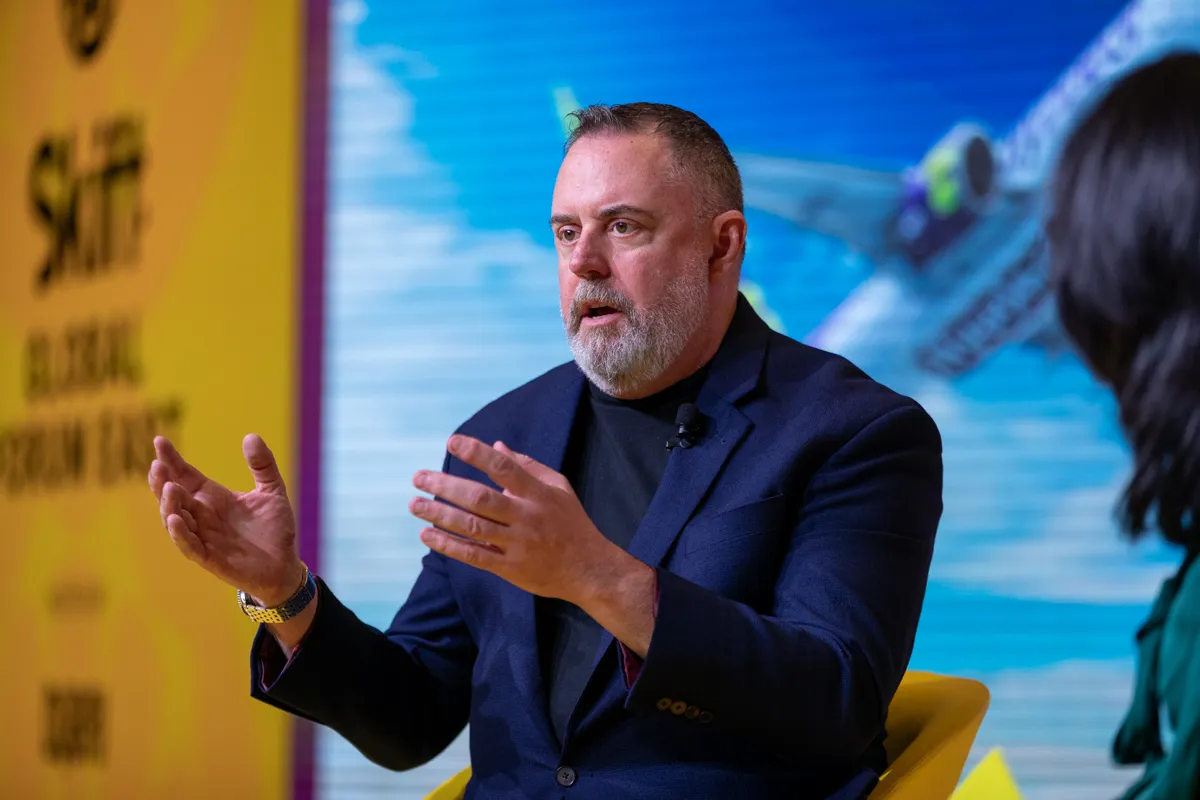
Flyadeal, the burgeoning budget subsidiary of Saudi Arabia’s national carrier Saudia, has confirmed to Skift on Thursday that its Chief Executive Officer, Steven Greenway, is stepping down from his leadership role. The airline stated that Greenway’s departure is "at his own request," a sentiment echoed in his public announcement earlier this month. This significant leadership change at a key player in the rapidly expanding Saudi Arabian aviation sector follows a period marked by high-profile executive transitions across the global airline industry, including recent decisions by top executives at carriers like Air Canada.
Steven Greenway, a seasoned aviation executive with a distinguished career spanning multiple continents and low-cost carriers, officially announced his impending departure on LinkedIn on April 2. In his post, he informed "TeamF3" – a reference to Flyadeal – of his decision to step down as CEO. Crucially, Greenway also indicated that he would remain involved with the airline as an advisor through the end of the year, suggesting a planned and structured transition period designed to ensure continuity and stability during this leadership change. His tenure at Flyadeal commenced in 2023, making his period at the helm relatively brief but impactful given the airline’s strategic importance.
A Chronology of Recent Leadership Shifts
The announcement of Greenway’s departure from Flyadeal on April 2, followed by the official confirmation to industry media on Thursday, positions this event within a discernible trend of executive movements in the post-pandemic aviation landscape. While the specific reasons for individual departures are often unique, a confluence of factors, including the intense operational pressures of recovery, ambitious growth targets, and evolving strategic imperatives, appears to be contributing to a dynamic leadership environment.
For context, the Skift Take accompanying the original report highlighted this trend by referencing "recent decisions by CEOs of Air Canada and Indigo." Michael Rousseau, the President and CEO of Air Canada, announced his retirement effective April 10, 2024, after a tenure that navigated the airline through the unprecedented challenges of the COVID-19 pandemic and into a period of robust recovery. While the reference to Indigo might allude to broader executive changes within the InterGlobe Aviation group (which operates IndiGo, India’s largest airline), or perhaps a past leadership transition, the overarching point underscores a broader pattern. Airlines are navigating complex market conditions, including fluctuating fuel prices, labor shortages, geopolitical tensions, and the imperative for sustainable operations, which often necessitate new strategic directions or leadership styles. This environment places immense pressure on CEOs, making leadership transitions a notable feature of the current industry landscape.
Greenway himself joined Flyadeal in 2023, bringing with him a wealth of experience from various low-cost and hybrid airline models. His previous roles include leadership positions at notable carriers such as Swoop (WestJet’s former ultra-low-cost subsidiary), Scoot (Singapore Airlines’ low-cost arm), Azul Brazilian Airlines, Virgin America, and Qatar Airways. This extensive background in establishing, growing, and optimizing low-cost operations made him a seemingly ideal fit for Flyadeal, an airline central to Saudi Arabia’s ambitious Vision 2030 objectives. His relatively short tenure of approximately one year suggests either a rapid achievement of key objectives, a divergence in strategic vision, or personal reasons that prompted his decision to step down. The advisory role through year-end, however, points towards a cooperative separation rather than an abrupt departure, aiming to facilitate a smooth handover and ensure ongoing strategic guidance.
Flyadeal’s Strategic Role in Saudi Arabia’s Vision 2030
Flyadeal is not just another airline; it is a critical component of Saudi Arabia’s sweeping economic diversification plan, Vision 2030. Spearheaded by Crown Prince Mohammed bin Salman, Vision 2030 aims to reduce the Kingdom’s reliance on oil by developing new economic sectors, most notably tourism and aviation. The goal is to attract 150 million tourists annually by 2030, a monumental increase that requires a massive expansion of air travel infrastructure and capacity.
As the budget subsidiary of Saudia, Flyadeal is strategically positioned to cater to this burgeoning demand, offering affordable air travel options to both domestic and international visitors. Its mandate is to stimulate travel within the Kingdom and connect it to regional hubs at competitive prices, thereby democratizing air travel and making Saudi Arabia more accessible. The airline operates a modern fleet, primarily consisting of Airbus A320 family aircraft, and has been on an aggressive growth trajectory, expanding its route network and increasing frequencies to meet the anticipated surge in passenger numbers.
Under Greenway’s leadership, even if brief, Flyadeal would have been focused on scaling operations efficiently, enhancing digital customer experiences, and strengthening its market position in a highly competitive region. The Middle East is a hotbed of aviation activity, with established giants like Emirates, Qatar Airways, and Etihad, alongside growing budget carriers such as Air Arabia and Wizz Air Abu Dhabi. Flyadeal’s success is therefore crucial for Saudi Arabia to capture a significant share of the regional and international aviation market, especially within the low-cost segment. The Kingdom is also developing new mega-projects like NEOM, the Red Sea Project, and Qiddiya, all of which will require extensive air connectivity, making Flyadeal’s growth integral to their success.
Implications for Flyadeal and the Broader Saudi Aviation Landscape
The departure of a CEO, particularly one with Greenway’s specialized expertise in the low-cost model, inevitably raises questions about strategic continuity and future direction. While his advisory role through year-end mitigates immediate concerns about a leadership vacuum, the airline will now embark on a search for a successor. The choice of the next CEO will be critical, as it will signal the strategic priorities for Flyadeal’s next phase of growth. Will the focus remain solely on aggressive expansion, or will there be a pivot towards consolidation, operational efficiency, or specific market segments?
For Saudia, the parent company, ensuring Flyadeal’s continued robust performance is paramount. Saudia itself is undergoing a transformation, with plans to split into multiple entities and potentially launch a new premium carrier, Riyadh Air, to compete with regional long-haul giants. The success of Flyadeal is intertwined with Saudia’s overall strategy to capture different market segments and fulfill the Kingdom’s aviation ambitions. Any disruption in Flyadeal’s trajectory could have ripple effects on these broader strategic goals.
The broader Saudi aviation landscape is undergoing unprecedented transformation. Beyond Flyadeal and Saudia, the Kingdom is investing billions in new airports, including a massive new international airport in Riyadh, King Salman International Airport, designed to become one of the world’s largest in terms of capacity. These infrastructure developments, coupled with the launch of new airlines and the expansion of existing ones, underscore Saudi Arabia’s intent to become a global aviation hub. Leadership changes at key entities like Flyadeal, therefore, are watched closely by industry observers for insights into the execution of this ambitious vision.
Industry Trends and the Challenges of Airline Leadership
The aviation industry is notoriously complex and capital-intensive, characterized by thin margins and susceptibility to external shocks. The post-pandemic recovery, while strong in many regions, has presented a new set of challenges for airline leaders. These include managing soaring demand amidst persistent supply chain issues for aircraft and spare parts, navigating labor disputes, implementing sustainable aviation fuel (SAF) strategies, and adapting to rapidly evolving digital technologies.
The high-pressure environment often leads to significant churn in executive positions. According to various industry analyses, the average tenure for an airline CEO can be shorter than in other sectors, reflecting the intense demands and the constant need for strategic agility. Leaders are expected to deliver rapid growth, maintain operational excellence, satisfy demanding shareholders, and navigate a highly regulated global environment, all while responding to unpredictable geopolitical and economic shifts.
Steven Greenway’s decision to step down, while personal, can be viewed through this lens of intense industry pressure. His experience at multiple low-cost carriers across diverse markets (Asia, North America, South America) attests to his capability to lead in challenging environments. His departure from Flyadeal, however, highlights that even seasoned professionals may seek new directions or face circumstances that prompt a change, even when a company is seemingly on an upward trajectory. The "at his own request" statement is standard for amicable departures, allowing for a smooth transition without public speculation regarding performance or internal disputes.
Looking Ahead: The Path for Flyadeal
As Flyadeal prepares for a new chapter under incoming leadership, its strategic objectives remain clear: to continue expanding its network, enhance operational efficiencies, and contribute significantly to Saudi Arabia’s Vision 2030 tourism targets. The airline will need to maintain its competitive edge in a market where new players are emerging and existing ones are consolidating their positions.
The advisory role of Steven Greenway through the end of the year suggests that the transition will be managed with care, ensuring that ongoing projects and strategic initiatives are not unduly disrupted. This period will be crucial for the incoming CEO to gain a comprehensive understanding of the airline’s operations, culture, and strategic roadmap, while also leveraging Greenway’s insights.
Ultimately, the successful execution of Flyadeal’s mandate will hinge on its ability to attract and retain top talent, make astute decisions regarding fleet expansion and route development, and continue to innovate in customer service and digital engagement. The departure of its CEO marks a significant moment, but one that Flyadeal and its parent Saudia are likely to navigate with a keen focus on their overarching strategic goals for the Kingdom’s aviation future. The global aviation community will be watching closely to see who takes the helm next and how Flyadeal continues to evolve in this dynamic landscape.




 Anjar Salim
 Chandra Hamzah
 Budi Mulyono