
 Cholid Fahmi Thalib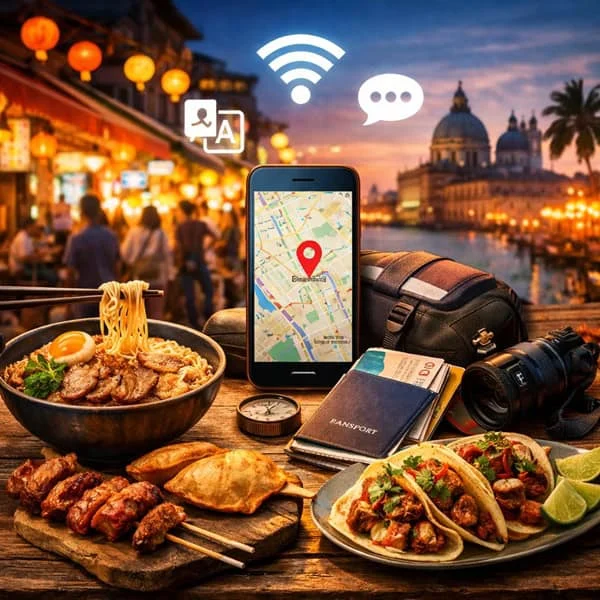
There’s a specific kind of travel day that feels like a magic trick. You wake up somewhere new, grab a coffee that tastes nothing like home, wander into a neighborhood you can’t pronounce yet, and somehow—without a rigid itinerary—you end up eating the best thing you’ve had all year. The myth is that these moments happen by accident. The truth is they usually happen because you’re prepared in the ways that don’t make it into the highlight reel. This isn’t about meticulous planning that stifles spontaneity, but rather about leveraging modern tools to minimize friction and maximize immersion. For a growing segment of travelers, particularly "foodie flashpackers"—those who seek efficient, well-fed adventures—staying connected is no longer a luxury, but a foundational element for experiencing the authentic pulse of a destination.
The modern traveler, especially one driven by culinary exploration, navigates a landscape far more dynamic than a traditional tourist itinerary. The pursuit of exceptional food leads individuals away from predictable attractions and into a labyrinth of local markets, unassuming side streets, ephemeral pop-up counters, bustling late-night food stalls, serendipitously discovered cafes, and restaurants that operate on a delicate balance of time and availability. These aren’t static destinations; they are fluid, responsive entities that require a traveler to be agile and informed.
The challenges presented by this dynamic environment are often subtle but cumulative. A missed connection due to a dead phone battery can mean the difference between tasting a dish that’s sold out for the day or missing a crucial opening window for a highly anticipated bakery. The inability to quickly translate a menu can lead to hesitant ordering, potentially bypassing a signature local specialty. The difficulty in sharing a discovery with a friend or documenting it for future reference can result in a lost gem, an experience that fades without being captured. Even a simple confirmation of a restaurant’s operating hours, often communicated via local messaging apps or social media, can be the deciding factor in a successful dining experience. These small inconveniences, when multiplied, can transform potential moments of joy into sources of frustration, undermining the very spontaneity that such travel aims to cultivate.
This is where the strategic use of connectivity emerges as a critical, albeit often overlooked, component of successful foodie travel. It’s not about being perpetually online or engrossed in a digital world. Instead, it’s about ensuring that essential digital tools are readily available when needed, thereby reducing the cognitive load associated with navigation, communication, and information retrieval. This seamless background support allows the traveler to remain fully present in the foreground, engaging with the sights, sounds, and, most importantly, the tastes of their surroundings. The ultimate goal is to enable a deeper, more authentic connection with the local culture through its cuisine, free from the impediments of technological hurdles.
The Evolving Landscape of Food-Focused Travel
The rise of food tourism, a sector that has seen significant growth over the past decade, is intrinsically linked to the increased accessibility of information and the desire for authentic experiences. According to the World Food Travel Association, food tourism is a multi-billion dollar industry, with travelers increasingly prioritizing culinary experiences as a primary motivation for their journeys. This trend is further amplified by social media platforms, which have become powerful conduits for sharing gastronomic discoveries, inspiring others to seek out unique flavors and local delicacies.
This shift in travel priorities necessitates a different approach to planning and execution. Traditional travel planning often focuses on historical sites, museums, and iconic landmarks. Food-focused travel, however, demands a more fluid and adaptable strategy. It involves navigating a complex ecosystem of culinary offerings that are often hidden, transient, or dependent on local knowledge. The success of such trips hinges on the ability to access real-time information, adapt to changing circumstances, and connect with local insights.
The inherent unpredictability of seeking out the best local food—from the seasonality of ingredients to the often-unwritten opening hours of small establishments—means that a rigid itinerary can be counterproductive. Instead, travelers need the flexibility to pivot, to chase down a whispered recommendation, or to linger longer at a market that has exceeded expectations. This agility is directly supported by reliable connectivity.
The "Flashpacker" Ethos: Efficiency Meets Exploration
The concept of "flashpacking" perfectly encapsulates the modern approach to travel that prioritizes both freedom and functionality. It represents a sophisticated blend of the adventurous spirit of backpacking with the practical efficiency often associated with more conventional forms of travel. Flashpackers are not seeking to "hack" travel by making it unnecessarily difficult; rather, they aim to streamline logistical challenges to dedicate more time and energy to the experiences that matter most.
For the foodie flashpacker, this means removing the mundane obstacles that can detract from the primary objective: culinary exploration. This includes having readily accessible maps for navigating unfamiliar urban environments, the ability to translate menus and signs to understand local offerings, and the capacity to communicate with local contacts or friends to share discoveries or gather information. The goal is to create a seamless experience where technology serves as an enabler, not a barrier.
The core of this approach lies in a simple, yet effective, system:
- Lightweight and Portable Gear: Minimizing the physical burden of travel allows for greater mobility and spontaneity.
- Flexible Itinerary: Allowing for unexpected discoveries and changes in plans is crucial for authentic exploration.
- Reliable Connectivity: Ensuring access to essential digital tools is the bedrock of efficient navigation and information gathering.
- Actionable Information: Having the ability to quickly access and utilize information—whether it’s a reservation QR code or a translation of a dish—is paramount.
This last point is particularly vital. Culinary plans are inherently more susceptible to change than visiting a fixed landmark. A restaurant might be fully booked, a special dish might be unavailable, or a local recommendation might lead to an unplanned detour. In such scenarios, the ability to quickly adapt, find an alternative, or confirm new details is essential, and this hinges on having reliable access to communication and information.
eSIMs: A Modern Solution to Travel Connectivity
The traditional method of acquiring international mobile service often involves a cumbersome process at airport kiosks. Travelers typically face a gauntlet of fluorescent lighting, confusing plan names, and rushed staff who swap physical SIM cards. This experience is not only time-consuming but also anxiety-inducing, as travelers are left to hope that their essential applications will function correctly in a new network environment.
Embedded SIMs, or eSIMs, offer a significantly more streamlined and user-friendly alternative. Instead of physically replacing a SIM card, eSIMs allow users to activate a digital cellular plan directly on their compatible devices. This eliminates the need for physical SIM cards altogether, making the process of acquiring and activating international data much more convenient. For many travelers, especially those prioritizing culinary experiences over technical troubleshooting, eSIMs represent the simplest pathway to immediate connectivity upon arrival.
Companies like SIMOVO offer travel eSIM solutions that provide a quick and straightforward setup, circumventing the traditional SIM card exchange. This focus on ease of use is critical for travelers who want to minimize the "friction" of setting up their devices and maximize their time exploring. The underlying principle is to make the acquisition of connectivity as effortless as possible, ensuring that travelers can focus their energy on the experiences they’ve journeyed for, rather than on the minutiae of telecommunications.
The Transformative Impact of Connectivity on Culinary Exploration
The availability of reliable mobile data and communication capabilities profoundly enhances the travel experience, particularly for those with a focus on food. This enhanced connectivity acts as a catalyst for deeper engagement and more informed decision-making, leading to richer and more satisfying discoveries.
Encouraging Exploration Beyond the Obvious
When travelers are unburdened by the fear of getting lost or being unable to communicate, they are more likely to venture off the beaten path. The constant worry about navigation can lead to sticking to well-trodden tourist paths and predictable establishments, often missing out on the truly authentic and exceptional culinary experiences that lie in less obvious locales. Reliable data empowers travelers to take those intriguing turns, explore quieter neighborhoods, and discover hidden gems, secure in the knowledge that they can always reorient themselves or seek assistance if needed. This ability to explore with confidence is crucial for uncovering the most memorable culinary encounters.
Facilitating the Integration of Local Recommendations
Local recommendations are often the most valuable source of information for discovering authentic food experiences. However, these recommendations are rarely given with precise addresses. Instead, they are often described by landmarks, neighborhood characteristics, or contextual cues like "it’s next to the pharmacy with the green sign." Having mobile connectivity allows travelers to quickly triangulate their location using maps, cross-reference with visual cues, and perhaps even send a quick message with a photo to confirm the exact spot. This seamless integration of local advice into the travel plan significantly increases the chances of finding those sought-after culinary treasures.
Enhancing Menu Comprehension and Culinary Bravery
Translation applications, powered by robust data connections, are not merely tools for convenience; they are enablers of culinary bravery. The anxiety associated with misordering or not understanding a menu can lead travelers to play it safe, selecting familiar dishes. By reducing this anxiety, translation tools empower individuals to be more adventurous, ordering dishes they might otherwise overlook. Furthermore, connectivity allows for quick research into unfamiliar ingredients, regional dish names, or the specific nature of a mysterious sauce, transforming potential confusion into an educational moment and fostering a deeper appreciation for the cuisine.
Optimizing Timing for Peak Culinary Experiences
Food experiences are often time-sensitive. The most sought-after dishes might sell out by midday, a bakery might be at its freshest in the early morning, and a vibrant night market may not truly come alive until later in the evening. The ability to quickly check operating hours, send a direct message to a vendor to confirm availability, or verify seasonal offerings allows travelers to plan their days with a light touch but effective precision. This strategic timing ensures that travelers are present at the right place at the right time to experience the peak of a culinary offering, maximizing their enjoyment and minimizing disappointment.
Building a Personal Culinary Archive
A common traveler’s lament is the inability to relocate a fantastic restaurant or street food stall discovered on a previous trip. Reliable connectivity transforms this problem into an opportunity. By being connected, travelers can:
- Save locations on maps: Instantly pin newfound culinary hotspots.
- Take screenshots of menus or stall names: A quick visual reminder for future reference.
- Send messages to friends or save notes: Documenting details like unique ingredients or the best time to visit.
- Use translation apps to save key phrases or dish names: Ensuring accurate recall.
This ability to meticulously document discoveries transforms a series of good food trips into a personal, repeatable playbook, allowing for even more rewarding culinary adventures in the future.
A Balanced Approach to Connectivity: Tool, Not Distraction
A common concern regarding travel connectivity is that it leads to excessive screen time and detracts from the present experience. However, a well-managed connectivity strategy can serve as a powerful tool without hijacking the travel experience. The key lies in establishing a mindful rhythm:
- Pre-Departure Preparation: Ensure that connectivity solutions, such as eSIMs, are set up and tested before leaving home. This preempts any last-minute technical issues.
- Arrival Activation: Immediately upon landing, activate the chosen connectivity plan to ensure seamless access from the outset.
- Strategic Check-ins: Utilize connectivity for specific, goal-oriented tasks such as checking directions before leaving the hotel, translating a menu before ordering, or confirming reservation details.
- Information Capture: When a significant discovery is made, take a moment to save its location, take a photo, or jot down notes using connected apps.
- Disconnection for Immersion: When not actively using digital tools for navigation or information, actively put the phone away to fully engage with the surroundings.
This approach ensures that the phone serves its intended purpose: a tool to enhance the travel experience, rather than becoming the central focus of it.
The Unseen Benefit: Traveling with Confidence
Ultimately, the objective of strategic connectivity is not to increase screen time, but to foster a greater sense of confidence and capability while traveling. Food travel, at its heart, is about discovery and immersion. It’s about experiencing the vibrant pulse of a destination through its culinary offerings. Reliable connectivity does not replace the act of discovery; rather, it safeguards and enhances it.
When the fundamental requirements are met—easy access to maps, translation tools, communication channels, and digital reservation or payment information—travelers are liberated to focus on the core purpose of their journey. This allows for:
- Uninhibited exploration of local markets and eateries.
- Authentic interactions with vendors and locals.
- A deeper appreciation for the nuances of regional cuisine.
- The sheer joy of discovering unexpected flavors and experiences.
This is the essence of foodie flashpacking: establishing structure where it is essential for efficiency and maintaining freedom everywhere else. By building trips with this philosophy in mind, travelers can significantly increase the frequency of those serendipitous, unforgettable meals—the ones that become cherished memories for years to come—all while minimizing the chaos that can often accompany spontaneity. The magic of travel, especially culinary travel, is amplified when the logistical groundwork is silently and effectively handled.




 Anjar Salim
 Chandra Hamzah
 Gabriela Annisa
 Susilo Edi Turonggo
 Tatiana Tantri Indah Sari
 Hendra Ismail