
 Walid Sujud Trenggono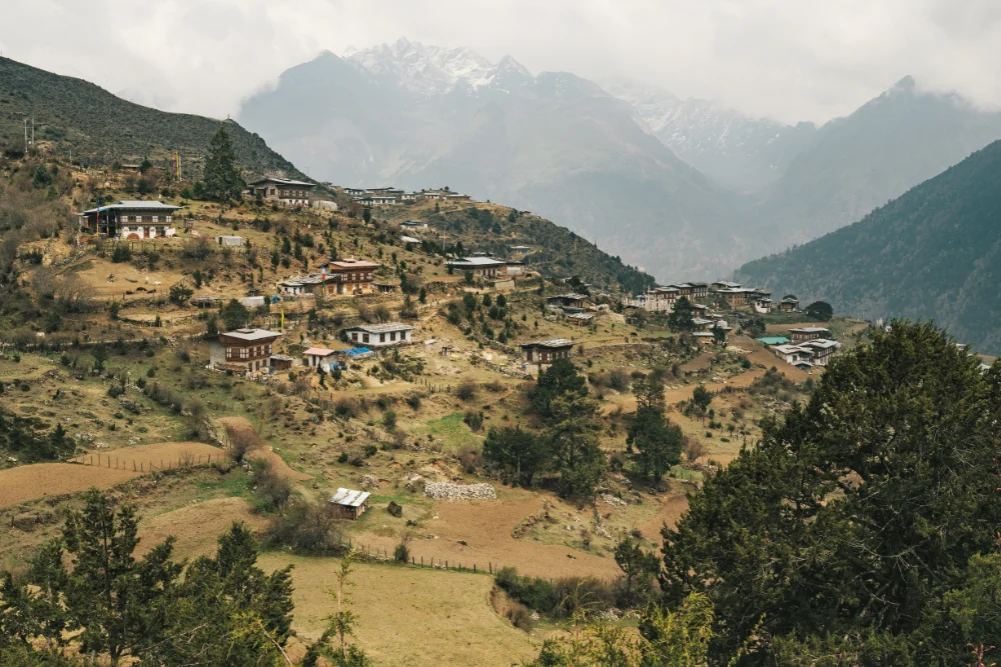
The Kingdom of Bhutan, a landlocked nation situated in the Eastern Himalayas, has emerged as a global focal point for transformative travel and mental health advocacy, offering a stark counter-narrative to the hyper-connected, high-stress environments of the modern West. As international rates of burnout and digital fatigue reach unprecedented levels, Bhutan’s unique socio-economic framework—prioritizing Gross National Happiness (GNH) over Gross Domestic Product (GDP)—is increasingly viewed not just as a national policy, but as a potential blueprint for individual restoration. For many travelers navigating the pressures of midlife, dual-career households, and the "sandwich generation" responsibilities of caring for both children and aging parents, the kingdom represents a rare sanctuary where the pace of life is dictated by tradition and environmental stewardship rather than digital metrics.
The Philosophical Foundation: Gross National Happiness
Nestled between the geopolitical giants of China and India, Bhutan remains a sovereign anomaly. With a population of approximately 760,000, the country was never colonized, allowing it to preserve a distinct cultural identity that informs every aspect of its governance. The concept of Gross National Happiness was formally introduced by the Fourth King, Jigme Singye Wangchuck, in the 1970s. The philosophy is built upon four primary pillars: sustainable and equitable socio-economic development, environmental conservation, preservation and promotion of culture, and good governance.
In 2022, the GNH Index revealed that nearly half of the Bhutanese population described themselves as "happy" or "extremely happy," a statistic that stands in contrast to the rising rates of clinical anxiety and depression in Western nations. This happiness is not a fleeting emotional state but a systemic outcome of government policy. In Bhutan, healthcare and education are provided free of charge to all citizens. Furthermore, the constitution mandates that at least 60 percent of the country remain under forest cover in perpetuity. Currently, forests blanket more than 70 percent of the land, making Bhutan the world’s first carbon-negative country.
A Chronology of Isolation and Integration
To understand the impact of Bhutan on the modern traveler, one must examine its timeline of controlled modernization. For centuries, the kingdom remained largely closed to the outside world.
- 1974: The first foreign tourists were permitted to enter the kingdom, marking the beginning of a "high value, low volume" tourism policy designed to prevent the environmental and cultural degradation seen in other Himalayan regions.
- 1999: Bhutan became one of the last countries in the world to introduce television and the internet, a move that brought global connectivity while sparking national debates on the preservation of traditional values.
- 2008: The nation transitioned from an absolute monarchy to a constitutional monarchy, holding its first general elections.
- 2022: Following the COVID-19 pandemic, Bhutan overhauled its tourism model, increasing the Sustainable Development Fee (SDF) to ensure that visitors contribute directly to the country’s social welfare and environmental programs.
The Logistics of Transformation: From Paro to Laya
The journey into Bhutan typically begins at Paro International Airport, widely considered one of the most challenging landings in the world. Surrounded by 18,000-foot Himalayan peaks, the runway is accessible to only a select group of certified pilots. This dramatic arrival serves as an immediate psychological "reset" for visitors. Observers note that upon landing, the typical rush toward baggage claim is often replaced by a collective silence as passengers take in the mountainous horizon—a phenomenon that travel psychologists suggest is the first stage of "awe-induced" stress reduction.
Beyond the capital, the path to wellness often involves physical exertion and spiritual immersion. The Dodedrak Monastery, a 12th-century institution, serves as a primary site for those seeking meditative retreat. Accessible only by a steep mountain hike that can take upward of two hours for unconditioned visitors, the monastery offers a lifestyle of simplicity. Here, the evening rituals involve the lighting of butter lamps and the synchronized chanting of ancient scriptures. These practices are designed to induce a state of "flow," where the distractions of the digital world are replaced by rhythmic sensory inputs.
For those seeking deeper isolation, the village of Laya represents the pinnacle of remote living. Situated at an altitude of 3,800 meters, Laya is one of the highest permanent settlements on Earth. It remains unreachable by motorized vehicles; the only access is via a multi-day trek or a journey by yak and pony. The Layap people, an indigenous community with Tibetan roots numbering approximately 1,600, live in stone houses beneath the sacred Tiger’s Peak.
Cultural Resilience: The Bumkor Festival and Community Cohesion
The social fabric of Bhutan is perhaps best observed during communal events such as the Bumkor Festival. Held biennially, the festival involves the grand procession of sacred texts through the village to ensure a prosperous harvest. It is a period characterized by the Tsendhar—a rolled flag traditionally carried by warriors—and communal dancing that involves participants of all ages.
Unlike Western societies where individualism is prized, Bhutanese society is fundamentally collective. This is exemplified in the village of Laya, where the construction of a new home is a community-wide endeavor. Local guides, such as Pema Wangchuk, note that hospitality is not a commercial transaction but a social duty. Guests are welcomed with tea and traditional attire, such as yak wool coats and conical hats, integrating them into the community rhythm.
Analysis of this social structure suggests that the "belonging" felt by visitors is a direct result of this collectivism. In Laya, contentment is often measured by the sufficiency of basic needs—a bowl of rice and a warm hearth—rather than the accumulation of material goods. This philosophy of "enough" provides a stark contrast to the consumerist "scarcity mindset" prevalent in many developed economies.
Traditional Medicine and the Science of Nature
The Bhutanese approach to physical wellbeing is rooted in Sowa Rigpa, one of the world’s oldest healing traditions. A key component of this is the use of natural hot springs, or tshachus. The Gasa hot springs, for instance, are steeped in legend, with local tradition holding that a 13th-century saint infused the waters with 128 different medicines.
While Western luxury spas focus on privacy and aesthetic comfort, Bhutanese hot springs are communal and functional. Locals and visitors soak shoulder-to-shoulder in steaming mineral baths, often after days of grueling mountain travel. Scientific studies on "forest bathing" and thermal balneology support the Bhutanese intuition: time spent in high-altitude forests and mineral-rich waters significantly lowers cortisol levels and resets the nervous system.
Furthermore, the Bhutanese relationship with mortality offers a unique psychological perspective. It is common practice for citizens to contemplate death five times a day. Rather than being morbid, this practice is intended to foster a sense of impermanence that encourages individuals to live more fully in the present moment. This cultural acceptance of death as a natural transition is believed to reduce the existential anxiety that often fuels midlife crises.
Broader Impact and Global Implications
The "Bhutan effect" is increasingly cited in discussions regarding the future of global tourism. As travelers move away from "check-list" sightseeing toward "transformative travel," Bhutan’s model serves as a case study in high-impact, low-footprint engagement. The implications of this shift are twofold:
- Economic Sustainability: By charging a premium for entry, Bhutan funds its free social services while ensuring that the volume of tourists does not overwhelm its fragile mountain ecosystems.
- Mental Health Advocacy: The country provides a living laboratory for the "Slow Movement." With a national speed limit of 20km/h in many areas and a lack of traffic lights even in the capital, Thimphu, the physical environment mandates a reduction in the pace of life.
Critics of the Bhutanese model point to the challenges of maintaining this isolation in an era of global social media and increasing economic pressure. However, the 2022 GNH data suggests that the core values of the kingdom remain resilient. For the individual traveler, the impact of such a journey often persists long after the return home.
In a world defined by "doom-scrolling" and over-scheduling, the Bhutanese philosophy offers a recalibration. It suggests that the antidote to burnout is not merely a temporary break from labor, but a fundamental shift in how one perceives "enough." As international interest in GNH grows, Bhutan continues to stand as a testament to the idea that a nation’s greatest export might not be a commodity, but a way of being. The kingdom remains a reminder that when the noise of the modern world becomes deafening, the most profound solution may be to find a place where the earth touches the sky, and where the measure of success is the quiet contentment of the community.


 Anjar Salim
 Chandra Hamzah
 Budi Mulyono

 Tatiana Tantri Indah Sari