
 Anjar Salim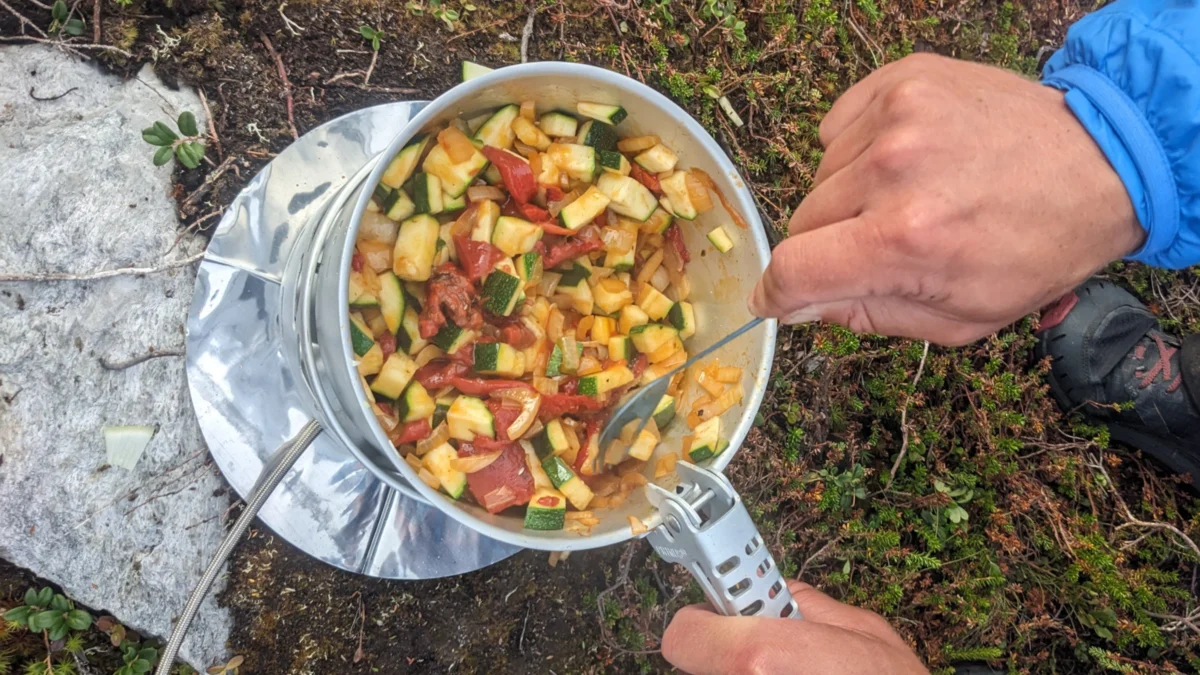
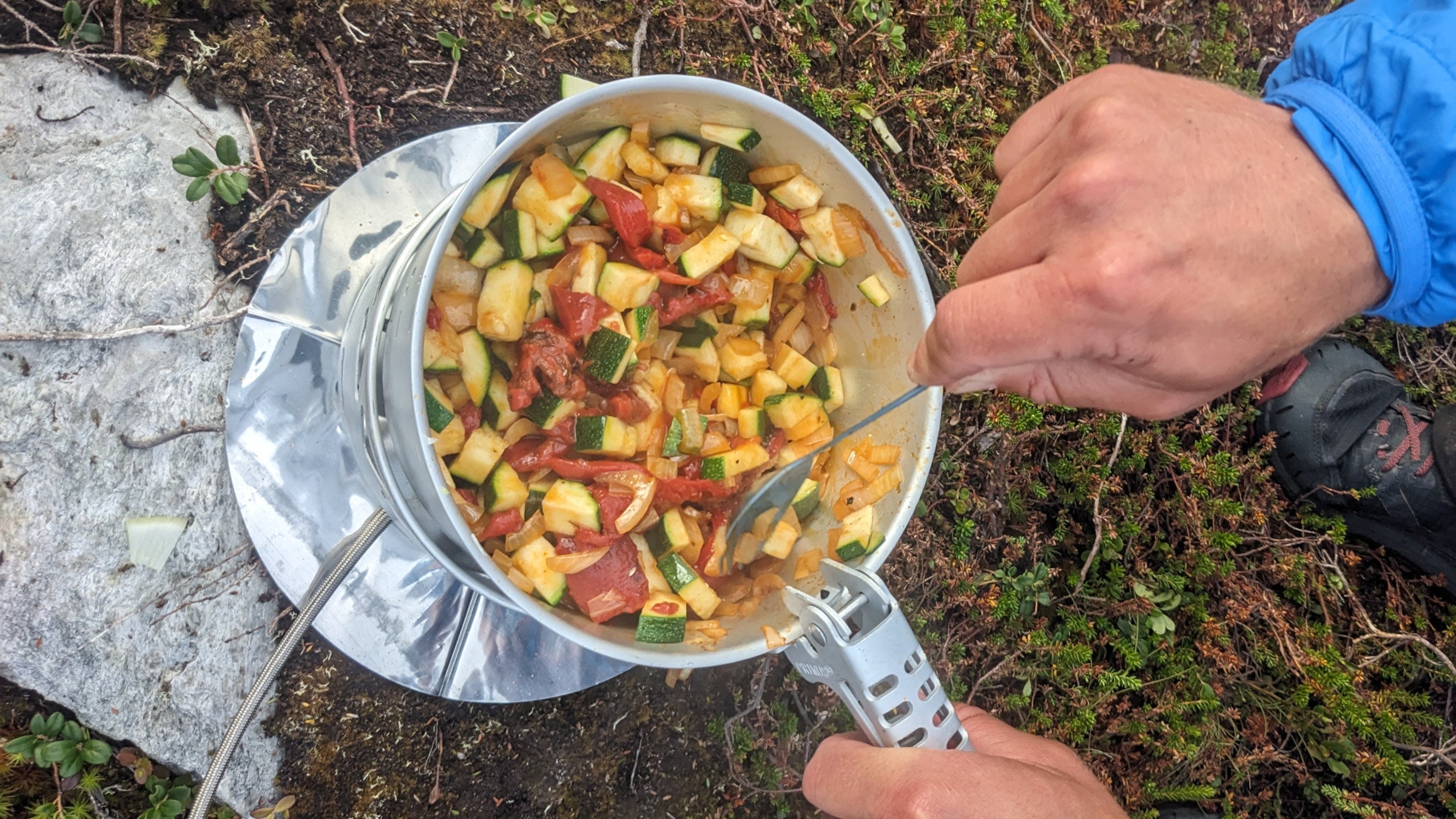
The spork is more than a mere convenience of modern fast-food dining; it is a meticulously engineered culinary tool with a lineage that spans over 150 years, traversing the battlefields of the American Civil War, the high-society dining rooms of the Gilded Age, and the most remote wildernesses on Earth. For the modern backpacker, the spork represents the pinnacle of "marginal gains"—a philosophy of efficiency where every gram of weight and every centimeter of space is scrutinized. While outdoor enthusiasts often cycle through various iterations of tents, sleeping bags, and stoves in pursuit of the perfect kit, the spork has remained a constant, singular solution to the complex problem of mobile nutrition. Its journey from a patent office in Rhode Island to the titanium-clad versions found in today’s high-end gear shops is a testament to the enduring utility of hybrid design.
The Pre-Industrial Struggle for a Universal Utensil
The concept of a combination spoon and fork predates the formal "spork" by centuries. Historically, travelers were expected to carry their own cutlery, leading to the development of various "folding" or "nested" sets. In the late 18th century, English poet Robert Southey observed in his 1797 work, Letters Written During a Short Residence in Spain and Portugal, the difficulty of acquiring separate utensils, hinting at an early cultural pressure for consolidated cutlery.
By the mid-19th century, the expansion of rail and steamship travel created a burgeoning market for compact travel goods. This era, however, was characterized by experimental designs that were often as dangerous as they were innovative. In 1860, Andrew Hills of Naugatuck, Connecticut, patented a "culinary fork and spoon" that featured a complex, almost industrial aesthetic. A year later, in 1861, Nathan Ames of Saugus, Massachusetts, filed a patent for a "poly-utensil" that combined a knife, fork, and spoon into a single, somewhat grotesque implement. These early iterations were often criticized for being "monsters" of design—unwieldy tools that prioritized the quantity of functions over the quality of any single use. The primary safety concern of the era was the integration of a sharp knife blade into the handle of a spoon or fork, a design choice that proved unpopular for obvious reasons.
The 1874 Breakthrough: The Samuel W. Francis Patent
The definitive ancestor of the modern spork arrived in the reconstruction era following the American Civil War. On February 3, 1874, Samuel W. Francis, a physician and prolific inventor from Newport, Rhode Island, was granted U.S. Patent No. 147,119. Francis’s design was revolutionary because it centered the utility on the bowl of the spoon, adding tines to the front edge.
In his patent filing, Francis noted that the "object of this invention is to combine in a convenient manner, in one implement, a knife, fork, and spoon." While his original design still included a serrated edge on the side of the spoon bowl—a feature that has largely been abandoned in modern spoon-fork hybrids for the sake of oral safety—the basic geometry established the template for the next century of production. Francis’s invention was a direct response to the need for a singular tool that could handle the varied textures of a full meal without requiring the user to switch implements, a precursor to the "one-pot" meal philosophy prevalent in modern camping.
The Terrapin Craze and the Gilded Age
While the spork was born from a desire for efficiency, its popularization was unexpectedly fueled by a 19th-century culinary fad: turtle soup. During the Gilded Age, terrapin (diamondback turtle) became a staple of high-society dining along the American Eastern Seaboard. The dish presented a unique challenge: it consisted of a rich, liquid broth filled with small, delicate chunks of meat.
Standard spoons were insufficient for spiking the meat, and standard forks were useless for the broth. Silverware manufacturers responded by producing "terrapin forks," which featured a shallow, spoon-like bowl with short tines. These elegant silver implements were the first version of the spork to gain widespread social acceptance, appearing in the catalogs of major silversmiths. This cultural moment proved that the hybrid tool was not just for the rugged traveler, but also for the refined urbanite.
Linguistic Evolution and the Mid-Century Trademark Battles
The term "spork" itself did not enter the common lexicon until the early 20th century. The Oxford English Dictionary traces the word back to 1909, the same year the Century Dictionary and Cyclopedia defined it as a "portmanteau-word" describing a long spoon with fork-like projections.
The 20th century also saw the spork enter the realm of intellectual property disputes. In 1951, Hyde W. Ballard of Pennsylvania applied for a trademark for the term, claiming he had been using it to describe his "eating utensil" since 1950. This began a decades-long legal saga over the "spork" name. Eventually, the term was genericized in many regions, though companies like Plastico and Van Brode Milling Co. fought for the right to use the name in the mid-1960s and 70s. This era also saw the spork’s transition into mass-market advertising. In 1956, the Karo Syrup Company launched a promotional campaign featuring Hollywood actor George Gobel. For one dollar and two labels of syrup, customers could receive their own "spork," marketed as the ultimate tool for eating pancakes.
Chronology of the Spork’s Evolution
- 1797: Robert Southey notes the difficulty of purchasing separate spoons and forks in Iberia.
- 1860: Andrew Hills patents an early "culinary fork and spoon."
- 1861: Nathan Ames patents a complex knife-fork-spoon combination.
- 1874: Samuel W. Francis receives the first patent for the modern spork design.
- Late 1800s: The "terrapin fork" becomes a staple of American high-society dining.
- 1909: The word "spork" appears in the Century Dictionary and Oxford English Dictionary.
- 1951: Hyde W. Ballard files for the "spork" trademark.
- 1956: Karo Syrup and George Gobel popularize the spork in American households.
- 1970s: Fast-food giants like Kentucky Fried Chicken (KFC) adopt the plastic spork as a cost-saving measure.
- 2000s: The rise of "ultralight" backpacking leads to the dominance of titanium sporks in the outdoor industry.
The Modern Outdoor Era: From Plastic to Titanium
The contemporary status of the spork is inextricably linked to the outdoor gear industry. As backpacking evolved from heavy canvas packs to ultralight synthetic materials, the demand for durable, lightweight cutlery skyrocketed. The plastic spork, while functional, was prone to snapping under the pressure of thick stews or frozen ground.
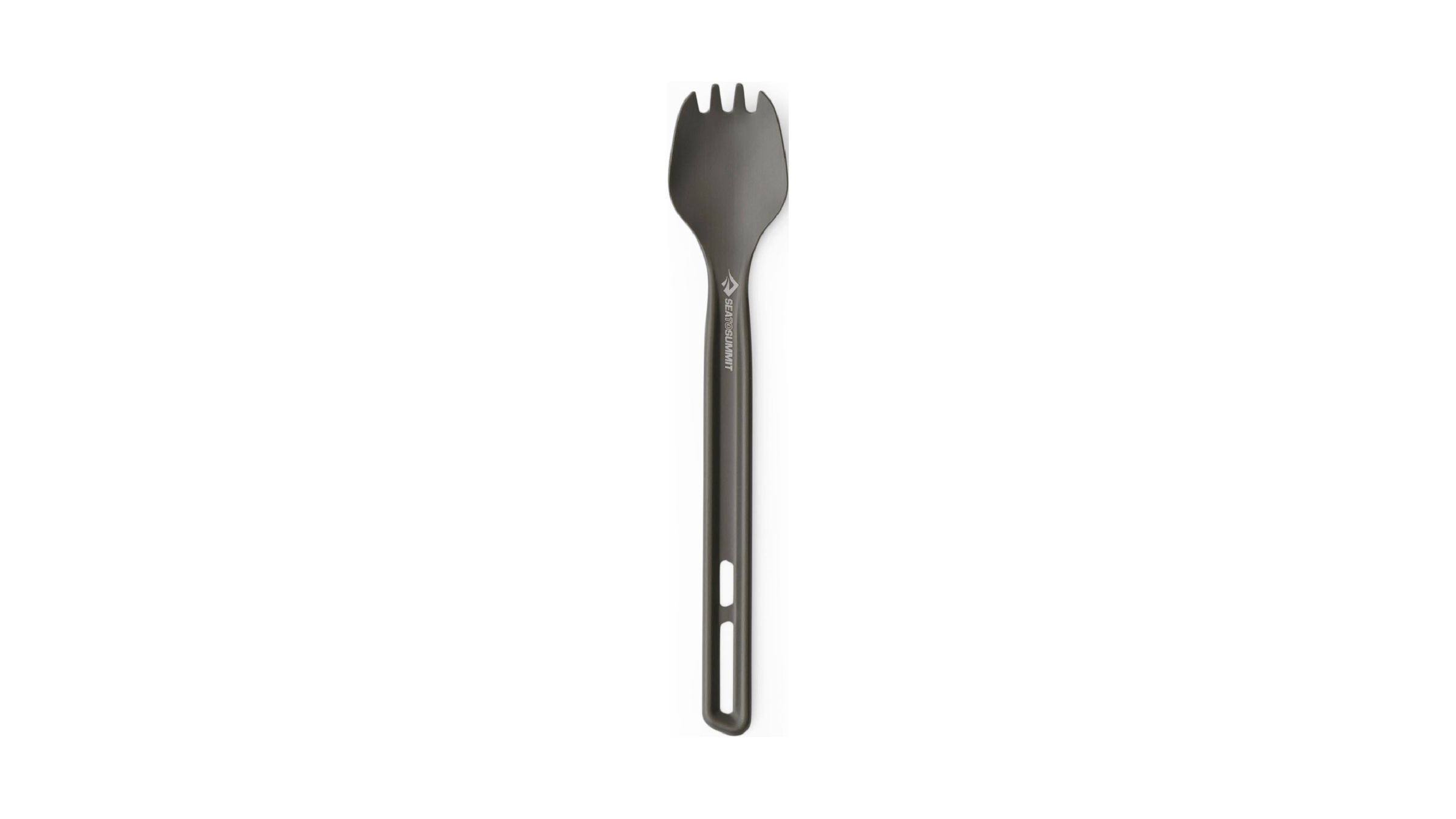
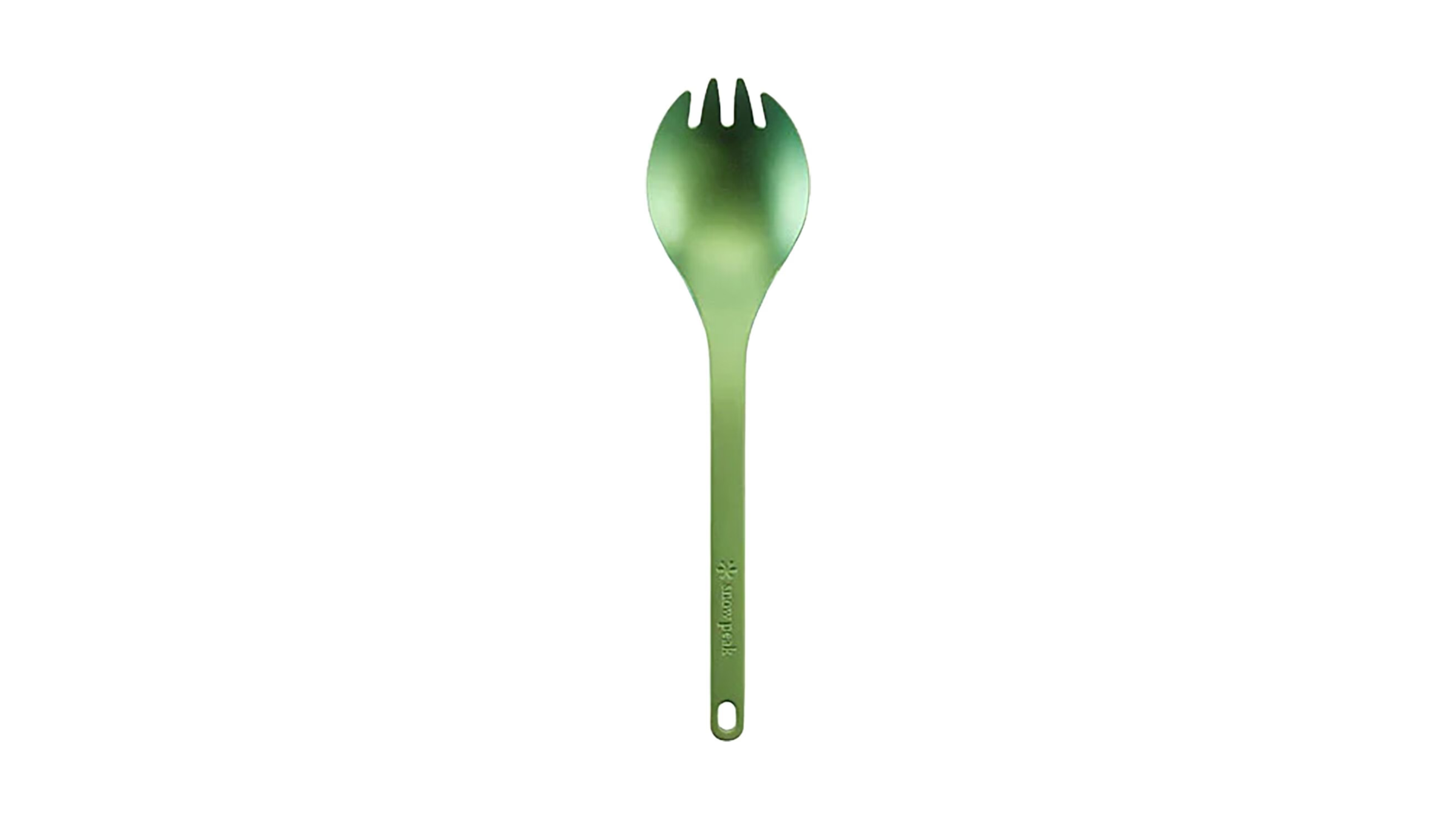
The introduction of titanium changed the landscape. Titanium offers a strength-to-weight ratio superior to steel and is biologically inert, meaning it does not impart a metallic taste to food. Brands like Snow Peak, Sea to Summit, and TOAKS have refined the spork into a precision tool. Modern variations often feature "long-handle" designs, specifically engineered to reach into the bottom of deep, freeze-dried meal pouches without the user getting food on their hands.
Data and Technical Specifications
In the world of professional backpacking, the weight difference between utensils is a critical metric. A standard stainless steel spoon-and-fork set can weigh upwards of 50 to 80 grams. In contrast, a modern titanium spork typically weighs between 12 and 21 grams.
| Model | Material | Weight | Length | Key Feature |
|---|---|---|---|---|
| Snow Peak Spork | Titanium | 16g | 16.5 cm | Classic design, multiple colors |
| Sea to Summit Frontier | Hard-Anodized Aluminum | 12g | 21 cm | Ultra-long handle for meal bags |
| TOAKS Polished Bowl | Titanium | 19g | 22 cm | Polished surface for better "mouthfeel" |
Broader Impact and Environmental Implications
The spork’s legacy is also tied to the global conversation on plastic waste. Fast-food chains adopted the plastic spork because it reduced the number of items they needed to stock by 50%, significantly cutting costs. However, this convenience has led to billions of single-use plastic utensils entering landfills annually.
Environmental analysts suggest that the "reusable spork" movement—encouraging individuals to carry their own titanium or bamboo spork—is one of the simplest ways to reduce personal plastic footprints. The "EDC" (Everyday Carry) community has embraced the spork as a symbol of preparedness and sustainability.
Conclusion: A Tool for the Next Century
After 150 years of refinement, the spork has moved beyond its "monster" phase to become a masterpiece of functionalism. It is a tool that reflects the history of human movement—from the slow travel of the 18th century to the fast-paced, weight-conscious exploration of the 21st. Whether it is being used to eat ramen in a high-altitude camp or pancakes at a family breakfast table, the spork remains a rare example of a design that successfully merged two distinct functions into a superior third. As society continues to prioritize efficiency and sustainability, the spork’s place in the traveler’s pack is not only secure but essential.




 Chandra Hamzah
 Budi Mulyono
 Tatiana Tantri Indah Sari