
 Cholid Fahmi Thalib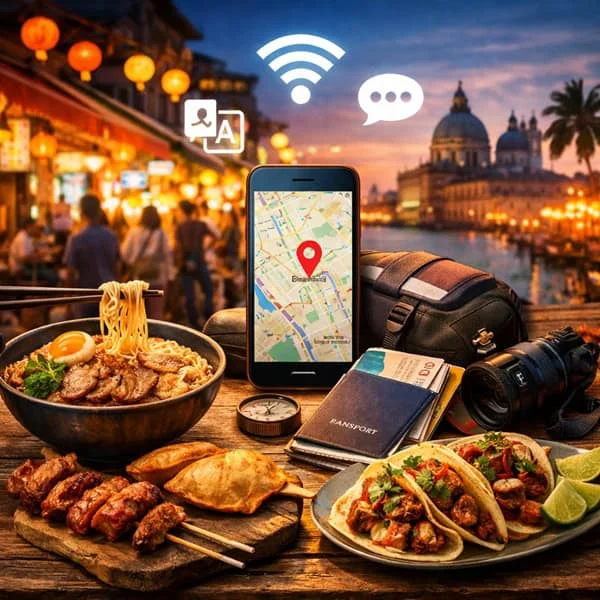
The allure of travel often lies in those serendipitous moments: waking up in an unfamiliar city, savoring a coffee that transcends everyday tastes, stumbling upon a neighborhood whose name rolls uniquely off the tongue, and, without a meticulously planned itinerary, discovering a culinary revelation that defines the entire trip. While these experiences are often romanticized as purely accidental, their consistent occurrence among discerning travelers—particularly those with a passion for gastronomy—is, in reality, a testament to diligent preparation in the less glamorous, yet crucial, aspects of travel. This preparation, far from being rigid and overly scheduled, centers on maintaining a seamless connection to the digital world, enabling an unhindered engagement with the real one. For the "foodie flashpacker"—a traveler who prioritizes smart navigation, exceptional dining, and fluid spontaneity—reliable connectivity has emerged as a surprisingly fundamental element, not for constant online immersion, but for minimizing background friction, thereby maximizing presence in the moment. This presence is precisely what transforms a simple meal into an unforgettable culinary adventure, whether it’s a steaming bowl of noodles, a perfectly crafted taco, or the intoxicating aroma of a neighborhood bakery.
The Unique Demands of Culinary Exploration
Food-focused travel diverges significantly from traditional sightseeing. It’s a dynamic pursuit that involves navigating not just landmarks, but a fluid landscape of bustling markets, hidden alleyways, ephemeral pop-up stalls, vibrant late-night eateries, inviting cafés discovered by chance, and restaurants whose very existence hinges on precise timing and location. This intricate web of potential gastronomic delights presents a unique set of challenges where minor logistical hurdles can rapidly accumulate and detract from the overall experience.
Consider the common scenarios: arriving at a remote street food vendor only to find they’ve sold out for the day due to a lack of real-time updates on their inventory; attempting to decipher a handwritten menu at a bustling local eatery without the aid of a translation tool, leading to potential misunderstandings or missed culinary opportunities; or wanting to share the discovery of an exceptional, yet unmarked, food stall with friends back home, only to be hampered by the inability to send a quick message or share a location pin. These seemingly small frictions—the delay in finding an open establishment, the awkwardness of pointing and guessing at menu items, the frustration of not being able to record a memorable discovery, or the missed opportunity to secure a table at a highly-sought-after restaurant—can collectively erode the spontaneity and joy that define this travel style. A reliable internet connection, therefore, is not about perpetual digital engagement but about providing the essential scaffolding that allows for improvisation and confident exploration. The goal is not to be “always online,” but to ensure seamless access precisely when it matters most.
The Rise of the Foodie Flashpacker: Blending Freedom with Efficiency
Flashpacking represents a contemporary approach to travel, occupying a sweet spot between the unbridled freedom of the traditional backpacker and the practical efficiency of more experienced travelers. It’s about optimizing the travel experience by intelligently removing obstacles, rather than deliberately complicating it. For the foodie flashpacker, this means streamlining the logistical aspects to dedicate more time and energy to the core pursuit: exceptional food.
A robust yet simple system for connectivity underpins this philosophy. This includes the ability to access maps and navigation tools instantly upon disembarking public transport, translating menus with ease to understand offerings, communicating with local contacts or friends to share discoveries, managing dietary restrictions with clear allergy cards, verifying the operational status of establishments, and effortlessly retrieving digital confirmations for reservations or payments, even in environments with unreliable Wi-Fi. The underlying principle is to ensure that technology serves as an enabler, not a hindrance, particularly when culinary plans are inherently fluid and subject to change. The ability to adapt quickly to evolving circumstances—such as a restaurant closing early or a market shifting its hours—is paramount, and a dependable data connection is the key to such agile adjustments.
eSIM Technology: The Streamlined Solution for Travel Connectivity
The traditional method of acquiring international mobile service, often involving navigating busy airport SIM card kiosks, can be a cumbersome and time-consuming process. Travelers often face a bewildering array of plans, potentially confusing terminology, and the physical act of swapping out a SIM card, all while hoping their essential digital services will function correctly afterward. This experience can be particularly frustrating for those who prioritize culinary exploration over troubleshooting technical issues.
Embedded SIM (eSIM) technology offers a significantly more streamlined and user-friendly alternative. Instead of a physical SIM card, an eSIM is a digital chip integrated into the device itself, allowing users to activate a cellular plan remotely and digitally. This eliminates the need for physical card manipulation and significantly reduces the friction associated with arriving in a new country with immediate connectivity needs. For many travelers, particularly those focused on maximizing their time for experiences like dining, eSIMs represent the most effortless path to staying connected from the moment they land. Platforms such as SIMOVO provide a straightforward avenue for travelers to acquire and activate eSIM plans, bypassing the conventional SIM card acquisition process. The ultimate objective of this approach is to safeguard valuable travel time, ensuring that minutes are spent discovering new flavors rather than searching for a signal.
How Connectivity Enhances the Culinary Travel Experience
The presence of reliable data connectivity profoundly transforms the way individuals engage with culinary travel, moving beyond mere consumption to a more adventurous and informed exploration.
-
Encouraging Exploration Beyond the Obvious: When travelers are preoccupied with concerns about getting lost, they tend to gravitate towards predictable and easily identifiable locations—main tourist thoroughfares or well-established restaurants. While these can be satisfactory, the most exceptional culinary discoveries are frequently found off the beaten path. Consistent data access empowers travelers to confidently venture down intriguing side streets and explore less-trodden areas, knowing they can always reorient themselves using digital maps. This freedom to explore deeper without the anxiety of isolation is crucial for uncovering authentic local gems.
-
Facilitating the Integration of Local Recommendations: Local advice on dining is rarely provided with precise street addresses. Instead, recommendations are often based on landmarks, the general ambiance of an area, or descriptive cues like "it’s next to the pharmacy with the green sign." Reliable connectivity allows travelers to quickly triangulate these less precise directions by combining map data with quick text messages or even photo confirmations of storefronts, significantly increasing the likelihood of successfully finding the recommended spot.
-
Accelerating Menu Comprehension and Confidence: Translation applications serve not as a crutch for laziness, but as a tool for courage and exploration. By reducing the apprehension associated with ordering unfamiliar dishes, travelers are more inclined to experiment with unique and potentially rewarding menu items. Furthermore, connectivity enables rapid lookups of specific ingredients, regional culinary terms, or the precise nature of a mysterious sauce, transforming what could be a time-consuming research endeavor into a quick, informative process. This immediate access to information fosters a greater sense of confidence and adventurousness when ordering.
-
Optimizing Culinary Timing: The success of many culinary experiences is inextricably linked to timing. The availability of a particular dish, like the highly sought-after birria, can be limited by daily sell-outs. Bakeries often reach their peak quality at specific morning hours, and night markets may only truly come alive later in the evening. The ability to quickly verify operating hours, send a message to confirm availability, or ascertain whether a particular item is in season allows for a more informed, yet still flexible, approach to daily planning. This strategic use of information helps to maximize the chances of experiencing peak culinary moments without resorting to rigid, overly-scheduled itineraries.
-
Building a Personalized Culinary Archive: Every traveler has experienced the disappointment of encountering an extraordinary dish and subsequently being unable to relocate the establishment. Reliable connectivity provides the means to create a lasting record of these culinary triumphs. This includes saving restaurant locations and details in digital map applications, bookmarking promising eateries for future reference, and taking high-quality photographs of dishes and storefronts to aid in future identification. This process transforms a series of individual good meals into a curated, repeatable playbook for exceptional food travel.
Establishing a Balanced Connectivity Routine
A common concern among travelers is that staying connected will lead to excessive screen time, detracting from the immersive experience of travel. However, a structured approach can mitigate this risk, ensuring technology remains a supportive tool rather than a central focus.
A recommended rhythm involves dedicated moments for connectivity. This might include checking maps and essential communications upon arriving at a destination or before embarking on a planned excursion. Brief checks throughout the day, particularly when navigating unfamiliar areas or seeking out specific dining establishments, are also beneficial. Crucially, a period of disconnection before meals allows for full sensory engagement with the food and the environment. Finally, a brief end-of-day review to save any discovered gems or plan for the next day consolidates the benefits of connectivity without consuming excessive time. This balanced approach ensures that the smartphone functions as an indispensable tool, enhancing the travel experience without dominating it.
Empowering Confident Exploration Through Connectivity
The essence of food travel is to feel vibrantly alive, to experience the thrill of genuine discovery rather than mere passive consumption. Connectivity does not supplant the act of discovery; rather, it actively protects and facilitates it. When fundamental logistical needs—such as navigation, communication, translation, and access to reservation or payment systems—are seamlessly met, travelers are liberated to fully engage with the core purpose of their journey: to immerse themselves in local flavors, explore diverse culinary landscapes, and connect with the culture through its food.
This philosophy lies at the heart of foodie flashpacking: implementing structure where it is functionally necessary, while preserving maximum freedom in all other aspects. By approaching travel with this balanced perspective, individuals are more likely to create those memorable "how did we end up here?" dining experiences—the ones that resonate long after the trip concludes—without the usual accompanying chaos that can accompany unplanned spontaneity. Ultimately, a well-integrated connectivity strategy empowers travelers to explore with greater confidence and a deeper appreciation for the culinary world, transforming each meal into an opportunity for discovery and lasting enjoyment.




 Anjar Salim
 Chandra Hamzah
 Budi Mulyono


 Tatiana Tantri Indah Sari