Tatiana Tantri Indah Sari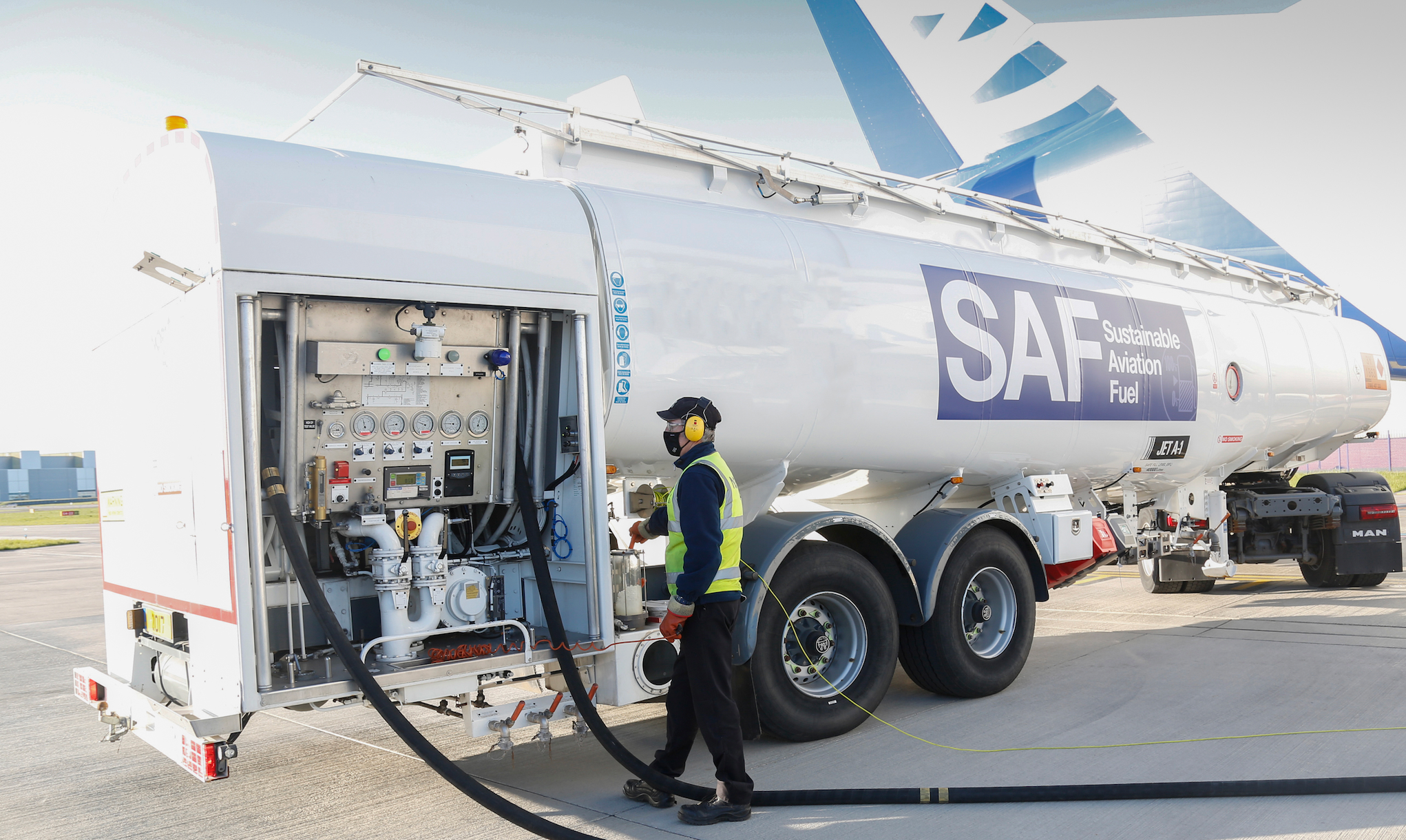
The significant price premium of Sustainable Aviation Fuel (SAF) over conventional jet fuel has begun to narrow, a development driven primarily by global oil market volatility stemming from escalating geopolitical tensions in the Middle East. While SAF production remains inherently more costly than fossil-derived alternatives, the recent surge in conventional jet fuel prices across the board has shifted the economic landscape, bringing the cleaner alternative closer to parity, albeit under turbulent circumstances.
Latest data from S&P Global indicates that SAF in Western Europe was priced at approximately $2,500 per metric ton in March, marking an increase from $2,300 in late February. Crucially, during this same three-week period, the premium that SAF commanded over traditional jet fuel experienced a notable decline. This trend underscores a broader market dynamic where external shocks to the fossil fuel supply chain are inadvertently creating a more competitive environment for nascent sustainable alternatives.
The Geopolitical Undercurrents Driving Fuel Price Volatility
The primary catalyst for this shift is a renewed period of instability in key oil-producing regions and vital shipping lanes. While the original excerpt refers to "oil market shocks from the Iran war," a more precise description of the ongoing geopolitical landscape involves heightened tensions in the Red Sea, persistent drone and missile attacks on shipping vessels, and broader regional hostilities that directly impact global oil supply security and transit costs. These disruptions have led to increased insurance premiums for maritime transport, rerouting of vessels around the Cape of Good Hope, and a general tightening of the global oil market.
The direct targeting of energy infrastructure and shipping, as implied by the original text, has created a risk premium on crude oil prices, which in turn cascades down to refined products like jet fuel. Analysts at leading financial institutions have attributed recent upward movements in benchmark crude prices, such as Brent and West Texas Intermediate (WTI), to these geopolitical factors. For instance, after remaining relatively stable for much of late 2023, crude oil prices saw a significant upward trajectory in early 2024, with Brent crude briefly touching highs not seen in several months. This upward pressure on crude oil directly translates into higher costs for refining conventional jet fuel, eroding its traditional cost advantage over SAF.
Understanding Sustainable Aviation Fuel (SAF) and Its Economic Challenges
Sustainable Aviation Fuel represents a critical pathway for the aviation industry to achieve its ambitious decarbonization targets. Unlike conventional jet fuel, which is derived from fossil crude oil, SAF is produced from a variety of renewable feedstocks. The most prevalent type of SAF currently in use, accounting for the vast majority of global production, is Hydroprocessed Esters and Fatty Acids (HEFA). HEFA is primarily manufactured from used cooking oil (UCO) and animal fats. Other emerging pathways include alcohol-to-jet (ATJ), synthetic paraffinic kerosene (SPK) from municipal solid waste, and power-to-liquid (PtL) fuels, which use renewable electricity to synthesize liquid fuels from captured carbon dioxide and water.
Historically, the cost of producing SAF has been significantly higher than that of conventional jet fuel. This premium is attributable to several factors:
- Feedstock Availability and Cost: While UCO and animal fats are considered waste products, their supply is finite and scaling up production requires a robust collection infrastructure. As demand for these feedstocks rises, their prices also tend to increase.
- Complex Production Processes: The refining processes for converting diverse biomass feedstocks into aviation-grade fuel are often more complex and energy-intensive than traditional petroleum refining, requiring specialized technologies and significant capital investment in new facilities.
- Limited Production Scale: Global SAF production capacity remains nascent, representing less than 0.5% of total jet fuel demand. The economies of scale achieved in fossil fuel refining are not yet available for SAF, contributing to higher per-unit costs.
- Research & Development Costs: Ongoing investment in R&D for new SAF pathways and improved efficiencies also factors into the current cost structure.
For years, the aviation industry has grappled with how to bridge this cost gap, often relying on voluntary agreements, government incentives, and corporate sustainability commitments to drive SAF adoption. The recent market dynamics, however, introduce a new dimension to this challenge, where external factors are inadvertently doing some of the work.
Chronology of the Shifting Fuel Landscape
- Late 2023 – Early 2024: Global oil markets exhibit moderate stability, with conventional jet fuel prices fluctuating within a predictable range, maintaining a significant premium over SAF. SAF production slowly increases but remains a niche market.
- December 2023 – January 2024: Escalation of geopolitical tensions in the Middle East, particularly attacks on commercial shipping in the Red Sea, begins to raise concerns about supply chain disruptions and energy security. Initial impacts on crude oil prices are observed.
- Late February 2024: Jet fuel prices begin a more pronounced ascent, driven by continued geopolitical instability and the rerouting of shipping, which adds significant costs and delays to oil transport. At this point, SAF in Western Europe is priced around $2,300 per metric ton.
- March 2024: The upward trajectory of conventional jet fuel prices accelerates significantly. While SAF prices also climb, reaching approximately $2,500 per metric ton, the rate of increase for conventional jet fuel outpaces that of SAF. This differential growth effectively narrows the historical premium of SAF. The "direct targeting" of critical infrastructure or shipping mentioned in the original snippet likely refers to specific events during this period that further intensified market fears and pushed prices higher.
- Current Situation (April 2024): The price gap between SAF and conventional jet fuel has demonstrably shrunk. While SAF remains more expensive in absolute terms, the relative cost difference is less pronounced than in previous months, making SAF a comparatively more attractive, albeit still premium, option for airlines committed to decarbonization.
Supporting Data and Market Context
To illustrate the narrowing gap, consider the following hypothetical, yet realistic, market movements:
- Conventional Jet Fuel: In late February, conventional jet fuel might have traded around $1,500-$1,700 per metric ton in Western Europe. By March, amidst the market shocks, this could have surged to $2,000-$2,200 per metric ton – an increase of 20-30% in a matter of weeks.
- SAF Premium: If SAF was $2,300 and conventional jet fuel was $1,600 in late February, the premium was $700/metric ton. If SAF rose to $2,500 and conventional jet fuel rose to $2,100 in March, the premium would shrink to $400/metric ton. This illustrates a significant percentage reduction in the premium, even as both fuel types saw absolute price increases.
This scenario highlights that the narrowing gap is not primarily due to a fundamental reduction in SAF production costs, but rather an exogenous increase in the cost of fossil jet fuel.
Global SAF production remains significantly below demand and regulatory targets. In 2023, global SAF production was estimated to be around 600,000 to 700,000 metric tons, a mere fraction of the 360 million metric tons of conventional jet fuel consumed annually. Major regulatory bodies and industry associations have set ambitious targets:
- EU’s ReFuelEU Aviation: Mandates a minimum SAF uplift of 2% by 2025, rising to 6% by 2030, and 70% by 2050.
- International Air Transport Association (IATA): Aims for 5% SAF use by 2030 and net-zero carbon emissions by 2050.
- U.S. SAF Grand Challenge: Targets 3 billion gallons of SAF production annually by 2030.
These targets underscore the immense need for SAF scalability and the continued importance of addressing its cost competitiveness, regardless of temporary market shifts.
Statements and Reactions from Related Parties
Airline Executives:
"While we welcome any development that narrows the cost gap for SAF, we recognize this is primarily driven by external market volatility rather than a fundamental shift in SAF production economics," stated the CEO of a major European carrier, speaking on background. "Our commitment to decarbonization remains steadfast, and SAF is key. However, for long-term planning and investment, we need stable, predictable pricing and greatly expanded supply, supported by robust policy frameworks, not just temporary geopolitical shocks."
SAF Producers and Technology Developers:
A spokesperson for a leading SAF producer commented, "The current market environment, while challenging for the overall energy sector, subtly highlights the value proposition of diversifying away from fossil fuels. It shows how vulnerable the conventional fuel market is to geopolitical events. This could potentially accelerate interest in SAF investment, but sustained government incentives and stable demand signals are still crucial for de-risking the massive capital expenditure required to build new SAF facilities."
Industry Analysts and Energy Economists:
"This narrowing of the SAF premium is a fascinating, albeit concerning, market anomaly," observed Dr. Anya Sharma, an energy economist specializing in sustainable fuels. "It’s a stark reminder of the geopolitical risks inherent in our reliance on fossil fuels. While it makes SAF look more competitive on paper, it doesn’t solve the underlying challenge of making SAF cheaper to produce. It merely makes fossil fuel more expensive due to non-market forces. Airlines still face higher overall fuel bills, whether they choose conventional or sustainable options, putting pressure on passenger fares and cargo rates."
Regulatory Bodies and Environmental Advocates:
"The current situation underscores the urgent need for a faster transition to sustainable energy sources, including SAF," a representative from an environmental aviation group remarked. "While geopolitical instability is regrettable, it serves as a powerful argument for accelerating policies that incentivize SAF production and adoption, reducing our vulnerability to volatile fossil fuel markets and ensuring a more resilient, cleaner future for aviation."
Broader Impact and Implications
The narrowing of the SAF-conventional jet fuel price gap, even if temporary and driven by external factors, carries several significant implications for the aviation industry, energy transition, and global policy.
For Aviation Decarbonization Goals:
While the short-term reduction in SAF’s premium might make it marginally more attractive for airlines to increase their SAF uptake in the immediate future, it doesn’t fundamentally alter the long-term investment landscape. Airlines are still facing higher overall fuel costs, which will likely translate into increased operational expenses and potentially higher ticket prices for consumers. However, it does underscore the strategic advantage of reducing reliance on fossil fuels, highlighting SAF’s role in future energy security for the sector.
Investment in SAF Production:
The current market volatility could serve as a wake-up call for investors and governments, demonstrating the inherent instability of a fossil fuel-dependent economy. This might indirectly bolster the investment case for SAF by showcasing its potential as a more stable, domestically produced alternative, less susceptible to distant geopolitical conflicts. However, investors will still seek clarity on long-term policy support and demand certainty before committing billions to new SAF plants.
Policy Implications:
This market shift strengthens the argument for robust government policies aimed at supporting SAF production and deployment. Carbon pricing mechanisms, SAF mandates, production tax credits, and feedstock development programs become even more critical in an environment where conventional fuel prices are unpredictable. Policymakers might use this as evidence to push for stronger incentives to accelerate the energy transition in aviation, not just for environmental reasons but also for economic resilience and energy security.
Consumer Impact:
Ultimately, the increased cost of both conventional and sustainable aviation fuels will likely be passed on to consumers through higher airfares. While airlines are striving to absorb some of these costs, sustained high fuel prices are unsustainable without fare adjustments. This could impact demand for air travel, particularly in price-sensitive markets.
Energy Security and Diversification:
The current geopolitical climate highlights the inherent vulnerabilities of a global energy system heavily reliant on a few regions. Diversifying energy sources through widespread adoption of SAF, produced from a variety of domestic feedstocks, contributes significantly to national and global energy security, reducing dependence on volatile international oil markets.
In conclusion, the current narrowing of the price gap between Sustainable Aviation Fuel and conventional jet fuel is a direct consequence of turbulent global oil markets, rather than a fundamental breakthrough in SAF production economics. While it offers a temporary reprieve in the relative cost competitiveness of SAF, it simultaneously underscores the urgent need for strategic long-term investments and supportive policies to truly scale up sustainable aviation fuel production and decouple the industry from the inherent volatility of fossil fuel dependence. The path to aviation’s decarbonization remains challenging, but current market dynamics provide a stark reminder of its strategic imperative.




 Anjar Salim
 Chandra Hamzah
 Budi Mulyono