
 Anjar Salim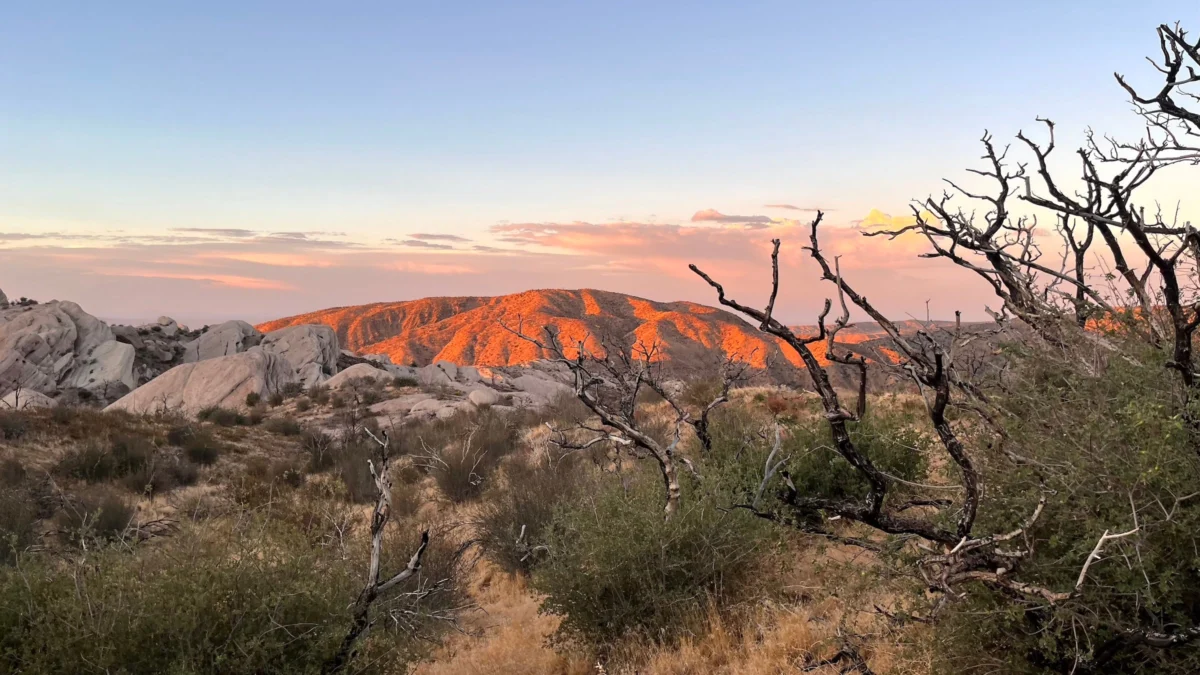
On the morning of June 11, 1998, John Aujay, a 38-year-old veteran of the Los Angeles County Sheriff’s Department (LASD) and a former U.S. Army Special Forces paratrooper, arrived at the Devil’s Punchbowl Natural Area for a routine training run. Aujay, an elite endurance athlete, was preparing for the Western States 100-Mile Endurance Run, one of the world’s most grueling ultramarathons. He parked his white Ford F150 at the trailhead of the 1,300-acre nature preserve, where the rugged San Gabriel Mountains intersect with the Mojave Desert. By nightfall, Aujay had vanished, leaving behind his vehicle, his service weapon, and a mystery that would remain unsolved for nearly three decades.
The disappearance of such a highly trained survivalist and law enforcement officer has long been a source of speculation and local lore. Recently, the case has seen a resurgence in public interest following an intensive investigation by journalists Hayley Fox and Betsy Shepherd. Their eight-part podcast series, Valley of Shadows, explores the intersection of Southern California’s high-desert subculture, institutional corruption, and the inherent dangers of the Antelope Valley’s remote landscapes. The investigation suggests that Aujay’s disappearance may not have been a tragic accident or a personal choice, but rather a consequence of the violent criminal elements that permeated the region in the late 1990s.
A Career Defined by Resilience and Service
To understand the gravity of John Aujay’s disappearance, one must consider his professional background. Aujay was not a casual hiker; he was a man whose life was built on physical discipline and tactical expertise. Before joining the LASD, he served as a paratrooper in the U.S. Army’s Special Forces, an assignment that required mastery of land navigation and wilderness survival. Within the Sheriff’s Department, he was a member of the elite Special Enforcement Bureau (SEB), the unit responsible for high-stakes SWAT operations and K-9 deployments.
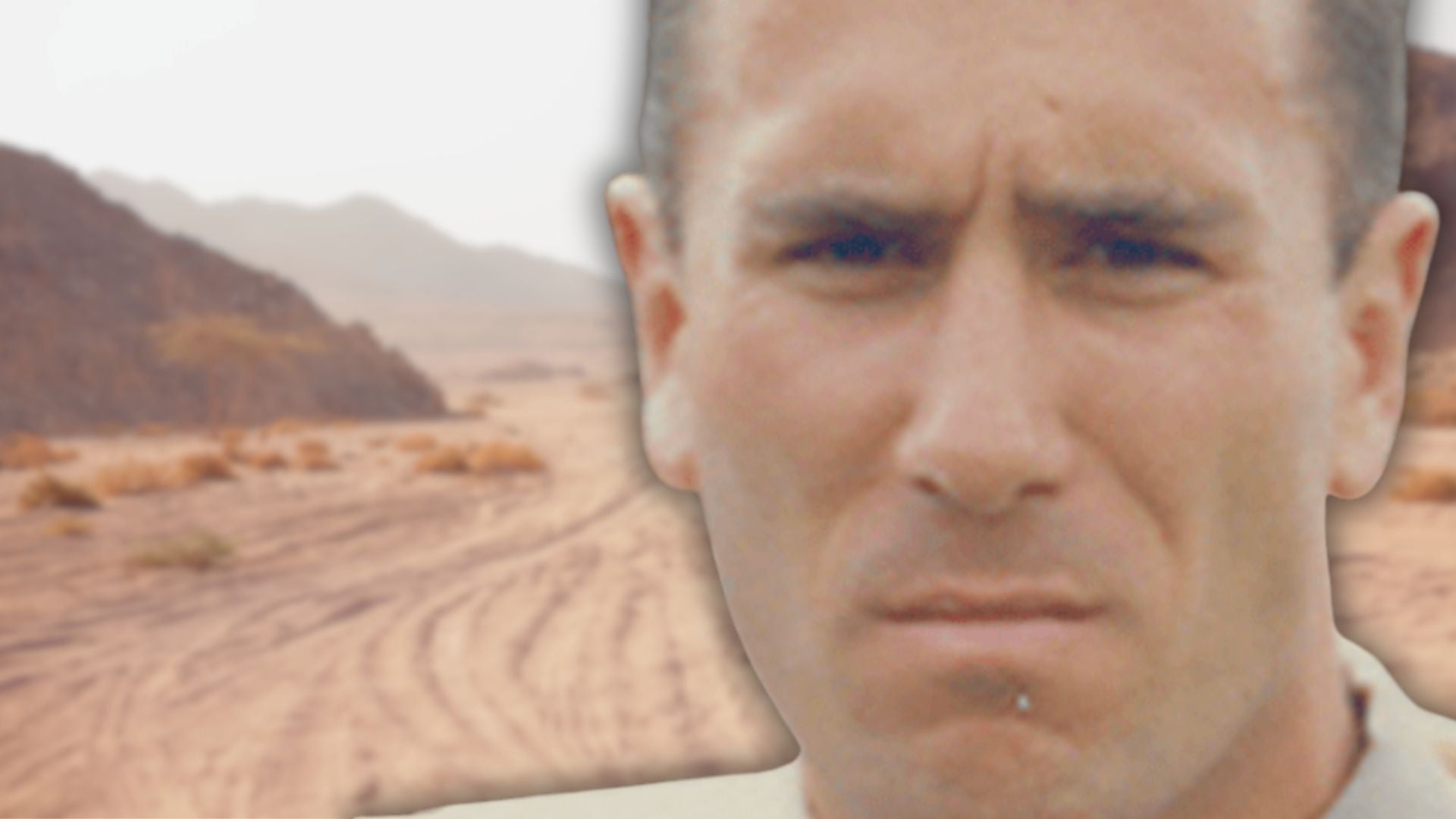
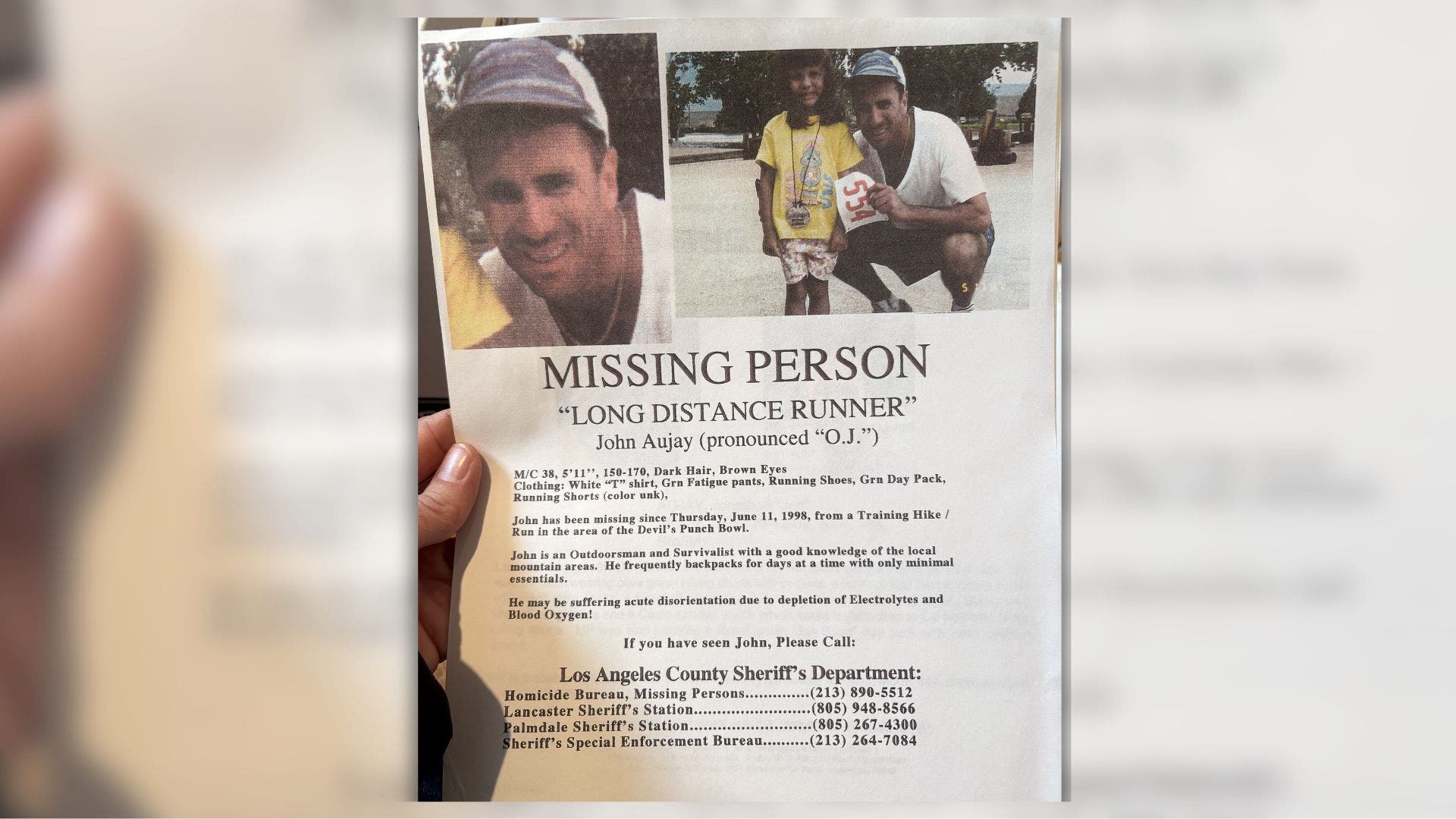
At the time of his disappearance, Aujay was in peak physical condition. The Western States 100, for which he was training, requires runners to navigate 100 miles of technical terrain, featuring cumulative climbs of over 18,000 feet and descents of 23,000 feet. Aujay was known to backpack for days with minimal supplies, earning him a reputation as a "self-efficient outdoorsman." His missing person profile described him as five feet eleven inches tall, weighing 165 pounds, and possessing "good knowledge of the local mountain areas." On the day he went missing, he was reportedly wearing a white T-shirt, green fatigue pants, running shoes, and a green day pack.
Chronology of the Disappearance: June 11, 1998
The timeline of June 11 begins with Aujay’s arrival at the Devil’s Punchbowl, a landscape characterized by dramatic 300-foot sandstone canyon walls and stark desert vistas. According to witness statements and official reports, the following events occurred:
- 12:00 PM: Aujay speaks with his wife, Debbie, for the last time. He indicates his plan to complete a long-distance loop through the convergence of the Angeles National Forest and the Mojave Desert.
- 6:00 PM: At least one witness reports seeing Aujay running on the trail, appearing to be in good health and maintaining a steady pace.
- 11:00 PM: After Aujay fails to return home by dark, Debbie Aujay contacts the LASD to report him missing.
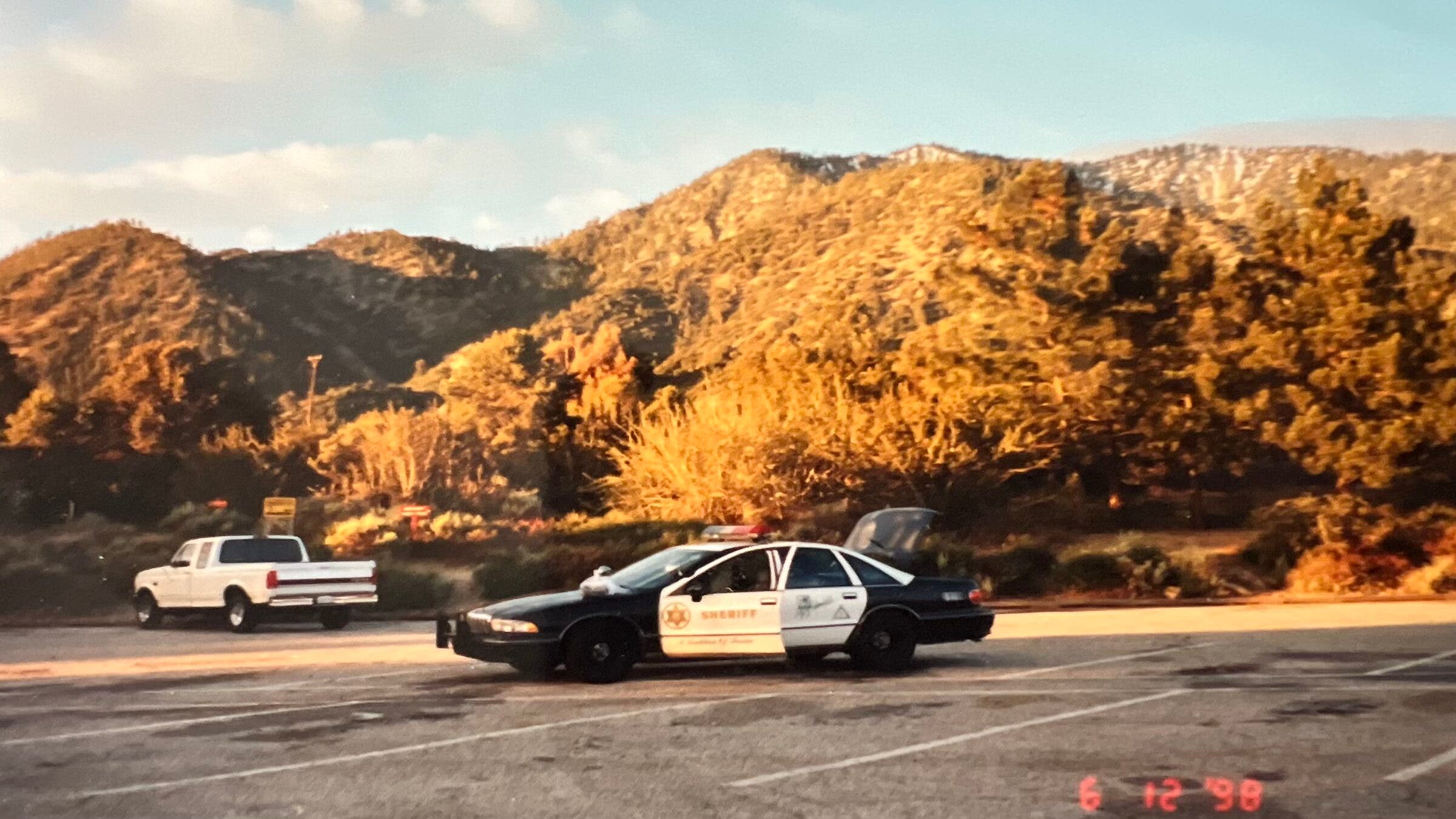
- Late Night, June 11: Responding deputies locate Aujay’s white Ford F150 in its usual parking spot near the trailhead. The vehicle is locked. Inside, on the dashboard, Aujay’s off-duty silver five-shot revolver is found propped behind a sun visor—a detail that investigators and family members found uncharacteristic for a man entering a remote area known for its hazards.
- June 12, 1998: A massive search-and-rescue operation is launched. The effort includes dozens of personnel, scent-tracking dogs, and aerial surveillance. A command post is established within the park.
- June 17, 1998: After six days of intensive searching in the rugged terrain, the LASD officially calls off the search. Despite the presence of expert trackers and K-9 units, no trace of Aujay—no clothing, no equipment, and no remains—is discovered.
The Antelope Valley: A Geography of Crime
The Devil’s Punchbowl is located roughly an hour northeast of Los Angeles, yet it exists in a state of relative isolation. The San Gabriel Mountains act as a physical barrier between the metropolitan sprawl and the Antelope Valley. This geographic separation, combined with a historical lack of law enforcement resources in the vast desert expanses, created what Shepherd and Fox describe as a "hotbed of violence and drug activity" during the 1990s.
During their investigation, Fox and Shepherd uncovered reports of dozens of bodies being discovered in the Antelope Valley around the time of Aujay’s disappearance. The region had earned a grim reputation as a "body dumping ground" for Los Angeles-based criminal organizations. The sheer scale of the landscape—remote, sparsely populated, and difficult to patrol—made it an ideal location for activities that required secrecy.
In the late 1990s, the Antelope Valley was also the epicenter of Southern California’s methamphetamine trade. The area was frequented by outlaw motorcycle clubs and white supremacist gangs. In 2001, three years after Aujay vanished, a massive law enforcement sting known as "Operation Silent Thunder" resulted in the arrest of nearly 300 individuals tied to drug trafficking and violent crime in the region. This criminal backdrop has led many to question whether Aujay, a sheriff’s deputy, inadvertently stumbled upon an illegal operation during his run.
Competing Theories: Suicide, Accident, or Foul Play
In the years following the disappearance, the LASD largely leaned into a theory of suicide. Some former colleagues suggested that Aujay might have been facing personal or professional pressures and chose to disappear into the wilderness to end his life. However, this theory has been heavily contested by Aujay’s family and those who knew his character. The fact that his service weapon was left in his truck, rather than taken with him, complicates the suicide narrative.
The "accident" theory suggests that Aujay may have suffered a medical emergency, such as a heat-related illness or a fall into one of the many deep fissures or "hard-to-reach spaces" within the Punchbowl’s complex geology. Yet, search-and-rescue experts have noted that it is rare for an experienced survivalist to leave absolutely no evidence behind, especially in an area that was subjected to a six-day search by professional trackers.
The third theory, and the focus of the Valley of Shadows investigation, is foul play. The podcast highlights numerous tips received by the LASD’s missing persons unit alleging that Aujay was murdered. These tips often pointed toward the criminal subculture of the Antelope Valley or, more controversially, to institutional corruption within the department itself. The journalists explore allegations of "secret police operations" and the possibility that Aujay’s disappearance was linked to internal departmental conflicts or his knowledge of illicit activities.
The Psychological and Cultural Impact of the Case
Reporting on the Aujay case required Fox and Shepherd to immerse themselves in the "brutal, stark, yet stunning" landscape of the high desert. Their experience of camping near the site of the disappearance provided them with a nuanced understanding of why the area remains so enigmatic. Fox, who initially viewed nature as a "serene refuge," noted that the investigation changed her perspective. "Oftentimes, it’s what is happening outside of cities and under the radar that can be the most troubling," she remarked.
The case serves as a case study in the challenges of rural law enforcement and the limitations of search-and-rescue operations in extreme environments. It also underscores a broader true-crime phenomenon: the vulnerability of individuals in spaces that exist "beyond the purview of public safety." The Antelope Valley, with its "cotton-candy colored skies" and "smell of sagebrush," hides a history of violence that contrasts sharply with its natural beauty.
Broader Implications and Ongoing Efforts
The disappearance of John Aujay remains an open case. The FBI and the LASD continue to maintain files on the matter, and the Valley of Shadows podcast has sparked a renewed call for information. The case highlights the importance of questioning "inherited narratives"—in this instance, the official departmental stance of suicide—and the need for modern forensic techniques to be applied to cold cases from the 1990s.
The story of John Aujay is more than a missing person case; it is a reflection of a specific era in California’s history when the desert was a frontier for both extreme adventure and extreme criminality. As investigative journalism continues to bridge the gap between official accounts and the lived realities of those in remote communities, the hope remains that new evidence will eventually bring closure to the Aujay family.
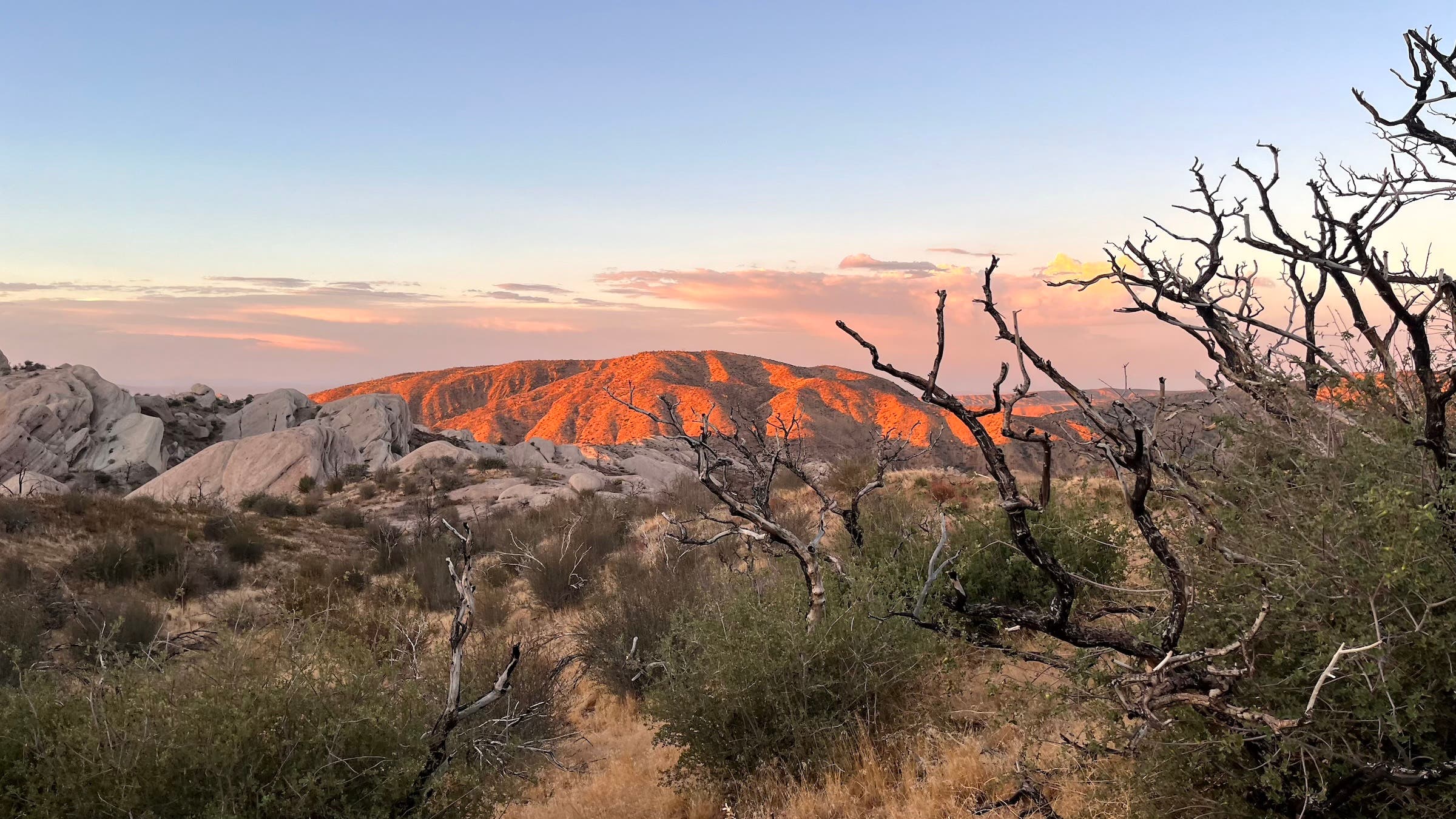
For now, the Devil’s Punchbowl remains a place of pilgrimage for both hikers and those seeking answers. The stark landscape where the mountains meet the Mojave continues to hold its secrets, a silent witness to the morning a decorated deputy ran into the wilderness and never returned. Anyone with information regarding the disappearance of John Aujay is encouraged to contact the Los Angeles County Sheriff’s Department or the FBI Los Angeles Field Office.


 Chandra Hamzah
 Budi Mulyono

 Tatiana Tantri Indah Sari