
 Budi Mulyono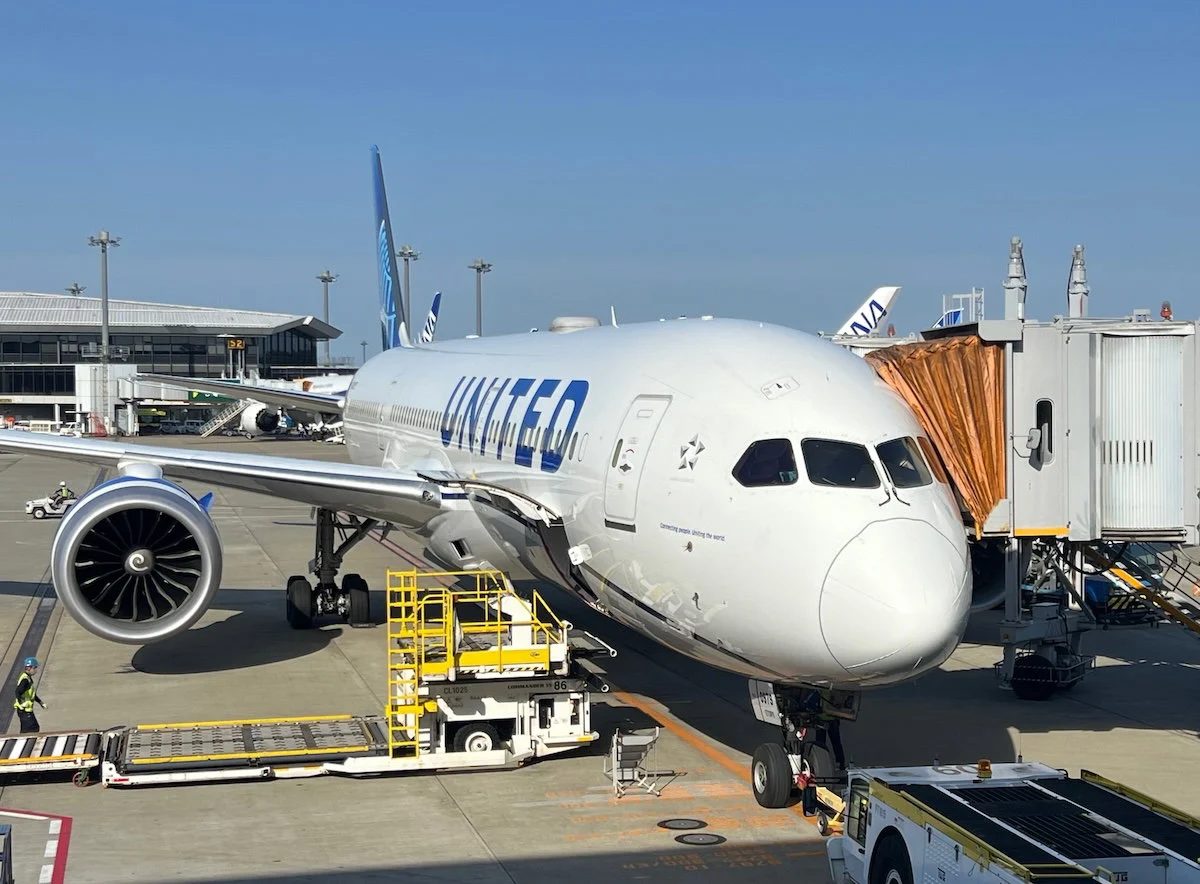
United Airlines has officially commenced the sale of tickets for its newly configured Boeing 787-9 Dreamliner aircraft, marking the inaugural phase of the carrier’s highly anticipated "United Elevate" project. This initiative represents a comprehensive overhaul of the airline’s long-haul passenger experience, introducing a cabin layout that prioritizes premium seating to a degree rarely seen among major U.S. domestic carriers. By reducing total seat density and significantly expanding its business class capacity, United is positioning itself to capture a larger share of the high-yield corporate and premium leisure markets on its most prestigious international routes.
The first international flights featuring these enhanced cabins are scheduled to depart in late April 2026, primarily serving the airline’s San Francisco (SFO) hub. This strategic deployment underscores the airline’s commitment to fleet modernization and product differentiation in an increasingly competitive global aviation landscape.
A Strategic Pivot Toward Ultra-Premium Capacity
The center of the United Elevate program is a radical reconfiguration of the Boeing 787-9, an aircraft traditionally used for a balanced mix of business and economy passengers. United’s existing 787-9 fleet typically accommodates 257 passengers, divided into 48 Polaris business class seats, 21 Premium Plus (premium economy) seats, and 188 standard economy seats.
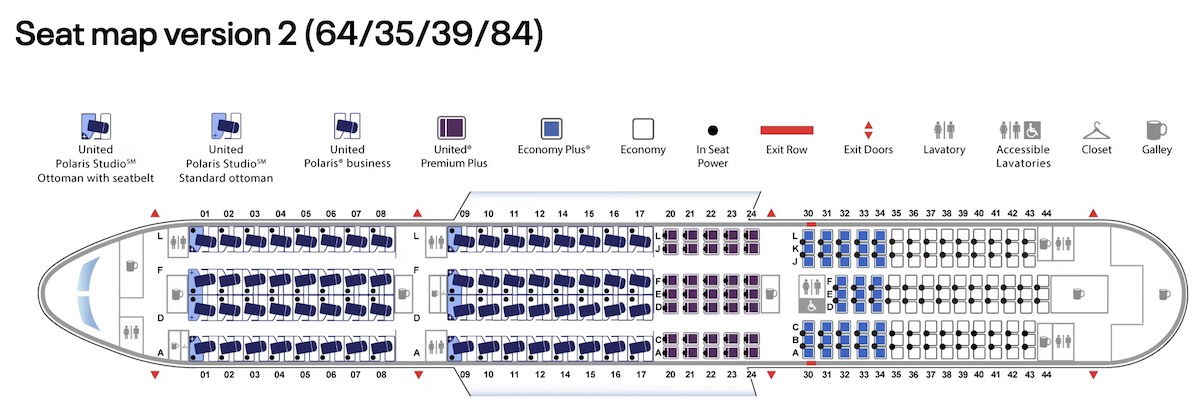
The new "ultra-premium" configuration reduces the total seat count to just 222. This 14% reduction in overall capacity allows for a dramatic increase in high-margin seating. The new layout features 64 Polaris business class seats—a 33% increase—and 35 Premium Plus seats, a 66% increase. Conversely, the standard economy cabin has been significantly scaled back, losing 65 seats to accommodate the expansion of the forward cabins.
This shift mirrors the success of United’s "High-J" Boeing 767-300ER fleet, which has been deployed with great success on routes like New York-Newark to London Heathrow. By applying this logic to the larger, more fuel-efficient 787-9, United is signaling that it views premium demand not just as a niche, but as the primary driver of its long-haul profitability.
The United Elevate Cabin: Technical Specifications and Amenities
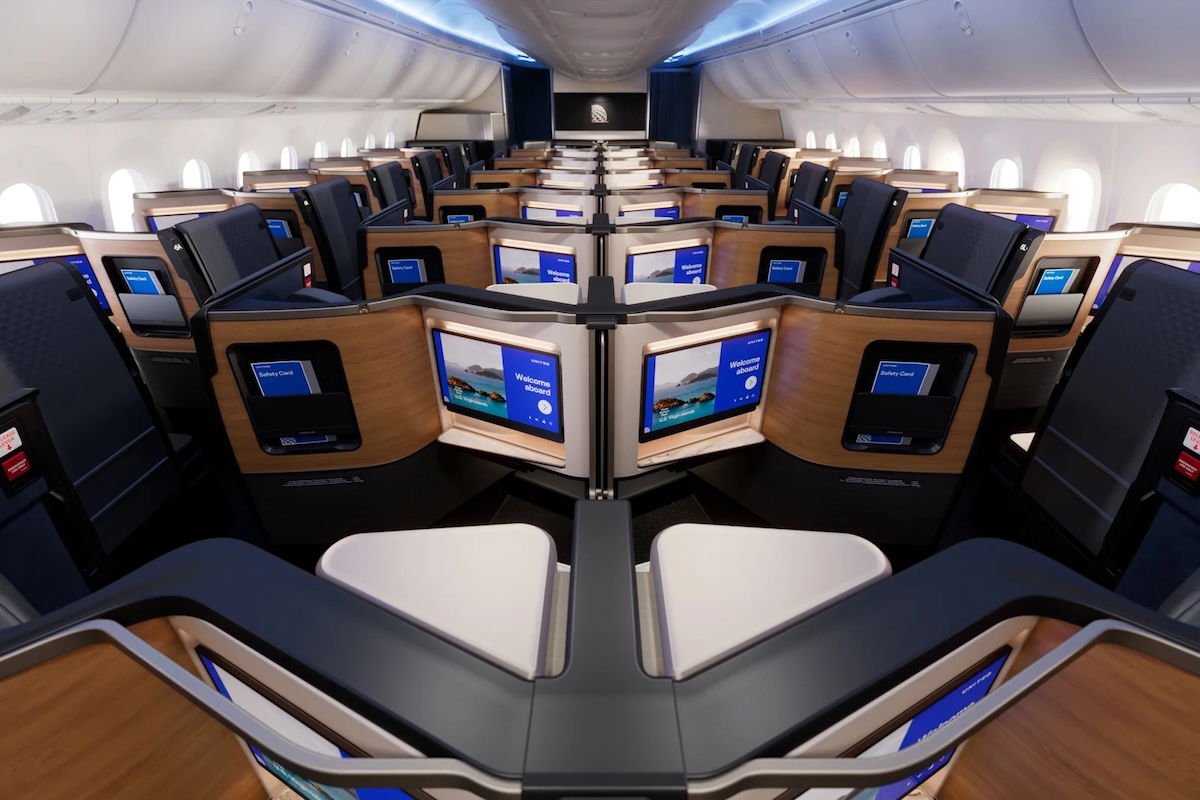
The United Elevate project is more than a change in seat count; it introduces entirely new hardware across all classes of service. The most significant evolution occurs in the Polaris business class cabin, which now features the "Adient Ascent" seat product.
The Polaris Studio Experience
At the forefront of the new cabin is the "Polaris Studio." Occupying the first row of each business class section, these seats offer significantly more personal space and a suite of enhanced "soft product" amenities. Passengers in the Polaris Studio will receive a curated dining experience that includes a caviar amuse-bouche and upgraded champagne selections. The physical space includes larger side consoles and additional storage, catering to ultra-high-net-worth travelers and corporate executives who require a mobile office environment.
Enhanced Polaris Suites
Beyond the Studio, the standard Polaris seats have been upgraded to include sliding privacy doors, a feature that has become the industry standard for top-tier international business class. The technical specifications of these suites include:
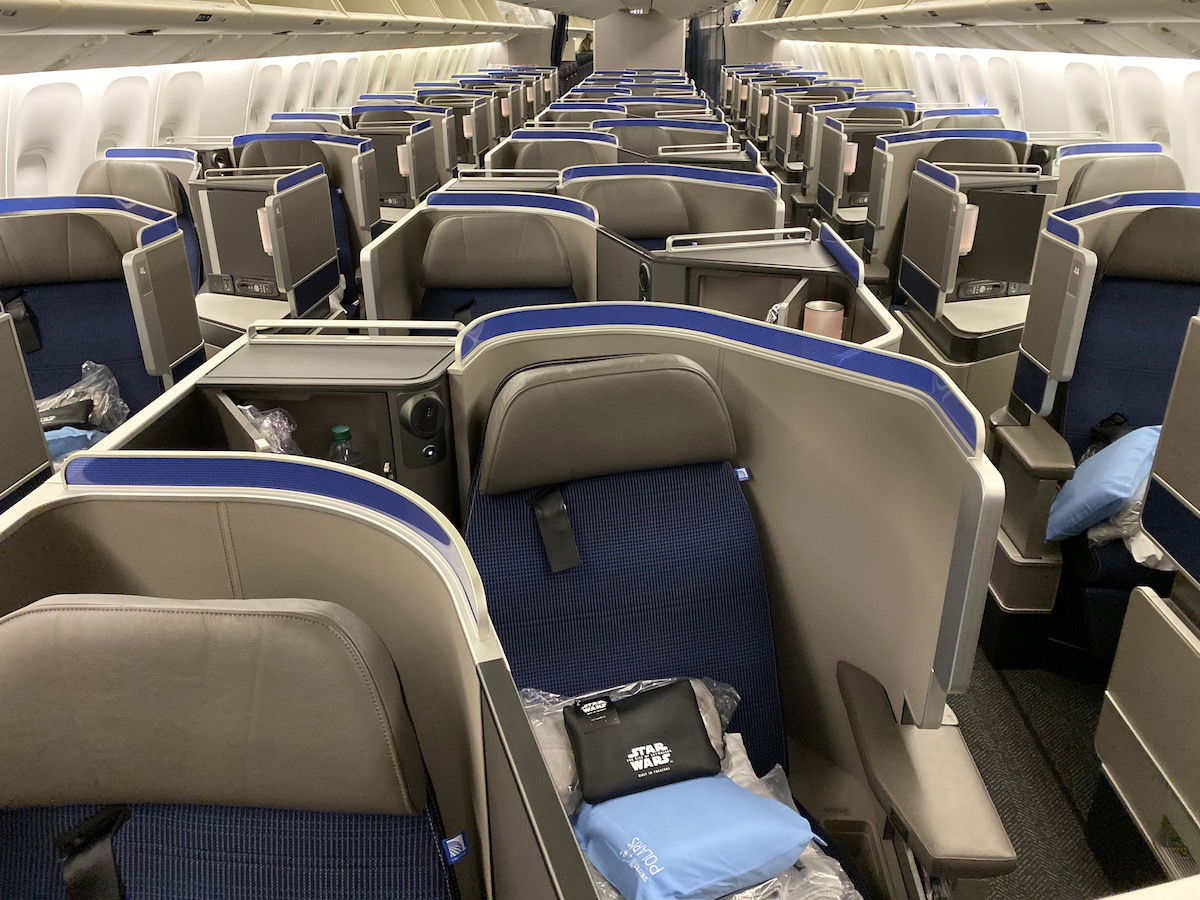
- High-Definition Displays: 4K entertainment screens with significantly improved contrast and color accuracy.
- Wireless Connectivity: Integrated Bluetooth audio, allowing passengers to use their own noise-canceling headphones.
- Power Solutions: Multiple charging options, including high-output USB-C ports and wireless charging pads.
- Unique Configuration: The cabin layout utilizes a mix of reverse-herringbone (inward-facing) and herringbone (outward-facing) seats in the center section, a design choice necessitated by the Ascent seat architecture to maximize space efficiency.
Premium Plus and Economy Upgrades
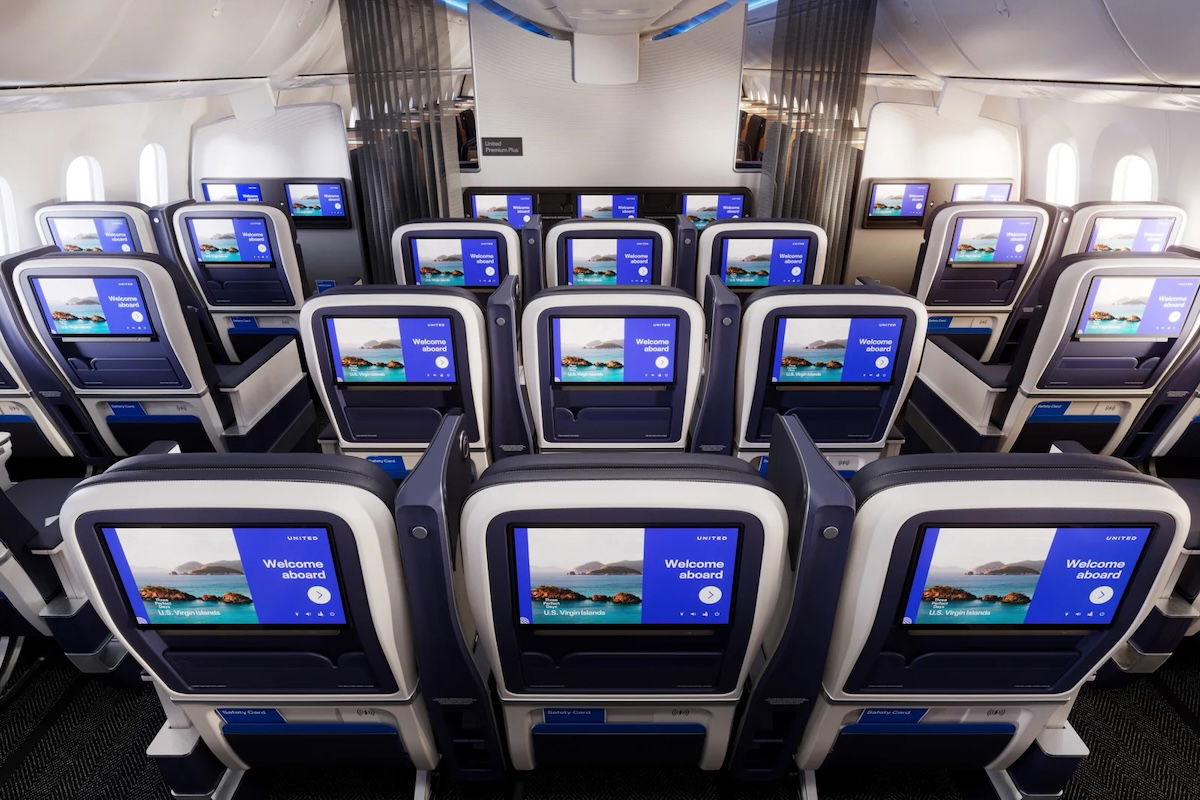
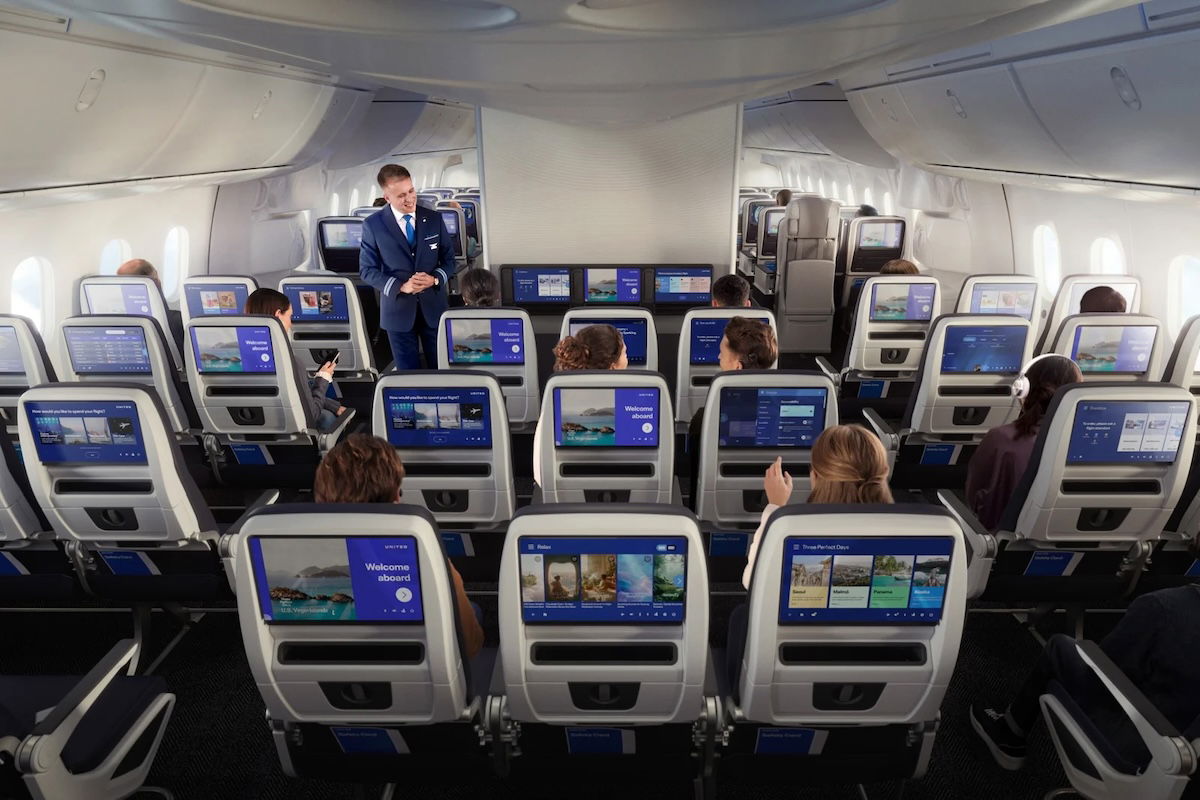
The Premium Plus cabin, United’s dedicated premium economy product, also receives a substantial update. New seats feature enlarged privacy wings at head-rest level and upgraded 4K monitors. Even in the economy cabin, United is focusing on technology to improve the passenger experience, installing larger seatback screens with Bluetooth capabilities and improved ergonomics.
Connectivity and the Integration of Starlink
A cornerstone of the United Elevate experience is the promise of high-speed, low-latency internet connectivity. United recently announced a landmark partnership with SpaceX to provide Starlink Wi-Fi across its entire fleet. The new 787-9s are intended to be among the first wide-body aircraft to offer this service for free to all passengers.
However, the timeline for Starlink integration remains subject to regulatory hurdles. While the hardware is being prepared, Federal Aviation Administration (FAA) certification for Starlink on the Boeing 787 platform is still in progress. United officials have indicated that while the aircraft may enter service with existing satellite systems, they will be retrofitted with Starlink as soon as certification is finalized. Once active, the service will support high-bandwidth activities such as live streaming, online gaming, and VPN-heavy corporate work, a significant leap over current-generation in-flight Wi-Fi.

Fleet Expansion and Delivery Chronology
United’s investment in the 787-9 is part of a broader fleet renewal strategy that includes over 140 Boeing 787 aircraft on order. The airline anticipates taking delivery of 30 newly configured 787-9s by the end of 2027, with 20 of those units expected to join the fleet before the close of 2026.
This delivery schedule is ambitious, particularly given the well-documented production delays at Boeing. United’s leadership has noted that the 20 wide-body deliveries planned for 2026 would represent the largest single-year wide-body intake for any U.S. carrier in nearly four decades. This aggressive expansion is designed to facilitate the retirement of older, less efficient aircraft, such as the Boeing 767 and 777-200ER, while simultaneously increasing the airline’s footprint in high-growth markets.
The first aircraft in this new configuration, registered as N21102, is currently undergoing final preparations. It is expected to perform several domestic "proving runs" to familiarize crew and ground staff with the new systems before transitioning to long-haul international service.
Inaugural Routes: San Francisco as the Global Gateway
United has selected two of its most critical long-haul routes for the debut of the new 787-9:
- San Francisco (SFO) to Singapore (SIN): As one of the longest flights in the United network, the Singapore route is a prime candidate for an ultra-premium configuration. The 17-hour flight demands high levels of comfort, and the route is heavily trafficked by tech industry executives and premium leisure travelers.
- San Francisco (SFO) to London Heathrow (LHR): London remains the world’s premier corporate travel destination. By deploying the 64-seat Polaris cabin on this route, United is directly challenging the premium offerings of British Airways and Virgin Atlantic.
These routes were selected based on historical data showing high demand for business class seating and a willingness among passengers to pay a premium for enhanced privacy and technology.
Industry Implications and Market Analysis
The introduction of the 222-seat 787-9 reflects a broader trend in the aviation industry known as "premiumization." Following the COVID-19 pandemic, airlines noticed that premium leisure travel—individuals willing to pay for business class for personal trips—remained resilient even as traditional corporate travel fluctuated.
By increasing the ratio of premium to economy seats, United is optimizing its aircraft for "yield" (revenue per passenger) rather than "load factor" (percentage of seats filled). While an aircraft with 257 seats might generate more total revenue if completely full, an aircraft with 222 seats can often generate higher profit margins because business class tickets are frequently priced at five to ten times the cost of an economy seat.
Furthermore, this move puts pressure on United’s domestic rivals. Delta Air Lines has been aggressive in marketing its "Delta One Suites," and American Airlines is currently in the process of rolling out its "Flagship Suite" on new Boeing 787-9 deliveries. United’s Elevate product, particularly the Polaris Studio, is a direct attempt to leapfrog these competitors by offering a "first class-plus" experience within the business class cabin.
Economic and Operational Considerations
Operating a low-density aircraft comes with specific economic risks. With 65 fewer economy seats, the "break-even" point for the aircraft relies more heavily on the sale of Polaris and Premium Plus tickets. If corporate travel markets soften or global economic conditions deteriorate, United may find it more difficult to fill a 64-seat business cabin compared to a standard 48-seat layout.
However, the 787-9’s operational efficiency provides a hedge against these risks. The Dreamliner’s composite structure and advanced engines offer significantly lower fuel burn and maintenance costs compared to the older aircraft it replaces. By combining these operational savings with a high-margin cabin, United is betting that the 787-9 Elevate will be the most profitable aircraft in its fleet on a per-flight basis.
As the late April 2026 launch date approaches, the aviation industry will be watching closely to see if United’s "Elevate" strategy successfully redefines the standard for American long-haul flying. With 30 of these aircraft expected in the coming years, United is not just testing a new product; it is fundamentally altering its identity as a global premium carrier.



 Cholid Fahmi Thalib
 Hendra Ismail
 Anjar Salim
 Chandra Hamzah
 Lukman Taruna Persada Ramadan