
 Gabriela Annisa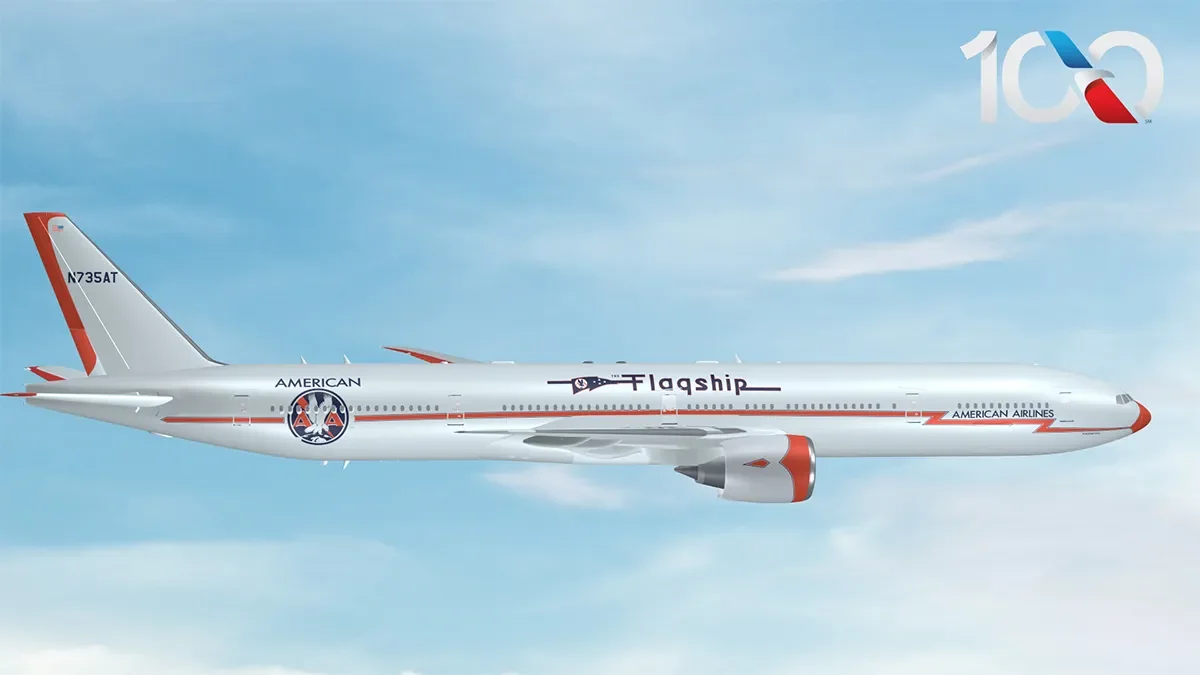
The airline industry, a bellwether for global economic health and consumer confidence, is currently showcasing a stark divergence in financial performance, with Delta Air Lines and United Airlines solidifying their positions as profit leaders. This robust financial health contrasts sharply with the challenges faced by American Airlines, which lags behind its legacy counterparts, and Frontier Airlines, an ultra-low-cost carrier (ULCC) grappling with significant operational and market pressures in its bid for a turnaround. This complex landscape, characterized by varying strategic responses to post-pandemic demand, evolving macroeconomic factors, and fierce competition, has become a focal point for industry analysts, including Jay Shabat and Meghna Maharishi, who regularly dissect airline earnings, leadership pressures, and recovery strategies on their platform.
The Landscape of Post-Pandemic Recovery and Divergent Fortunes
The global aviation sector has largely moved beyond the immediate crisis of the COVID-19 pandemic, with passenger demand recovering strongly, particularly in international and premium segments. However, the recovery has not been uniform. Airlines that effectively managed their balance sheets during the downturn, invested strategically in their networks, and adapted quickly to changing consumer preferences have emerged stronger. Conversely, those burdened by legacy issues, operational inefficiencies, or an inability to pivot rapidly have found themselves at a disadvantage.
Delta Air Lines, often lauded for its operational reliability and premium-focused strategy, has consistently posted impressive earnings. For instance, in its most recent quarterly report, Delta announced a net profit exceeding $1.2 billion, representing a significant year-over-year increase of approximately 18%. This performance was primarily driven by strong demand for international travel, robust premium cabin sales, and the continued success of its loyalty program, SkyMiles, which contributes substantially to its non-ticket revenue. Delta’s capacity discipline, coupled with its strategic focus on higher-yielding routes and a superior customer experience, has allowed it to command premium pricing and maintain high load factors, often averaging above 87%.
Similarly, United Airlines has leveraged its extensive global network and hub strategy to capitalize on the resurgence of international and business travel. United reported a net income of around $1.1 billion in the same period, marking a substantial 15% increase from the previous year. The airline’s strategic investments in fleet modernization, enhanced in-flight services, and a concerted effort to improve operational efficiency have paid dividends. United’s emphasis on its trans-Pacific and trans-Atlantic routes, which command higher fares, has been a critical factor in its profitability. Both Delta and United have also benefited from relatively stable fuel prices compared to earlier spikes and successful labor negotiations that, while increasing costs, have provided a degree of certainty.
American Airlines: Navigating Turbulence and Leadership Pressure
In stark contrast, American Airlines, despite its considerable size and network, has struggled to match the profitability of its closest competitors. While American has reported positive earnings, its net income, approximately $650 million in the most recent quarter, lagged significantly behind Delta and United. This represents a modest 5% increase year-over-year, despite an increase in capacity. Several factors contribute to American’s relative underperformance.
Historically, American has carried a heavier debt load compared to its peers, a legacy of mergers and past financial restructuring, which incurs higher interest expenses. Operationally, American has faced persistent challenges with on-time performance and baggage handling, leading to lower customer satisfaction scores and increased operational costs due to irregular operations. For instance, its on-time performance often hovers around 75-80%, trailing Delta and United by several percentage points. These operational inconsistencies directly impact its ability to command premium fares and foster customer loyalty.
Furthermore, American’s network strategy, heavily reliant on domestic point-to-point routes and its expansive regional jet fleet, has proven less lucrative in the current market where international and premium demand are the primary profit drivers. While domestic leisure travel remains strong, the intense competition in this segment often leads to price compression, squeezing margins.
The pressure on American Airlines’ leadership, particularly CEO Robert Isom, is palpable. Investors and analysts are increasingly scrutinizing the airline’s ability to close the profitability gap with its rivals. There are calls for more aggressive cost-cutting measures, a renewed focus on operational excellence, and potentially a recalibration of its network strategy to better align with high-yield segments. Sources close to the company indicate that internal discussions are focused on leveraging American’s vast loyalty program, AAdvantage, more effectively and exploring avenues for greater ancillary revenue generation to boost the bottom line. However, fundamental operational improvements are seen as critical to long-term sustainable profitability.
Frontier Airlines: The Uphill Battle for a Turnaround
The challenges faced by ultra-low-cost carriers (ULCCs) like Frontier Airlines highlight a different facet of the industry’s complex recovery. While the initial post-pandemic surge saw ULCCs thrive on pent-up leisure demand, the segment has since faced intense price competition, rising fuel costs, and labor shortages impacting operational reliability. Frontier Airlines has been particularly hit, reporting a net loss of approximately $45 million in its most recent quarter, a significant decline from its performance a year prior. Its load factors have dipped to around 78%, down from an industry average closer to 85%, indicating an inability to fill seats efficiently.
Frontier’s struggles stem from several interconnected issues. Its growth strategy, which involved rapid capacity expansion, has sometimes outpaced demand in certain markets, leading to fare wars that erode profitability. Furthermore, as a ULCC, Frontier’s business model is highly sensitive to fuel price fluctuations and operational disruptions. Even minor delays can cascade into significant costs and negative customer experiences, which are amplified in a model where ancillary fees are crucial. Customer complaints regarding flight delays, cancellations, and perceived lack of service have been a recurring theme, impacting its brand reputation.
In response to these challenges, Frontier Airlines’ leadership, including CEO Barry Biffle, has outlined a comprehensive turnaround strategy. This strategy focuses on several key pillars:
- Network Optimization: A more disciplined approach to route planning, prioritizing profitable routes and reducing exposure to highly competitive or underperforming markets. This involves consolidating capacity and potentially withdrawing from less strategic airports.
- Operational Reliability: Significant investments in crew scheduling, maintenance, and ground operations to improve on-time performance and reduce irregular operations. This includes enhancing staffing levels and leveraging technology to predict and mitigate disruptions.
- Value Proposition Refinement: While maintaining its low-fare core, Frontier aims to recalibrate its ancillary offerings to enhance customer satisfaction without compromising its cost structure. This might involve clearer communication of fees, improved digital interfaces, and a focus on essential service elements.
- Capacity Management: A more conservative approach to capacity growth, aligning it closely with demand trends and profitability targets rather than aggressive market share pursuits.
The success of Frontier’s turnaround hinges on its ability to execute these strategic shifts effectively while navigating a competitive landscape dominated by larger, more resilient carriers and other ULCCs.
Broader Industry Context and Macroeconomic Headwinds
The varying fortunes of these airlines are not merely isolated incidents but are deeply intertwined with broader industry trends and macroeconomic factors.
- Fuel Prices: While more stable than earlier peaks, crude oil prices remain a significant operational cost, particularly for airlines with older fleets or less efficient hedging strategies.
- Labor Costs and Shortages: The demand for pilots, flight attendants, and ground staff has driven up labor costs across the industry. Airlines have had to offer more competitive wages and benefits, impacting profitability. While necessary for operational stability, these costs are a persistent pressure point.
- Air Traffic Control (ATC) Constraints: Issues with ATC staffing and infrastructure, particularly in regions like the Northeast U.S. and Europe, have led to increased delays and cancellations, impacting operational efficiency and customer experience for all carriers.
- Evolving Consumer Behavior: While leisure demand remains robust, business travel, though recovering, has not fully returned to pre-pandemic levels, leading some airlines to pivot towards a "blended" model that caters to both segments. Premium leisure, however, has seen a significant boom, benefiting carriers like Delta and United.
- Inflationary Pressures: Broader inflation affects not only labor and fuel but also maintenance, catering, and other operational inputs, putting upward pressure on fares and downward pressure on margins.
The Skift Travel 200 (ST200) and Sector Performance
The Skift Travel 200 (ST200) provides a comprehensive benchmark for understanding the performance of the global travel industry, aggregating the financial performance of nearly 200 publicly traded travel companies worth over a trillion dollars. Within this index, the airlines sector’s performance is closely watched. The current scenario—where Delta and United are driving strong profitability while American lags and Frontier struggles—significantly influences the overall airlines sector index within the ST200.
When market leaders like Delta and United exhibit robust financial health, they tend to pull the sector index upwards, reflecting investor confidence in their business models and execution. Conversely, the underperformance of major players like American, or the deep losses incurred by carriers like Frontier, can temper overall sector growth or even drag the index down. The ST200’s "Airlines Sector Stock Index Performance Year-to-Date" would therefore reflect this disparity, showing a strong upward trend driven by the outperformers, somewhat mitigated by the challenges faced by others. This dynamic underscores the importance of individual airline strategies and their collective impact on the broader travel investment landscape. Investors looking at the ST200 are able to discern which segments of the travel industry are thriving and which are facing headwinds, providing crucial insights into market trends and investment opportunities.
Analyst Perspectives and Future Outlook
Industry analysts largely concur on the underlying reasons for the current divergence. Many point to Delta and United’s proactive management of capacity, their strong emphasis on premium offerings, and superior operational execution as key differentiators. These airlines have successfully capitalized on the strong international and business travel rebound, segments that command higher margins.
For American Airlines, analysts suggest that while the airline has made strides in reducing its debt and improving its balance sheet, it needs to accelerate its operational improvements and perhaps re-evaluate its competitive positioning in certain markets. The pressure on leadership will continue to mount until a clear and sustained path to profitability comparable to its peers is demonstrated. Strategic acquisitions of smaller carriers or deeper alliances might be considered, though internal optimization remains the immediate priority.
Frontier Airlines’ turnaround strategy is viewed with cautious optimism. Analysts emphasize that the ULCC model, while inherently cost-efficient, requires impeccable operational execution and a clear value proposition to succeed in a crowded market. The success of its network optimization and capacity discipline will be critical, as will its ability to improve customer perception without alienating its core price-sensitive demographic. The competitive pressure from other ULCCs and even legacy carriers offering basic economy fares will remain intense.
Looking ahead, the airline industry is expected to continue navigating a complex environment. Geopolitical uncertainties, potential economic slowdowns, and ongoing labor negotiations could introduce new challenges. However, the underlying demand for air travel remains strong, suggesting that airlines with sound strategies, efficient operations, and strong customer loyalty programs are best positioned for sustained success. The current period of divergence will likely continue to shape the competitive landscape, potentially leading to further consolidation or strategic realignments as airlines adapt to the evolving demands of the global travel market. The stories of Delta, United, American, and Frontier offer a microcosm of these broader industry dynamics, illustrating the varied paths to recovery and profitability in the post-pandemic era.




 Anjar Salim
 Chandra Hamzah
 Tatiana Tantri Indah Sari
 Budi Mulyono

