
 Walid Sujud Trenggono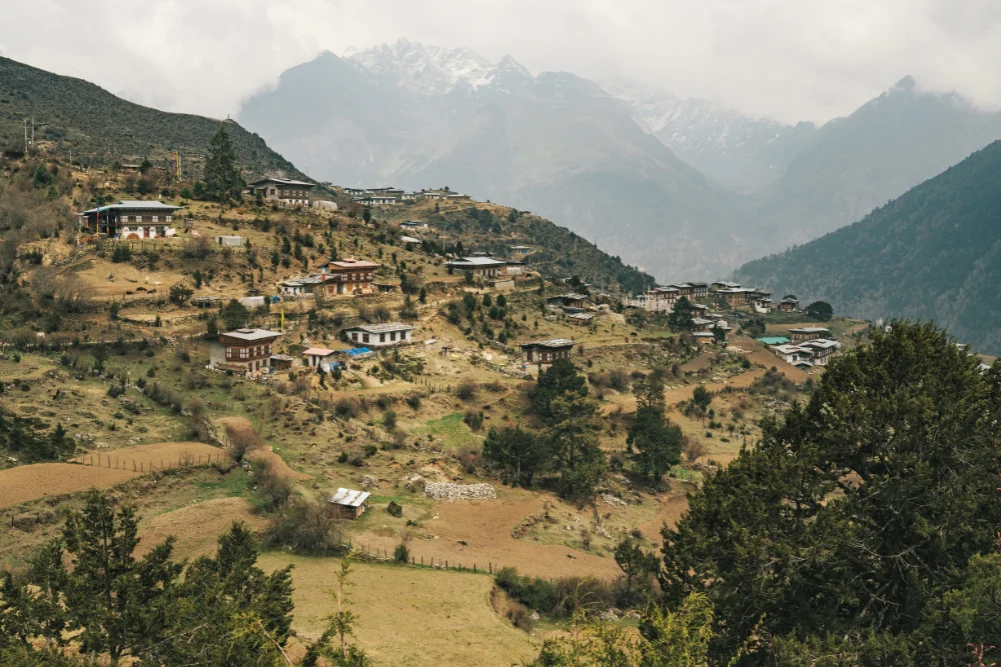
The Kingdom of Bhutan, a landlocked Himalayan nation situated between the geopolitical giants of China and India, has long maintained a reputation as one of the world’s most reclusive and culturally preserved societies. In recent years, as global rates of professional burnout and digital fatigue have reached unprecedented levels, Bhutan has emerged not merely as a travel destination, but as a primary case study for "wellbeing tourism." This shift comes as international visitors increasingly seek out the country’s unique socio-economic framework, which prioritizes Gross National Happiness (GNH) over Gross Domestic Product (GDP). For many modern professionals—characterized by the "stretched thin" lifestyle of managing businesses, parenting, and elder care—the kingdom offers a radical alternative to Western models of success and productivity.
The Socio-Economic Framework of Gross National Happiness
Bhutan’s global identity is inextricably linked to the concept of Gross National Happiness, a philosophy first articulated by the Fourth King, Jigme Singye Wangchuck, in 1972. Unlike nations that measure progress through fiscal growth and industrial output, Bhutan operates under a constitutional mandate to ensure that every government policy is vetted through a "GNH lens." This lens evaluates four primary pillars: sustainable and equitable socio-economic development, environmental conservation, preservation and promotion of culture, and good governance.
According to the 2022 GNH Index, which utilizes a complex survey of 33 indicators across nine domains—including psychological wellbeing, time use, and community vitality—nearly half of the Bhutanese population (48.1%) is classified as "extensively or deeply happy." This data stands in stark contrast to the rising mental health crises in many industrialized nations. For the international visitor, this philosophy manifests in tangible ways: the absence of global fast-food chains like McDonald’s, a total ban on billboards, and the world’s first carbon-neutral status. Bhutan’s constitution mandates that at least 60% of the country remains under forest cover for all time, a figure that currently sits at approximately 71%.
Logistics and the "High Value, Low Volume" Tourism Model
Accessing the kingdom remains a logistical challenge, by design. The government’s "High Value, Low Volume" tourism policy is intended to minimize the environmental and cultural impact of foreign visitors. Central to this policy is the Sustainable Development Fee (SDF), a daily levy paid by tourists that funds free healthcare, free education, and infrastructure development for Bhutanese citizens.
Travelers typically arrive via Paro International Airport, widely considered one of the most technically demanding runways in the world. Surrounded by 18,000-foot Himalayan peaks, the airport allows only a small number of certified pilots to navigate the visual flight approach. This dramatic entry serves as a physical and psychological threshold, signaling a departure from the high-speed, hyper-connected world. Until 1974, foreign tourists were not permitted in the country, and it was not until 1999 that Bhutan lifted its ban on television and the internet, making it one of the last nations on Earth to introduce these technologies.
Monastic Immersion and the Psychology of Silence
A critical component of the Bhutanese experience for those seeking mental recalibration is the integration of monastic life into the travel itinerary. The Dodedrak Monastery, a 12th-century institution, serves as a primary example of the kingdom’s spiritual infrastructure. Reaching such sites often requires significant physical exertion, reflecting the Bhutanese belief that spiritual rewards are earned through effort.
In monastic settings, visitors are exposed to the daily rituals of the "burgundy-adorned" monkhood. These rituals include the lighting of butter lamps—symbolizing the illumination of wisdom—and the rhythmic chanting of ancient scriptures. For the Western professional accustomed to the "digital zombie state" of constant notification cycles, the sensory shift to incense and synchronized chanting provides a physiological reset. Observers note that the lack of traffic lights—even in the capital of Thimphu—and the national speed limit of 20km/h in urban areas further enforce a "slower, kinder pace" that directly counters the "bullet-train tempo" of Western metropolitan life.
The Remote Village of Laya: A Case Study in Communal Resilience
To understand the depth of Bhutanese social cohesion, one must look toward its most remote settlements, such as the village of Laya. Situated at an altitude of 3,800 meters, Laya is inhabited by the Layap people, an indigenous community with distinct Tibetan roots. The village remains inaccessible by motor vehicle; all supplies and visitors must arrive via multi-day hikes or by yak and pony trails.
The social fabric of Laya is built on a "matriarchal" and communal foundation. As noted by local guides such as Pema Wangchuk, the village operates on a system of reciprocal kindness. When a family constructs a home, the entire community assists, operating under the assumption that the labor will be returned in kind. This collective care is a hallmark of Bhutanese society, where the question "How can I help my community?" is ingrained in the educational system from early childhood.
The biennial Bumkor Festival in Laya offers a rare glimpse into the preservation of ancient traditions. During the festival, sacred texts are carried in procession through the village, accompanied by traditional dances and songs. For outsiders, the festival highlights a profound sense of "belonging" that is often absent in fragmented Western societies. The diet in these regions—consisting of butter-sautéed mushrooms, chilies, and red rice—reflects a philosophy of "enoughness." The local sentiment, as expressed by village elders, suggests that contentment is derived not from the accumulation of variety, but from the appreciation of basic sustenance.
Healthcare and Traditional Wellness Practices
Wellbeing in Bhutan is not a commercialized "lifestyle brand" but a state-sponsored right. The kingdom provides free universal healthcare to its citizens, blending modern Western medicine with traditional Himalayan healing practices (Sowa Rigpa).
The Gasa hot springs, or "Menchu," serve as a vital intersection of these two worlds. Unlike luxury spas found in the West, these springs are communal, sacred sites where locals and visitors soak together in mineral-rich waters. Legend attributes the healing properties of these pools to a 13th-century saint, and today, they are used to treat various ailments, from joint pain to respiratory issues. This communal approach to wellness reinforces the idea that health is a collective rather than an individual pursuit.
Furthermore, the Bhutanese approach to mortality is a significant factor in the nation’s psychological resilience. Citizens are encouraged to reflect on death five times a day. In Western psychology, this might be viewed as morbid; however, in Bhutanese Buddhism, the practice is intended to foster an awareness of impermanence, which in turn reduces anxiety and encourages a more meaningful engagement with the present moment.
Analysis of Long-term Impact and Global Implications
The efficacy of the Bhutanese model on international visitors is increasingly documented through anecdotal and qualitative evidence. Many who return from the kingdom report a "necessary awakening" regarding their consumption habits and time management. The transition from a world of "endless scrolling" and "four types of milk" to one of singular focus and communal reliance often results in a permanent shift in perspective.
However, Bhutan faces its own modern challenges. As the nation becomes more integrated into the global economy, it must balance the preservation of its traditional values with the aspirations of a younger generation that is increasingly connected via social media. The 2022 GNH data indicates that while happiness levels remain high, there are disparities between urban and rural populations, and the country continues to grapple with the economic impacts of the COVID-19 pandemic, which necessitated a temporary closure of its borders.
Conclusion: The Path Toward "Enough"
The story of Bhutan is a reminder that the "chaos" of modern life is often a product of systemic choices rather than an inevitable reality. By prioritizing environmental health, cultural integrity, and communal bonds over unbridled economic expansion, Bhutan provides a blueprint for a more sustainable human experience.
For the "burnt-out" professional, Bhutan offers more than a vacation; it offers a confrontation with the concept of "enough." Whether through the silence of a monastery, the physical challenge of a Himalayan trek, or the communal warmth of a village festival, the kingdom asserts that wellbeing is found not in the pursuit of more, but in the presence of what is already there. As the world continues to grapple with a global mental health crisis, the "quiet defiance" of this small Himalayan kingdom may prove to be its most valuable export.



 Anjar Salim
 Chandra Hamzah
 Tatiana Tantri Indah Sari
 Budi Mulyono
 Lukman Taruna Persada Ramadan
