
 Anjar Salim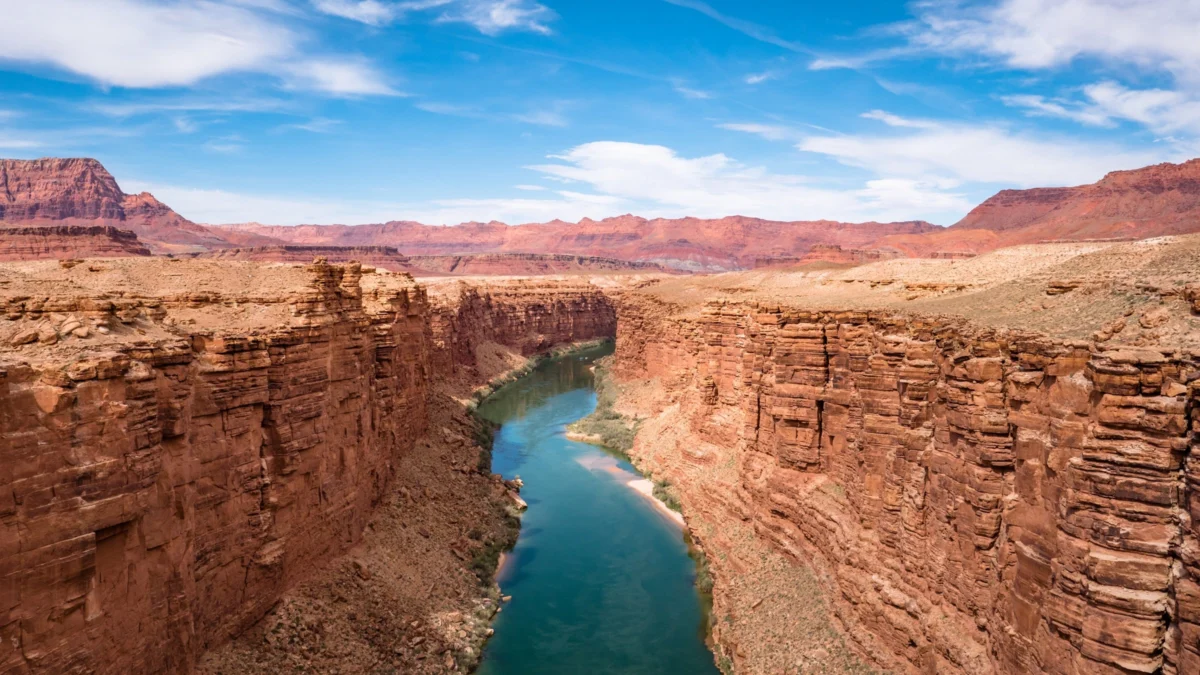
Recent empirical findings from environmental policy experts suggest that the burgeoning public anxiety regarding the water consumption of artificial intelligence (AI) may be misdirected, potentially obscuring more significant threats to the nation’s water security. An intensive 11-week study conducted by a PhD in engineering and public policy, who also serves as a filmmaker specializing in the Colorado River basin, has quantified the personal water footprint of heavy AI utilization. The results indicate that while AI does require significant resources, its impact is orders of magnitude smaller than traditional industrial and agricultural sectors, specifically those draining the Colorado River.
The study, concluded in early 2026, tracked 100 individual AI sessions involving complex tasks such as building a mobile application from the ground up, drafting 15,000-word manuscripts, and producing technical policy briefs on extreme heat. Despite using AI daily for hours at a time, the total lifecycle water footprint—including data center cooling, electricity generation, and hardware manufacturing—amounted to approximately five gallons. This figure stands in stark contrast to the water required for a single 383-mile trip in a diesel-powered vehicle, which consumed roughly 110 gallons of water in its fuel production lifecycle alone.
The Methodology of Measurement: Quantifying the Invisible Footprint
To achieve a comprehensive understanding of AI’s environmental impact, the researcher employed a lifecycle assessment (LCA) methodology. This approach does not merely look at the water used to cool a server rack but accounts for the "embedded" water in every stage of the process. This includes "Scope 2" water—the moisture evaporated at power plants to generate the electricity that runs the servers—and the water used in the mining and manufacturing of silicon chips and server hardware.
The calculations utilized publicly available data on per-token energy and water intensity from Epoch AI, alongside operator-reported Water Usage Effectiveness (WUE) metrics from industry leaders such as Microsoft and Google. For the transport comparison, the researcher used the Argonne National Laboratory’s Greenhouse Gases, Regulated Emissions, and Energy use in Technologies (GREET) model to determine the water intensity of diesel fuel production.
The finding that 11 weeks of intensive digital labor consumed less water than a few hours of highway driving highlights a significant disconnect in public perception. While a "viral" narrative has emerged suggesting that ChatGPT and similar Large Language Models (LLMs) are "guzzling" the West dry, the data suggests that digital consumption remains a fractional component of the broader hydrological crisis.
A Chronology of the Colorado River Crisis
The context of this study is rooted in the century-long mismanagement of the Colorado River, a vital artery for seven U.S. states and Mexico. Understanding why AI is a secondary concern requires looking back at the legal and environmental history of the basin:
- 1922: The Colorado River Compact: The river was divided among the "Upper" and "Lower" basin states based on flow measurements taken during one of the wettest periods in a millennium. This resulted in an overallocation of water that the river could not naturally sustain.
- 2000–Present: The Millennium Drought: The basin entered a prolonged period of aridification. Streamflow has dropped by approximately 20 percent since the turn of the century.
- 2021–2024: Record Lows: Lake Powell and Lake Mead, the nation’s largest reservoirs, reached historic lows, threatening hydropower generation and triggering the first-ever federal shortage declarations.
- 2025–2026: The Critical Renegotiation: As of early 2026, stakeholders are engaged in the most consequential water policy event in a century: the renegotiation of the 1922 Compact. These talks determine the future of water rights and conservation mandates for tens of millions of people.
Amidst this high-stakes chronology, the emergence of AI as a "water villain" has been viewed by some experts as a distraction. While data centers are concentrated in states like Arizona, their total national water withdrawal accounts for only about 0.3 percent of the U.S. total.
Supporting Data: Agriculture vs. Information Technology
The scale of the discrepancy between AI and other sectors is most evident when examining the specific usage patterns in the American West. In Arizona, a state that has become a hub for both data centers and industrial agriculture, the numbers are telling. Agriculture accounts for approximately 86 percent of the state’s total water use.
On a broader scale, the irrigation of alfalfa in California’s Imperial Valley alone consumes over 800 billion gallons of water annually. Alfalfa is a thirsty crop, often exported as cattle feed, yet it receives significantly less scrutiny in the modern digital discourse than the cooling systems of Northern Virginia or Phoenix data centers.
Furthermore, the "water intensity" of electricity is a factor rarely applied to other household utilities. Every time a consumer uses a refrigerator, an electric vehicle, or a subway system, they are consuming "Scope 2" water at the power plant. The study argues that AI is being uniquely penalized for a water footprint that is inherent to the entire electrical grid, not just the computing sector.
Efficiency Trends and Industry Responses
A critical question for policymakers is whether the exponential growth of AI will eventually lead to a water crisis, even if current levels are low. Projections from 2025 and 2026 suggest that efficiency gains are currently outpacing growth in many areas.
A 2025 Microsoft Research paper titled "AI Inference Energy Pathways" noted that advances in hardware architecture and software optimization have delivered between 8-fold and 20-fold reductions in energy per query. Hardware efficiency itself is improving at a rate of approximately 40 percent per year. Because electricity is one of the largest operational costs for AI firms, there is a massive financial incentive to reduce power—and by extension, water—consumption.
The International Energy Agency’s (IEA) 2025 report on Energy and AI projects that data centers will account for roughly 3 percent of global electricity demand by 2030. While this represents a significant increase, it remains a manageable portion of the global energy portfolio, provided that the transition to carbon-free and water-efficient cooling continues.
Tech companies have responded to these concerns by pledging "water positive" goals. Google and Microsoft, for instance, have committed to replenishing more water than they consume by 2030. These initiatives include investing in leaky infrastructure repairs, wastewater treatment, and the restoration of local watersheds.
Broader Impact and Implications for Public Policy
The danger of focusing on AI’s water use, according to environmental policy experts, is the "opportunity cost" of public attention. While the public engages with viral content about the "hidden cost" of a ChatGPT search, the 2026 Compact renegotiations—which will decide the fate of the Colorado River for the next several decades—often occur with minimal public oversight.
The broader implications of this research suggest a need for "hydrological literacy." If the public is led to believe that shutting down data centers will save the Colorado River, they may overlook the systemic issues of agricultural overallocation and climate-driven aridification.
Analysis of the data leads to several key takeaways for future policy:
- Scale Matters: Policies must target the "80 percent" sectors (agriculture and industry) rather than the "0.3 percent" sectors (data centers) to achieve meaningful conservation.
- Grid Decarbonization is Water Conservation: Since the majority of AI’s water footprint is tied to electricity generation, transitioning the power grid to wind, solar, and dry-cooled nuclear power would effectively eliminate the bulk of the digital water footprint.
- Localized vs. Regional Impact: While AI is not a threat to the entire Colorado River system, a single data center can place a localized strain on a specific municipality’s water utility. Policy should focus on local zoning and "dry cooling" requirements rather than framing AI as a regional existential threat.
In conclusion, the environmental crisis facing the American West is real, but its primary drivers remain rooted in 20th-century policy and 19th-century agricultural practices. As the 2026 renegotiations of the Colorado River Compact proceed, the data suggests that the river’s survival depends not on curbing the digital revolution, but on reforming the legacy systems that have over-drafted its waters for over a hundred years. The five gallons used for 11 weeks of AI work is a drop in the bucket compared to the billions of gallons diverted daily for alfalfa—a reality that must be central to any honest conversation about the future of the West.


 Chandra Hamzah
 Tatiana Tantri Indah Sari

 Budi Mulyono