
 Anjar Salim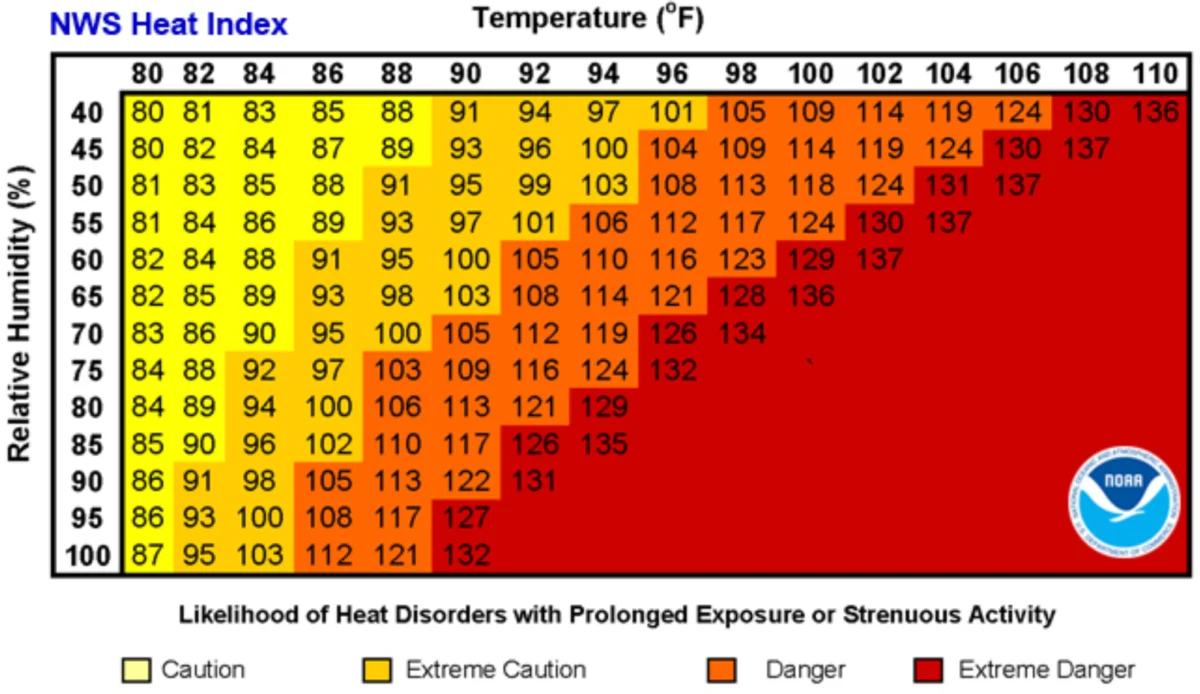
The National Integrated Heat Health Information System (NIHHIS) and the National Weather Service (NWS) have issued a series of urgent health advisories as a massive heat dome settles over a significant portion of the United States. Entering the first week of July 2026, meteorologists and medical professionals are warning that the combination of triple-digit ambient temperatures and oppressive humidity levels is creating life-threatening conditions for millions of Americans. Unlike typical summer heat, this current event is characterized by a "stagnant air mass" that prevents overnight cooling, a factor that health experts identify as a primary driver of heat-related mortality. As the Fourth of July holiday weekend approaches, federal agencies are urging the public to prioritize the "heat index"—the "feels like" temperature—over the standard thermometer reading, as the former more accurately predicts the physiological strain on the human body.
Regional Scope and Meteorological Context
The current heat wave is not localized to a single corridor but is instead affecting a broad swath of the continental United States, spanning from the Desert Southwest through the Gulf Coast and up into the Mid-Atlantic. According to the NIHHIS interactive heat map, the states bearing the brunt of the extreme conditions include Arizona, Texas, Florida, Tennessee, Virginia, Mississippi, and southeastern Colorado. While these regions are accustomed to summer heat, the current meteorological setup is particularly hazardous.
Meteorologists report that ambient temperatures in these regions are consistently reaching the high 90s and low 100s. However, the true danger lies in the "moisture stack." High dew points are trapping moisture near the surface, preventing the air from cooling. In parts of the Southeast and the Gulf Coast, the combination of 98-degree temperatures and 70 percent humidity is pushing the heat index well above 110 degrees Fahrenheit. This phenomenon, often referred to as a "heat dome," occurs when high-pressure atmospheric conditions trap hot air over a region for an extended period, leading to a cumulative effect on both infrastructure and human health.
The Science of the Heat Index and Human Thermoregulation
The heat index is a critical metric developed by the National Weather Service to estimate the human body’s perception of heat. It is a composite measurement of air temperature and relative humidity. The biological necessity for this measurement stems from the way the human body regulates its internal temperature. The primary mechanism for cooling is the evaporation of sweat from the skin. When the air is saturated with moisture—high humidity—the rate of evaporation slows significantly.
If sweat cannot evaporate, the body’s core temperature continues to rise, leading to a cascade of physiological failures. A 90-degree afternoon with 70 percent humidity results in a heat index of 105 degrees, placing individuals in the "Danger" category. Furthermore, these indices are calculated for shaded areas with light wind. Exposure to direct sunlight can add up to 15 degrees to the heat index, meaning a "dangerous" 105-degree day can effectively become a 120-degree environment for those on exposed trails, construction sites, or athletic fields.
Chronology of the 2026 Heat Event
The current heat wave began to coalesce in late June, following a period of unseasonably high pressure in the upper atmosphere. By June 28, 2026, the NWS had issued Heat Watches for the Southwest. By June 30, these were upgraded to Excessive Heat Warnings as the system moved eastward, pulling moisture from the Gulf of Mexico.
On July 1, the NIHHIS officially flagged the event as "Major to Extreme," noting that the duration of the heat wave is expected to last through at least July 7. The timing is particularly concerning for public safety officials due to the Fourth of July holiday, a period typically marked by outdoor gatherings, parades, and physical activity. Historical data from the Centers for Disease Control and Prevention (CDC) indicates that heat-related emergency room visits spike by nearly 30 percent during holiday weekends when extreme temperatures coincide with outdoor celebrations.
Physiological Thresholds and Medical Implications
Internal medicine physicians and emergency responders categorize heat-related illnesses into three primary stages: heat cramps, heat exhaustion, and heat stroke. The critical threshold for medical intervention is often a core body temperature of 104 degrees Fahrenheit. At this level, the body’s thermoregulatory system fails, and the individual enters "exertional heat stroke" territory.
Symptoms of this stage include altered mental status, confusion, slurred speech, and loss of consciousness. Medical experts emphasize that heat stroke is a true medical emergency that can lead to permanent organ damage or death if not treated immediately with aggressive cooling techniques. A compounding factor in the current heat wave is the lack of "nocturnal relief." When overnight lows remain in the high 70s or low 80s, the human body never fully recovers from the daytime heat strain. This lack of recovery leads to a cumulative physiological stress that increases the risk of cardiovascular events, particularly in elderly populations and those with pre-existing conditions.

Public Health Guidelines and Mitigation Strategies
In response to the building crisis, health authorities have released updated protocols for those who must be outdoors. These strategies focus on "active cooling" rather than passive hydration alone.
Targeted Cooling Zones
Clinical research indicates that certain areas of the body—specifically the hands, forearms, face, and neck—possess high blood flow and are highly efficient at shedding heat. Placing forearms in cold water or applying ice packs to the neck can drop the core body temperature more rapidly than general hydration.
The Role of Airflow and Moisture
While fans are a common tool for heat mitigation, they can be deceptive. When ambient temperatures exceed the mid-90s, a fan blowing dry air can actually accelerate dehydration and heat gain. Public health officials recommend pairing fans with water mists to simulate the evaporative cooling process that humidity currently prevents.
Acclimatization and Exertion
The human body requires approximately 7 to 10 days to acclimatize to a significant increase in temperature. During this period, the body learns to sweat more efficiently and maintain a lower heart rate. Because this heat wave arrived suddenly, most of the population is not yet acclimatized. Consequently, experts advise that when the heat index enters the "Orange" (Danger) or "Red" (Extreme Danger) zones, all high-intensity exercise and heavy labor should be moved indoors or postponed.
Hydration and Electrolyte Balance
While water intake is essential, "over-hydration" with plain water during periods of heavy sweating can lead to hyponatremia, a dangerous drop in blood sodium levels. For those active in the heat for more than 60 minutes, electrolyte-replacement drinks are necessary to maintain the sodium-potassium balance required for muscle and nerve function.
Infrastructure and Economic Impacts
The implications of the July 2026 heat wave extend beyond individual health. Energy grids across the South and East are facing record demand as air conditioning units run at maximum capacity. Grid operators in Texas and Florida have issued "voluntary conservation" notices to prevent rolling blackouts, which would be catastrophic during an extreme heat event.
The agricultural and construction sectors are also reporting significant slowdowns. Labor regulations in several states now mandate "cool-down rests" every hour when the heat index crosses 100 degrees, leading to delays in infrastructure projects and a reduction in agricultural yields. Economists estimate that extreme heat events of this magnitude can cost the U.S. economy billions in lost productivity and increased healthcare expenditures.
Broader Implications and Environmental Analysis
The 2026 heat wave is part of a documented trend of increasing frequency, intensity, and duration of heat events in North America. Climatologists point to the "urban heat island" effect as a factor that exacerbates these conditions in cities like Richmond, Nashville, and Dallas, where asphalt and concrete retain heat long after the sun sets.
This event serves as a critical test for the NIHHIS and the National Heat Strategy, a federal initiative aimed at coordinating the response between the NWS, CDC, and FEMA. The focus on the heat index represents a shift in public health communication, moving away from simple temperature reporting toward a more nuanced, "impact-based" warning system. As the heat wave continues to evolve, the ability of local governments to provide cooling centers and protect vulnerable populations—such as the unhoused and the elderly—will be the primary measure of the success of these federal and state interventions.
The NIHHIS continues to monitor the situation and provides real-time updates via its interactive portal. Citizens are encouraged to utilize weather applications that provide the "feels like" temperature and to heed all local heat advisories as the nation navigates one of the most significant thermal events of the decade.




 Chandra Hamzah
 Tatiana Tantri Indah Sari
 Budi Mulyono
 Lukman Taruna Persada Ramadan