
 Tatiana Tantri Indah Sari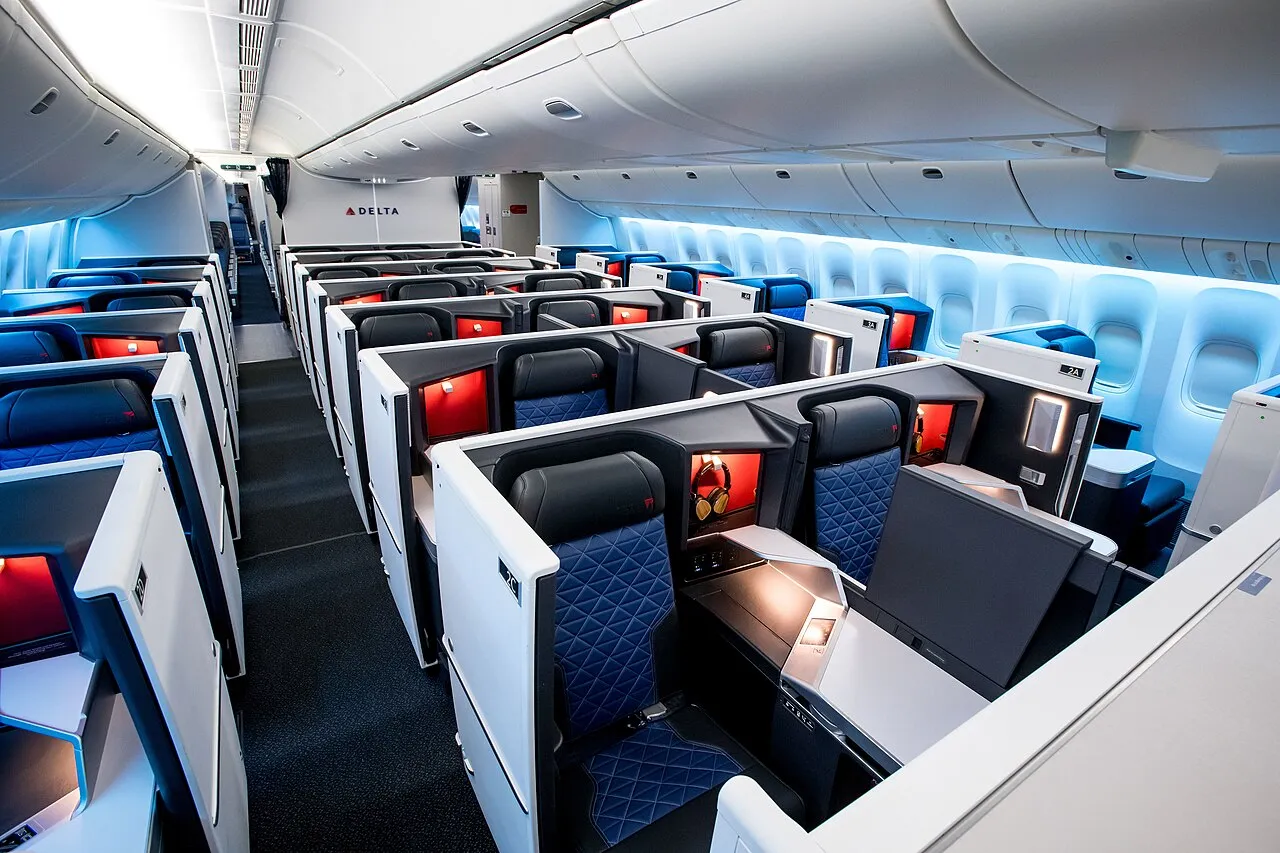
Delta Air Lines is embarking on a significant strategic shift in its premium offerings, introducing a new fare class dubbed "Basic Business." This move, announced on a recent Wednesday, marks a substantial unbundling of its flagship Delta One business class experience, specifically targeting customers who prioritize the comfort of a lie-flat seat and premium in-flight service but are willing to forgo certain ground-based amenities and flexibility in exchange for a lower price point. The airline’s decision reflects a broader industry trend towards hyper-segmentation and a refined approach to yield management in the highly competitive premium travel market.
The Core Offering: Stripped-Down Luxury in the Skies
The "Basic Business" fare is designed for the long-haul, international Delta One cabin, which traditionally represents the pinnacle of Delta’s service. Under this new structure, passengers purchasing a Basic Business ticket will retain the core elements of the Delta One in-flight experience. This includes access to the spacious 180-degree lie-flat seats, which are crucial for rest and productivity on extended journeys. Also included are the acclaimed chef-curated three-course meals, a hallmark of Delta One dining, along with premium beverage selections, enhanced in-flight entertainment options, and amenity kits. Passengers will also benefit from Zone 1 boarding, allowing them to settle into their seats early.
However, the "Basic Business" fare strategically omits a suite of benefits that are standard with a full Delta One ticket. While Delta has not yet released an exhaustive list, industry analysis suggests these exclusions will primarily revolve around ground services and booking flexibility. Foremost among these is likely the absence of complimentary access to Delta Sky Clubs, the airline’s network of premium airport lounges. Other potential exclusions could include SkyPriority expedited security and check-in lanes, priority baggage handling, and the ability to make free or low-cost changes and cancellations to itineraries. The underlying premise is to offer a premium hard product at a materially reduced cost, effectively allowing customers to "buy up" to a lie-flat experience without paying for the full suite of associated premium services that some travelers may not utilize or value as highly.
A Strategic Bet on Customer Segmentation
Delta’s introduction of Basic Business is not merely a pricing adjustment; it’s a calculated bet on the evolving preferences of a specific segment of affluent travelers. The airline aims to capture customers who are sensitive to the high cost of traditional Delta One fares but still desire the comfort of a lie-flat seat for long-duration flights. This group likely includes:
- Value-Conscious Business Travelers: Many corporations, even those with generous travel policies, are increasingly scrutinizing travel expenditures. A Basic Business fare could allow companies to provide employees with premium seating comfort on long-haul flights while adhering to tighter budgets by eliminating costly lounge access or highly flexible tickets that might not be necessary for pre-planned trips.
- Affluent Leisure Travelers: Discretionary leisure travelers, particularly those undertaking long international trips, often seek comfort but are also keen to maximize the value of their travel budget. Paying for a lie-flat seat directly, without the added cost of lounge access they might not use (especially if arriving close to departure or having lounge access through credit cards), presents an attractive proposition.
- Small Business Owners and Entrepreneurs: This demographic often self-funds their travel and balances the need for productivity and rest on long journeys with an awareness of costs. Basic Business could open up premium comfort to this growing segment.
The "Skift Take" insight — that Delta is betting wealthy customers will pay Delta One prices for a coach-class experience on the ground — perfectly encapsulates this strategy. It acknowledges that for many, the primary value of a premium ticket lies in the in-flight comfort, not necessarily the pre-flight pampering.
Background and the Unbundling Trend
The concept of unbundling is not new to the airline industry; in fact, it has been a dominant strategy across all cabin classes for well over a decade. Starting with economy class, airlines began separating baggage fees, seat selection charges, and meal costs from the base fare. This evolved into "Basic Economy," a highly restrictive fare designed to compete with ultra-low-cost carriers and capture price-sensitive travelers, often at the expense of flexibility and perks.
This trend gradually extended into premium cabins. "Premium Economy," a distinct cabin class offering more space and enhanced services than economy but less than business class, emerged as a successful middle ground. More recently, airlines have introduced "Premium Economy Light" fares, which may offer the physical seat but strip away baggage allowance or lounge access. Delta itself has been a pioneer in this segmentation, with its tiered offerings of Basic Economy, Main Cabin, Delta Comfort+, First Class, Delta Premium Select, and Delta One. The introduction of Basic Business is a logical, albeit significant, extension of this philosophy into its highest-tier product.
The drivers behind unbundling are multifaceted:
- Revenue Maximization: By offering multiple price points for essentially the same physical product, airlines can cater to a wider spectrum of customers and extract more revenue from each flight.
- Competitive Pressure: In a highly competitive global market, airlines constantly seek ways to differentiate their offerings and respond to competitor moves, including pricing strategies.
- Yield Management: Unbundling allows airlines greater flexibility in dynamically pricing seats, filling cabins more efficiently, and optimizing revenue per available seat mile (RASM).
- Customer Choice: Proponents argue that unbundling empowers customers by allowing them to pay only for the services they value and intend to use.
Timeline and Rollout Strategy
While the specific "Wednesday" of the announcement was not detailed in the initial report, such a significant product launch typically follows an extensive internal development and market research phase. Airlines spend considerable time analyzing passenger data, conducting surveys, and modeling potential revenue impacts before introducing a new fare class.
- Conceptualization & Market Research: Likely began 12-18 months prior to the announcement, assessing demand for a lower-cost lie-flat option and competitive landscape.
- Internal Systems Integration: Updating booking systems, revenue management platforms, and operational procedures to accommodate the new fare class.
- Pilot Program/Soft Launch (Inferred): It is plausible that Delta conducted internal trials or a very limited soft launch on specific routes to gauge operational readiness and initial customer reaction.
- Official Announcement: The "Wednesday" announcement would typically be accompanied by detailed press releases, updates to the airline’s website, and communications to travel agents and corporate partners.
- Phased Rollout: New fare classes, especially for premium cabins, are usually introduced on a phased basis. Basic Business is expected to be initially available on select long-haul international routes where Delta One demand is robust and segmentation can be most effectively tested. Examples might include high-volume routes between major U.S. hubs and key European or Asian cities.
- Evaluation and Expansion: Following initial implementation, Delta will monitor sales, customer feedback, and operational efficiency, making adjustments as needed before potentially expanding the fare class to more routes across its network.
Supporting Data and Market Dynamics
The decision to introduce Basic Business is underpinned by significant market data. The global premium travel market, encompassing business and first-class travel, is a substantial segment, estimated to be worth hundreds of billions of dollars annually, with projections for continued growth, albeit with fluctuations tied to economic cycles. Data from the International Air Transport Association (IATA) consistently shows that premium cabin passengers, while making up a smaller percentage of total passengers, contribute a disproportionately high share of airline revenue and profit margins.
A key insight driving Delta’s move is the observed divergence in customer preferences. Research indicates that while the desire for comfort and space on long-haul flights remains high, the value placed on ancillary ground services can vary widely. For instance, a frequent flyer with elite status or a premium credit card might already have lounge access, rendering the lounge benefit of a full Delta One ticket redundant. Similarly, corporate travelers on tightly scheduled itineraries might not have time to fully utilize all pre-flight amenities.
Competitors have also explored similar models, though often not for their full long-haul lie-flat product in the same manner as Delta. Some European carriers offer a "Business Light" fare that restricts baggage or lounge access on shorter routes, but a full unbundling of the lie-flat experience for long-haul is a more distinct proposition. This positions Delta to potentially gain a first-mover advantage in targeting this specific market niche within the lucrative long-haul premium segment.
Inferred Statements and Industry Reactions
While specific quotes were not provided in the original snippet, a professional journalistic approach necessitates inferring plausible reactions from various stakeholders:
From Delta Leadership (Fictionalized):
"At Delta, we are continuously listening to our customers and innovating our product offerings to meet their diverse needs," a Delta spokesperson might state. "Basic Business is a direct response to a growing segment of travelers who prioritize the unparalleled comfort of our Delta One lie-flat seats for long-haul journeys, while also seeking more control over their travel budget. This new fare allows us to make that exceptional in-flight experience more accessible without compromising the quality of our core product."
From Industry Analysts (Fictionalized):
"This is a shrewd move by Delta, demonstrating their sophisticated approach to market segmentation and revenue management," commented a leading airline industry analyst. "By unbundling, they’re not just creating a new revenue stream; they’re also likely to increase load factors in their premium cabins by attracting travelers who previously found full Delta One fares out of reach. It’s a calculated risk that could pay off significantly, potentially pressuring competitors like United and American to re-evaluate their own premium product strategies." Another analyst might add, "It also reflects a broader consumer trend where individuals want to customize their purchases and pay only for what they value most. The ‘full service’ premium experience is increasingly being seen as a collection of optional extras by a segment of the market."
From Corporate Travel Managers (Fictionalized):
"For our corporate clients, this could be a game-changer," said a representative from a major corporate travel management company. "Providing employees with a lie-flat seat for international travel is crucial for their well-being and productivity, but the cost of full business class tickets can be prohibitive. Basic Business offers a compelling middle ground, allowing us to enhance traveler comfort while achieving significant cost savings for our clients."
From Consumers (Inferred Sentiment):
Reactions among consumers are likely to be mixed. Many will welcome the opportunity to experience lie-flat comfort at a lower price, especially leisure travelers or those whose companies have stricter travel policies. However, some traditional premium travelers might view it as a further erosion of the all-inclusive luxury that once defined business class, potentially leading to confusion about what exactly is included in each fare tier.
Broader Impact and Implications
Delta’s "Basic Business" fare has several significant implications for the airline itself, the wider industry, and consumers:
For Delta Air Lines:
- Increased Revenue and Profitability: By tapping into a new customer segment, Delta can potentially fill more premium seats that might otherwise go empty or be sold at steep discounts, thereby boosting premium cabin load factors and overall revenue.
- Competitive Advantage: Being an early mover in this specific long-haul lie-flat unbundling strategy could give Delta a competitive edge, attracting customers who might otherwise opt for a competitor’s premium economy or a more budget-constrained full-service business class.
- Brand Perception: While the move is strategically sound, Delta will need to carefully manage its brand messaging to ensure that "Basic Business" does not dilute the perception of the full "Delta One" experience as an ultimate luxury product. Clear differentiation and communication will be key.
- Operational Complexity: Introducing a new fare class adds another layer of complexity to booking systems, crew training, and customer service protocols.
For the Airline Industry:
- Further Segmentation: This move is likely to accelerate the trend of segmentation within premium cabins. Competitors will closely monitor Delta’s success and may be compelled to introduce similar "Business Light" or "Basic Business" products for their own lie-flat offerings.
- Pricing Pressure: The introduction of a lower-priced lie-flat option could exert downward pressure on standard business class fares across the industry, especially on competitive long-haul routes.
- Evolving Corporate Travel Policies: Corporate travel managers will adapt their policies to leverage these new fare options, potentially shifting spending towards the core in-flight product rather than ancillary services.
For Consumers:
- More Choices, Potentially Lower Prices: The most direct benefit for consumers is the availability of more choices and potentially lower prices for the coveted lie-flat experience, making long-haul travel more comfortable for a wider audience.
- Increased Complexity: Travelers will need to be more diligent in understanding exactly what is included and excluded from each fare class to avoid surprises. The "unbundled" nature means a more "a la carte" approach to planning their journey.
- Value Proposition Shift: Consumers will increasingly be asked to decide what specific elements of the premium travel experience they truly value and are willing to pay for.
In conclusion, Delta’s "Basic Business" represents a bold and calculated evolution in premium air travel. It acknowledges the nuanced demands of modern travelers, offering a targeted solution for those who prioritize the sanctuary of a lie-flat seat for long journeys over the full suite of ground-based amenities. As the airline industry continues to refine its offerings, this strategic unbundling could well set a new precedent for how luxury and value are defined and delivered in the skies, signaling a future where even the most premium experiences are subject to the forces of customization and choice.




 Chandra Hamzah
 Budi Mulyono
 Anjar Salim
