
 Budi Mulyono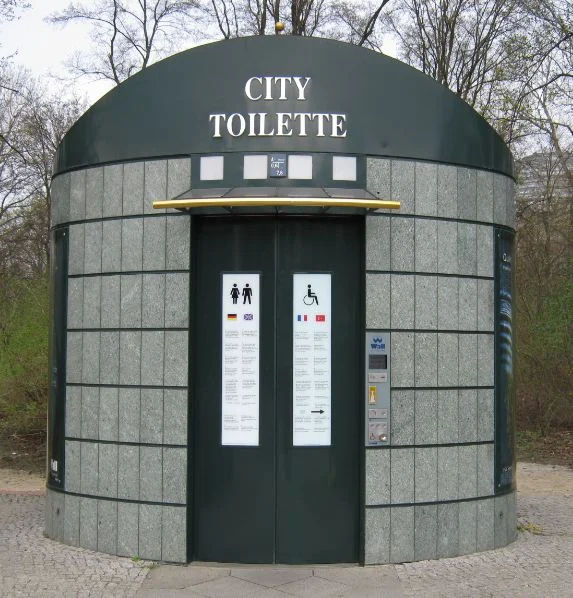
The landscape of American public infrastructure underwent a radical transformation in the mid-1970s, transitioning from a system where access to basic sanitation often required a ten-cent deposit to one where free public restrooms became the expected standard. While modern travelers to Europe or the United Kingdom are frequently surprised by the persistence of coin-operated turnstiles in train stations and shopping centers, the United States once mirrored this model. In 1974, at the height of the pay-toilet era, the Wall Street Journal reported that there were over 50,000 pay toilets in operation across the country. However, within a decade, this ubiquitous feature of American life had nearly vanished, driven into obsolescence by a unique combination of grassroots activism, legislative reform, and shifting views on civil rights.
The Rise of the Pay-Toilet Industry
The pay-toilet model emerged as a solution to the costs associated with maintaining public facilities. For much of the early 20th century, municipalities and private businesses, such as bus terminals and department stores, viewed the coin-operated lock as a necessary tool for revenue generation and security. The logic was twofold: the fees would offset the costs of water, cleaning, and repairs, while the barrier to entry would theoretically deter loitering and vandalism.
The dominant player in this industry was the Nik-o-Lok Company, an Indianapolis-based firm founded in the early 1900s. Nik-o-Lok manufactured the heavy-duty mechanical locks that became synonymous with public restrooms. At its peak, the industry generated significant revenue; adjusted for inflation, the estimated $30 million in annual revenue generated by pay toilets in 1970 would equate to approximately $230 million in 2024. Despite the profitability, the system created a significant barrier for the traveling public, particularly those in lower-income brackets or those experiencing medical emergencies.
The Genesis of Resistance: CEPTIA and the Gessler Brothers
The movement to dismantle this system began unexpectedly in 1970 in Dayton, Ohio. Ira Gessler, then a 19-year-old student, and his brother Frank founded the Committee to End Pay Toilets in America (CEPTIA). What began as a local effort quickly evolved into a nationwide crusade. The organization was characterized by a blend of youthful humor and serious political advocacy, utilizing a newsletter titled "Free Toilet Paper" to organize its members.
CEPTIA’s mission statement was unambiguous: "Pay toilets are an unethical infringement on basic human rights." The group argued that because elimination is a biological necessity, charging for access to a restroom was fundamentally different from charging for luxury goods or services. They contended that the practice was a form of "biological tax" that penalized the poor and the marginalized.
The Gender Equity Argument
One of the most potent arguments against pay toilets involved gender discrimination. In the mid-20th century, most public restrooms provided free urinals for men, while the stalls—which were required by women for all needs—remained behind coin-operated locks. This meant that while men could often use public facilities for free, women were almost always required to pay.
This disparity caught the attention of the burgeoning feminist movement and various civil rights advocates. Legislators began to argue that pay toilets constituted a form of sex-based discrimination. California Assemblywoman March Fong Eu became a prominent voice in this fight, famously smashing a toilet with a sledgehammer on the steps of the California State Capitol in 1974 to protest the "symbol of oppression" against women. Although her initial legislative efforts faced setbacks due to lobbying from the pay-toilet industry, the public spectacle galvanized national attention.
A Chronology of Legislative Success
The shift from private commerce to public right was marked by several key legal and legislative milestones:
- 1970: CEPTIA is founded in Dayton, Ohio, launching the first coordinated national campaign against pay-toilet locks.
- 1973: Chicago becomes the first major American city to ban pay toilets. Mayor Richard J. Daley supported the ban, framing it as a matter of public convenience and dignity.
- 1974: The industry reaches its peak with over 50,000 units, but the tide begins to turn as states like New York and California begin debating statewide bans.
- 1975: New York State passes a ban on pay toilets, significantly impacting the industry given the state’s high concentration of transit hubs.
- 1976–1979: A wave of similar legislation sweeps through the Midwest and Northeast. Florida and several other states implement laws requiring that if a business provides restrooms, a certain percentage (or all) must be free of charge.
- 1980: By the start of the new decade, the pay-toilet industry in the United States had effectively collapsed. The number of coin-operated locks in public spaces plummeted to near zero.
Corporate Counterarguments and the Nik-o-Lok Defense
The industry did not disappear without a fight. The Nik-o-Lok Company and its competitors argued that the removal of pay locks would lead to the degradation of public sanitation. They maintained that the revenue from the locks was the only thing keeping restrooms clean and safe. Without the "user-pays" model, they predicted that businesses would simply close their restrooms to the public rather than bear the full cost of maintenance and the risk of increased vandalism.
In many ways, these predictions were partially realized. Following the bans, many gas stations and small businesses began implementing "customers only" policies or requiring users to ask for a key, a practice that persists today. However, the legal precedent set by CEPTIA and subsequent legislation established that while a business could restrict access to customers, they could not charge a direct fee for the use of the facility itself.
The Economic and Social Implications of the Ban
The transition to free toilets had immediate economic consequences. For municipalities, it meant that the cost of maintaining public restrooms in parks and transit centers had to be fully absorbed by tax revenue. For the private sector, it shifted the cost of sanitation into the general overhead of doing business.
From a social perspective, the ban was a victory for public health. By removing the financial barrier to sanitation, cities reduced the instances of public urination and defecation, particularly in urban centers. However, the "Great Disappearing Act" of the 1970s also led to a long-term decline in the total number of public restrooms available. As maintenance costs rose and revenue disappeared, many municipalities opted to close public facilities entirely rather than maintain them for free.
Comparative Analysis: The European Model vs. The American Model
The divergence between the U.S. and Europe regarding pay toilets remains a point of interest for sociologists and urban planners. In many European cities, pay toilets remain the norm, often managed by private contractors like Sanifair. The fees—ranging from 50 cents to 1.50 Euro—are typically used to fund high-tech, self-cleaning facilities and on-site attendants.
In the United States, the cultural shift toward "free access" effectively ended the possibility of a self-sustaining public restroom industry. While this ensured that those with no money could still access facilities (where they existed), it also created a "restroom gap." Today, many American cities struggle with a lack of public toilets, a crisis that disproportionately affects the homeless population and those with medical conditions such as Crohn’s disease or IBS.
The Modern Legacy of CEPTIA
Though CEPTIA disbanded in the late 1970s after achieving its primary goals, its influence remains visible in modern American life. The movement was a precursor to modern "Right to the City" activism, which argues that urban environments should be designed for the dignity and needs of all residents, not just those who can pay.
The current debate over public restrooms in cities like San Francisco, Seattle, and New York echoes the arguments made by the Gessler brothers 50 years ago. Today, the focus has shifted from "pay-to-pee" to the total lack of available facilities. Some urban planners are now looking back at the 1970s with a critical eye, questioning whether the total ban on pay toilets inadvertently led to the current scarcity of public options.
Conclusion
The disappearance of the pay toilet in America is a testament to the power of grassroots organizing and the evolving definition of human rights in the 20th century. By 1980, the ten-cent lock had been relegated to the status of a historical curiosity. While the move to free facilities addressed issues of gender equity and economic justice, it also forced a rethink of how public spaces are funded and maintained. As American cities continue to grapple with infrastructure and public health challenges, the history of the pay toilet serves as a reminder that even the most mundane aspects of daily life are often the result of intense political and social struggle. The legacy of CEPTIA lives on every time an American traveler enters a public restroom without reaching for a dime—a small but significant victory for the principle of universal access to basic human needs.




 Anjar Salim
 Chandra Hamzah
 Tatiana Tantri Indah Sari

