
 Tatiana Tantri Indah Sari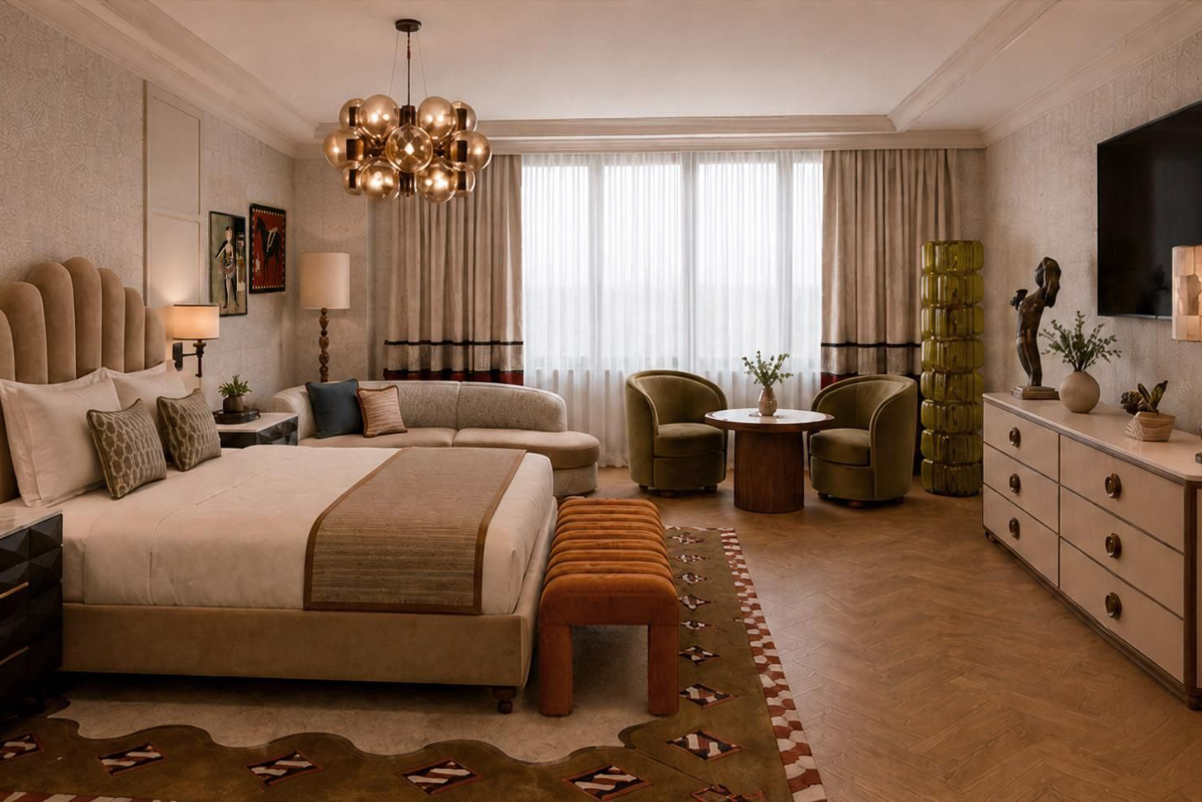
Fattal Hotel Group, a prominent Israeli hospitality conglomerate, has officially entered the United States market with its acquisition of The Blakely, a historic pre-war hotel situated in Midtown Manhattan. This modest transaction, valued at $38.5 million, carries significant strategic weight, marking the initial foray of a global hospitality giant into one of the world’s most competitive and lucrative hotel landscapes. The company announced on Wednesday its immediate plans to close the property for an extensive $13 million renovation, with an anticipated reopening of the 117-room hotel slated for mid-2027.
A Strategic Entry Point in a Dynamic Market
The acquisition of The Blakely, located on West 55th Street, positions Fattal Hotel Group in the heart of New York City, a market renowned for its robust tourism, business travel, and luxury segments. While the initial investment figure for this single property may appear relatively small compared to some of the group’s larger European acquisitions, its symbolic importance is profound. It signals Fattal’s deliberate intent to establish a foothold in the North American hospitality sector, a move that industry analysts suggest could redefine certain segments of the market in the coming decade.
The Blakely, a classic New York pre-war building, offers Fattal a solid foundation upon which to build its brand presence. Pre-war hotels in Manhattan are often cherished for their architectural character, spacious rooms, and prime locations, though they frequently require significant capital expenditure to modernize and meet contemporary guest expectations. Fattal’s commitment of $13 million towards renovations underscores its long-term vision for the property, aiming to transform it into a flagship representation of its brand standards in the U.S.
Fattal Hotel Group: A Global Hospitality Powerhouse
Founded by billionaire David Fattal, the Fattal Hotel Group has steadily grown into a formidable force in the international hospitality arena. With a portfolio that currently encompasses 329 hotels spread across 22 countries, the group operates predominantly under its flagship Leonardo brand, alongside other labels such as NYX Hotels and Jurys Inn. Its expansive footprint spans major European markets, including the UK, Ireland, Germany, Spain, and its home base in Israel, among others. The company’s growth trajectory has been marked by strategic acquisitions and development projects, allowing it to build a diverse portfolio catering to various market segments, from business travelers to leisure tourists.
David Fattal’s leadership has been instrumental in shaping the group’s distinctive operational philosophy. Unlike many of its global peers, such as Marriott, Hilton, and IHG, which have largely transitioned to an "asset-light" model focusing on franchising and management contracts, Fattal Hotel Group remains an "asset-heavy" operator. This means the company often owns the real estate of its hotels, rather than merely managing or franchising them. This contrarian strategy allows Fattal greater control over its properties, direct benefits from real estate appreciation, and potentially higher long-term profitability, albeit with a greater capital outlay and exposure to real estate market fluctuations.
The Visionary Behind U.S. Expansion: Ronen Nissenbaum
The ambitious expansion into the U.S. market is being spearheaded by Ronen Nissenbaum, CEO of Leonardo Hotels U.K., Ireland, Benelux, Spain, Portugal, and U.S. Development. Nissenbaum, a seasoned hospitality executive with extensive international experience, articulated Fattal’s strategy as a "deliberate, cluster-by-cluster expansion." This approach deviates from a rapid, widespread market penetration, instead favoring the establishment of strong, concentrated presences in key urban centers before broadening the geographic scope.
"If I put one hotel down in one market, within a few years I’ll have 10 or 15," Nissenbaum told Skift, outlining the exponential growth potential he envisions. This systematic methodology aims to build operational efficiencies, brand recognition, and a robust support infrastructure within specific regions, mitigating the risks associated with scattered, uncoordinated growth. Nissenbaum’s ambitious projections include scaling the group’s global portfolio to between 400 and 450 hotels by 2030, a target that clearly factors in significant growth from the nascent U.S. operations.
Chronology of Fattal’s Growth and U.S. Market Entry
The journey to the U.S. market has been a culmination of decades of strategic expansion for Fattal Hotel Group:
- 1998: David Fattal establishes Fattal Hotels in Israel, rapidly growing its domestic portfolio.
- Mid-2000s: The group begins its international expansion, initially focusing on Germany and other key European markets.
- 2007: Launch of the Leonardo Hotels brand, which quickly becomes the group’s primary international flag.
- 2010s: Significant growth across Europe, including the acquisition of the Jurys Inn chain in the UK and Ireland, dramatically expanding its footprint.
- Late 2010s – Early 2020s: Continued consolidation and organic growth in existing European markets, while exploring new territories.
- 2023: Strategic decision to enter the highly competitive U.S. market, identifying New York City as the initial beachhead.
- November 2023: Acquisition of The Blakely Hotel in Midtown Manhattan for $38.5 million.
- Immediate Future (2024-2027): Closure of The Blakely for a comprehensive $13 million renovation.
- Mid-2027: Anticipated reopening of the reimagined 117-room hotel, likely under a Fattal brand, potentially Leonardo Hotels.
- Post-2027: Execution of the "cluster-by-cluster" expansion strategy across the U.S., targeting major cities like Miami, Los Angeles, and Chicago.
The Blakely Renovation: A Vision for Modern Luxury
The planned $13 million renovation of The Blakely is not merely a cosmetic refresh but a comprehensive overhaul aimed at repositioning the hotel within Manhattan’s competitive luxury and upscale segments. Industry experts suggest that such an investment will likely involve a complete redesign of guest rooms and suites, incorporating contemporary aesthetics, advanced technology, and enhanced amenities. Public spaces, including the lobby, restaurant, and any potential meeting facilities, will also undergo significant transformation to reflect Fattal’s brand identity and appeal to discerning travelers.
Given Fattal’s portfolio, it is highly probable that The Blakely, upon reopening, will be rebranded under one of its established international flags, with Leonardo Hotels being a strong contender. This would introduce a new European-influenced hospitality experience to the U.S. market, characterized by modern design, personalized service, and a focus on integrating local culture. The renovation period, though lengthy, provides an opportunity to meticulously plan and execute a design that maximizes the hotel’s prime location and historical charm while ensuring operational efficiency and guest satisfaction.
Supporting Data: The Allure of the U.S. Hotel Market
The U.S. hotel market remains a magnet for global investors, driven by its vast scale, robust demand, and resilient performance metrics. According to data from STR, a leading global hospitality data provider, the U.S. hotel industry has shown remarkable recovery post-pandemic. In October 2023, U.S. hotel occupancy stood at approximately 65%, with an Average Daily Rate (ADR) of around $158 and Revenue Per Available Room (RevPAR) of nearly $103. While growth has moderated from the peak recovery period, these figures demonstrate a healthy and stable market.
New York City, specifically Manhattan, consistently outperforms national averages in certain segments. While Manhattan’s hotel supply has steadily increased over the past decade, demand has largely kept pace, especially in the luxury and upscale tiers. In recent months, Manhattan has seen ADRs well above the national average, often exceeding $300, particularly in prime locations like Midtown. This strong pricing power, coupled with high barriers to entry for new construction, makes existing, well-located properties highly attractive for investors seeking long-term value. Fattal’s decision to acquire an existing asset rather than undertake ground-up development in such a dense market is a testament to this strategic consideration.
The "Asset-Heavy" Contrarianism: A Deeper Look
Fattal’s commitment to an asset-heavy model stands in stark contrast to the dominant trend among publicly traded hospitality giants. Marriott, Hilton, and IHG have largely divested their real estate portfolios over the past two decades, opting for an asset-light strategy that prioritizes fee-based income from franchising and management contracts. This model minimizes capital expenditure, reduces balance sheet risk, and often leads to higher returns on equity, appealing strongly to public market investors.
However, Fattal’s approach champions different advantages. By owning the real estate, the group retains full control over property standards, brand integrity, and long-term strategic decisions without the complexities of negotiating with independent owners or franchisees. This model also allows Fattal to directly benefit from real estate appreciation, a significant factor in high-value urban markets like Manhattan. In an inflationary environment, real estate ownership can act as a hedge, providing stability and potential for capital gains. While this strategy demands substantial capital and carries greater exposure to real estate market cycles, it aligns with a long-term investment horizon and a desire for operational autonomy. For a privately held group like Fattal, the pressure for quarterly earnings growth is less intense, allowing for patient, strategic real estate plays.
Broader Impact and Implications for the U.S. Hotel Landscape
Fattal Hotel Group’s entry into the U.S. market, and its stated ambition for significant expansion, carries several implications for the broader hospitality industry:
- Increased Competition: The arrival of a well-capitalized, experienced global player will intensify competition, particularly in the upscale and luxury segments of major U.S. cities. Existing brands will need to continuously innovate and differentiate to retain market share.
- Diversification of Ownership and Brands: Fattal’s expansion will introduce new brands and operational philosophies to the U.S., offering consumers more choices and potentially fostering new trends in hospitality design and service. It also diversifies the ownership landscape beyond the established domestic players and private equity firms.
- Validation of the Asset-Heavy Model: While still niche in the U.S., Fattal’s success could inspire other international groups or even domestic investors to reconsider the long-term value proposition of owning hotel real estate, especially in prime markets.
- Boost to Foreign Direct Investment: This acquisition could serve as a precedent, encouraging more foreign hotel groups, particularly from Europe and Asia, to explore investment opportunities in the U.S., further bolstering the industry’s capital base.
- Focus on Renovation and Repositioning: Fattal’s substantial investment in renovating The Blakely highlights the ongoing trend of revitalizing existing hotel stock, particularly in mature markets like New York, where new development can be challenging and expensive.
Official Reactions and Industry Outlook
While specific reactions from U.S. competitors have not been released, industry analysts generally view Fattal’s move as a logical progression for a group of its size and ambition. "The U.S. market, particularly New York City, is a critical benchmark for any global hotel company," noted a senior analyst at a leading hospitality consulting firm, speaking on background. "Fattal’s asset-heavy strategy, while distinct, has proven successful in Europe. Their ability to replicate that success here will be closely watched."
Local business groups and tourism boards in New York are likely to welcome the investment, recognizing the positive impact of a renovated hotel on local employment, tax revenues, and the overall visitor experience. The commitment to a multi-year renovation project also signals confidence in the long-term vitality of Manhattan’s tourism and business sectors.
In conclusion, Fattal Hotel Group’s acquisition of The Blakely is more than just a transaction; it is a strategic declaration of intent. It marks the beginning of what promises to be an aggressive and meticulously planned expansion into the U.S. market by a global hospitality powerhouse. As The Blakely undergoes its transformation, the industry will be watching closely to see how Fattal’s unique, asset-heavy approach, combined with Ronen Nissenbaum’s cluster-by-cluster strategy, will reshape the competitive dynamics of American hospitality in the years to come. The goal of 400 to 450 hotels by 2030 underscores a vision not just for growth, but for establishing a significant, lasting presence in a new continent.



 Anjar Salim
 Chandra Hamzah
 Budi Mulyono

